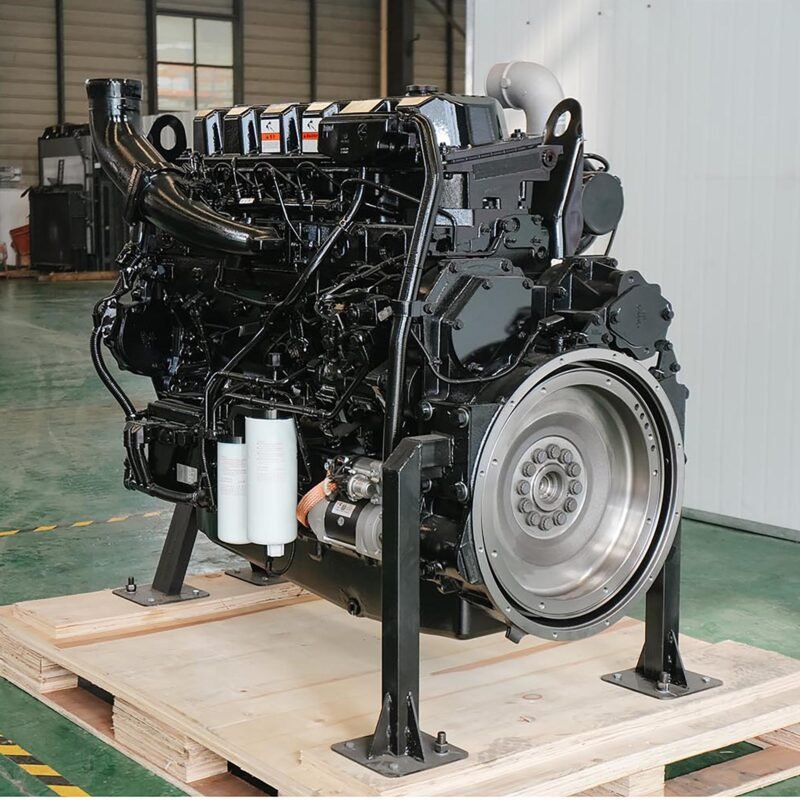
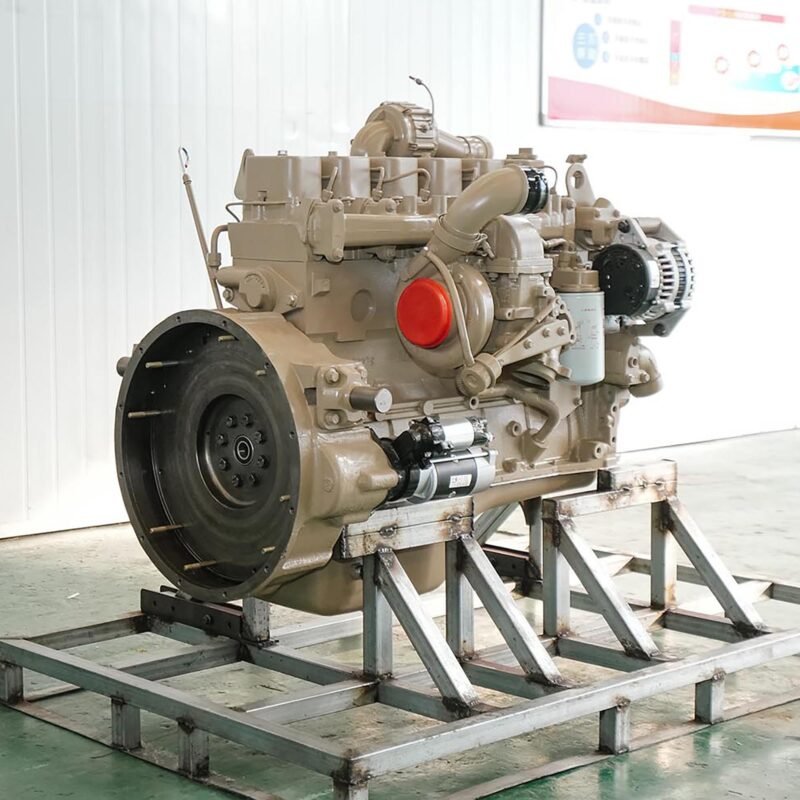
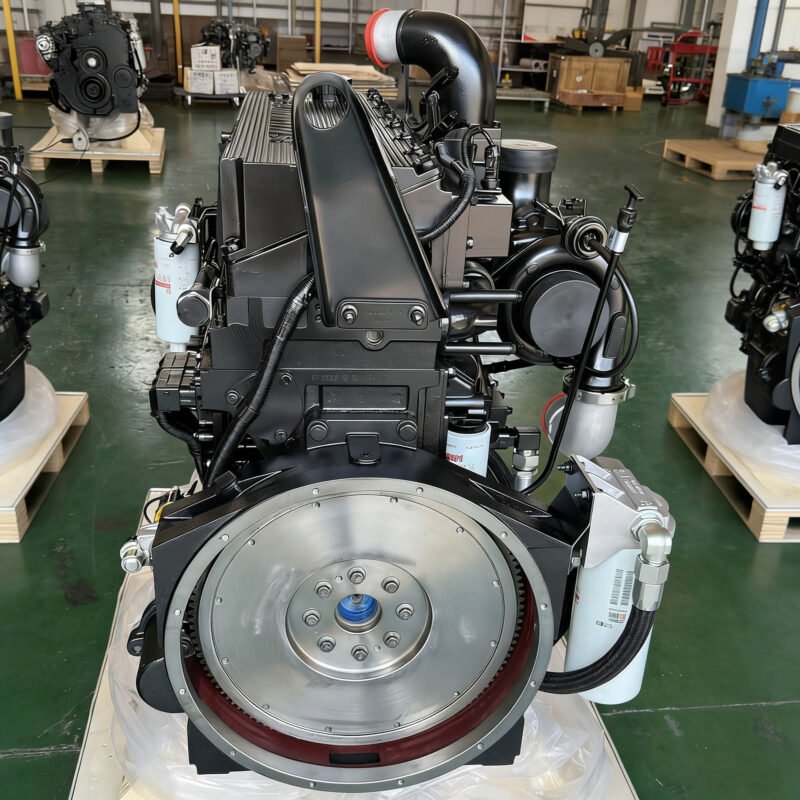
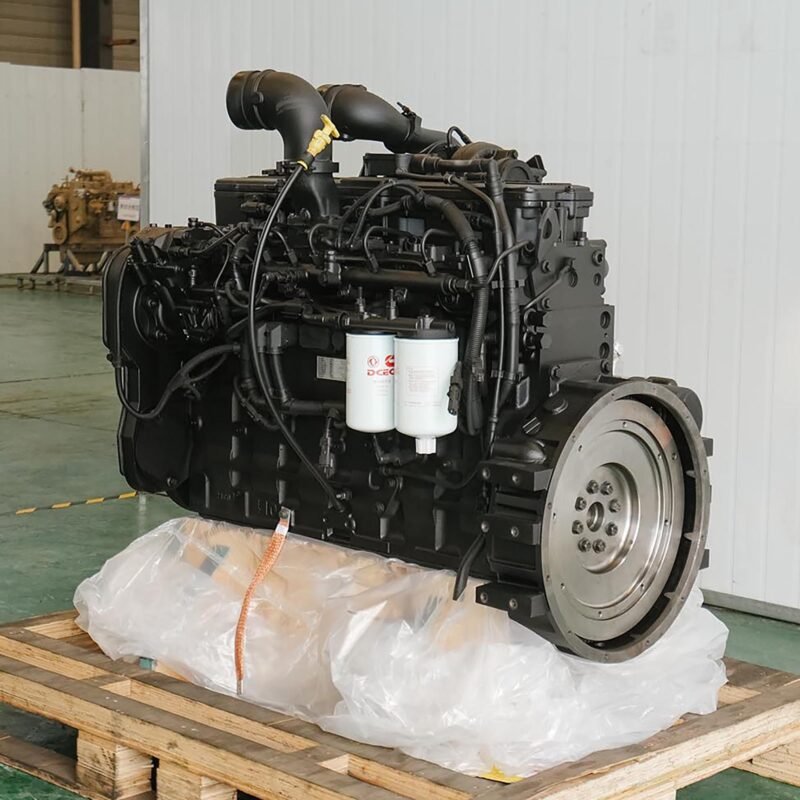
Diesel Engine Supplier for International Buyers: How to Request a Quote

diesel engine supplier is a B2B decision that should be made from documented project requirements rather than a headline price or a generic product description. International buyers need to know what equipment will be driven, how the engine will operate, which documents are required in the destination market, and how the quotation assigns technical and commercial responsibility. The title of this guide reflects a commercial search intent, so the practical goal is to turn early supplier discussions into a comparable, evidence-led RFQ.
For a diesel-engine sourcing project, the buyer should separate three categories of information. First are the statements visible on a supplier’s own webpage. Second are general technical, quality or trade principles that can be supported by independent sources. Third are project-specific issues that remain RFQ confirmation required. Keeping those categories separate helps a procurement team avoid treating a marketing statement as a contractual commitment.
Define the project requirement before asking for a quote
Begin with the installed equipment or planned package, not with a model name alone. Record the application, target country, operating duty, requested output and speed, ambient conditions, fuel assumptions, cooling arrangement, mounting and driven-equipment interfaces, electronic-control needs, accessories, quantity and desired delivery window. If the request concerns a replacement, collect the nameplate, serial number, photographs, installation dimensions and a description of the existing failure or upgrade objective.
This requirement sheet gives each candidate supplier a common basis for response. It also makes it easier to identify a quote that omits a control system, interface component, inspection document or packing item. A buyer should ask the supplier to identify every assumption in writing and to mark any deviation from the requirement sheet. Compatibility, performance, output, emission route and commercial availability should never be inferred from a family name or a photograph.
Compare evidence before comparing price
| Review area | What to request | What the buyer should confirm |
|---|---|---|
| Technical fit | Model-specific datasheet, rating information, dimensions, interfaces and accessory list | That the quoted configuration matches the application and any replacement interfaces |
| Supplier identity | Legal entity, responsible contact, quotation issuer and stated product scope | That the contracting party and shipping documents will match the accepted quotation |
| Quality evidence | Quality-system evidence, certificate scope, issuer and validity date; test or inspection records where offered | That evidence is current, relevant and independently verifiable |
| Compliance route | Destination-market documentation and engine-family information where applicable | Which project, market and application requirements apply before order placement |
| Commercial execution | Line-item price, Incoterms version and named place, packing, documentation, payment and delivery basis | Which obligations, costs and risks are included or excluded |
Use supplier webpages as a starting point, not final proof
Kangjin Power’s public homepage describes B2B diesel-engine and power-solution supply for construction, power generation, marine, mining and industrial applications. Its public product catalogue lists multiple diesel-engine products. These are supplier-page descriptions only.
Buyers can review the supplier’s relevant public product category and its public company or product information to identify discussion points. Those pages are helpful for building an RFQ, but they do not substitute for a model-specific proposal, technical annex or acceptance plan. Price, stock status, lead time, warranty, certification, test documentation, origin and post-delivery support remain RFQ confirmation required unless they are expressly stated in current written documents for the proposed configuration.
Check quality, compliance and documentation in context
ISO 9001 describes a framework for establishing, maintaining and continually improving a quality management system; certification is voluntary. [1] For regulated U.S. engines, a certificate of conformity represents a specific engine family’s conformity with applicable emission requirements. [2]
These sources provide a framework for questions; they do not certify a particular supplier or proposed engine. A useful evidence request identifies the exact document, applicable project scope, issuing body, date and verification route. For regulated applications, the buyer should first define where and how the product will operate, then request the relevant engine-family or project documentation. Do not transform a general standard, an unrelated certificate or a comparable product into a claim that the proposed item is compliant.
Build an RFQ that produces comparable quotations
A disciplined RFQ reduces rework by asking every supplier to respond to the same technical and commercial fields. It should state the required application, destination, quantity, target timing, duty description, interface information and required document list. It should then ask the supplier to provide the full configuration, model designation, rating basis, included accessories, proposed packing, inspection scope and quotation assumptions.
- Attach the nameplate, serial number, part number or installation drawing when available, and ask for written confirmation of every proposed match.
- Request a line-item quotation separating the core item, accessories, controls, packaging, documentation, inspection, optional spares and freight basis.
- State the target market and request the relevant compliance evidence without assuming a certification or emission classification.
- Ask for the Incoterms® rule version and named place, payment milestones, delivery basis and responsibility for export documents.
- Define what inspection, functional-test record or pre-shipment evidence is required before the agreed payment point.
- Record unresolved technical or commercial assumptions as RFQ confirmation required before issuing a purchase order.
Evaluate quotations with a cross-functional review
Engineering should validate the technical configuration and interfaces. Quality should review the document trail and inspection approach. Purchasing should normalize price lines, Incoterms, payment conditions and packing scope. Logistics and compliance teams should review the destination-market assumptions and documentation responsibilities. This cross-functional review makes the total proposal more transparent than a unit-price comparison alone.
Where clarification is needed, buyers can use the supplier’s RFQ contact channel to submit the consolidated requirement sheet. Request a written response that identifies the proposed configuration, exceptions, documents and commercial basis. A final decision should be based on the accepted RFQ record and contract documents, not on a webpage statement.
Frequently Asked Questions
What should I send with my initial request?
Send the application, destination market, quantity, timing, required duty, interface details and any available nameplate, serial number, part number or drawings. A complete initial package improves the quality of technical clarification and quotation comparison.
Can a product-category page prove compatibility?
No. A category page can help identify a relevant discussion area, but compatibility requires a written comparison of the proposed configuration with the actual equipment, duty and interfaces. Final compatibility is RFQ confirmation required.
How should I evaluate a quality or compliance claim?
Request the relevant current document, identify its scope and issuer, and verify it through an appropriate source. A general quality-management or regulatory reference is not proof that a specific item meets a buyer’s project requirement.
Why should Incoterms be included in the RFQ?
International trade terms help clarify selected responsibilities, costs and risks. The RFQ should identify the Incoterms® version and the named place, then the parties should ensure the complete contract addresses all other commercial requirements. [8]
Make the final choice evidence-led
The most reliable approach to diesel engine supplier is to define the application first, request comparable evidence, verify important documents and keep unresolved assumptions visible. This method helps a buyer move from a broad commercial search to an evidence-led sourcing decision without overstating what a supplier webpage or generic standard can prove.