
Diesel Engine DPF Regeneration: Active vs Passive Regeneration Explained

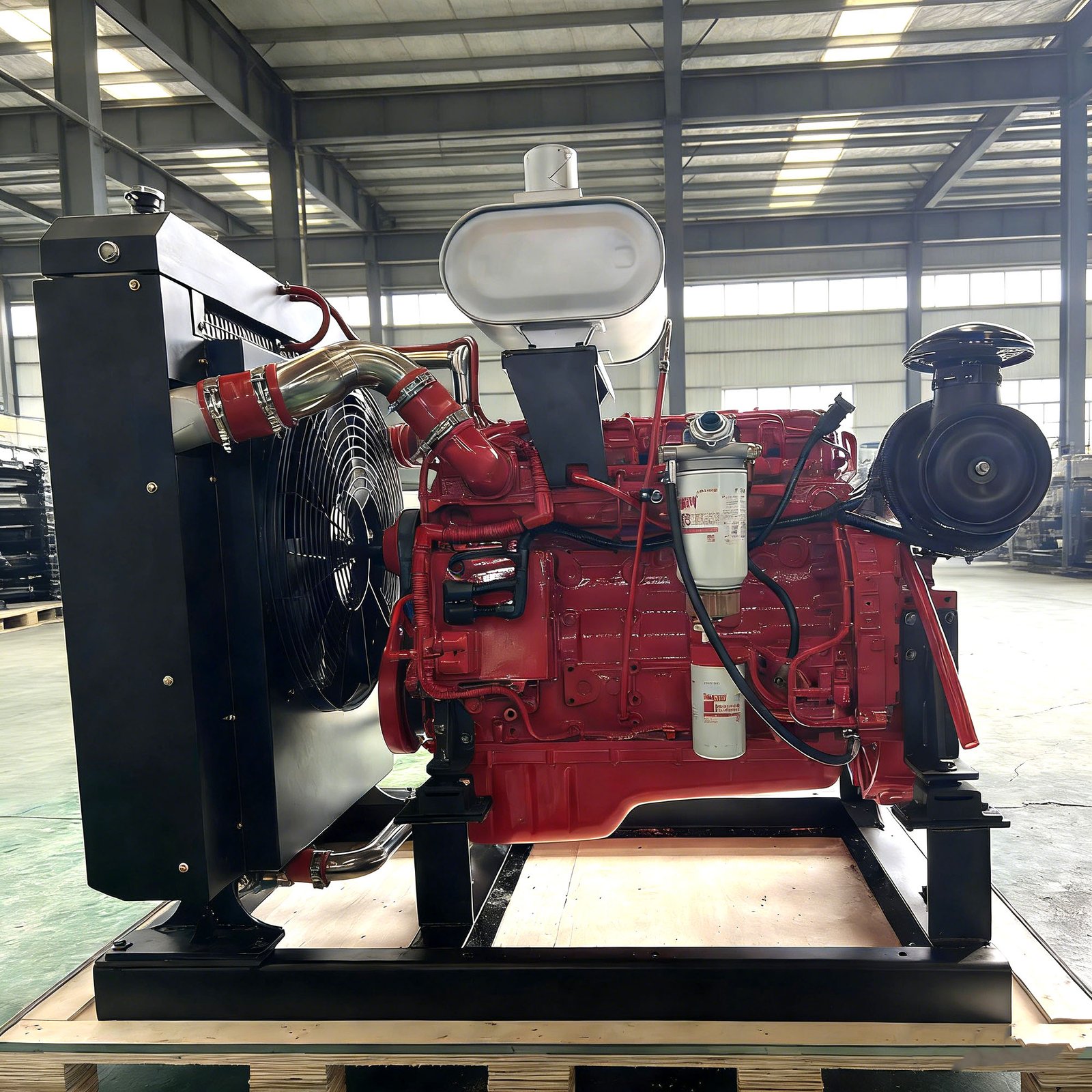
The diesel engine DPF regeneration process removes accumulated soot from a diesel particulate filter by oxidizing it into gases. Passive regeneration occurs when normal exhaust conditions support soot oxidation, while active regeneration raises exhaust temperature through an engine-controlled process when natural cleaning is insufficient. Some engines also support parked or stationary regeneration. The correct method depends on engine load, exhaust temperature, soot accumulation, and the manufacturer’s aftertreatment strategy.
For industrial diesel engines, understanding regeneration helps operators reduce unplanned downtime and recognize when a warning requires attention. However, not every diesel engine has a DPF. The engine’s emissions certification, configuration, and installed aftertreatment system must be confirmed before applying DPF-specific maintenance procedures.
What Is a DPF and Why Does It Need Regeneration?
A diesel particulate filter, or DPF, is an exhaust aftertreatment component designed to capture particulate matter, especially carbon soot, from diesel exhaust.
Many filters use a wall-flow ceramic structure. Exhaust gases pass through porous filter walls while soot particles collect on or within the filter material.
As soot accumulates, exhaust flow resistance increases. The engine control system may estimate soot loading using differential pressure, exhaust temperature, operating history, and other calibrated information.
Regeneration converts the accumulated combustible soot into gaseous products. This helps restore acceptable exhaust flow resistance without removing the filter from the equipment.
How the DPF Works with Other Exhaust Components
Depending on the emissions system, the exhaust aftertreatment package may include:
- Diesel oxidation catalyst (DOC), which supports oxidation reactions and can generate heat during active regeneration.
- Diesel particulate filter (DPF), which traps particulate matter.
- Exhaust temperature sensors, which monitor operating and regeneration conditions.
- Differential pressure sensor, which helps assess restriction across the DPF.
- NOx sensors and SCR components, where the engine uses selective catalytic reduction.
- Engine control module (ECM) and aftertreatment controls, which manage diagnostic and regeneration functions.
The arrangement varies. Some engines use integrated aftertreatment assemblies, while other configurations have separate components or do not use a DPF at all.
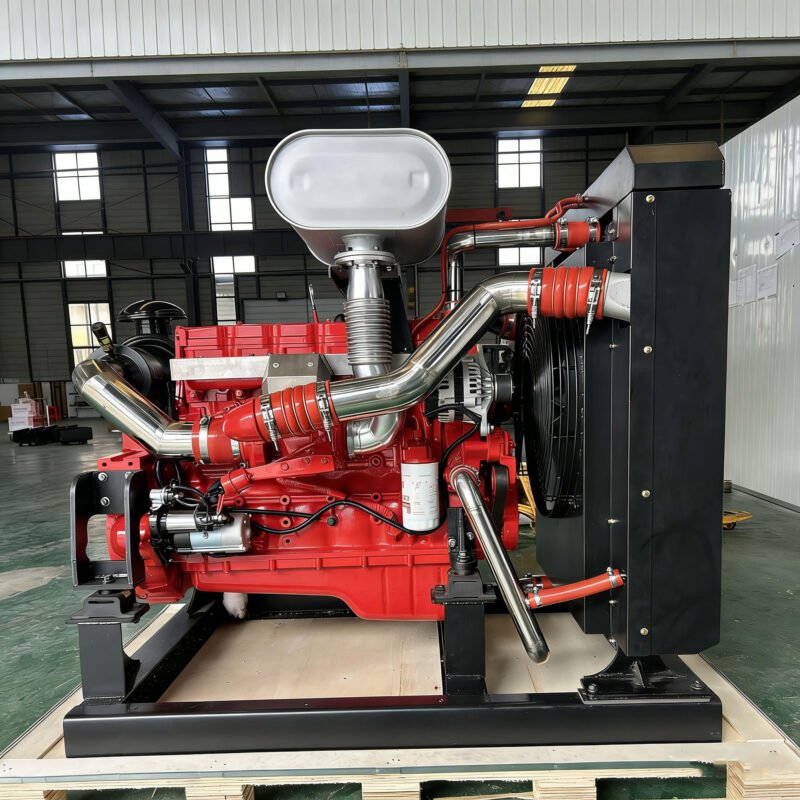
Active vs Passive DPF Regeneration: Key Differences
Both regeneration strategies remove combustible soot, but they differ in how the necessary exhaust conditions are achieved.
| Feature | Passive Regeneration | Active Regeneration |
|---|---|---|
| How it works | Uses suitable exhaust conditions during normal operation | Uses an engine or aftertreatment control strategy to increase exhaust heat |
| Typical trigger | Operating temperature and exhaust chemistry support soot oxidation | Estimated soot loading or other calibrated conditions require regeneration |
| Additional fuel | Generally not required specifically for regeneration | May require additional fuel, depending on system design |
| Operator involvement | Usually none | Often automatic; some situations require a parked procedure |
| Common operating conditions | Sustained operation with adequate exhaust temperature | Variable-duty or lower-temperature operation when passive cleaning is insufficient |
| Main limitation | May not remove soot quickly enough during low-load operation | Requires correct sensors, controls, operating conditions, and sufficient system health |
How Passive DPF Regeneration Works
Passive regeneration occurs when normal exhaust temperatures and chemical reactions oxidize soot without a dedicated fuel-heating event.
In many catalyzed systems, nitrogen dioxide supports soot oxidation at temperatures lower than those required for oxidation by oxygen alone.
This process is particularly useful during steady operation when the engine maintains suitable exhaust conditions for extended periods.
However, passive regeneration does not mean the DPF constantly cleans itself at every load. Repeated short operating cycles, prolonged idling, or insufficient exhaust temperature can cause soot to accumulate faster than it burns.
How Active DPF Regeneration Works
When passive soot oxidation cannot keep pace with accumulation, the ECM may initiate active regeneration.
Depending on engine design, the system may use additional fuel injection or a dedicated exhaust dosing arrangement. The DOC then helps generate the heat needed to increase DPF temperature.
During the event, the control system monitors temperature, pressure, and operating conditions. It aims to remove soot while protecting the aftertreatment hardware against excessive temperatures.
Active regeneration can occur automatically during normal equipment operation. Therefore, an active event does not always require the machine to stop working.
What Is Parked or Stationary Regeneration?
Parked regeneration is a controlled regeneration procedure performed while the equipment remains stationary. It is often associated with a DPF warning when ordinary operation has not provided sufficient regeneration opportunities.
On supported equipment, the operator may need to park safely, apply the parking brake, meet the required control conditions, and initiate the procedure through the approved switch or diagnostic interface.
Not every engine supports the same sequence. Follow the exact operator manual, particularly for industrial equipment with power take-off systems or automatic engine-speed controls.
How the Diesel Engine DPF Regeneration Process Works
The basic process can be understood as a sequence of soot accumulation, system assessment, temperature management, soot oxidation, and verification.
1. The DPF Collects Soot
Normal diesel combustion produces particulate matter. The DPF captures much of the soot as exhaust passes through the porous filter walls.
Over time, the amount of retained soot changes according to fuel consumption, combustion quality, engine load, and regeneration activity.
2. The ECM Assesses Regeneration Needs
The control system estimates DPF soot loading through model-based calculations and available sensor feedback.
A differential pressure reading can contribute to the assessment, but pressure alone is not a direct measurement of soot mass. Exhaust flow, temperature, and accumulated ash also influence restriction.
3. The System Establishes Regeneration Conditions
If passive oxidation is adequate, cleaning continues during normal operation.
Otherwise, the ECM may request an active event when the engine and aftertreatment system meet the necessary conditions.
Depending on the installation, the system may adjust engine operation or provide additional fuel to raise exhaust temperature.
4. Soot Oxidizes Inside the Filter
As the filter reaches the required reaction conditions, trapped carbon oxidizes. The exact temperatures and reaction rates depend on filter design, catalyst behavior, exhaust chemistry, and engine calibration.
Operators should not rely on a universal regeneration temperature because sensor locations and control strategies differ between systems.
5. The ECM Confirms Completion
The system evaluates regeneration progress using its programmed control logic and sensor signals.
After a successful event, estimated soot loading should decrease, although some exhaust restriction will remain because the filter structure and any accumulated ash still resist flow.
If a regeneration ends prematurely or a diagnostic fault develops, the ECM may postpone further regeneration, display a warning, or limit engine output.
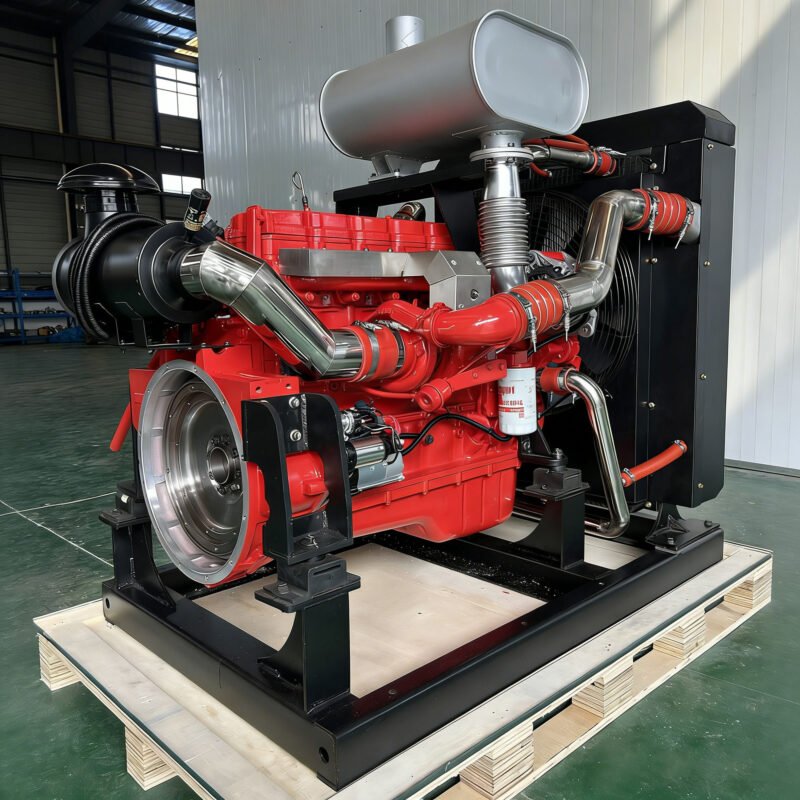
DPF Regeneration Temperature, Duration, and Frequency
There is no single regeneration temperature, duration, or frequency that applies to every diesel engine.
Cummins training material describes passive soot oxidation supported by NO2 at temperatures above approximately 250°C in an applicable DPF system. However, this value should not be treated as a universal regeneration threshold or a service limit for every engine.
Active regeneration may require considerably higher temperatures. The required conditions depend on catalyst design, fuel-dosing strategy, sensor placement, and ECM calibration.
| Parameter | What Affects It | What to Check |
|---|---|---|
| Regeneration temperature | Catalyst activity, soot chemistry, control strategy, sensor location | OEM service specifications |
| Regeneration duration | Soot loading, operating conditions, regeneration method | ECM status and operator instructions |
| Regeneration frequency | Duty cycle, combustion quality, load, fuel and oil characteristics | Historical regeneration data |
| DPF restriction | Soot, ash, exhaust flow, sensor condition | Approved differential pressure test |
Frequent regeneration can indicate excessive soot production, unsuitable operating conditions, or a system fault. However, a single short interval is not enough to identify a defective component.
Why Does DPF Regeneration Fail?
A failed or interrupted regeneration can result from the engine’s duty cycle, sensor faults, excessive soot loading, or unsuitable aftertreatment conditions.
Prolonged Idling and Low Engine Load
Engines that spend long periods idling may produce exhaust temperatures too low to sustain passive soot oxidation.
Low-load operation can also reduce opportunities for automatic active regeneration, depending on the engine control strategy.
This issue is common in equipment that runs intermittently or spends substantial time waiting between work cycles.
Low exhaust temperature can also contribute to a different problem called wet stacking. Kangjin Power’s diesel engine wet stacking guide explains that condition in more detail.
Wet stacking and DPF soot accumulation are not identical failures. Moreover, wet stacking can affect engines that do not have a particulate filter.
Faulty Temperature or Differential Pressure Sensors
The ECM uses sensor data to determine whether the aftertreatment system can regenerate safely.
A damaged temperature sensor, blocked differential pressure tube, leaking pressure hose, or electrical fault can interfere with regeneration decisions.
Before replacing the DPF, technicians should confirm the accuracy of the relevant sensor signals and inspect stored diagnostic fault codes.
Excessive Soot Accumulation
When soot loading exceeds the permitted operating range, the ECM may require a specific service procedure or prohibit normal regeneration.
Attempting repeated forced regeneration on an excessively loaded filter can create dangerous thermal conditions.
Follow the manufacturer’s diagnostic decision tree. Some conditions require filter removal, professional cleaning, or component replacement instead of another regeneration attempt.
Fuel, Injection, and Air-System Problems
Excessive soot production can result from poor combustion, fuel-injection faults, charge-air leaks, restricted intake airflow, or other engine problems.
If the engine produces soot faster than the aftertreatment system can remove it, regeneration frequency may increase.
Therefore, technicians should investigate repeated DPF warnings as an engine-and-aftertreatment issue rather than treating the filter as the only possible cause.
DPF Warning Lights and Troubleshooting
DPF warning lights and regeneration controls vary by engine and equipment manufacturer. A dashboard indicator should always be interpreted using the corresponding operator manual.
| Observed Condition | Possible Meaning | Recommended Response |
|---|---|---|
| DPF lamp illuminated | Filter may require a regeneration opportunity | Follow the equipment manufacturer’s instructions |
| DPF lamp flashing | More urgent soot-loading condition on some systems | Consult the operator manual promptly |
| HEST lamp illuminated | High exhaust-system temperature may exist | Keep the exhaust area clear of combustible materials |
| Derated engine performance | Aftertreatment or another engine protection strategy may be active | Read diagnostic codes and follow approved service guidance |
| Repeated unsuccessful regeneration | Operating, sensor, dosing, or filter condition may prevent completion | Investigate the underlying problem before retrying |
To interpret a high-temperature warning correctly, review the sensor locations and regeneration-related conditions described in Kangjin Power’s diesel engine exhaust gas temperature monitoring guide.
DPF Regeneration vs DPF Cleaning: Soot and Ash
Regeneration removes combustible soot, but it does not eliminate the noncombustible ash that gradually accumulates inside the DPF.
Ash can originate from lubricant additives, engine wear materials, and other inorganic residues. Over time, accumulated ash reduces the filter’s available storage capacity and can contribute to higher exhaust restriction.
| Issue | DPF Regeneration | Professional Cleaning or Replacement |
|---|---|---|
| Combustible soot accumulation | Normally addressed by a successful regeneration | May be necessary if regeneration is prohibited or ineffective |
| Noncombustible ash accumulation | Not removed | Requires approved ash-removal service or replacement |
| Cracked or melted filter substrate | Cannot repair physical damage | Component inspection and replacement may be required |
Repeated regeneration should not replace scheduled DPF ash maintenance. Follow the engine manufacturer’s cleaning interval and approved service procedure.
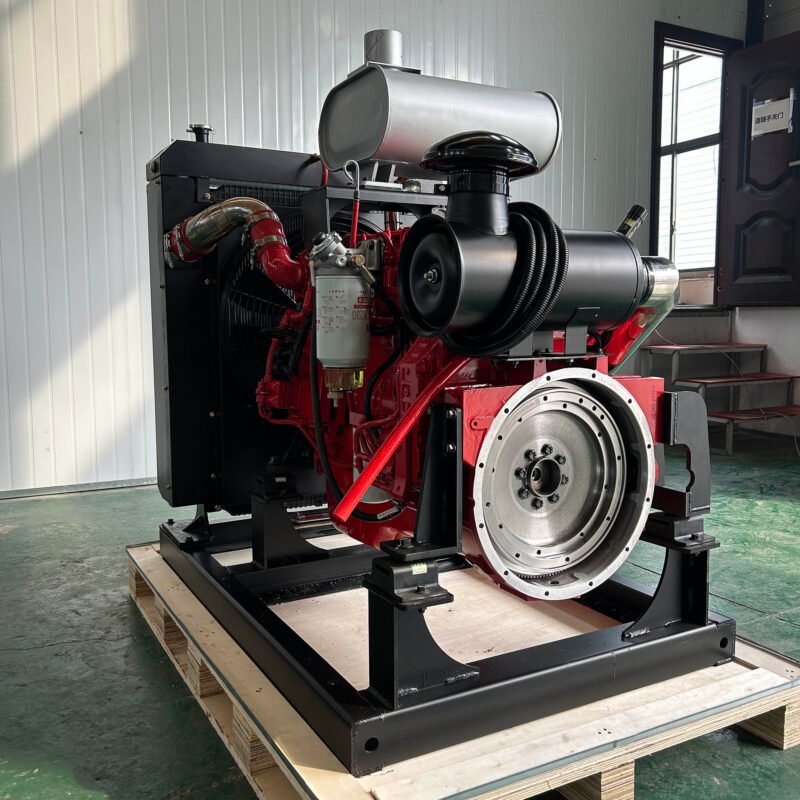
DPF Regeneration in Industrial Diesel Engine Applications
Industrial engines operate in different duty cycles, which can influence passive regeneration opportunities and the need for active events.
Construction Equipment with Variable Loads
Excavators, loaders, and other machines may alternate between heavy work, light hydraulic demand, and idling.
These changing conditions can make exhaust temperature and regeneration opportunities less predictable.
The Cummins QSB6.7 diesel engine is available in multiple industrial ratings and emissions configurations. However, its product-family designation does not establish whether a particular engine includes a DPF.
Before specifying regeneration controls or service requirements, confirm the exact engine serial number, emissions certification, and aftertreatment assembly.
Smaller Industrial Engine Installations
Compact construction equipment and industrial machinery may face limited space for exhaust aftertreatment, cooling airflow, and service access.
For an engine platform such as the Cummins QSB4.5 diesel engine, buyers should verify the specific emissions variant and any required exhaust aftertreatment hardware before planning installation.
If the approved configuration includes a DPF, the installation must accommodate the manufacturer’s temperature limits, exhaust routing, monitoring connections, and maintenance access.
Stationary Power and Continuous-Duty Equipment
Stationary equipment may operate at steady rated load or run only briefly during standby testing.
A consistent high-load duty cycle may provide suitable conditions for passive soot oxidation in an appropriately designed system. By contrast, intermittent light-load use may result in fewer regeneration opportunities.
Not every stationary diesel engine has a DPF. Confirm the actual regulatory requirements and supplied emissions package instead of assuming that every generator needs regeneration.
Choosing a DPF-Compatible Diesel Engine for Your Equipment
When procuring engines for regulated markets, DPF capability is only one part of the selection process. The entire certified engine and aftertreatment configuration must suit the equipment’s operating conditions.
Before placing an order, request the following information from the supplier:
- Complete engine model, serial number, and rated power.
- Applicable emissions certification and supporting documentation.
- Confirmation of whether the supplied configuration includes a DPF.
- Complete DOC, DPF, SCR, sensor, and control-system arrangement where applicable.
- Exhaust routing, installation clearances, and thermal protection requirements.
- Required regeneration controls and operator interfaces.
- Recommended service tools, maintenance procedures, and replacement parts.
- Guidance for the expected engine load profile and operating environment.
Engine selection and aftertreatment matching should also reflect the destination market. Kangjin Power’s diesel engine export supplier guide discusses how emissions requirements affect international procurement.
Do not remove or disable an emissions-control component to avoid regeneration. Such changes may violate applicable regulations and compromise the engine’s approved configuration.
DPF Regeneration Safety and Maintenance Checklist
Active and stationary regeneration can create very high exhaust-system surface temperatures. Operators must follow the equipment manufacturer’s safety instructions.
- Read active fault codes before requesting a service regeneration.
- Confirm that soot loading is within the range permitted for regeneration.
- Keep combustible materials and personnel away from hot exhaust outlets.
- Never initiate regeneration in an unsuitable enclosed or poorly ventilated location.
- Follow parked-regeneration requirements for parking brake, transmission, PTO, and controls.
- Do not repeatedly override regeneration warnings without diagnosing the cause.
- Use the manufacturer-specified fuel and engine oil for the emissions system.
- Maintain the approved DPF ash-cleaning schedule.
- Record regeneration history and recurring diagnostic faults.
If the machine cannot meet the required safety or operating conditions, stop and consult the approved service instructions rather than attempting an improvised regeneration procedure.
Conclusion
The diesel engine DPF regeneration process keeps particulate filters functioning by oxidizing accumulated soot. Passive regeneration uses suitable exhaust conditions during normal operation, while active regeneration provides additional heat when natural soot oxidation is insufficient.
For industrial equipment, regeneration performance depends on engine duty cycle, exhaust temperature, fuel-system condition, and aftertreatment controls. Repeated warnings require systematic diagnosis rather than repeated regeneration attempts.
Finally, remember that regeneration does not remove accumulated ash or repair physical filter damage. Correct engine configuration, scheduled maintenance, and safe operating procedures remain essential for reliable aftertreatment performance.
Frequently Asked Questions
What is the difference between active and passive DPF regeneration?
Passive regeneration oxidizes soot during normal operation when exhaust conditions are suitable. Active regeneration uses an engine-controlled strategy to raise exhaust temperature when passive cleaning cannot adequately control soot accumulation.
How long does diesel DPF regeneration take?
The duration varies by engine model, soot loading, regeneration strategy, and operating conditions. Some Cummins parked-regeneration instructions allow up to approximately one hour, but this is not a universal duration for all engines.
Can a diesel engine regenerate its DPF while idling?
Some systems support a manufacturer-controlled parked regeneration that increases engine speed or changes operating conditions while the equipment remains stationary. Ordinary low idle does not necessarily provide sufficient exhaust temperature for regeneration.
What happens if DPF regeneration fails repeatedly?
Repeated failures may increase soot loading and trigger warnings or engine derating. Technicians should examine fault codes, sensors, engine operating conditions, and aftertreatment components before attempting further regeneration.
Does DPF regeneration remove ash from the filter?
No. Regeneration oxidizes combustible soot but does not remove noncombustible ash. Ash accumulation requires manufacturer-approved filter cleaning or replacement when the service limit is reached.
Explore DPF-Compatible Engine Configurations
Selecting an industrial diesel engine for a regulated market requires more than matching horsepower. Kangjin Power can help buyers review engine ratings, application requirements, and available emissions configurations. Contact the team with your engine model, destination market, and operating duty cycle to discuss suitable engine options and the documentation needed to verify aftertreatment compatibility.
Need a Diesel Engine That Meets Your Emission Requirements?
Kangjin Power supplies Cummins diesel engines for construction machinery, power generation, and industrial applications. Contact our team with your engine model, power requirements, destination market, and emission standards to discuss suitable engine configurations and DPF compatibility.
Technical References
- Cummins – Aftertreatment System Fundamentals – DPF filtration, passive and active regeneration, and ash removal.
- Cummins – Particulate Filter Operating Guide – Regeneration operating principles, indicators, and operator actions.
- Cummins – Parked Regeneration Instructions – Safe stationary-regeneration conditions and operating precautions.

