
SCR vs EGR in Diesel Engines: Emission Control Technologies Compared

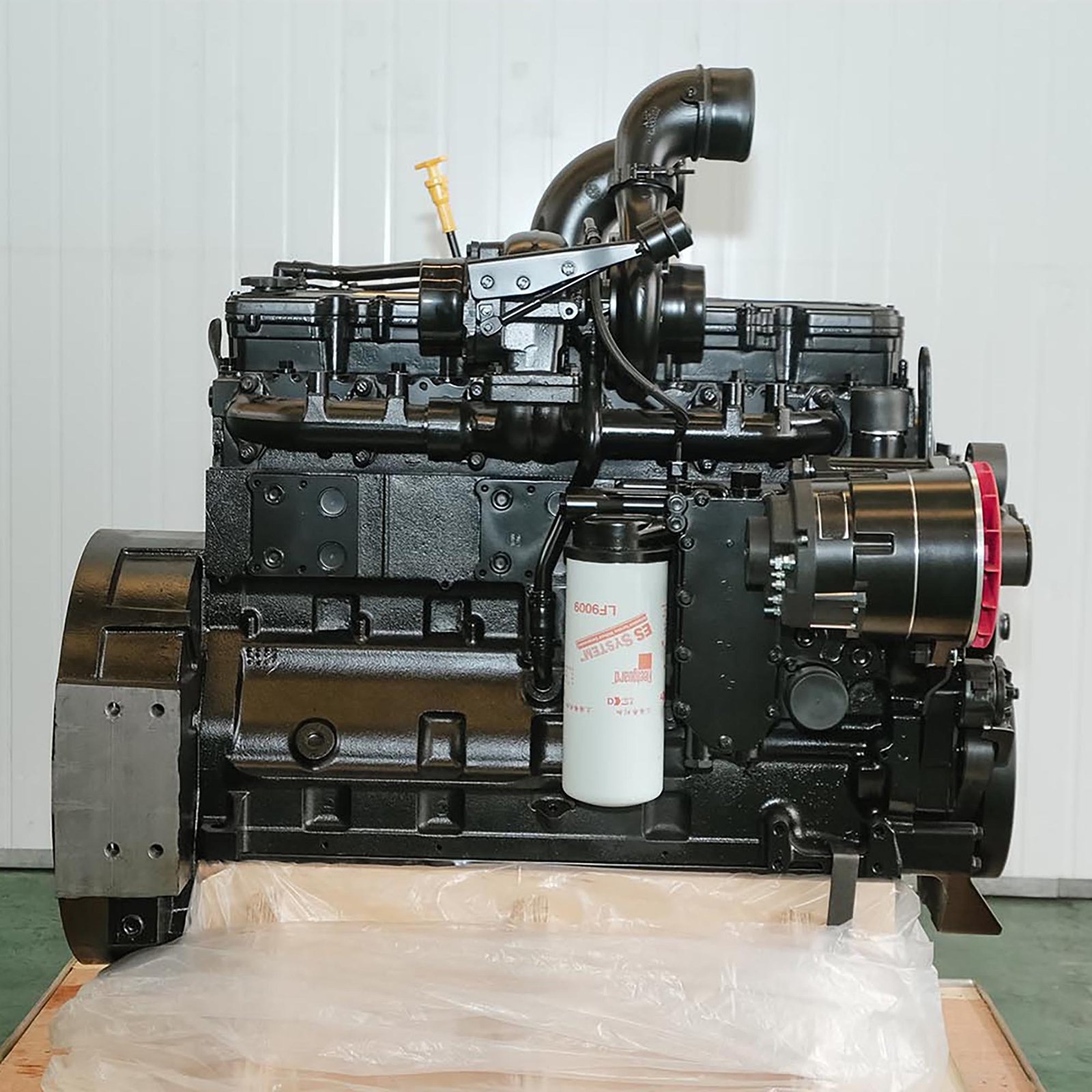
The main difference between SCR and EGR in diesel engines is where they reduce nitrogen oxides (NOx). Exhaust Gas Recirculation (EGR) returns a controlled portion of exhaust gas to the intake system, helping lower peak combustion temperatures and reduce NOx formation inside the cylinders. Selective Catalytic Reduction (SCR) uses Diesel Exhaust Fluid (DEF) and a catalyst to convert NOx in the exhaust into nitrogen and water. Some diesel engines use both technologies to meet their emissions targets.
For industrial diesel engine buyers, the choice affects more than emissions performance. Cooling requirements, DEF availability, maintenance costs, equipment packaging, and regulatory compliance all matter. The correct configuration depends on the certified engine model, power rating, application, and destination market.
What Are SCR and EGR in Diesel Engines?
Diesel combustion produces nitrogen oxides when nitrogen and oxygen react under high-temperature conditions. Modern emission-control systems reduce these pollutants through engine combustion management, exhaust aftertreatment, or a combination of both.
What Is Selective Catalytic Reduction (SCR)?
SCR is an exhaust aftertreatment technology that reduces NOx after combustion has occurred.
In a typical diesel SCR system, an electronic dosing module injects Diesel Exhaust Fluid into the hot exhaust stream. DEF contains 32.5% high-purity urea and 67.5% deionized water.
The urea decomposes to generate ammonia. Within the SCR catalyst, ammonia reacts with NOx to form mainly nitrogen and water.
The system typically includes:
- DEF storage tank and supply module.
- DEF dosing injector and delivery lines.
- Decomposition or mixing section.
- SCR catalyst assembly.
- Exhaust temperature and NOx sensors.
- Electronic aftertreatment control functions.
SCR effectiveness depends on exhaust temperature, accurate DEF dosing, catalyst condition, and the engine’s certified calibration.
What Is Exhaust Gas Recirculation (EGR)?
EGR reduces NOx formation during combustion rather than removing it from the exhaust afterward.
The system directs a controlled quantity of exhaust gas back into the intake charge. This gas dilutes the fresh intake mixture and increases its heat capacity, which helps reduce peak combustion temperature and NOx formation.
In cooled EGR systems, exhaust gas passes through a heat exchanger before returning to the intake.
Typical components include:
- EGR valve and actuator.
- EGR cooler.
- Exhaust and intake connecting passages.
- Temperature, pressure, and airflow sensors.
- Engine control module.
Because EGR changes combustion conditions, the engine manufacturer must carefully balance NOx reduction, particulate formation, power delivery, and fuel efficiency.
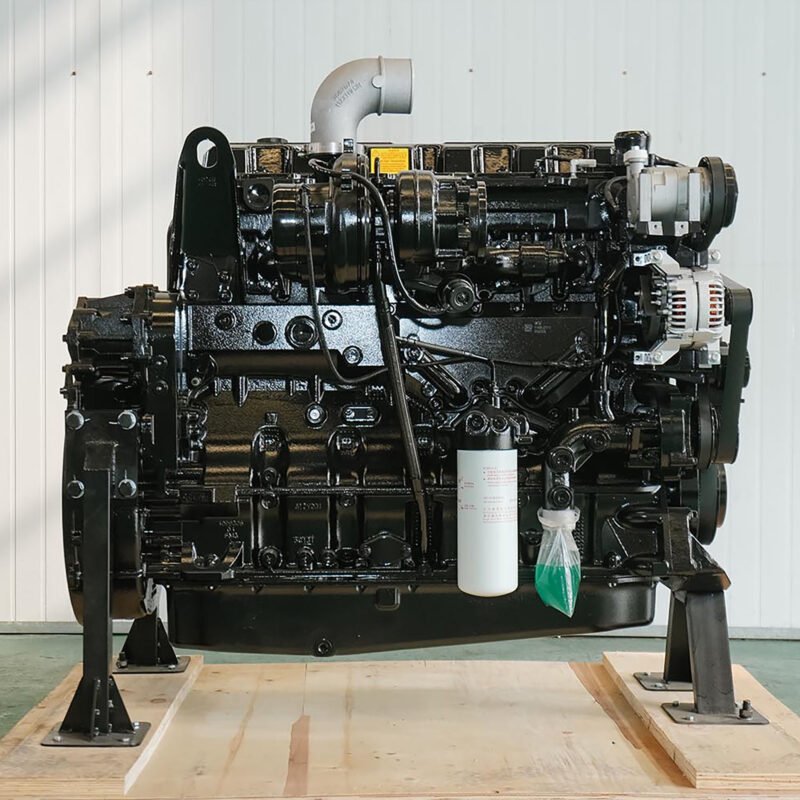
Diesel Engine SCR vs EGR: Key Differences
SCR and EGR address the same pollutant through different mechanisms. Understanding these differences helps buyers evaluate engine configurations and long-term operating requirements.
| Comparison Factor | SCR | EGR |
|---|---|---|
| Main function | Converts NOx after combustion | Reduces NOx formation during combustion |
| System location | Exhaust aftertreatment system | Engine exhaust and intake circuits |
| Operating principle | Ammonia reacts with NOx over a catalyst | Recirculated exhaust reduces peak combustion temperature |
| DEF required | Yes, for conventional urea-SCR systems | No, for the EGR function itself |
| Additional cooling demand | Depends on the complete engine and exhaust package | Cooled EGR adds heat rejection to the cooling system |
| Maintenance focus | DEF quality, dosing system, sensors, and catalyst | EGR valve, cooler, passages, and control system |
| Particulate considerations | Does not directly filter soot | Can increase engine-out soot under some conditions |
| Typical limitation | Requires suitable exhaust temperature and reliable dosing | Can affect combustion efficiency and cooling requirements |
| Can work with DPF? | Yes | Yes |
| Can SCR and EGR operate together? | Yes | Yes |
Neither technology is inherently superior for every application. Manufacturers select and calibrate the complete emissions package according to the relevant regulations and engine operating conditions.
How SCR and EGR Reduce NOx Emissions
NOx Reduction Through SCR
SCR allows an engine to manage combustion and then reduce much of the resulting NOx downstream.
The aftertreatment controller monitors operating conditions and adjusts DEF dosing. When the catalyst reaches an effective operating temperature, chemical reactions reduce NOx concentration in the exhaust.
Cummins describes SCR systems as an important solution for off-highway engines. Depending on the engine family, its certified package may use SCR alone or combine SCR with other emissions technologies.
However, SCR performance can deteriorate when exhaust temperature is too low, the DEF system malfunctions, or the catalyst becomes damaged.
NOx Reduction Through EGR
EGR approaches the problem at the combustion stage. By introducing recirculated exhaust gas, the system reduces oxygen concentration and peak flame temperature under controlled operating conditions.
This reduces NOx formation before the gases reach the exhaust aftertreatment system.
However, the resulting combustion changes can influence soot formation, fuel consumption, and engine response. The outcome depends on EGR rate, combustion calibration, air handling, and engine load.
A properly designed system limits these trade-offs through electronic control and suitable cooling capacity.
Why Some Diesel Engines Use Both SCR and EGR
Many modern engines combine cooled EGR with SCR to control NOx across a broad range of operating conditions.
EGR reduces the amount of NOx leaving the cylinders. The SCR catalyst then treats the remaining NOx in the exhaust.
This combined approach allows manufacturers to balance engine combustion, DEF consumption, catalyst requirements, and thermal management.
Cummins has published examples of integrated EGR and SCR configurations. However, other certified engine families use different strategies, including SCR-focused architectures without cooled EGR.
Therefore, buyers should evaluate the complete engine-specific emissions package rather than assume all modern diesel engines use the same combination.
SCR vs EGR: Fuel Economy and Operating Costs
For equipment operators, emissions compliance must be evaluated alongside fuel consumption, maintenance, and equipment availability.
Fuel Economy Considerations
An SCR-focused strategy can give engine designers more flexibility to optimize combustion for fuel efficiency while treating NOx downstream.
By contrast, high EGR rates may require compromises in combustion settings and pumping work. However, modern EGR systems use carefully controlled recirculation to reduce these effects.
Real fuel consumption depends on the complete engine calibration. Comparing SCR and EGR technology alone does not establish which engine will use less diesel.
Buyers should request manufacturer fuel-consumption data at representative operating points and compare engines that meet equivalent emissions requirements.
DEF Consumption and Supply Costs
Conventional diesel SCR systems require a reliable supply of specification-compliant DEF.
Operators must account for purchasing, storage, handling, and replenishment. DEF consumption varies according to engine load, NOx production, and dosing calibration.
Consequently, a fixed percentage taken from an unrelated engine is not a reliable way to forecast annual DEF expenses.
For remote mining sites or agricultural operations, DEF delivery and storage facilities can become important procurement considerations.
EGR Maintenance and Cooling Costs
Cooled EGR adds components to the engine air and coolant circuits.
Carbon deposits may affect the valve and gas passages over time. In addition, EGR coolers can develop restriction or leakage problems that require inspection.
The cooling system must also accommodate the heat rejected by the EGR cooler.
For equipment operating in high ambient temperatures, engineers should verify radiator capacity and the complete heat-rejection specification.
SCR Maintenance and Repair Costs
SCR maintenance involves different components. Operators may need to service DEF filters, dosing equipment, sensors, or other aftertreatment hardware.
Poor-quality or contaminated DEF can create deposits or damage dosing components. Low exhaust temperature may also prevent the catalyst from operating within its intended range.
Modern systems can trigger warnings or engine inducement strategies when certain emissions faults remain unresolved.
Because these strategies vary by certification and equipment, maintenance teams must follow the applicable service documentation.
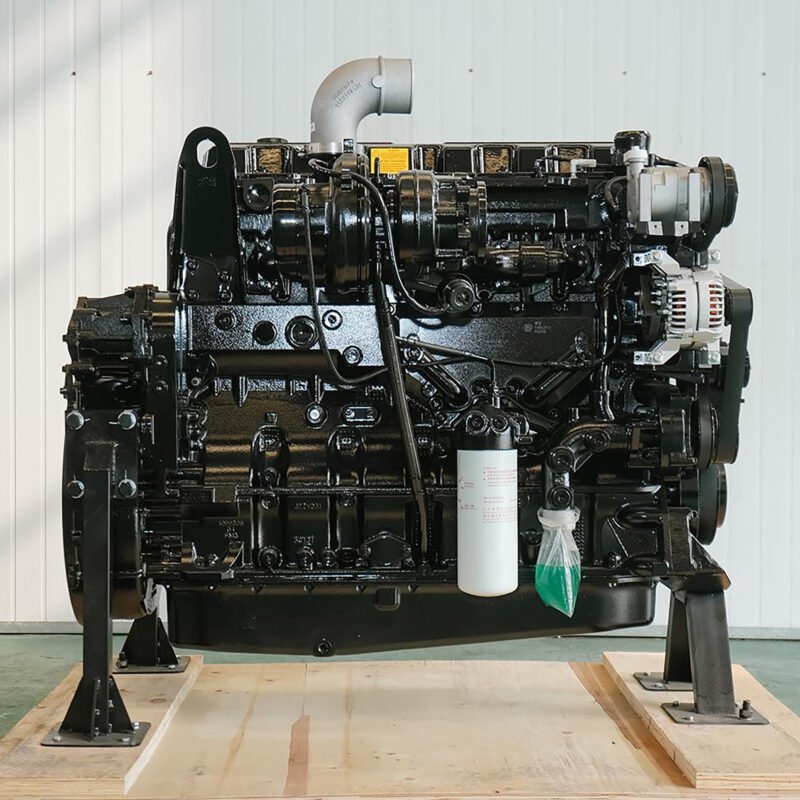
SCR, EGR, and DPF: Are They the Same Technology?
SCR, EGR, and DPF serve different purposes in diesel emission control. While SCR converts nitrogen oxides (NOx) in the exhaust, EGR reduces their formation during combustion. Meanwhile, a diesel particulate filter (DPF) captures particulate matter, particularly soot, before it leaves the exhaust system.
| Technology | Primary Pollutant | Working Method |
|---|---|---|
| SCR | NOx | Catalytic conversion using ammonia generated from DEF |
| EGR | NOx | Reduced peak combustion temperature |
| DPF | Particulate matter | Physical filtration and soot regeneration |
| DOC | CO and hydrocarbons | Catalytic oxidation |
Some engines use all four technologies. Others use a different combination to meet the required emissions limits.
A DPF also needs periodic soot regeneration under appropriate operating conditions. That maintenance process differs from the NOx conversion performed by SCR.
Importantly, SCR does not automatically eliminate the need for a DPF, and EGR does not necessarily mean a DPF must be installed. The certified configuration determines the equipment requirements.
SCR and EGR Applications in Cummins Industrial Engines
Cummins engine families include multiple generations and regional emissions configurations. A model name alone cannot confirm whether a specific engine uses SCR, EGR, both technologies, or neither.
QSB4.5: Compact Industrial Machinery
The Cummins QSB4.5 diesel engine is used in construction, agricultural, and industrial applications.
Kangjin Power lists multiple QSB4.5 industrial configurations, including engines associated with different emissions stages.
However, those emissions descriptions do not establish that every listed model includes SCR or cooled EGR.
When sourcing a QSB4.5 for a regulated project, buyers should verify the engine’s exact emission family, certification documentation, and required exhaust aftertreatment components.
QSB6.7: Construction and Industrial Equipment
The Cummins QSB6.7 diesel engine is a 6.7-liter electronically controlled platform used in various industrial applications.
Its product listing offers several ratings and refers to multiple emissions solutions.
For equipment manufacturers, the critical question is whether the proposed engine configuration meets the intended market’s emissions requirements.
Engine power, cooling package, electronic controls, and aftertreatment hardware should be reviewed together before confirming an order.
QSM11: Heavy-Duty Industrial Applications
The Cummins QSM11 diesel engine is a larger electronically controlled engine platform used in mining, construction, and other demanding applications.
Kangjin Power lists several emissions descriptions for the QSM11 family. However, actual compliance and emissions hardware must be verified for the specific engine variant.
In heavy-duty equipment, an EGR-equipped configuration may require additional attention to coolant heat rejection. An SCR-equipped configuration introduces DEF storage, dosing, and exhaust packaging requirements.
These installation differences should be evaluated alongside power output and expected engine load.
How to Choose Between SCR and EGR for Industrial Applications
Engine selection should start with the project requirements rather than a preference for one emissions technology.
Construction Machinery
Construction equipment often experiences rapid changes in load, repeated idling, and limited space around the engine.
Buyers should evaluate exhaust temperature, aftertreatment packaging, transient response, cooling requirements, and the availability of DEF at the worksite.
For machines operating under strict emissions regulations, the complete certified engine package may determine which technologies are required.
Mining and Remote Worksites
Mining applications often combine high engine loads with challenging ambient conditions.
SCR-equipped equipment requires a dependable DEF supply and suitable storage practices. Meanwhile, cooled EGR configurations increase the importance of cooling-system maintenance and heat rejection.
At remote locations, buyers should also assess service technician availability, diagnostic software access, spare parts, and downtime costs.
Industrial Generators and Pump Drives
Stationary diesel equipment may operate at constant speed, but its exhaust temperature changes with electrical or mechanical load.
SCR performance can become challenging during prolonged low-load operation because catalyst activity depends on temperature.
However, the correct solution is not always to choose EGR instead. A properly engineered stationary SCR package may include manufacturer-approved thermal management strategies.
Generator emissions requirements also differ by jurisdiction, rated power, duty classification, and installation type.
Export Engine Procurement
International buyers must consider whether an engine’s emissions certification is valid for the intended destination and application.
Kangjin Power’s diesel engine export supplier guide explains why technical documentation, engine identification, and emissions compatibility matter in cross-border purchasing.
A general claim such as “Tier 4 engine” is not a substitute for the actual engine-family certification and approved installation information.
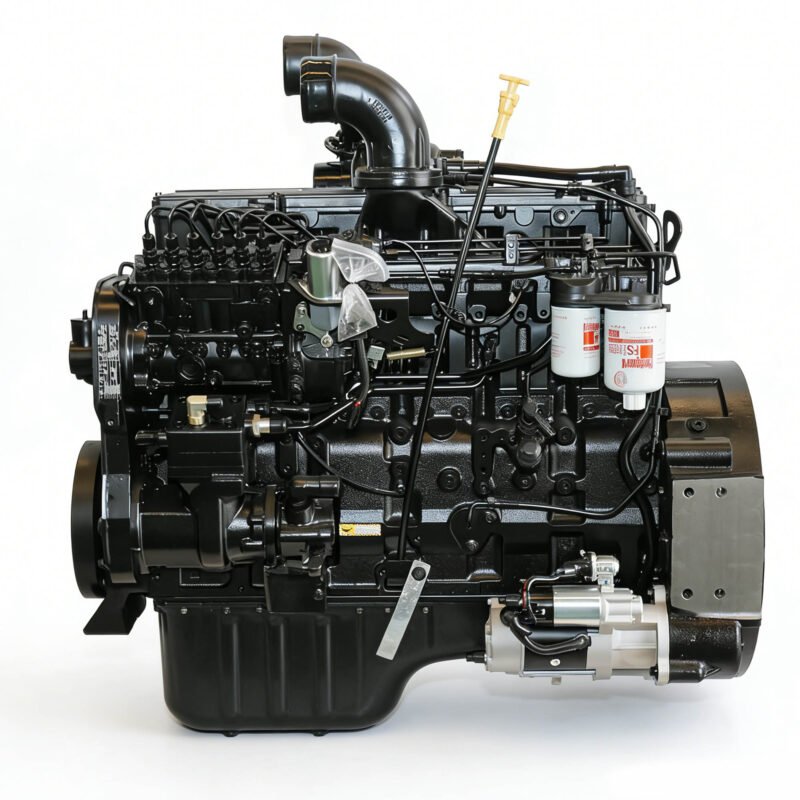
What Should Buyers Check Before Ordering an SCR or EGR Engine?
A purchase specification should identify the complete engine configuration, including emissions hardware and operational requirements.
| Procurement Item | Recommended Verification |
|---|---|
| Engine identity | Model, serial number, rating, and configuration |
| Emissions compliance | Applicable certification and destination-market requirements |
| NOx control technology | Exact SCR, EGR, or combined configuration |
| Aftertreatment hardware | Complete DOC, DPF, SCR, sensors, and dosing equipment as applicable |
| Installation requirements | Cooling capacity, exhaust routing, clearances, and electrical interfaces |
| Operating consumables | DEF specification, fuel requirements, and approved lubricants |
| Service support | Diagnostic access, maintenance procedures, spare parts, and warranty terms |
| Supplier documentation | Technical data sheets, identification records, and compliance documents |
For an OEM equipment project, also confirm whether the engine supplier provides an approved application package and integration requirements.
The supplier should distinguish between standard engine specifications and optional or market-specific emissions configurations. Unsupported claims about a particular SCR or EGR system can cause installation delays and compliance problems.
Common SCR and EGR Maintenance Problems
EGR Valve Sticking or Carbon Deposits
Carbon accumulation can interfere with EGR valve movement or restrict gas passages.
Symptoms may include unstable engine operation, power loss, or relevant ECM fault codes. However, similar symptoms can arise from intake and fuel-system problems.
Technicians should follow model-specific electrical and mechanical checks before replacing components.
EGR Cooler Leakage or Restriction
An EGR cooler transfers heat from recirculated exhaust gas to coolant. Internal leakage can affect coolant consumption and engine operation.
Restricted passages may also reduce EGR performance. Inspect the cooler according to the manufacturer’s approved testing procedures.
SCR DEF Dosing Problems
Incorrect DEF dosing can reduce NOx conversion and trigger emissions faults.
Possible causes include contaminated fluid, supply-system issues, injector deposits, sensor errors, or electronic faults.
Use the approved diagnostic system to identify the problem. Replacing the catalyst without checking dosing and sensor performance may not resolve the fault.
SCR Catalyst Temperature Problems
An SCR catalyst must operate within an effective temperature range.
Low-temperature operation may reduce NOx conversion efficiency, while excessive exhaust temperature can affect durability.
Engine loading, exhaust routing, and any upstream aftertreatment components all influence catalyst inlet conditions.
For difficult cases, technicians should compare temperature, NOx sensor data, dosing operation, and the manufacturer’s diagnostic specifications.
Conclusion
Diesel engine SCR vs EGR comparisons should begin with their different approaches to NOx control. EGR reduces NOx formation inside the engine, while SCR treats NOx downstream using a catalyst and DEF.
Both technologies offer advantages and impose different system requirements. EGR affects combustion and engine cooling, whereas SCR introduces exhaust aftertreatment hardware, DEF handling, and temperature-dependent catalyst operation.
For industrial diesel engines, the best choice is the certified configuration that meets the project’s emissions limits and operating requirements. Buyers should verify engine identification, cooling capacity, aftertreatment equipment, maintenance resources, and destination-market compliance before placing an order.
Frequently Asked Questions
What is the difference between SCR and EGR in diesel engines?
EGR reduces NOx formation during combustion by recirculating exhaust gas into the intake. SCR reduces NOx after combustion using DEF and a catalyst. Some engines use both technologies together.
Is SCR better than EGR for diesel engines?
Neither is universally better. SCR can support combustion optimization but requires DEF and suitable exhaust temperatures. EGR does not require DEF for its function but affects combustion and cooling requirements. The correct choice depends on the complete engine design.
Can a diesel engine use both SCR and EGR?
Yes. Some engines use EGR to reduce engine-out NOx and SCR to convert additional NOx in the exhaust. The combination depends on the engine’s certified emissions-control strategy.
Does an EGR diesel engine need DEF?
EGR itself does not require DEF. However, an engine equipped with both EGR and SCR will normally need DEF for its SCR system. Always verify the installed aftertreatment configuration.
Which system has lower maintenance costs, SCR or EGR?
Maintenance costs depend on engine design, operating conditions, and service intervals. SCR adds DEF-related expenses and aftertreatment components, while cooled EGR requires maintenance of its valve, cooler, and associated passages.
Need Help Selecting an Emissions-Compliant Diesel Engine?
Kangjin Power supplies Cummins diesel engines for construction machinery, industrial equipment, and power generation. Share your engine model, required power, destination market, and emissions standard with our team to discuss suitable engine configurations and available technical documentation. Contact Kangjin Power to request engine specifications and a quotation.
Technical References
- Cummins – Aftertreatment System Fundamentals – SCR components, DEF dosing, and emissions-system operation.
- Cummins – Tier 4, Stage V and Beyond – Explains cooled EGR, SCR-focused architectures, cooling requirements, and industrial applications.
- UK Government – Emission Reduction Technologies – Explains EGR’s effect on combustion temperature, NOx formation, and particulate emissions.

