
Cummins QSB4.5 Specs: HP, Torque & Dimensions

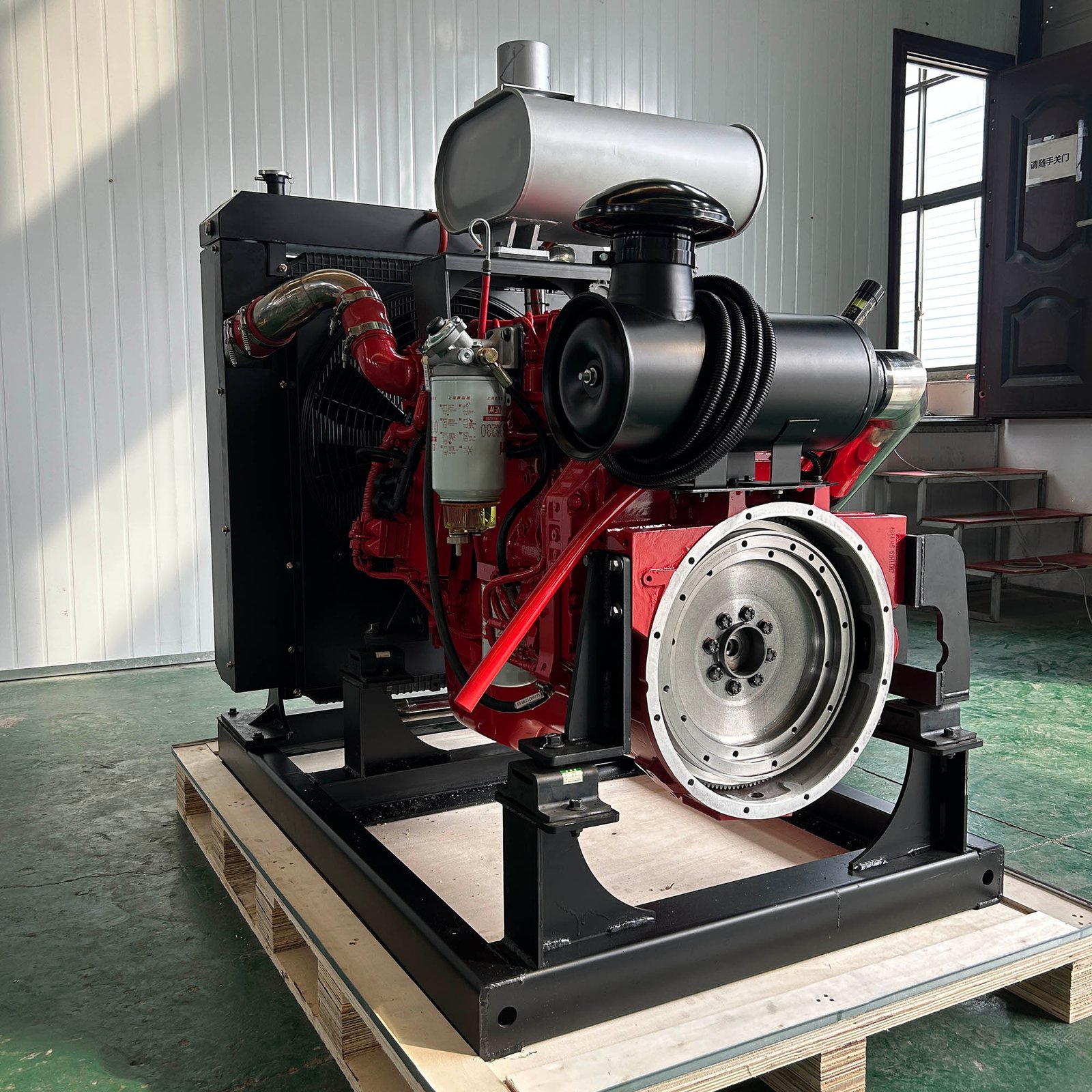
The Cummins QSB4.5 is a 4.5-liter inline four-cylinder diesel engine used across industrial equipment, pumps, generators and selected marine applications. Common Tier 3 industrial ratings are roughly 110–170 hp, with peak torque reaching about 624 N·m, while a representative industrial package measures approximately 818 × 713 × 878 mm. These figures are not universal, because QSB4.5 ratings and dimensions change with calibration, emissions generation, cooling package and application.
For that reason, engineers should treat “QSB4.5” as an engine family rather than a single fixed specification. A construction-engine version may share the same displacement with a pump or marine configuration, but the rated speed, torque curve, cooling system and installation hardware can be very different.
What Are the Main Cummins QSB4.5 Specs?
The QSB4.5 belongs to Cummins’ electronically controlled B Series platform. In widely documented Tier 3 industrial form, it uses a 4.5-liter displacement, four inline cylinders, turbocharging, charge-air cooling and high-pressure common-rail fuel injection.
A typical industrial specification looks like this:
| Specification | Typical QSB4.5 Industrial Data |
|---|---|
| Configuration | Inline 4-cylinder |
| Displacement | 4.5 L / 275 cu in |
| Power range | About 110–170 hp |
| Power range | About 82–127 kW |
| Peak torque | Up to about 624 N·m |
| Fuel system | High-pressure common rail |
| Aspiration | Turbocharged, charge-air cooled |
| Cooling | Liquid cooled |
| Engine control | Electronic |
| Typical wet weight | About 371 kg |
These values are useful as a baseline, but they should not replace the exact engine data plate or application-specific technical sheet.
Kangjin Power’s QSB4.5 diesel engine page, for example, lists several industrial variants including QSB4.5-C110-30, C110-31, C130-30 and C160-30. Those configurations cover different output and torque levels, showing why the model suffix matters when comparing engines.
Horsepower and Torque Are Calibration-Dependent
One of the most common mistakes when researching Cummins QSB4.5 specs is assuming the engine has one fixed horsepower rating.
It does not.
Cummins has offered the QSB4.5 in several calibrations, and the same basic engine can be rated differently depending on governed speed, emissions requirements and duty cycle.
Representative industrial ratings include:
| Rated Power | Rated Speed | Peak Torque |
|---|---|---|
| 170 hp / 127 kW | 2500 rpm | About 622 N·m |
| 160 hp / 119 kW | 2500 rpm | About 624 N·m |
| 160 hp / 119 kW | 2400 rpm | About 624 N·m |
The peak horsepower figure alone does not tell an engineer whether the engine is suitable for a machine.
For hydraulic equipment, pumps and industrial power units, the shape of the torque curve is often more important. An engine that maintains strong torque at working speed may perform better than a higher-horsepower engine operating outside its ideal rpm range.
When comparing versions, check:
- rated power;
- rated engine speed;
- peak torque;
- torque rise;
- continuous or intermittent duty;
- accessory load;
- altitude derating;
- cooling-system capacity.
This matters especially when replacing an existing engine. A similar horsepower number does not guarantee similar field performance.
How Large Is a Cummins QSB4.5?
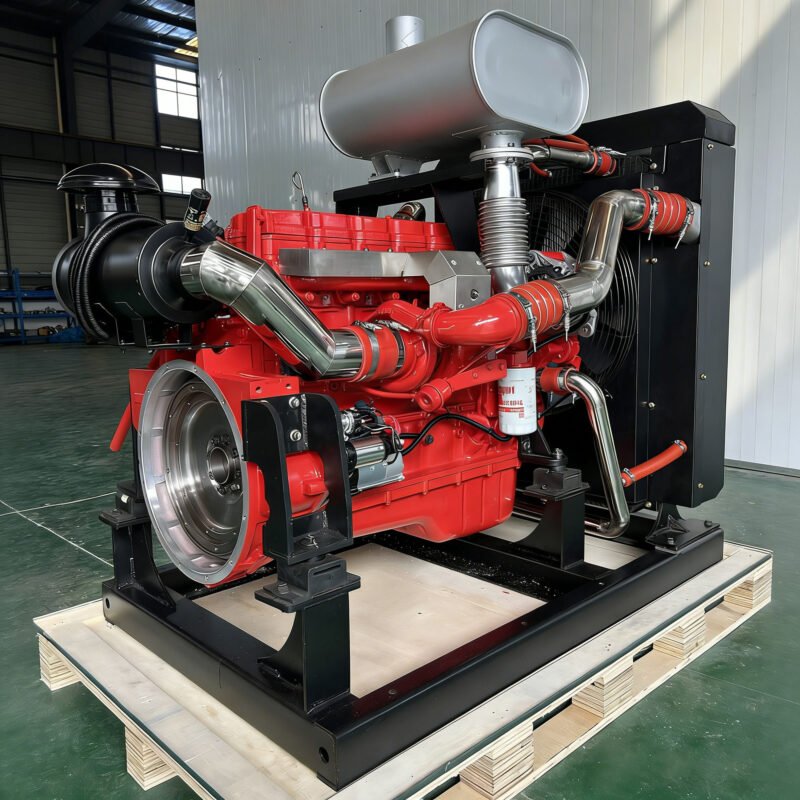
A representative Tier 3 industrial QSB4.5 measures approximately 818 mm long, 713 mm wide and 878 mm high. Typical wet weight is around 371 kg.
Those figures are useful for preliminary planning, but they should not be treated as final installation dimensions.
Radiators, charge-air coolers, fan assemblies, exhaust systems, air cleaners and accessory drives can add substantial size to the complete engine package. Mounting brackets and flywheel housing options also differ between equipment manufacturers.
For actual installation work, engineers should verify:
- overall package length;
- fan-to-flywheel distance;
- engine mount position;
- flywheel housing size;
- exhaust outlet orientation;
- intake position;
- service clearance around filters;
- ECM and wiring harness location.
This is especially important during repower projects, where a few centimeters of interference can create major fabrication work.
Why Do Some QSB4.5 Bore and Stroke Figures Differ?
This is another area where online specification sheets can appear contradictory.
Some Cummins Tier 3 QSB4.5 documentation lists a bore and stroke of approximately 102 × 137 mm.
Other later QSB4.5-based configurations list approximately 107 × 124 mm.
That difference usually reflects engine-generation or application changes rather than a simple data error.
The same family designation may continue across revised internal architecture, emissions packages or product generations. For this reason, bore and stroke should always be checked against the exact CPL, serial number or technical specification sheet.
This point is particularly relevant for marine configurations. Kangjin Power’s QSB4.5 marine engine page lists a different bore-and-stroke combination from some earlier industrial documentation.
For overhaul, piston, liner, crankshaft or gasket selection, the family name alone is therefore not enough.
How the QSB4.5 Fuel System Affects Performance
The QSB4.5 uses electronically controlled high-pressure common-rail injection in widely documented industrial versions.
This system allows fuel pressure and injection timing to be controlled independently of basic mechanical pump timing.
In practical terms, that improves:
- fuel-metering accuracy;
- cold starting;
- transient response;
- combustion consistency;
- diagnostics;
- engine protection functions.
Earlier-generation common-rail QSB4.5 engines operate at injection pressures reaching roughly 1,600 bar.
High injection pressure produces finer fuel atomization, which improves air-fuel mixing inside the combustion chamber. This helps the engine generate useful torque without relying on excessive displacement.
Turbocharging and charge-air cooling add another layer of performance.
The turbocharger increases the mass of air entering the cylinders. The charge-air cooler then reduces intake temperature before combustion, increasing air density and helping control thermal load.
For heavy-duty equipment, these systems matter most under changing load rather than at a steady laboratory operating point.
A loader, excavator or pump set repeatedly moves between low load and high load. Fuel control and turbo response therefore influence usable performance as much as the headline rated horsepower.
Cummins QSB4.5 Applications
The QSB4.5 is commonly used where equipment requires moderate displacement, compact packaging and strong mid-range torque.
Typical applications include:
- excavators;
- wheel loaders;
- agricultural equipment;
- compressors;
- industrial power units;
- water pumps;
- generator sets;
- marine auxiliary equipment.
Its four-cylinder architecture makes it more compact than many six-cylinder engines while still covering a broad industrial power range.
QSB4.5 for Water Pump Applications
Pump applications place different demands on an engine than mobile equipment.
A pump engine may spend long periods operating close to one governed speed. Cooling capacity, fuel delivery stability and continuous-duty capability become particularly important.
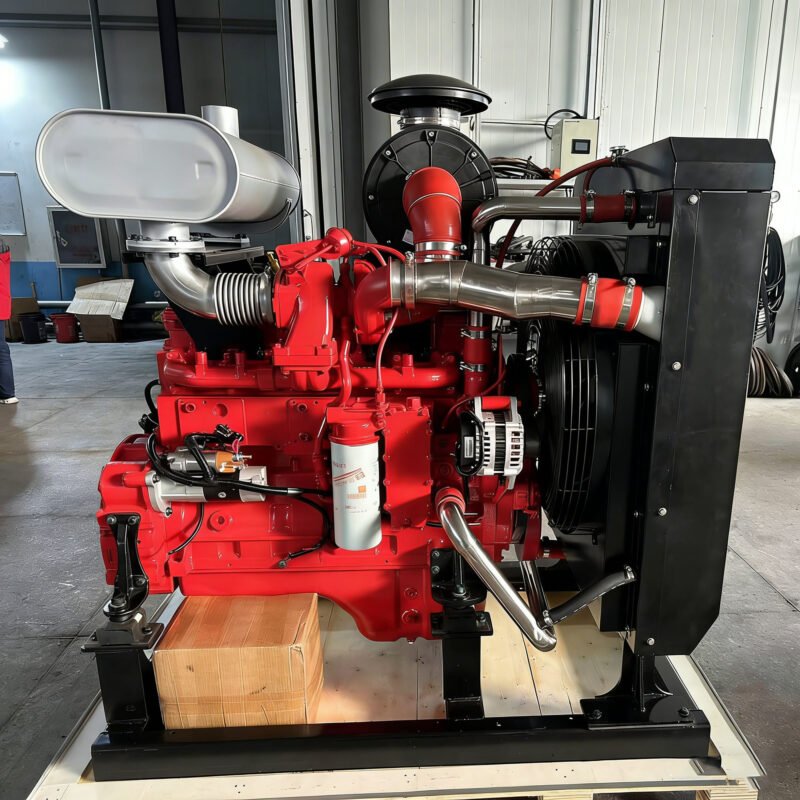
Kangjin Power’s QSB4.5 water pump engine is configured for applications such as municipal water supply, irrigation, mine dewatering and firefighting systems.
The listed pump configuration uses common-rail injection, turbocharging, aftercooling and liquid cooling.
When matching a QSB4.5 to a pump, engineers should not simply choose the highest horsepower option.
The engine rating must be compared with the pump’s absorbed power at the expected duty point.
For centrifugal pumps, required shaft power changes with flow, head and operating speed. A pump that appears acceptable at nominal conditions can overload the engine if the actual system resistance moves the operating point.
Engine selection should therefore include:
- pump curve;
- required rpm;
- maximum absorbed power;
- expected ambient temperature;
- altitude;
- radiator capacity;
- continuous operating duration.
A small power reserve is generally desirable because field conditions rarely match test-bench conditions exactly.
QSB4.5 for Marine Applications
Marine engines require a different installation philosophy.
Cooling water supply, exhaust configuration, corrosion exposure and engine-room ventilation all affect system reliability.
Kangjin Power’s QSB4.5 marine engine uses application-specific marine arrangements rather than simply adapting a standard industrial engine without modification.
Marine versions may include:
- heat-exchanger cooling;
- wet exhaust systems;
- marine-rated accessories;
- corrosion-resistant components;
- application-specific controls.
This is why an industrial QSB4.5 should not automatically be substituted into a marine installation.
Even if rated power appears similar, the cooling circuit, exhaust backpressure allowance and accessory package may be completely different.
How to Read Cummins QSB4.5 Specs Correctly
When evaluating a QSB4.5, the correct sequence is to identify the application first and the engine rating second.
Start with the exact model suffix or serial number.
Then verify:
- rated power and rpm;
- peak torque and torque curve;
- emissions generation;
- fuel-system configuration;
- cooling arrangement;
- flywheel and housing;
- mounting dimensions;
- intake and exhaust layout.
This approach is more reliable than comparing engines only by displacement and horsepower.
It also helps avoid a common replacement-engine problem: purchasing an engine that produces enough power but cannot be integrated into the existing machine without major changes.
For users comparing QSB4.5 with other industrial diesel engines, the broader diesel engine buying guide explains why duty cycle, torque characteristics, emissions requirements and installation constraints should be checked before selecting an engine.
In real equipment projects, those factors usually determine suitability more accurately than rated horsepower alone.
FAQ
How much horsepower does a Cummins QSB4.5 have?
Common Tier 3 industrial versions are rated at roughly 110–170 hp. Other application-specific QSB4.5 configurations may use different ratings.
What is the peak torque of a Cummins QSB4.5?
Some industrial QSB4.5 ratings produce approximately 624 N·m of peak torque. Exact torque depends on calibration and engine speed.
What is the displacement of the QSB4.5?
The Cummins QSB4.5 has a nominal displacement of 4.5 liters, or about 275 cubic inches.
What are the dimensions of a QSB4.5 engine?
A representative Tier 3 industrial version is approximately 818 × 713 × 878 mm. Complete package dimensions vary with radiator, fan, exhaust and accessory configuration.
Is the Cummins QSB4.5 common rail?
Yes. Widely documented QSB4.5 industrial versions use electronically controlled high-pressure common-rail fuel injection.
Can a QSB4.5 run a water pump?
Yes. QSB4.5 engines are used for industrial pumping, irrigation, firefighting and dewatering systems. The engine must be matched to the pump’s rpm and absorbed-power requirements.
Can an industrial QSB4.5 be used as a marine engine?
Not without checking the complete configuration. Marine versions use application-specific cooling, exhaust and accessory arrangements, so an industrial engine is not automatically interchangeable with a marine QSB4.5.
Reference Sources
- Cummins — QSB4.5 Tier 3 Engine Specifications
- Cummins — QSB Engine Family Technical Data
- Cummins — QSB4.5 Tier 3 Product Documentation
- Kangjin Power — QSB4.5 Diesel Engine
- Kangjin Power — QSB4.5 Water Pump Engine
- Kangjin Power — QSB4.5 Marine Engine

