
Cummins 6CTAA8.3 Specs: Power, Torque, Fuel System & Applications

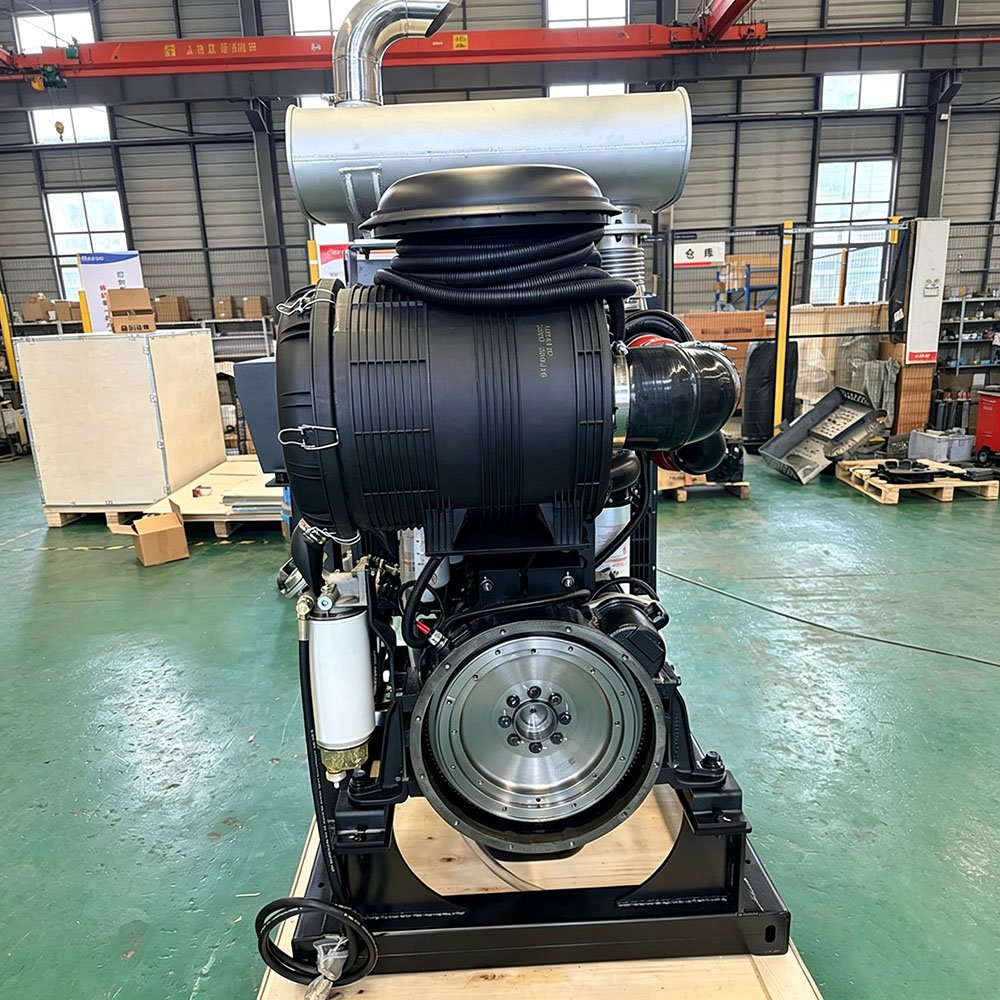
The Cummins 6CTAA8.3 is an 8.3-liter inline six-cylinder diesel engine designed for heavy-duty industrial equipment, construction machinery and stationary power applications. Depending on the exact model and calibration, rated output is roughly 160–194 kW (215–260 HP) in commonly used industrial versions. The engine uses a 114 mm bore and 135 mm stroke, turbocharging and air-to-air charge cooling, with peak torque on many industrial configurations delivered around 1,400–1,500 rpm.
One important point for buyers is that 6CTAA8.3 is a family designation, not a single fixed specification. Power rating, torque, governed speed, injection equipment, emissions configuration and accessory layout can vary by model and CPL. A C215 used in construction equipment should not be treated as mechanically identical to a P250 configured for a stationary pump.
Cummins 6CTAA8.3 Specifications at a Glance
| Specification | Typical 6CTAA8.3 Configuration |
|---|---|
| Engine type | Inline 6-cylinder, 4-stroke diesel |
| Displacement | 8.3 L |
| Bore × stroke | 114 × 135 mm |
| Aspiration | Turbocharged and air-to-air charge cooled |
| Cooling | Liquid cooled |
| Fuel injection | Direct injection |
| Fuel system | Mechanical inline pump on many industrial versions |
| Rated output | Approximately 160–194 kW depending on model |
| Typical rated speed | 1,500–2,200 rpm depending on application |
| Common applications | Construction equipment, industrial pumps, mining equipment and stationary machinery |
These figures should be used as a family-level reference only. For an OEM installation or replacement project, the engine data sheet and CPL should always be checked before ordering.
What Does 6CTAA8.3 Mean?
The engine designation gives useful information about its configuration.
The “6” refers to the six-cylinder arrangement, while “C” identifies the Cummins C Series platform. The 8.3 indicates the approximate displacement in liters.
The “TAA” portion is particularly important:
- T — Turbocharged
- A — Aftercooled
- A — Air-to-air charge cooling
This distinguishes many 6CTAA8.3 configurations from 6CTA8.3 variants that may use a different charge-air cooling arrangement.
For buyers comparing closely related engines, the 6CTA8.3 diesel engine is therefore worth reviewing alongside the 6CTAA8.3 rather than assuming the two designations are interchangeable.
Common 6CTAA8.3 Power and Torque Ratings
The most useful specification for equipment engineers is not displacement alone. Rated speed and torque characteristics determine how the engine behaves once connected to a transmission, hydraulic system or pump.
Representative industrial configurations include:
| Model | Rated Power | Peak Torque | Typical Peak-Torque Speed |
|---|---|---|---|
| 6CTAA8.3-C215 | 160 kW / 215 HP @ 2200 rpm | about 980 N·m | 1500 rpm |
| 6CTAA8.3-C240 | 179 kW / 240 HP @ 2200 rpm | about 1040 N·m | 1400 rpm |
| 6CTAA8.3-C260 | 194 kW / 260 HP @ 2200 rpm | about 1100 N·m | 1400 rpm |
| 6CTAA8.3-P250 | 183 kW / 250 HP @ 1500 rpm | 1165 N·m | 1500 rpm |
These ratings illustrate why the model suffix matters.
A C-series industrial calibration may operate at 2,200 rpm to provide the power characteristics required by construction machinery. A pump-drive engine can instead be governed at 1,500 rpm because the driven equipment requires a stable shaft speed.
For this reason, buyers should avoid selecting an engine solely because the horsepower number appears correct.
Why Torque Matters More Than Maximum Horsepower in Some Equipment
Horsepower describes the rate at which an engine can perform work, but many heavy machines depend heavily on torque available below rated speed.
Consider a wheel loader entering a dense pile of aggregate. Engine speed can fall sharply as hydraulic demand increases. An engine with a strong torque rise can continue supplying useful mechanical power without requiring the operator to keep the engine at maximum rated speed.
The same principle applies to crushers, drilling equipment, pumps and other machinery that experiences sudden changes in load.
When evaluating a 6CTAA8.3, engineers should therefore compare:
- rated power and rated speed;
- maximum torque and the rpm at which it occurs;
- torque rise below rated speed;
- governor characteristics;
- the power absorption curve of the driven equipment.
Two 250 HP engines can behave very differently if one develops its useful torque much higher in the rpm range.
Fuel System: Do Not Assume Every 6CTAA8.3 Is Common Rail
One specification that often causes confusion is the fuel system.
Many classic 6CTAA8.3 industrial engines use a mechanical inline injection pump with a mechanical or electronic governor. Depending on the configuration, pump systems such as the P7100 or other regional production variants may be used.
This architecture is one reason the engine remains attractive for equipment operating in locations where simple servicing and mechanical familiarity are important.
It would therefore be inaccurate to describe the entire 6CTAA8.3 family as a high-pressure common-rail engine.
When replacing an existing engine, confirm:
- injection pump type;
- governor type;
- wiring and shutdown interface;
- fuel-line arrangement;
- throttle-control method;
- applicable emissions configuration.
These details can matter as much as horsepower when fitting an engine into an existing machine.
6CTAA8.3-P250 for Industrial Pump Applications
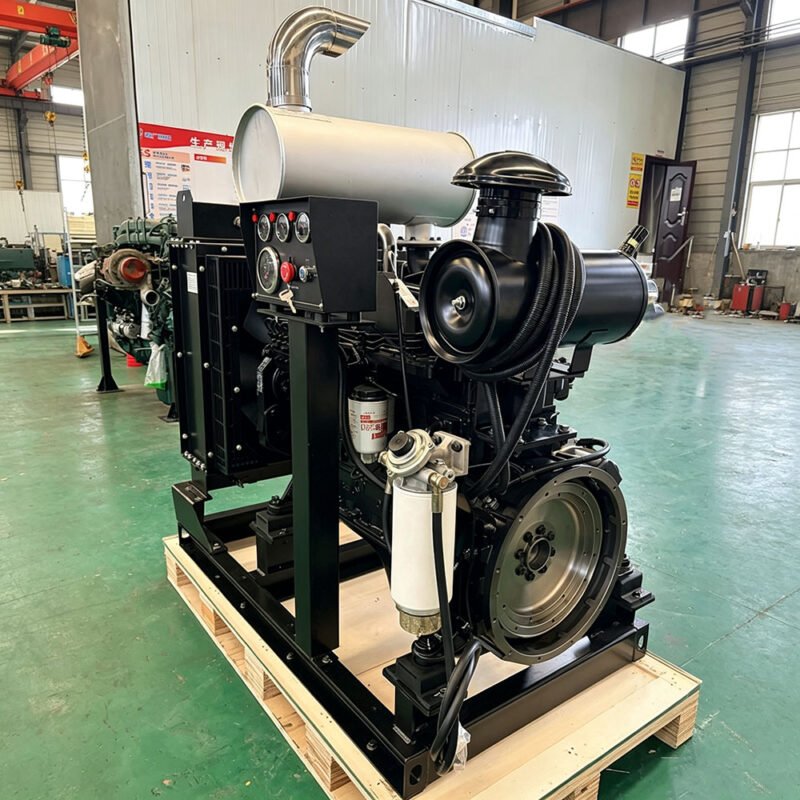
A good example of application-specific calibration is the 6CTAA8.3-P250 pump-drive diesel engine.
This configuration is rated at approximately 183 kW (250 HP) at 1,500 rpm and develops 1165 N·m of torque at 1,500 rpm. Rather than being optimized for the changing engine speeds common in mobile construction equipment, it is designed around a stable operating point suitable for stationary pump systems.
That makes it relevant to applications such as:
- fire-water pump packages;
- mine dewatering systems;
- municipal drainage pumps;
- irrigation systems;
- industrial water-transfer equipment.
For a pump package, engine selection cannot be based on horsepower alone. The engineer must compare the pump power curve at the intended operating speed with the engine’s available continuous output.
Cooling capacity, ambient temperature, altitude and auxiliary loads also need to be included in the calculation.
Engine Construction and Serviceability
The 8.3-liter C Series was developed around a heavy-duty cast-iron block and a relatively long 135 mm stroke. This architecture favors the type of low-speed torque expected from industrial diesel engines.
Certain industrial 6CTAA8.3 configurations also use replaceable cylinder liners, which can simplify overhaul work compared with an engine that requires extensive block machining after severe bore wear.
However, service specifications should still be checked against the exact engine serial number or CPL. Components that appear interchangeable across the 8.3-liter family may differ in:
- piston specification;
- injectors;
- turbocharger;
- camshaft;
- fuel pump calibration;
- cooling arrangement;
- flywheel housing;
- accessory drives.
For maintenance teams, the engine name alone is therefore not enough to identify replacement parts.
OEM Integration: What to Check Beyond Engine Power
For an OEM or repower project, purchasing a 6CTAA8.3 should begin with the driven equipment rather than with the engine catalog.
Flywheel and Housing
Confirm the SAE flywheel and flywheel-housing specification before matching the engine with a transmission, gearbox or pump coupling.
A compatible horsepower rating does not guarantee that the mechanical interface will fit.
Cooling Capacity
The radiator and fan system must reject enough heat at full engine load under the site’s maximum ambient temperature. Enclosed machinery compartments require particular attention because restricted airflow can quickly raise coolant and intake temperatures.
Intake and Exhaust Restriction
Poorly designed intake ducting or excessive exhaust backpressure can prevent the engine from producing its rated output even when the engine itself is correctly specified.
Mounting and Packaging
Check overall dimensions, center of gravity, mount locations, oil-pan clearance and service access.
Equipment builders should leave enough space to replace filters, belts and other routine service components without removing major surrounding structures.
Altitude
Turbocharging reduces the performance loss associated with altitude, but it does not eliminate derating under every operating condition.
For high-altitude installations, use the manufacturer’s altitude-derating data rather than assuming full sea-level output.
6CTAA8.3 vs. 6CTA8.3: Why the Exact Model Matters
The 6CTA8.3 and 6CTAA8.3 share the same basic 8.3-liter displacement, six-cylinder layout and 114 × 135 mm bore-and-stroke dimensions, but buyers should not select parts or complete engines based on displacement alone.
Differences can include charge-air cooling configuration, fuel-system calibration, rated speed, torque curve and installation hardware.
This matters particularly when replacing an engine already installed in a loader, pump package or industrial machine.
A replacement engine should ideally be checked against:
- full engine model;
- CPL;
- engine serial number;
- rated horsepower and rpm;
- torque requirement;
- flywheel and housing;
- fuel and governor system;
- emissions requirement;
- cooling package;
- application duty cycle.
This approach reduces the risk of purchasing an engine that looks correct on paper but requires expensive modification during installation.
How Application Changes the Correct 6CTAA8.3 Specification
There is no universally “best” 6CTAA8.3 configuration.
For construction machinery, low-speed torque, transient response, and compatibility with hydraulic loads are usually the primary concerns.
Stationary pump applications place greater emphasis on operating speed and matching the engine output to the pump’s absorbed power curve.
In mining and remote industrial operations, serviceability, filtration, and parts availability may be more important than maximum rated horsepower.
This is why OEM buyers should send application information with an RFQ rather than simply requesting a “Cummins 6CTAA8.3 engine.”
Useful RFQ information includes:
- equipment type;
- required power;
- operating rpm;
- maximum torque demand;
- operating hours per day;
- ambient temperature;
- altitude;
- target country;
- required emissions level;
- existing engine model or CPL;
- required SAE housing and flywheel.
Providing these details allows the supplier to determine whether the required engine is a construction configuration, pump-drive configuration or another industrial calibration.
What Affects the Price of a 6CTAA8.3 Engine?
The purchase price depends on much more than engine displacement.
Major variables include the exact model, configuration, emissions requirements, included accessories, cooling package and whether the engine is supplied for replacement or OEM installation.
A quotation should clearly state whether items such as the starter, alternator, filters, flywheel housing, control system and wiring are included.
Buyers comparing quotations can review our diesel engine price guide for a broader explanation of how horsepower, emissions equipment, accessories and application requirements affect industrial engine cost.
Comparing two quotations without checking the supplied configuration can create a misleading price difference. A lower quotation may simply contain fewer accessories or a different emissions package.
FAQ
What is the displacement of the Cummins 6CTAA8.3?
The Cummins 6CTAA8.3 has a displacement of approximately 8.3 liters, with a bore of 114 mm and stroke of 135 mm.
How much horsepower does a 6CTAA8.3 produce?
Output depends on the exact model. Common industrial versions range from approximately 215 HP to 260 HP, although other calibrations exist for different applications.
What is the difference between 6CTA8.3 and 6CTAA8.3?
Both belong to the 8.3-liter C Series family, but the additional designation relates to the charge-air cooling configuration. Specific fuel systems, ratings and installation components can also differ by model.
Is the Cummins 6CTAA8.3 common rail?
Many traditional 6CTAA8.3 industrial configurations are not common rail. They use mechanical inline fuel-injection pumps, sometimes combined with electronic governing. The exact fuel system should be checked against the engine model and CPL.
What is the 6CTAA8.3-P250 rated power?
The 6CTAA8.3-P250 pump-drive configuration is rated at approximately 183 kW (250 HP) at 1,500 rpm, with torque of approximately 1165 N·m at 1,500 rpm.
Is the 6CTAA8.3 suitable for construction machinery?
Yes. Industrial variants of the 6CTAA8.3 have been used in construction and other heavy machinery where strong low-speed torque and heavy-duty operation are required. The correct rating must still be matched to the machine’s hydraulic or drivetrain requirements.
What information is needed when ordering a replacement 6CTAA8.3?
Provide the complete engine model, CPL, engine serial number, rated power and rpm, application, flywheel housing requirements and destination-market emissions requirements whenever possible. These details are more reliable than ordering by displacement or horsepower alone.
Final Selection Advice
The most important Cummins 6CTAA8.3 specs are not simply 8.3 liters and 215–260 HP. For an OEM or replacement project, rated speed, peak torque, fuel-system configuration, CPL, mechanical interface and operating duty determine whether the engine will actually work in the machine.
Before ordering, match the engine data sheet to the driven equipment and confirm the exact configuration with the supplier. This is especially important when replacing an existing 6CTA8.3 or 6CTAA8.3, because engines within the same displacement family can have significantly different calibrations and installation requirements.

