
Marine Diesel Engine Duty Ratings: M1, M2, M3, M4 & M5 Explained

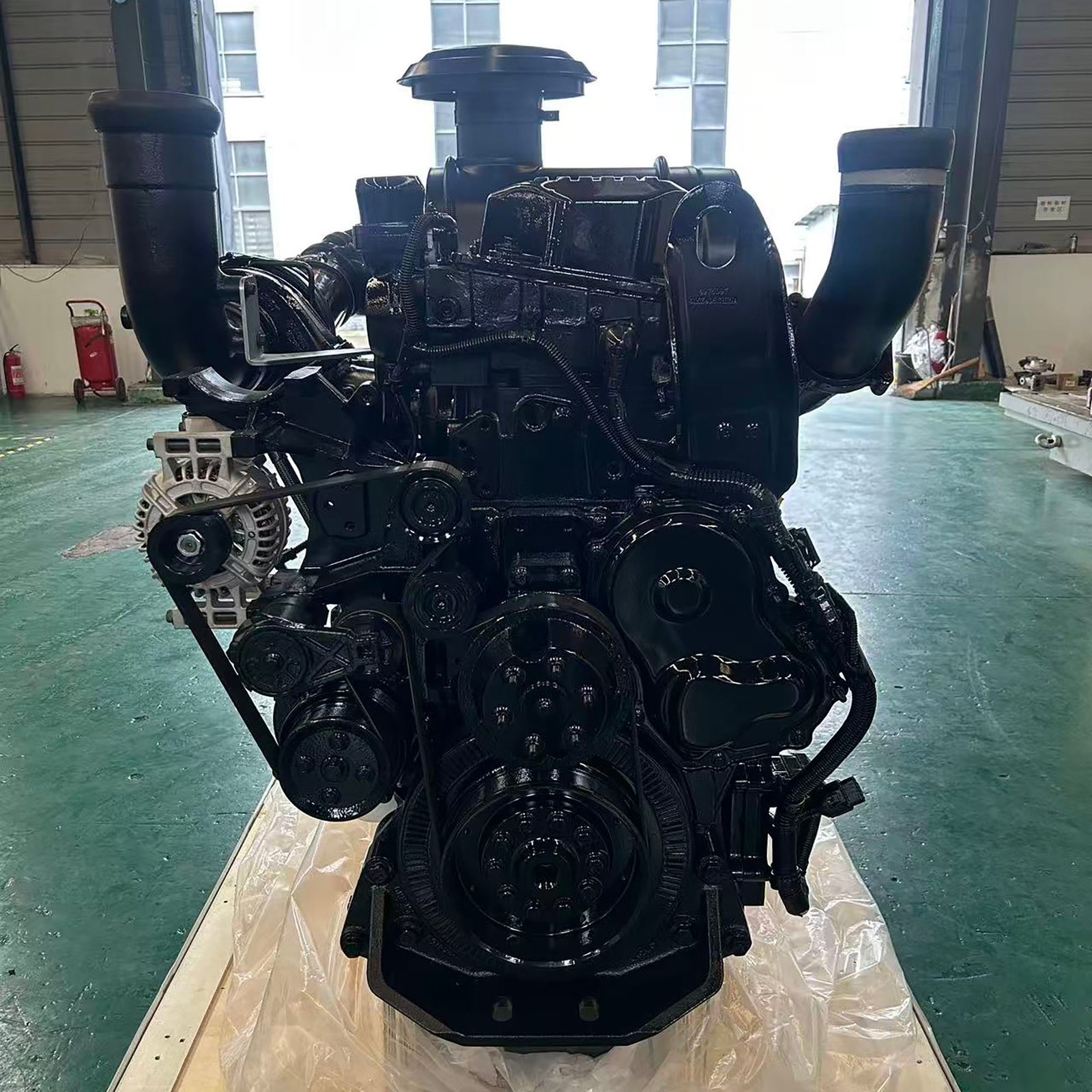
Marine diesel engine duty ratings describe how heavily and how often a propulsion engine may operate at its declared power. In John Deere’s M1–M5 classification, M1 covers continuous, high-load service, while M5 is intended for substantially lighter, intermittent operation. The intermediate ratings specify progressively lower load factors and shorter permitted periods at full power. Choosing the correct rating requires checking annual running hours, full-power duration, vessel duty cycle, and the manufacturer’s approved engine specification.
For shipowners and marine equipment buyers, duty rating can be more important than peak horsepower alone. Two engines with similar displacement may offer different rated outputs because their permissible operating loads differ. However, the M1–M5 terminology is manufacturer-specific; Cummins uses its own marine duty classifications rather than directly assigning every marine engine an M1–M5 rating.
What Do Marine Diesel Engine Duty Ratings Mean?
A marine duty rating defines the operating conditions for which an engine’s published power output is intended. It helps match engine performance and durability to a vessel’s actual work pattern.
The rating considers how frequently the engine operates, how much load it carries, and how long it may run at full power.
For example, a displacement-hull trawler pulling fishing gear for extended periods places a different demand on its propulsion engine than a recreational boat making occasional high-speed trips.
Although both vessels may require similar peak shaft power, their engines should not necessarily use the same duty rating.
Why Duty Rating Is Different from Horsepower
Horsepower or kilowatt output measures the engine’s declared power at specified conditions. Duty rating establishes the operating profile for which that power is approved.
A manufacturer may publish several power ratings for one engine platform. Higher-output versions may have tighter restrictions on full-load operation or annual usage.
Therefore, selecting the highest advertised horsepower without reviewing the duty classification can produce an unsuitable propulsion package.
Marine Diesel Engine M1–M5 Duty Ratings Compared
John Deere’s marine selection guidance provides the following M1–M5 classifications for propulsion engines.
| Rating | Typical Load Factor | Typical Annual Operation | Permitted Full-Power Operation |
|---|---|---|---|
| M1 | Greater than 65% | Unrestricted | Uninterrupted |
| M2 | Up to 65% | 3,000–5,000 hours | Up to 16 hours in every 24 hours |
| M3 | Up to 50% | 2,000–4,000 hours | Up to 4 hours in every 12 hours |
| M4 | Below 40% | 1,000–3,000 hours | Up to 1 hour in every 12 hours |
| M5 | Below 35% | Up to 1,000 hours | Up to 30 minutes in every 8 hours |
Source: John Deere marine propulsion rating definitions. The figures describe John Deere’s classification guidelines and should not be applied as universal limits to other engine manufacturers.
M1: Continuous Marine Propulsion Duty
M1 is intended for demanding propulsion applications that may require uninterrupted operation at full rated power.
John Deere defines this rating for engines with load factors above 65% and unrestricted annual operating hours.
Typical vessel applications include:
- Long-distance tugboats and towboats.
- Fishing trawlers and draggers.
- Commercial displacement-hull fishing vessels.
- Other propulsion applications requiring extended high-load operation.
An M1-rated engine is suitable for applications where sustained propulsion demand takes priority over maximum power density.
However, M1 does not eliminate maintenance requirements or permit operation outside the engine’s approved temperature, lubrication, or installation limits.
M2: Heavy Commercial Duty
M2 supports commercial vessels that operate for long periods but do not continuously require maximum rated power.
Under John Deere’s guidelines, M2 applications typically accumulate 3,000–5,000 operating hours annually, with a load factor up to 65%.
Full-power operation is limited to 16 hours within each 24-hour period. The engine must operate at or below the specified cruising speed during the remaining time.
Suitable applications may include short-range towboats, long-distance ferries, larger passenger vessels, and certain fishing boats.
Compared with M1, the M2 duty profile allows more variation in engine loading.
M3: Medium Commercial Duty
M3 is designed for vessels with moderate average load factors and limited full-power periods.
John Deere specifies typical annual operation of 2,000–4,000 hours and a load factor up to 50%.
Full power may be used for no more than four hours in each 12-hour operating period. The engine operates at or below the specified cruising speed for the remainder.
Possible applications include coastal fishing boats, offshore crew vessels, research boats, short-route ferries, and dinner cruise boats.
For example, a vessel that regularly alternates between high-speed transfers and lower-speed operation may fit this category, provided its actual load profile meets the manufacturer’s limits.
M4: Light Commercial Duty
M4 covers comparatively lighter operating profiles where the engine reaches full rated output only occasionally.
John Deere describes typical annual usage of 1,000–3,000 hours, with load factors below 40%.
Full power is limited to one hour in each 12-hour period.
Applications can include pilot boats, diving vessels, charter fishing boats, inshore crew boats, and certain planing-hull commercial fishing vessels.
An M4 rating should not be selected for continuous trawling or towing simply because its peak power appears adequate.
M5: High Output and Intermittent Duty
M5 is intended for lighter and more intermittent propulsion use.
John Deere’s M5 guidance covers typical annual operating time up to 1,000 hours and load factors below 35%.
Full-power operation is limited to 30 minutes within every eight hours. Remaining operation must stay at or below the specified cruising speed.
Applications include recreational vessels and certain qualifying light-duty commercial or specialized boats.
M5 allows a high-output operating profile, but it does not provide the sustained full-load capability required by heavy commercial vessels.
In addition, commercial eligibility and warranty conditions must follow the exact engine manufacturer’s terms rather than an assumed industry-wide rule.
How Is Marine Engine Load Factor Calculated?
Load factor describes the engine’s average operating demand over a defined period.
For its marine ratings, John Deere expresses load factor using the fuel consumed during operation compared with the fuel that would have been consumed at full power over the same period.
The calculation is:
Load Factor (%) = Actual Fuel Consumed / (Full-Power Fuel Consumption Rate × Operating Hours) × 100
Example: Calculating a Vessel’s Load Factor
Assume a marine engine consumes 180 liters of diesel during an eight-hour operating period. Its published full-power consumption is 60 liters per hour under the relevant conditions.
The full-power fuel consumption over eight hours would be:
60 × 8 = 480 liters
Therefore:
Load Factor = 180 / 480 × 100 = 37.5%
This illustrative fuel-based load factor is 37.5%.
However, a load factor of 37.5% does not automatically establish an M4 rating. The buyer must also assess annual hours, full-power duration, vessel application, and the engine’s approved rating.
Why Annual Hours Alone Are Not Enough
Consider two vessels that each operate 2,000 hours per year.
One runs at moderate load for most of its working hours. The other frequently operates near maximum power while towing heavy equipment.
Although their annual hours match, their engine loading patterns differ significantly.
As a result, both load factor and full-power duration must be reviewed before selecting a propulsion engine.
Are M1–M5 Ratings the Same as Cummins Marine Duty Ratings?
No. John Deere’s M1–M5 ratings and Cummins’ marine duty classifications describe similar operating considerations, but they are not identical systems.
Cummins publishes marine propulsion ratings under names including Continuous Duty, Heavy Duty, Medium Continuous, Intermittent Duty, and High Output.
These classifications also define intended load factors and restrictions on full-power operation.
| Cummins Duty Rating | Published Load Factor | Full-Power Operating Guideline |
|---|---|---|
| Continuous Duty (CON) | 70–90% | Intended for continuous high-load applications |
| Heavy Duty (HD) | 60–75% | Up to 10 hours in every 12 hours |
| Medium Continuous (MCD) | 40–60% | Up to 6 hours in every 12 hours |
| Intermittent Duty (INT) | 20–40% | Up to 2 hours in every 8 hours |
| High Output (HO) | 10–30% | Up to 1 hour in every 8 hours |
These Cummins definitions are provided for comparison only. They do not establish a direct M1-to-CON, M2-to-HD, or other one-to-one equivalence.
Cummins also specifies restrictions for reduced-power operation under several ratings. In particular, its High Output category is intended for recreational vessel use, with commercial application subject to important warranty restrictions.
Therefore, buyers considering a Cummins marine engine must use the rating assigned to the actual engine model and calibration.
How to Select the Right Marine Diesel Engine Duty Rating
The selection process should begin with the vessel’s operating profile rather than its desired maximum speed.
Step 1: Identify the Vessel’s Main Duty
Determine whether the engine will power a displacement-hull fishing vessel, tugboat, ferry, patrol craft, passenger boat, or recreational vessel.
Also establish whether the engine is intended for main propulsion or auxiliary equipment.
A propulsion rating does not automatically apply to marine generator sets, hydraulic power packs, or thruster drives.
Step 2: Estimate Annual Running Hours
Use operating logs or projected schedules to estimate yearly engine hours.
For new vessels, consider the number of trips, voyage duration, operating days, and expected seasonal use.
If the vessel has an unpredictable work schedule, select a rating with appropriate operating flexibility rather than relying on a best-case usage estimate.
Step 3: Determine Full-Power Duration
Estimate how long the engine will operate at its rated output during each working period.
For example, a vessel may run near maximum speed when leaving port but spend most of the voyage at an economical cruising speed.
Another vessel may experience sustained high load while towing or pushing cargo.
These operating patterns require different rating evaluations even when both vessels use engines of similar nominal power.
Step 4: Calculate Required Propulsion Power
Engine power must match the vessel’s resistance, speed target, propeller characteristics, and transmission losses.
Marine propulsion engineers typically review hull resistance, propeller curves, reduction gear ratio, and required shaft power across the speed range.
Do not assume that the highest advertised engine output can be used continuously.
The approved duty rating, gearbox limits, propeller absorption, and cooling capacity must all remain compatible.
Step 5: Check Environmental and Installation Conditions
Engine performance and reliability depend on more than the nominal rating.
Review engine-room ventilation, seawater temperature, heat exchanger capacity, exhaust restriction, operating altitude, and installation layout.
Furthermore, marine engines require suitable corrosion protection, cooling-water arrangements, and service access.
Marine Engine Applications: Matching Rating to Vessel Type
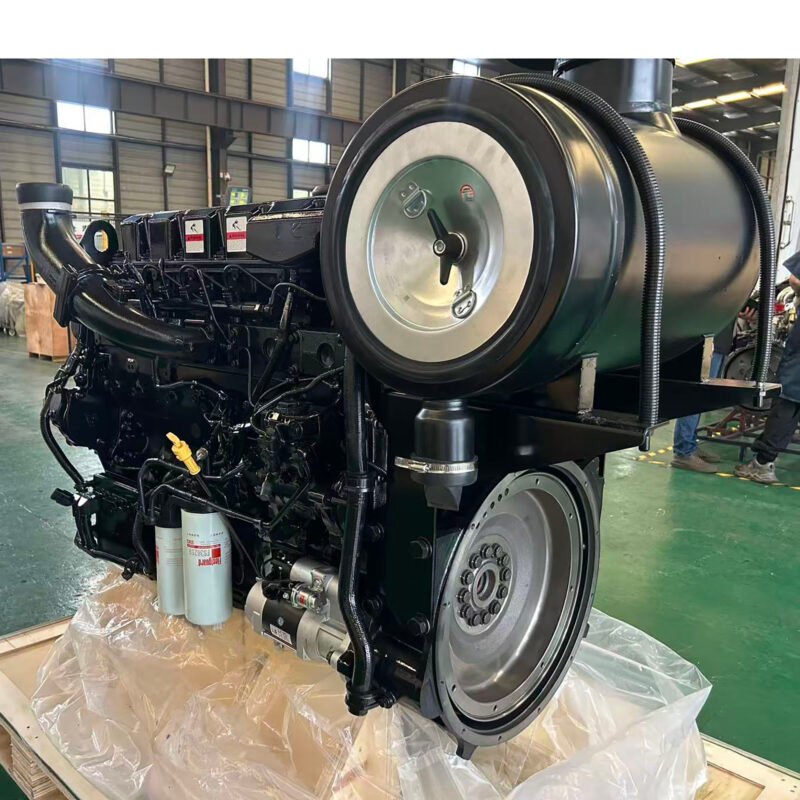
The following examples illustrate how work patterns affect propulsion engine selection. They are application guidance, not automatic duty assignments.
| Vessel Application | Typical Operating Pattern | Primary Selection Consideration |
|---|---|---|
| Long-haul tugboat | High load for extended periods | Continuous-duty capability |
| Commercial trawler | Prolonged propulsion and towing loads | Load factor and sustained torque |
| Passenger ferry | Repeated acceleration and cruising | Full-power duration and operating hours |
| Offshore crew boat | Variable speed and recurring transfers | Intermittent power requirements |
| Charter fishing boat | Variable trips and shorter high-power periods | Annual utilization and peak-power limits |
| Recreational cruiser | Occasional use with short high-output periods | Approved leisure-duty rating |
For commercial fishing vessels, Kangjin Power’s diesel engine selection guide for fishing boats discusses propulsion requirements and the importance of matching the engine to actual vessel operation.
Comparing Kangjin Power Marine Engine Options
Kangjin Power lists several marine-specific Cummins engine products. These pages provide useful starting points for selecting the required displacement and power range.
However, the public product listings do not establish an official M1–M5 rating for each configuration. Buyers should request the approved marine performance curve and manufacturer duty-rating documentation before deciding on suitability.
QSB4.5 Marine Engine
The Cummins QSB4.5 marine engine is listed as a 4.5-liter inline four-cylinder platform for applications including fishing boats, tour vessels, and marine power equipment.
Kangjin Power advertises a range of marine power configurations, but the precise duty rating and approved continuous output must be verified for the selected variant.
For smaller vessels, assess propulsion load, cruising speed, engine-room space, and cooling-system compatibility before selecting the engine.
QSB6.7 Marine Engine
The Cummins QSB6.7 marine engine is a 6.7-liter inline six-cylinder marine diesel platform.
Its listed applications include working vessels, passenger boats, and marine propulsion installations.
For commercial operators, the key question is whether the proposed engine rating supports the vessel’s expected annual running hours and high-load operation.
A vessel requiring continuous heavy propulsion should not use a higher-output, intermittent-duty rating without manufacturer approval.
QSL9.5 Marine Engine
The Cummins QSL9.5 marine engine is listed by Kangjin Power for heavier marine applications, including working vessels and fishing boats.
Its product page presents a high-output marine configuration. However, the term high output does not itself prove suitability for long-duration continuous operation.
Before specifying this engine for a tugboat or commercial trawler, request the exact marine duty rating, rated-power curve, fuel consumption data, and cooling package details.
What Should Marine Engine Buyers Verify Before Ordering?
A marine engine purchase should specify the approved operating profile rather than simply request a particular horsepower.
| Procurement Item | Required Verification |
|---|---|
| Engine identity | Complete model, configuration, and serial number |
| Manufacturer duty rating | Official rating and operating restrictions |
| Power output | Rated kW or hp and corresponding RPM |
| Operating profile | Annual hours, load factor, full-power duration |
| Propulsion compatibility | Gearbox ratio, propeller curve, shaft-power requirement |
| Cooling configuration | Seawater circuit, heat exchanger, or keel-cooling requirements |
| Regulatory requirements | Applicable marine emissions and classification documentation |
| Service capability | Parts, maintenance procedures, diagnostics, warranty support |
| Supplier documents | Performance curves, installation drawings, test records |
Check Classification and Emissions Requirements
Marine duty ratings are not the same as emissions certifications or vessel classification approvals.
Depending on the vessel and operating region, the project may require documents relating to IMO emissions requirements, flag-state rules, or a classification society such as ABS, DNV, or Lloyd’s Register.
Do not assume that a marine engine automatically has every certification needed for international commercial shipping.
Confirm Propulsion and Auxiliary Ratings Separately
Marine propulsion and auxiliary generator applications may use different rating systems.
A propulsion engine’s M rating should not be substituted for a generator set’s prime or continuous electrical rating.
For a broader assessment of commercial engine specifications, Kangjin Power’s marine diesel engine sourcing guide outlines practical engine procurement considerations.
Common Mistakes When Selecting Marine Engine Duty Ratings
- Choosing the highest horsepower without checking permitted operating hours.
- Using a recreational high-output rating for demanding commercial service.
- Assuming John Deere M1–M5 and Cummins duty classifications are identical.
- Ignoring the difference between average load factor and full-power duration.
- Matching engine output without verifying propeller and gearbox requirements.
- Assuming a marine engine product page proves the exact approved duty rating.
- Overlooking seawater cooling, exhaust configuration, and engine-room conditions.
- Confusing marine duty classification with emissions or classification certification.
These mistakes may lead to inadequate propulsion performance, excessive operating stress, or engine use outside the manufacturer’s approved warranty conditions.
Conclusion
Marine diesel engine duty ratings help buyers match engine output to the vessel’s actual operating demands.
John Deere’s M1–M5 system ranges from unrestricted continuous-duty propulsion to lighter, intermittent high-output service. Annual operating hours, load factor, and permitted full-power duration distinguish the categories.
For Cummins marine engines, buyers must instead verify the manufacturer’s applicable Continuous, Heavy Duty, Medium Continuous, Intermittent, or High Output rating.
The correct engine is not simply the one with the greatest advertised horsepower. It is the one whose approved rating, propulsion performance, cooling system, and operating limits match the vessel’s working profile.
Frequently Asked Questions
What are marine diesel engine duty ratings?
Marine diesel engine duty ratings define the intended operating load, full-power duration, and usage pattern for a propulsion engine. They help determine whether an engine is suitable for continuous commercial operation or lighter intermittent service.
What is the difference between M1 and M5 marine engine ratings?
Under John Deere’s system, M1 permits uninterrupted full-power operation with unrestricted annual hours. M5 is intended for lighter usage, generally up to 1,000 hours annually, with full power limited to 30 minutes in every eight hours.
Is M1 always the best marine diesel engine rating?
No. M1 is suitable for demanding continuous-duty propulsion, but other ratings may better match vessels with lower average loads and shorter full-power periods. Engine size, efficiency, operating profile, and manufacturer specifications all matter.
Does Cummins use M1, M2, M3, M4, and M5 ratings?
Cummins generally uses categories such as Continuous Duty, Heavy Duty, Medium Continuous, Intermittent Duty, and High Output. These should not be treated as directly equivalent to John Deere’s M1–M5 classifications.
How do I choose a marine diesel engine duty rating for a fishing boat?
Estimate annual hours, average load, towing or trawling demand, and time spent at full power. Then compare the vessel’s operating profile with the approved manufacturer rating and verify gearbox, propeller, cooling, and certification requirements.
Need Help Selecting a Marine Diesel Engine?
Kangjin Power supplies marine diesel engine options for fishing vessels, workboats, and other marine applications. Share your vessel type, required propulsion power, annual operating hours, cruising speed, and intended duty cycle with our team. We can help you review available engine configurations and request the appropriate technical specifications. Contact Kangjin Power for marine engine specifications and a quotation.
Technical References
- John Deere – Marine Applications and M1–M5 Rating Definitions – Official load factors, annual usage guidelines, full-power limits, and vessel applications.
- Cummins – Marine Ratings and Definitions – Official marine Continuous Duty, Heavy Duty, Medium Continuous, Intermittent, and High Output categories.

