
Cummins QSL9.5 Specs: Power, Torque, Dimensions & Applications

What Are the Core Cummins QSL9.5 Specs?
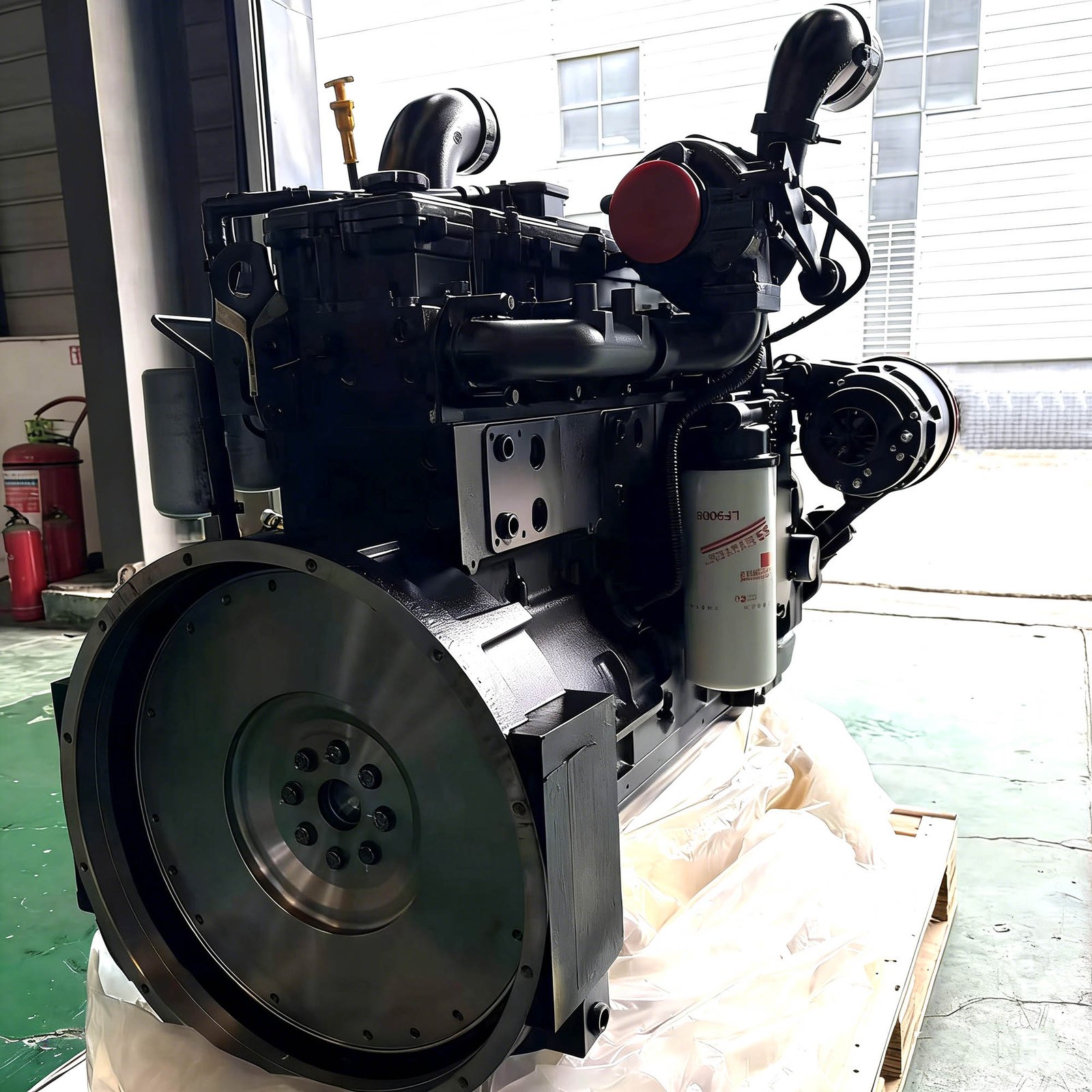
The Cummins QSL9.5 is a heavy-duty, inline 6-cylinder, 4-stroke diesel engine delivering between 330 kW and 373 kW (up to 500 HP) depending on the configuration. Peak torque reaches approximately 1,620 N·m (1,195 lb-ft) at optimized engine speeds. The physical displacement varies by application: marine blocks utilize an 8.9L geometry, while high-speed industrial water pump models use a true 9.5L displacement. All configurations integrate the Extreme Pressure Injection (XPI) high-pressure common rail system, which ensures strict fuel atomization for high-load, continuous duty cycles.
Power Curves and RPM Thresholds by Application
Engine control unit (ECU) mapping drastically alters performance metrics. Industrial machinery and marine vessels demand entirely different power curves and thermal management strategies.
When evaluating the QSL9.5 water pump engine configuration, engineers look at high steady-state RPM capabilities. This specific variant sustains 330 kW at 3,000 RPM. Running a diesel block of this size at 3,000 RPM is mechanically demanding, but it eliminates the need for complex reduction gears. Direct coupling to ultra-high-flow pump impellers makes this setup ideal for emergency mine dewatering and large-scale industrial fire suppression systems.
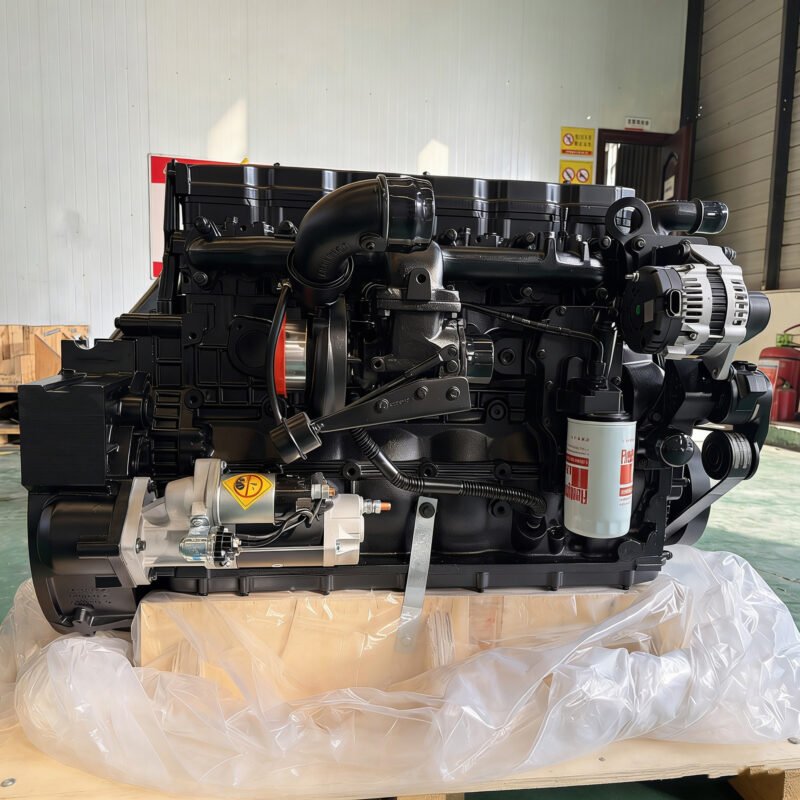
Conversely, marine propulsion relies on torque delivery at lower speeds to match propeller pitch and reduce internal thermal stress. The Cummins QSL9.5 marine engine outputs 500 HP (373 kW) at a governed 2,100 RPM. This lower RPM threshold extends the mean time between overhauls (MTBO) during continuous maritime operations, allowing heavy workboats to maintain momentum against strong currents without overloading the cylinder heads.
Technical Specification Breakdown
| Parameter | Industrial Water Pump Configuration | Marine Propulsion Configuration |
| Engine Displacement | 9.5 Liters | 8.9 Liters |
| Cylinder Layout | Inline 6 | Inline 6 |
| Max Power Output | 330 kW @ 3000 RPM | 373 kW (500 HP) @ 2100 RPM |
| Peak Torque | High steady-state rating | ~1,620 N·m |
| Fuel System | XPI Common Rail | HPCR |
| Aspiration | Turbocharged & Air-to-Air Aftercooled | Turbocharged & Seawater Aftercooled |
Component Engineering and Dimensional Integration
Equipment integration requires strict adherence to physical dimensions and mounting hardware. Most QSL9.5 blocks utilize standard SAE flywheel housings, allowing straightforward coupling with industrial hydraulic pumps, alternators, or standard marine gearboxes.
The block itself is cast iron, structurally reinforced to handle high-compression internal pressures. It utilizes wet cylinder liners. For remote mining or offshore applications, wet liners are a critical design feature. They allow maintenance crews to rebuild the cylinders in the field without machining the entire engine block, massively reducing downtime.
Cooling architecture dictates an engine’s suitability for its environment. The industrial variant relies on an oversized air-to-air aftercooling matrix to shed heat during stationary operation. Marine models use a dual-circuit system. A Cu-Ni (Copper-Nickel) heat exchanger isolates the core engine block from corrosive seawater, relying on brass impeller pumps and zinc sacrificial anodes to prevent galvanic corrosion within the hull.
OEM Sourcing Dynamics and Customization
Procurement managers at B2B equipment manufacturers must evaluate factory capabilities alongside raw engine specs. Securing these heavy-duty platforms directly from specialized assembly lines drastically alters project economics.
For many OEM projects, sourcing diesel engines from a China supplier bridges the gap between global engineering standards and scalable manufacturing costs. Direct sourcing typically reduces capital expenditure by 20% to 40% per unit.
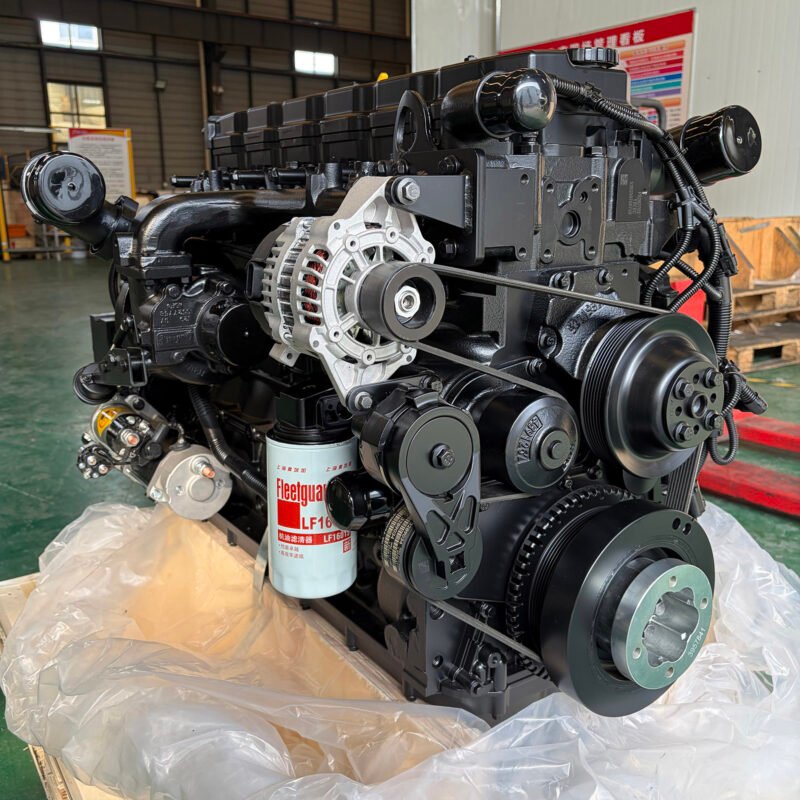
However, supplier evaluation requires strict vetting of testing protocols. Reputable facilities conduct comprehensive load bank testing on every single unit prior to export. Engineers review oil pressure stability, exhaust gas temperatures, and vibration metrics. For custom projects—such as altering the power take-off (PTO) configuration for auxiliary winch drives—factories can often support minimum order quantities (MOQs) as low as one unit. Export standard packaging, including Vapor Corrosion Inhibitor (VCI) wrapping and heavy-duty wooden crating, ensures the block survives trans-oceanic freight without surface oxidation.
Frequently Asked Questions
What is the fuel system used on the Cummins QSL9.5?
The engine utilizes the Extreme Pressure Injection (XPI) common rail system. This precise fuel delivery mechanism lowers mechanical noise and improves fuel burn efficiency under high continuous loads.
Can the industrial water pump QSL9.5 be used in a marine vessel?
No. The water pump variant is calibrated for 3,000 RPM continuous operation and lacks marine-grade heat exchangers. Marine vessels require the 8.9L configuration, which runs at 2,100 RPM and features a Cu-Ni seawater cooling circuit.
What is the standard MOQ for customized OEM engine blocks?
Direct-to-factory customization frequently starts with an MOQ of just 1 unit. Lead times depend on the complexity of the SAE housing modifications or specific PTO requirements requested by the buyer.
Are replacement parts accessible for the cylinder block?
Yes. The QSL9.5 utilizes a wet cylinder liner design. This allows maintenance teams to replace individual cylinder sleeves and piston rings directly in the field, avoiding full block removal.
How do suppliers prevent rust during international shipping?
Heavy machinery exporters seal the engine in Vapor Corrosion Inhibitor (VCI) plastics and apply heavy-duty anti-corrosion sprays to exposed metal. The unit is then bolted inside an export-grade wooden crate for sea freight.
Reference Sources
- ISO 3046-1: Reciprocating internal combustion engines — Performance.
- SAE International: J617 Engine Flywheel Housings Standard Dimensions.
- Kangjin Power: QSL9.5 Marine Engine Technical Specifications.
- Kangjin Power: QSL9.5 Water Pump Engine Output Data.
- ASTM B111: Standard Specification for Copper and Copper-Alloy Seamless Condenser Tubes (applied in marine heat exchangers).

