
Cummins ISB6.7 Specs: Horsepower, Torque, Weight & Applications

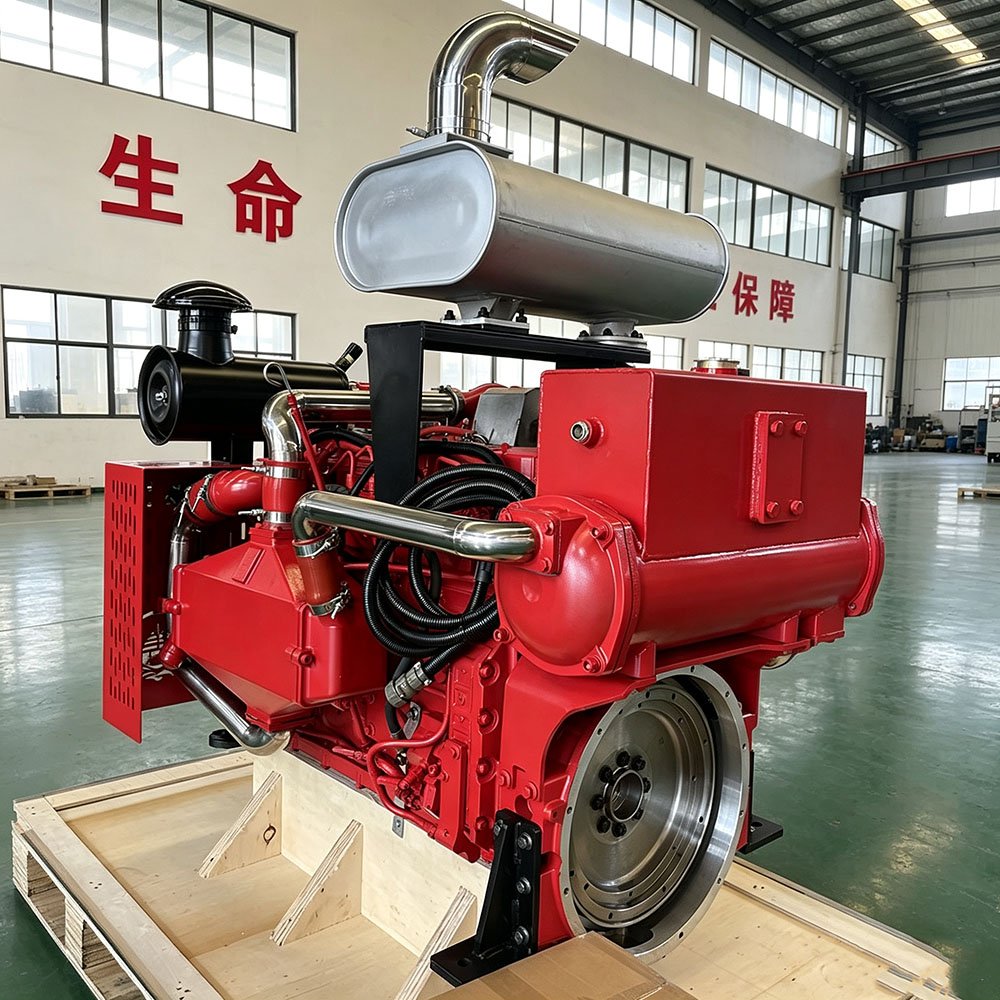
The Cummins ISB6.7 is a 6.7-liter, inline six-cylinder diesel engine designed primarily for medium-duty commercial vehicles. Depending on the model year and application, it delivers approximately 200–360 horsepower and 520–800 lb-ft (705–1,085 N·m) of peak torque. A representative engine has a dry weight of approximately 1,150 lb (522 kg).
These figures cover several ISB6.7 configurations rather than one universal engine rating. Truck, bus, motorhome, and emergency vehicle versions may use different calibrations, torque curves, and emissions systems.
Understanding these differences is essential when interpreting engine specifications or comparing the ISB6.7 with other Cummins B Series engines.
What Are the Main Cummins ISB6.7 Specifications?
The ISB6.7 belongs to Cummins’ B Series diesel engine family. It uses a four-stroke, turbocharged design with electronically controlled fuel injection.
The engine’s 6.7-liter displacement provides a balance between physical size, torque output, and fuel efficiency for medium-duty applications.
Cummins ISB6.7 Engine Specifications
| Specification | Cummins ISB6.7 |
|---|---|
| Engine configuration | Inline 6-cylinder, four-stroke |
| Displacement | 6.7 L / 409 cu in |
| Bore × stroke | 107 × 124 mm |
| Horsepower range | 200–360 hp |
| Power output | Approximately 149–269 kW |
| Peak torque | 520–800 lb-ft |
| Peak torque (metric) | Approximately 705–1,085 N·m |
| Governed speed | Typically 2,600 rpm; some ratings differ |
| Dry engine weight | Approximately 1,150 lb / 522 kg |
| Fuel system | Electronic high-pressure common rail |
| Aspiration | Turbocharged and charge-air cooled |
| Cooling system | Liquid-cooled |
| Engine management | Electronic Control Module (ECM) |
| Typical applications | Trucks, buses, motorhomes, emergency vehicles |
Note: These specifications summarize documented ISB6.7 ratings across different applications and emissions generations. Individual engines may have narrower operating ranges.
Cummins’ published documentation confirms that horsepower and torque vary considerably between vehicle applications.
For example, some medium-duty truck configurations are rated between 200 and 300 hp. Certain motorhome and emergency vehicle versions reach 360 hp.
The engine identification plate and application-specific Cummins documentation provide the most reliable information for an individual unit.
Cummins ISB6.7 Horsepower and Torque Ratings
The ISB6.7 does not have a single horsepower or torque specification.
Cummins offers multiple engine calibrations to accommodate different vehicle weights, transmission characteristics, and operating requirements.
Representative ISB6.7 Power Ratings
The following figures come from Cummins’ published ISB6.7 ratings for selected vehicle applications.
| Engine Rating | Horsepower | Peak Torque | Torque Speed |
|---|---|---|---|
| ISB6.7 200 | 200 hp | 520 lb-ft / 705 N·m | 1,600 rpm |
| ISB6.7 220 | 220 hp | 520 lb-ft / 705 N·m | 1,600 rpm |
| ISB6.7 240 | 240 hp | 560 lb-ft / 759 N·m | 1,600 rpm |
| ISB6.7 260 | 260 hp | 660 lb-ft / 895 N·m | 1,600 rpm |
| ISB6.7 280 | 280 hp | 660 lb-ft / 895 N·m | 1,600 rpm |
| ISB6.7 300 | 300 hp | 660 lb-ft / 895 N·m | 1,600 rpm |
| ISB6.7 325 | 325 hp | 750 lb-ft / 1,017 N·m | 1,800 rpm |
| ISB6.7 360 | 360 hp | 800 lb-ft / 1,085 N·m | 1,800 rpm |
These are representative ratings from different Cummins application documents. Not every rating is available for every vehicle or emissions generation.
Why Horsepower and Torque Matter Differently
Horsepower describes the rate at which an engine performs mechanical work. Torque describes the twisting force available at the crankshaft.
Both influence vehicle performance, but they affect operating behavior differently.
Horsepower becomes particularly important when:
- Maintaining speed under sustained load.
- Climbing long grades.
- Operating at higher engine speeds.
- Meeting continuous power demands.
Torque becomes particularly important when:
- Accelerating a heavily loaded vehicle.
- Starting on an incline.
- Operating at moderate engine speeds.
- Responding to changing drivetrain loads.
An engine producing 660 lb-ft at 1,600 rpm may provide useful pulling performance without operating near maximum governed speed.
However, peak torque alone cannot predict vehicle performance.
Transmission ratios, vehicle mass, tire diameter, and drivetrain efficiency also influence the force available at the wheels.
Understanding the Torque Curve
A torque curve shows how engine torque changes with rotational speed.
For diesel engines, strong mid-range torque allows useful work to be performed without continuously operating at maximum rpm.
The ISB6.7’s electronically controlled fuel system helps regulate injection timing and fuel delivery as engine load changes.
Its turbocharging system also supports torque production by increasing the air available for combustion.
Actual torque response depends on the specific calibration, turbocharger configuration, and operating conditions.
Cummins ISB6.7 Engine Weight, Dimensions and Design
A commonly published ISB6.7 dry engine weight is approximately 1,150 lb (522 kg).
However, dry engine weight should not be confused with the weight of a complete installed powertrain.
Cummins documentation for certain 2013 configurations lists:
| Weight Measurement | Published Value |
|---|---|
| Dry engine weight | 1,150 lb / 522 kg |
| Aftertreatment system allowance | 207 lb / 94 kg |
| Combined system weight | 1,357 lb / 616 kg |
The aftertreatment figure represents an additional system weight allowance in the referenced configuration. It excludes certain chassis-manufacturer components.
Why Installed Engine Weight Can Be Higher
A complete engine installation may include:
- Radiator and cooling fan.
- Charge-air cooler and connecting pipes.
- Exhaust aftertreatment components.
- Engine mounting brackets.
- Air intake and filtration equipment.
- Fluids and auxiliary accessories.
These components increase the total installed weight.
Engine dimensions also vary with accessory placement, cooling arrangements, and vehicle-specific installation requirements.
Consequently, a single length, width, and height measurement cannot accurately describe every ISB6.7 installation.

Engine Architecture
The ISB6.7 uses an inline six-cylinder arrangement with a displacement of approximately 6.7 liters.
Its 107 mm bore and 124 mm stroke produce a relatively long-stroke configuration.
This geometry is well suited to diesel combustion characteristics and medium-speed torque production.
The engine combines several important systems:
High-pressure common-rail injection
Fuel pressure and injection timing are electronically controlled. Multiple injection events can improve combustion management, noise characteristics, and emissions performance.
Turbocharging
The turbocharger increases the amount of air entering the cylinders. This supports higher power output without requiring a larger displacement.
Charge-air cooling
Compressed intake air is cooled before entering the engine. Lower intake temperatures improve air density and help manage combustion temperatures.
Electronic engine management
The ECM monitors operating conditions and controls fuel delivery and related engine functions.
Depending on the emissions generation, it may also coordinate exhaust aftertreatment and onboard diagnostics.
Where Is the Cummins ISB6.7 Used?
The ISB6.7 is primarily associated with medium-duty transportation applications.
Its combination of six-cylinder displacement, electronically controlled combustion, and multiple power ratings supports different vehicle operating requirements.
Medium-Duty Commercial Trucks
Commercial trucks represent an important application for the ISB6.7.
Typical operating conditions include frequent acceleration, variable payloads, urban traffic, and sustained highway driving.
The engine’s torque characteristics help support loaded vehicle operation.
Actual performance depends on the selected power rating, transmission, axle ratio, and vehicle configuration.
Transit and School Buses
Bus applications require predictable acceleration and repeated operation at relatively low vehicle speeds.
Frequent stops place considerable demands on engine response and cooling performance.
The ISB6.7 has been used in bus configurations with ratings tailored to these operating conditions.
Its electronic controls also support integration with vehicle management and diagnostic systems.
Motorhomes and Recreational Vehicles
Motorhomes often operate at substantial vehicle weights for extended periods.
These applications benefit from usable torque across a broad operating range.
Certain ISB6.7 motorhome configurations provide horsepower ratings reaching 360 hp.
The higher-output versions are intended for specific vehicle applications rather than every ISB6.7 installation.
Fire and Emergency Vehicles
Emergency vehicles require dependable acceleration and the ability to operate auxiliary equipment.
Cummins has published ISB6.7 ratings specifically for fire and emergency applications.
These configurations may differ from standard commercial truck engines in calibration and maintenance requirements.
For example, Cummins documentation specifies shorter oil-service intervals under certain severe-duty emergency vehicle conditions.
Industrial Equipment and Related B Series Applications
Cummins also offers 6.7-liter engines for construction machinery, agricultural equipment, and industrial power systems.
However, these applications frequently use QSB6.7 or other application-specific B6.7 configurations, rather than an identical on-highway ISB6.7 engine.
The distinction matters because industrial engines can have different rated speeds, torque curves, emissions equipment, and installation arrangements.
For example, Kangjin Power’s QSB6.7 diesel engine specifications include industrial ratings from 99 to 194 kW.
These configurations illustrate how the same displacement class can support different operating requirements.
They should not be treated as interchangeable ISB6.7 ratings.
ISB6.7 vs QSB6.7: What Is the Difference?
The ISB6.7 and QSB6.7 share the same general 6.7-liter B Series engine architecture.
However, their application-specific configurations can differ substantially.
| Feature | ISB6.7 | QSB6.7 |
|---|---|---|
| Engine family | Cummins B Series | Cummins B Series |
| Displacement | 6.7 L | 6.7 L |
| Cylinder configuration | Inline 6 | Inline 6 |
| Primary application | On-highway vehicles | Industrial and off-highway equipment |
| Power calibration | Vehicle-specific | Equipment-specific |
| Emissions configuration | Depends on vehicle regulations | Depends on equipment and market |
| Operating characteristics | Road vehicle duty cycles | Industrial equipment duty cycles |
Both engine families use electronic control and turbocharging in commonly documented configurations.
Nevertheless, differences in engine calibration, accessories, and emissions requirements can affect installation compatibility.
A QSB6.7 designed for construction equipment should not automatically be considered a direct replacement for an ISB6.7 truck engine.
Kangjin Power also lists a separate QSB6.7 marine engine configuration.
Marine applications introduce additional requirements involving cooling arrangements, exhaust systems, and operating duty cycles.
For a smaller electronically controlled industrial engine, the Cummins QSB4.5 specifications guide explains the differences in displacement, power output, and industrial applications.
The broader B Series family also includes mechanically controlled engines.
The Cummins 6BTA5.9 specifications guide provides a useful reference for understanding an earlier 5.9-liter engine platform.
Why Engine Model Identification Matters
Two engines labeled ISB6.7 may have different horsepower ratings, emissions equipment, or electronic calibrations.
The engine serial number provides a more precise identification reference.
Cummins uses engine-specific information to identify applicable components, technical documentation, and service requirements.
The engine dataplate and serial number should therefore take priority over general specifications found online.
This is particularly important when interpreting technical information across different production years.
FAQ
How much horsepower does a Cummins ISB6.7 have?
The Cummins ISB6.7 produces approximately 200–360 hp across documented applications. Medium-duty truck versions commonly fall within a narrower range, while certain motorhome and emergency vehicle configurations reach 360 hp.
What is the maximum torque of the ISB6.7?
Selected ISB6.7 configurations produce up to 800 lb-ft (approximately 1,085 N·m) of peak torque. Other versions are rated at 520, 560, 660, or 750 lb-ft, depending on calibration.
How much does a Cummins ISB6.7 engine weigh?
A representative ISB6.7 has a dry engine weight of approximately 1,150 lb (522 kg). Certain Cummins documentation lists a combined engine and aftertreatment system weight of approximately 1,357 lb (616 kg).
Is the Cummins ISB6.7 a 6-cylinder engine?
Yes. The ISB6.7 is an inline six-cylinder, four-stroke diesel engine with a displacement of approximately 6.7 liters.
Is the ISB6.7 the same as the QSB6.7?
No. Although both belong to the Cummins 6.7-liter B Series family, they are configured for different applications. The ISB6.7 is primarily associated with on-highway vehicles, while the QSB6.7 is commonly used in industrial equipment.
What is the difference between ISB6.7 and B6.7?
ISB6.7 and B6.7 are related Cummins engine designations used across different product generations and applications. Specifications should be compared by model year and application rather than assuming the names identify identical engines.
Summary
The Cummins ISB6.7 is a 6.7-liter inline six-cylinder diesel engine widely used in medium-duty trucks, buses, motorhomes, and emergency vehicles. Depending on the application and engine calibration, it delivers approximately 200–360 hp and 520–800 lb-ft of torque, with a representative dry weight of 1,150 lb (522 kg).
While different ISB6.7 versions share the same basic engine architecture, their power ratings, emissions systems, and operating characteristics can vary significantly. Understanding these differences helps explain how the engine performs across different vehicle applications.
For accurate technical evaluation, the specific engine model, production year, and serial number should always be considered. These details provide a more reliable basis for interpreting specifications than general horsepower or displacement figures alone.

