
Sourcing the 6LTAA9.5 Diesel Engine for 300kW Generators: Technical Guide


The 6LTAA9.5 diesel engine for 300kW generator set is a 9.5-liter, inline 6-cylinder prime mover specifically calibrated to deliver continuous, high-stability electrical output. Operating at a fixed 1500 RPM (50Hz) or 1800 RPM (60Hz), it utilizes a turbocharged, air-to-air aftercooled architecture to handle instantaneous load acceptance without stalling. To successfully procure this block, OEM integrators must audit a supplier’s dynamometer testing protocols, evaluate exact cooling package dimensions, and verify ECU compatibility with standard digital genset controllers.
Matching an internal combustion engine to an alternator requires strict alignment of torque curves and thermal capacities. A poorly specified engine will suffer from frequency droop during heavy motor startups, triggering under-voltage alarms on the control panel. Industrial power applications demand absolute continuous voltage stability, efficient heat dissipation, and a rugged cast-iron block capable of withstanding constant vibration.
This guide details the engineering realities of integrating the 6LTAA9.5 into commercial genset canopies. Navigating the B2B procurement process requires technical clarity to balance initial capital expenditure with long-term mechanical reliability.
Mechanical Tolerances for Prime Power Generation
The 6LTAA9.5 is structurally optimized for constant-speed environments. Unlike automotive engines that experience variable RPMs, generator drive engines sit at a static speed, making harmonic resonance a primary engineering concern. The inline 6-cylinder configuration offers exceptional rotational balance, minimizing chassis vibration and preventing structural fatigue on the base frame and coupling bolts.
Precision speed control is managed via electronic governing. This ensures that when a facility transfers its electrical load to the generator, the engine injects the exact fuel volume needed to prevent RPM drops. High combustion efficiency provides a stable fuel consumption rate, but the engine must be loaded correctly. Running a high-displacement engine like the 6LTAA9.5 below 30% of its rated capacity for extended periods causes wet stacking, where unburned fuel glazes the cylinder walls and degrades compression.
Engineers sizing the final assembly must account for parasitic loads. The radiator cooling fan, battery charging alternator, and water pump all draw mechanical power away from the main flywheel.
| Component Parameter | Specification Profile | Operational Impact |
| Displacement | 9.5 Liters | Provides sufficient thermal mass to sustain 300kW continuous loads. |
| Aspiration | Turbocharged & Charge-Air Cooled | Maximizes oxygen density for complete combustion at continuous high loads. |
| Speed Governance | Electronic Actuation | Maintains rigid frequency limits required by ISO 8528 standards. |
| Cylinder Layout | Inline-6 Cast Iron | Lowers torsional vibration compared to V-block alternatives. |
| Lube Oil System | Forced Feed Gear Pump | Ensures constant hydrodynamic oil film on heavy-duty main bearings. |
Managing Thermal Limits in Harsh Deployments
Deploying a 300kW generator in extreme environments dictates severe modifications to the engine’s auxiliary systems. High-altitude installations experience significant drops in air density. Without recalibrating the turbocharger wastegate and adjusting the fuel maps, the engine will run rich, resulting in excessive exhaust smoke and elevated exhaust gas temperatures (EGT).
In high-ambient desert environments, the standard radiator matrix often proves insufficient. Engineers must upsize the cooling package to dissipate engine block heat effectively. Failure to manage coolant temperatures triggers automatic thermal derating, dropping the electrical output well below the intended 300kW threshold.
Industrial deployments often share environmental challenges with heavy earth-moving equipment. Much like construction machinery engines, prime power generators in mining or quarry applications require heavy-duty, dual-stage air filtration. High airborne silica levels will rapidly erode a turbocharger’s compressor wheel if standard paper elements are used. Upgrading to cyclonic pre-cleaners dramatically extends the lifespan of the intake system under these abrasive conditions.
Supplier Auditing and RFQ Workflows
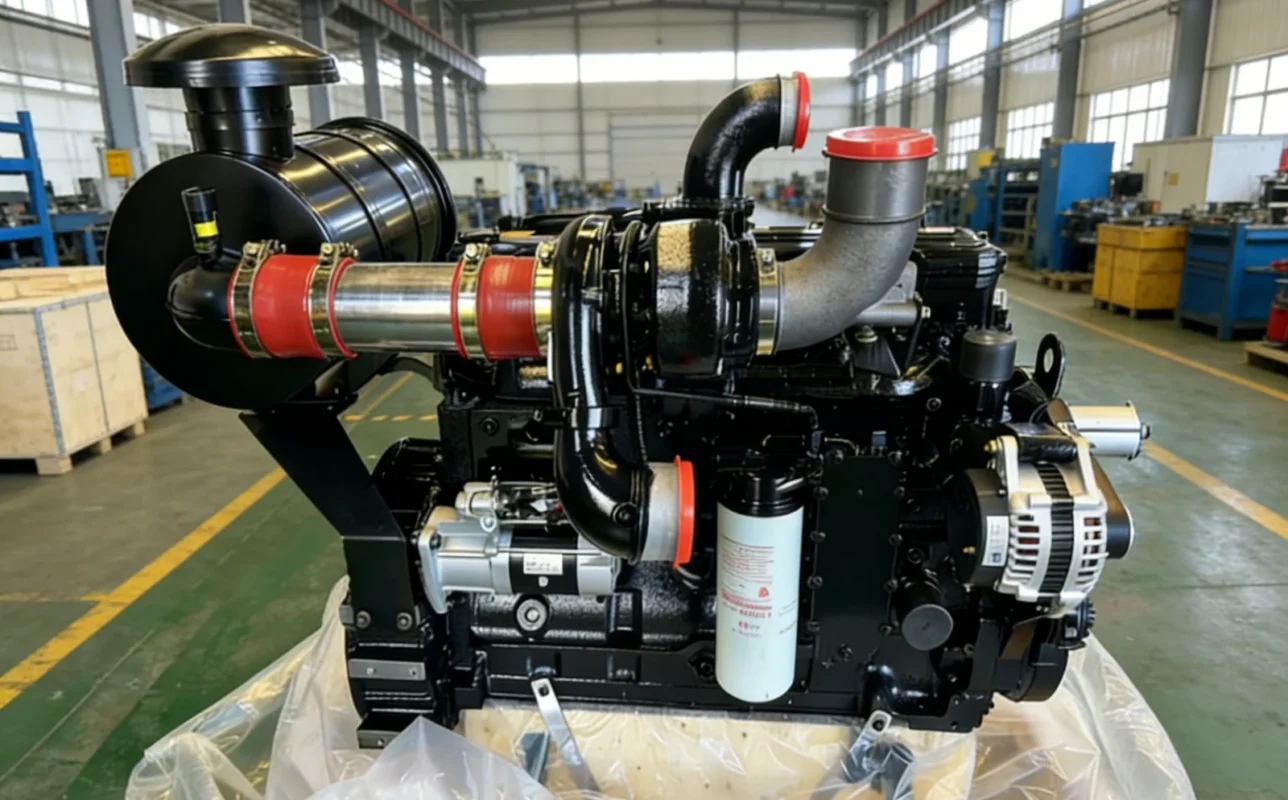
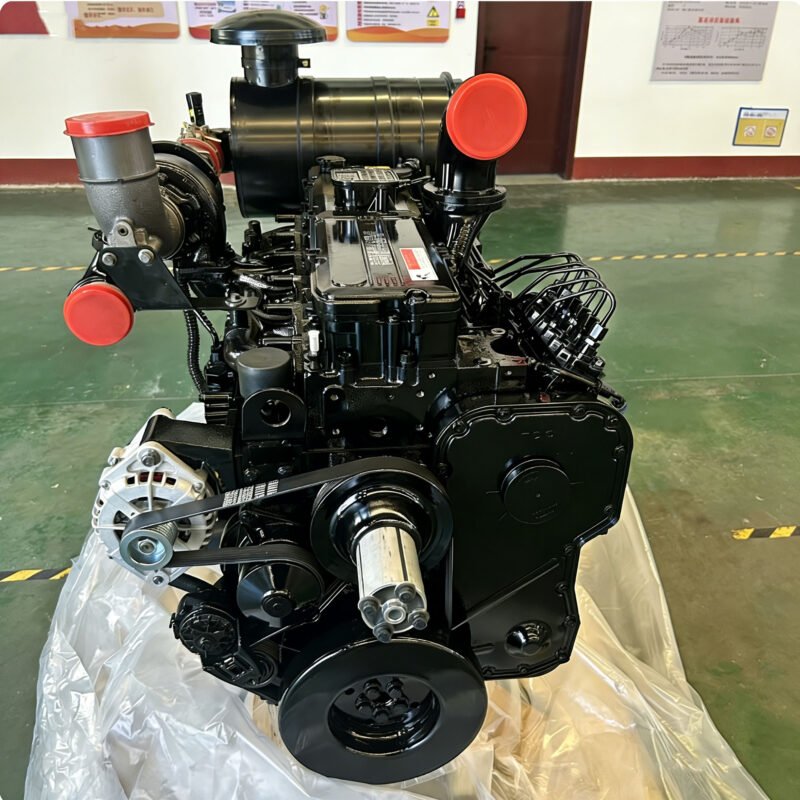
Procuring bare engine blocks directly from a Chinese factory requires auditing their engineering integration workflow. A reliable supply chain partner provides more than a standardized crate engine. They actively adapt wiring harnesses, reposition oil dipsticks for specific canopy access doors, and adjust mounting points to fit your proprietary skid designs.
Finding a factory capable of this requires looking past surface-level specifications. If you are evaluating international suppliers, understanding how to identify the best OEM diesel engine manufacturer in China involves checking their IATF 16949 or ISO 9001 quality certifications. Requesting documented dynamometer test reports verifying fuel consumption and EGT under simulated step-loads is a mandatory part of the RFQ process.
Effective B2B procurement also evaluates prototype support. Buying 50 engines blind carries immense financial risk. Look for manufacturing facilities like Kangjin Power that support an MOQ (Minimum Order Quantity) of just 1 unit. This allows your internal engineering team to assemble a prototype genset, conduct independent load bank testing, and verify CAN-bus communication between the engine ECU and controllers like Deep Sea or ComAp.
Customization for Final Assembly Integration
When integrating the 6LTAA9.5 into silent-type enclosures, ambient airflow is highly restricted by acoustic baffling. The OEM supplier must calculate the airflow restriction and potentially specify a higher-pitch pusher fan to force hot air out of the canopy louvers.
Custom integrations often involve specific emission after-treatment requirements based on the destination market. While non-regulated markets utilize standard exhaust silencers, highly regulated zones may require the physical space to mount Diesel Particulate Filters (DPF). Communicating the physical dimensions of your generator canopy during the RFQ phase ensures the factory configures the exhaust manifold outlet in the correct orientation, saving hours of fabrication time during final assembly.
FAQ
Q: What is the standard lead time for a custom-configured 6LTAA9.5 engine?
A: Standard configurations usually ship within 15 to 25 days. If your RFQ requires custom cooling packages, specialized ECU programming, or non-standard 24V starting motors, expect lead times to extend by an additional two weeks for engineering and testing.
Q: Can the engine ECU communicate with my existing generator control panel?
A: Yes. The electronic control unit utilizes standard CAN-bus network protocols (such as J1939). This allows direct data integration with standard digital controllers, providing real-time telemetry on oil pressure, coolant temperature, and RPM without needing auxiliary analog sensors.
Q: Why do I need to calculate altitude derating for this engine?
A: As altitude increases, air density decreases, meaning less oxygen enters the combustion chamber. To prevent over-fueling and extreme exhaust temperatures, the engine must produce less power. Manufacturers provide specific derating curves so you can calculate the exact kW output at your target elevation.
Q: What is the risk of running the 300kW generator at low loads?
A: Running a high-displacement engine below 30% load prevents the piston rings from expanding fully due to low cylinder pressures. This causes lubricating oil to pass into the combustion chamber and unburned fuel to leak into the exhaust, a condition known as wet stacking.
Q: Does the factory test the engine before export shipping?
A: Reputable OEM suppliers perform rigorous dynamometer testing under varying load profiles (25%, 50%, 75%, 100%, and 110% overload) before packaging. Buyers should mandate electronic data sheets and operational test videos linked to the engine’s exact serial number prior to FOB or CIF container loading.
Reference Sources
- ISO 8528-1:2018 – Reciprocating internal combustion engine driven alternating current generating sets.
- ISO 3046-1:2002 – Reciprocating internal combustion engines — Performance.
- SAE J1939 – Serial Control and Communications Heavy Duty Vehicle Network.
- Official Manufacturing Data and Specifications from Xiangyang Kangjin Power Technology Co., Ltd.

