
Diesel Water Pump Engine: Technical Selection Guide

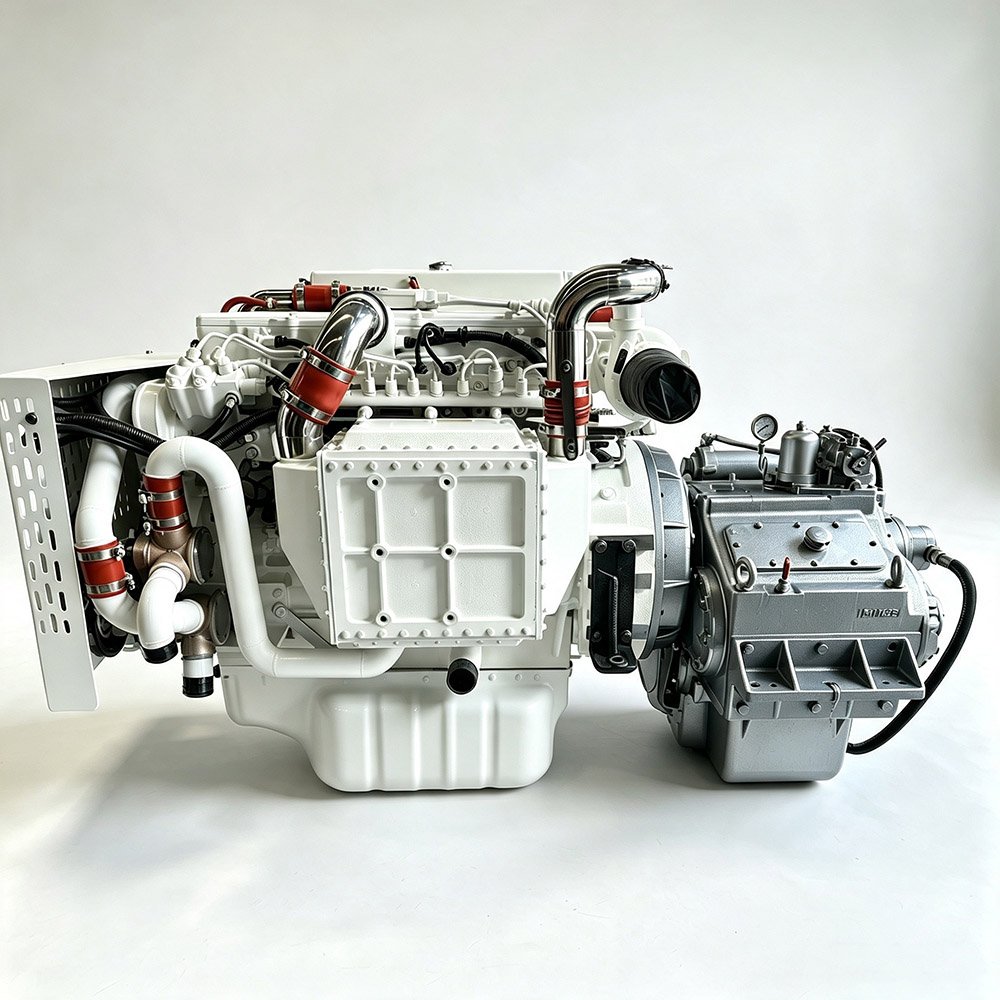
A diesel water pump engine provides mechanical shaft power directly or through a gearbox to drive centrifugal, axial-flow, or positive displacement pumps. Unlike standard generator drives, pump engines operate under continuous fluid load curves where torque demand varies with head pressure and flow rate. Selecting the right engine requires evaluating continuous power ratings, duty cycles, and cooling options.
Industrial water pumping systems demand uninterrupted operation under harsh environmental conditions. Engine undersizing causes thermal overload, while oversizing wastes fuel and induces cylinder glazing conditions. Proper evaluation aligns engine torque response with the specific hydraulic pump operating envelope.
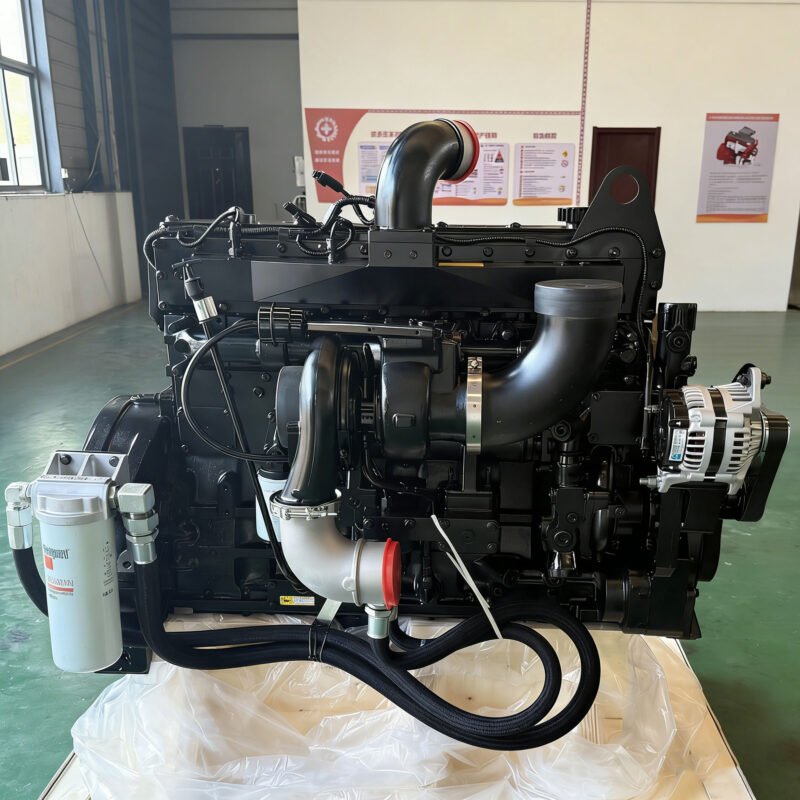
Why Hydraulic Load Profiles Demand Specific Diesel Water Pump Engine Configurations
Centrifugal water pumps follow predictable affinity laws where power consumption scales cubicly with rotational speed. A reliable diesel water pump engine must maintain constant speed under sudden changes in fluid viscosity, head pressure, or intake suction head. Mechanical or electronic governors prevent engine stalling during pressure surges in agricultural irrigation or dewatering operations.
Engine power ratings for pump duty fall into distinct ISO categories, primarily ISO 3046 continuous power (COP) and prime power (PRP). Continuous operation applications require engines configured at 80% to 90% of maximum rated horsepower to avoid thermal fatigue. Intermittent or standby emergency pumps can run at higher output thresholds due to short run times.
Key mechanical features required for pump integration include:
- Heavy-duty flywheel housings compliant with SAE #2 or SAE #3 standards for direct pump coupling.
- Variable or fixed-speed governor controls to match required fluid flow rates.
- Auxiliary power take-off (PTO) drives for primer pumps or hydraulic actuators.
- Heat exchanger or high-capacity radiator cooling for ambient temperature resilience.
Technical Parameters and Performance Metrics for Engine Sizing
Evaluating engine parameters requires analyzing brake specific fuel consumption (BSFC), peak torque RPM, and displacement capacity. A well-matched diesel water pump engine operates near its lowest BSFC point during nominal flow conditions. This operational efficiency drastically reduces long-term fuel expenditure in continuous flood control or mining dewatering projects.
Engine cooling configuration plays a critical role in system reliability. Direct radiator cooling suits outdoor mobile pump skids exposed to variable ambient temperatures. Shell-and-tube heat exchanger cooling utilizes pumped water directly, reducing footprint and mechanical fan power losses in stationary pumping stations.
| Application Type | Required Power Class | Cooling Configuration | Governor Type | Recommended Engine Duty Rating |
| Agricultural Irrigation | 50 kW – 150 kW | Heavy-Duty Radiator | Mechanical / Electronic | Continuous Power (ISO 3046 COP) |
| Mining Dewatering | 100 kW – 300 kW | Radiator with Dust Screen | Electronic (CANbus / J1939) | Prime Power (PRP) Heavy-Duty |
| Municipal Flood Control | 150 kW – 400+ kW | Heat Exchanger or Radiator | Electronic Speed Control | Continuous Duty Heavy-Duty |
| Emergency Fire Protection | 60 kW – 250 kW | Heat Exchanger (NFPA 20) | Mechanical with Manual Override | Standby / Fire Service Rating |
Selecting Engine Configurations Across Agricultural, Industrial, and Fire Protection Applications
Agricultural irrigation demands prolonged low-maintenance running during growing seasons. Four-cylinder and six-cylinder turbocharged engines with mechanical fuel injection excel in remote locations where fuel quality varies. These simple mechanical systems withstand lower-grade fuel while maintaining steady torque across long irrigation lines.
Industrial slurry handling and mine dewatering require high low-end torque to clear stalled impellers and heavy sediment loads. High-displacement engines with turbocharging and charge-air cooling supply the necessary reserve torque. Integrated electronic engine control units monitor oil pressure, coolant temperature, and load profiles to trigger automated shutoff protections.
Fire protection pump systems operate under NFPA 20 guidelines requiring rapid startup and immediate power delivery. These engines use heat exchanger cooling systems powered by the pump’s discharge stream. Immediate load acceptance and mechanical backup throttles ensure uninterrupted performance during emergency water suppression cycles.
Total Cost Drivers, Maintenance Cycles, and OEM Coupling Considerations
Acquisition cost represents only a fraction of total pump engine lifecycle expenditure. Fuel consumption typically accounts for over 70% of total operating expenses across a 10,000-hour service life. Selecting an engine with low BSFC yields significant operational savings over extended pumping cycles.
OEM engine integration requires addressing torsional vibration analysis (TVA) between the engine crankshaft and pump shaft. Flexible couplings or clutch assemblies isolate harmful mechanical harmonics generated by pump impellers. Improper coupling selection leads to premature bearing failure or crankshaft fatigue.
Essential procurement evaluation factors include:
- Availability of regional spare parts and standardized service components.
- Compliance with local emission standards, such as Stage III or Tier 3/Tier 4.
- Compatibility with base-frame mounting footprints and vibration isolators.
- Factory testing documentation including dyno test reports and fuel curves.
Matching Kangjin Power Engine Platforms to Pump System Specifications
Selecting a reliable power plant requires partnering with a manufacturer capable of delivering matching displacement and torque profiles. Xiangyang Kangjin Power Technology Co., Ltd. supplies industrial diesel engines specifically engineered for water pump assemblies and heavy equipment drive systems. Their product line includes proven four-cylinder and six-cylinder platforms suited for diverse flow and head pressures.
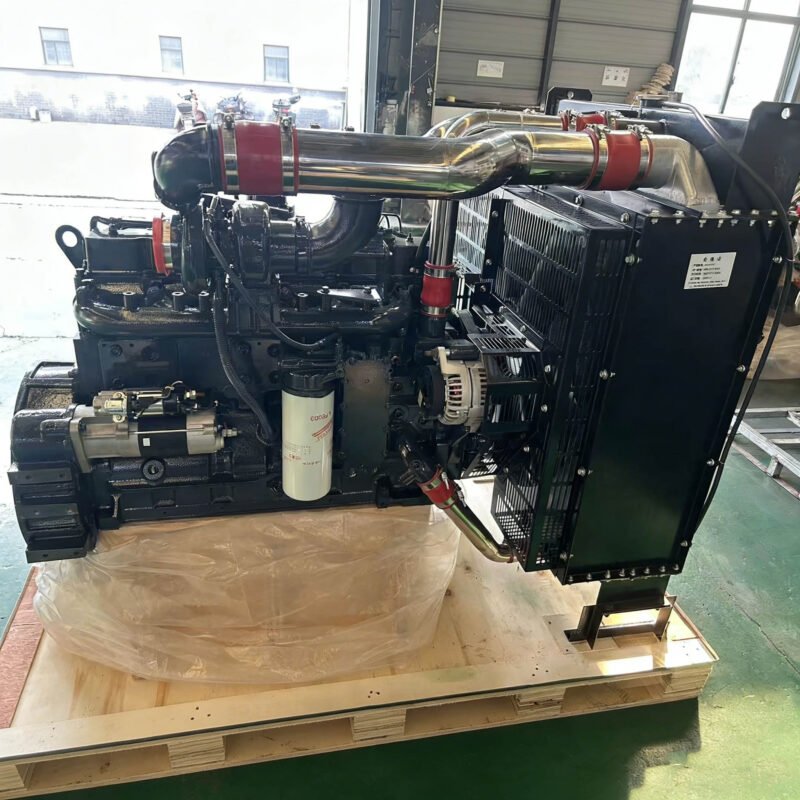
For light-to-medium agricultural and dewatering pumps, the 4BTA3.9 and 4BTAA3.9 engine series deliver compact dimensions with dependable mechanical power output. These four-cylinder turbocharged engines offer simple maintenance protocols and high fuel efficiency. Larger industrial and municipal applications benefit from the 6BT5.9, 6BTA5.9, and 6CTA8.3 engine platforms, providing high torque output across continuous operation windows.
Kangjin Power supports OEM manufacturers and pump assemblers with complete technical integration, customized flywheel configurations, and export-ready documentation. Project teams can review full mechanical engine options and request engineering quotes via the Kangjin Power Products Portal.
FAQ
What is the difference between a generator engine and a diesel water pump engine?
Generator engines run at a fixed synchronous speed under variable electrical loads. A diesel water pump engine operates against continuous fluid dynamic loads across variable speed ranges. Pump engines require specific torque rise characteristics to handle head pressure variations and dynamic hydraulic loads.
Should I select a mechanical or electronic governor for a water pump engine?
Mechanical governors provide low cost and mechanical reliability in remote areas with basic fuel quality. Electronic governors deliver precise speed regulation, automated load sharing, and remote CANbus monitoring. High-volume industrial and municipal pumping applications benefit most from electronic controls.
How do I determine the continuous power requirement for a centrifugal water pump engine?
Calculate the required hydraulic shaft horsepower based on pump flow rate, total dynamic head, and pump efficiency. Add 15% to 20% power reserve to account for mechanical losses and altitude derating. Apply ISO 3046 continuous power (COP) ratings for uninterrupted daily operation.
What cooling system is best for stationary industrial water pump engines?
Shell-and-tube heat exchanger cooling systems work best for stationary installations with clear water supplies. They eliminate cooling fan horsepower losses and reduce total installation footprint. Radiator cooling remains essential for mobile pump skids and dirty water applications.
Reference Sources
- ISO 3046-1:2002 — Reciprocating internal combustion engines — Performance — Part 1: Standard reference conditions, declarations of power, fuel and lubricating oil consumptions, and test methods.
- NFPA 20 — Standard for the Installation of Stationary Pumps for Fire Protection (National Fire Protection Association).
- SAE J1995 — Engine Power Test Code – Spark Ignition and Compression Ignition – Gross Power Rating (SAE International).
- ISO 8528-1:2018 — Reciprocating internal combustion engine driven alternating current generating sets — Part 1: Application, ratings and performance.

