
Diesel Engine for Construction Machinery: OEM Sourcing Guide

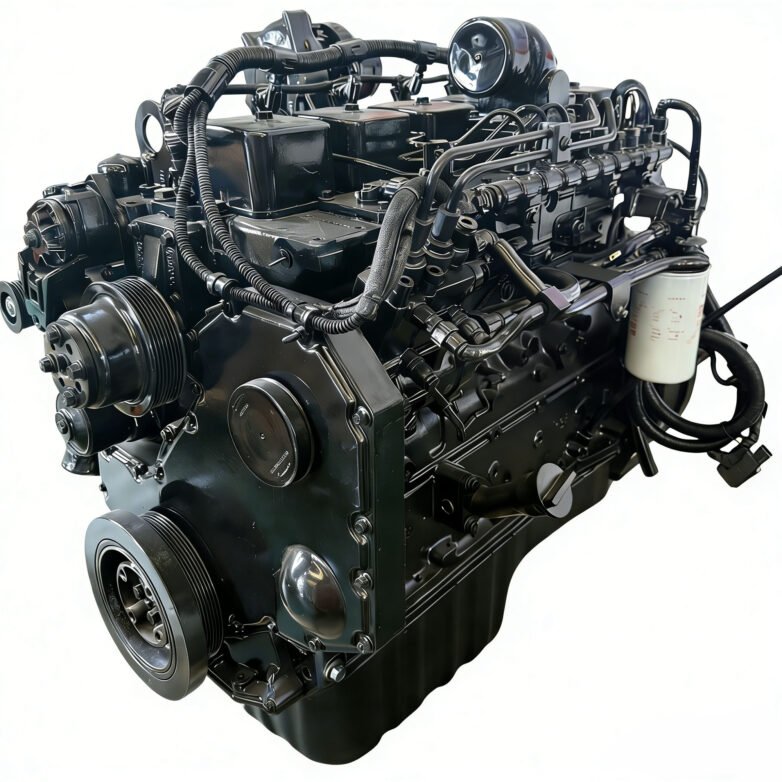
Construction machinery operates in the most punishing off-highway environments. Unplanned downtime causes severe financial losses on active job sites. Selecting a diesel engine for construction machinery requires looking beyond simple peak horsepower.
OEM project managers must evaluate thermal management, load response, and global emission compliance. A mismatched engine architecture leads to overheating, poor fuel economy, and premature hydraulic component failure.
This guide outlines the technical and commercial criteria for sourcing heavy-duty diesel engines. We focus on real-world duty cycles, packaging constraints, and specific supplier evaluation metrics.
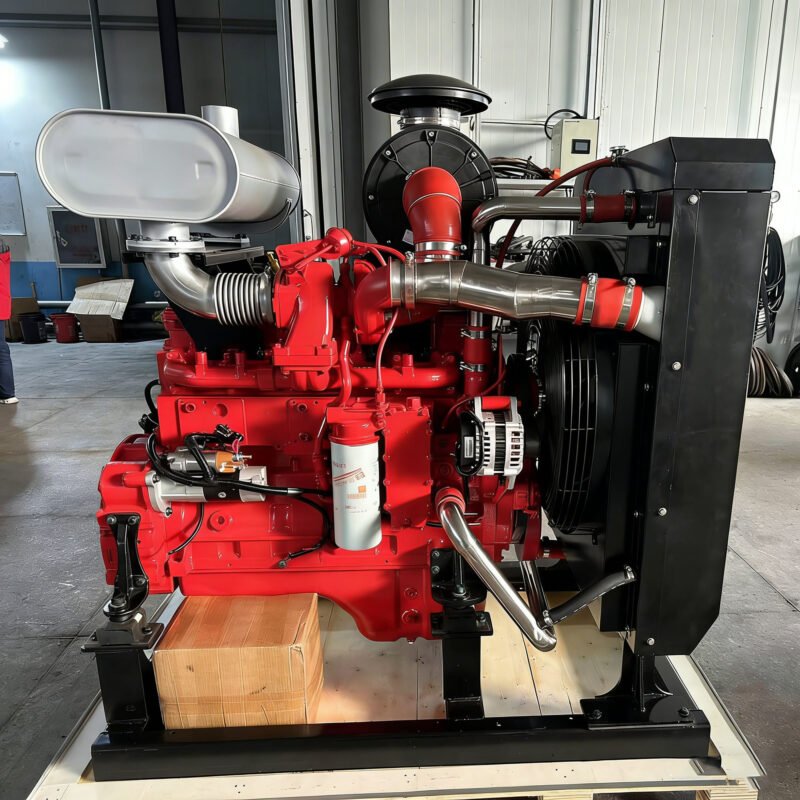
Why Torque Curves Matter More Than Peak Horsepower
Peak horsepower is often a misleading metric for heavy earthmoving equipment. Construction machinery requires immediate, low-end power to break ground or lift massive loads. Mechanical engineers prioritize the torque rise and overall torque curve over maximum horsepower.
A steep torque rise prevents the engine from stalling under sudden parasitic loads. When an excavator bucket hits dense bedrock, engine RPM drops sharply. A proper torque curve ensures the engine recovers quickly without stalling or requiring operator intervention.
When comparing commercial diesel engines, OEM buyers should analyze three specific performance metrics:
- Peak Torque Speed: The specific RPM where maximum twisting force is achieved. Lower RPMs generally improve fuel efficiency.
- Torque Reserve: The percentage increase in torque as engine speed decreases from its rated speed.
- Transient Response: How quickly the engine and turbocharger spool up to react to sudden hydraulic throttle changes.
How Emission Standards Impact OEM Packaging
Regulatory compliance dictates modern engine architecture. Procurement teams must match the engine’s emission certification to the machinery’s target export market. Failing to do so results in unsellable inventory or heavy customs fines.
Modern emission reduction relies on complex aftertreatment systems. These include Diesel Particulate Filters (DPF) and Selective Catalytic Reduction (SCR). These modular systems significantly impact the physical size, heat rejection, and cost of the engine block.
Off-Highway Emission Standards Comparison
| Standard | Target Market | Key Technologies Required | Packaging Impact |
| Tier 3 / Stage IIIA | Unregulated Regions | Mechanical / Basic Electronic Injection | Minimal |
| EPA Tier 4 Final | North America | High-Pressure Common Rail, SCR, DEF | High (Requires DEF tank) |
| EU Stage V | Europe | DPF, SCR, Advanced EGR | Very High (Strict limits) |
Engineers must account for these aftertreatment components during the initial 3D CAD design phase. Space inside a compact excavator or skid steer engine bay is extremely limited.
Real-World Application Matching
Different construction vehicles demand completely different duty cycles. You cannot use the same engine mapping for a continuous-duty generator and a wheel loader.
Excavators operate with frequent, severe load variations. The main hydraulic pumps draw massive power spikes intermittently. The diesel engine must feature rapid electronic governor response to maintain steady hydraulic flow.
Conversely, wheel loaders require continuous high-power output during the pushing and lifting phases. These engines need robust cooling systems to handle extended high-load operations. High ambient temperatures and heavy dust environments require oversized radiators and cyclonic air filtration.
Other critical application-specific features include:
- Power Take-Off (PTO) Capability: Essential for driving auxiliary hydraulic pumps directly from the gear train.
- Deep-Sump Oil Pans: Required to maintain oil pressure when machinery operates on steep gradients.
- Block Stiffness: A rigid engine block reduces Noise, Vibration, and Harshness (NVH) transferred to the operator cabin.
Evaluating a Diesel Engine Supplier for Construction Machinery
Supplier selection impacts the entire lifecycle of the OEM product. A cost-effective engine block is useless without reliable aftermarket support and customization flexibility. B2B procurement consultants must evaluate production scalability and warranty terms.
Global service networks are a non-negotiable requirement. If a specialized fuel injector fails on a remote mining site, replacement parts must be available immediately. Prolonged downtime destroys contractor profitability and ruins the OEM’s reputation.
Evaluate the supplier’s internal testing and OEM/ODM capabilities. Engines must undergo rigorous cold-start testing and continuous maximum-load validation. Reliable suppliers provide detailed Mean Time Between Failures (MTBF) data for specific engine families.
Next-Step Procurement Logic and Integration
Before finalizing a procurement contract, OEMs must analyze specific application data. This involves reviewing mounting points, cooling airflow constraints, and exhaust routing options. Aftertreatment packaging limits often dictate the final engine choice.
Reviewing technical catalogs and performance curves is the critical first step for procurement teams. You must align the engine’s power delivery exactly with your hydraulic system’s requirements.
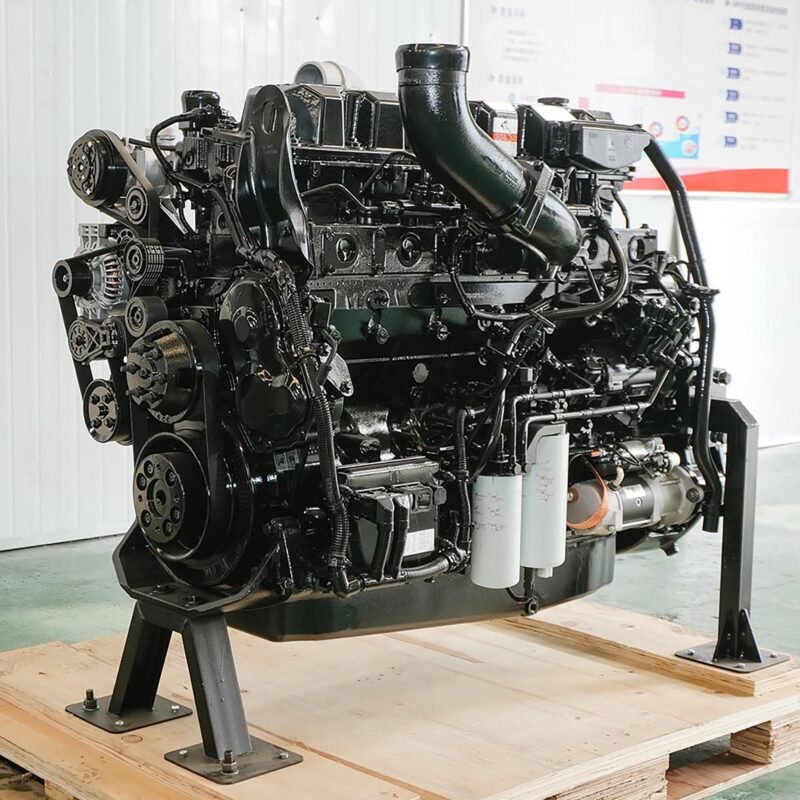
For engineers actively evaluating displacement ranges and customization capabilities, reviewing verified platforms is highly recommended. You can explore technical specifications, including the proven Cummins QSB, QSL, and 6BTA series, through Kangjin Power’s construction machinery engines directory. Analyzing these specific OEM/ODM options helps ensure the chosen power plant meets strict off-highway performance criteria.
FAQ
How do emission aftertreatment systems impact engine packaging?
Tier 4 Final and Stage V engines require DPF and SCR systems. These components add significant bulk and generate high heat rejection. OEM engineers must redesign engine bays to accommodate larger exhaust modules, DEF (Diesel Exhaust Fluid) tanks, and increased cooling capacity.
What is the typical overhaul interval for an off-highway diesel engine?
Depending on the displacement and duty cycle, major overhauls typically occur between 8,000 and 12,000 operating hours. Engines operating in extreme dust or high-load continuous conditions may require top-end rebuilds sooner. Strict adherence to fluid maintenance schedules extends these intervals.
Why is heavy-duty air filtration critical for construction engines?
Construction sites generate massive amounts of silica dust and airborne particulates. If dust bypasses the primary filter, it acts as an abrasive paste inside the cylinders. This causes rapid piston ring wear, loss of cylinder compression, and catastrophic engine failure.
Can one engine model be used globally for OEM equipment?
Generally, no. Emission regulations vary wildly by region. OEMs often specify a base engine platform but utilize different fuel systems and aftertreatment modules. You might install a Tier 4 Final version for North America and a mechanical Tier 3 version for unregulated export markets.
Reference Sources
- United States Environmental Protection Agency (EPA): Nonroad Compression-Ignition Engines: Exhaust Emission Standards.
- ISO 8178-4: Reciprocating internal combustion engines — Exhaust emission measurement — Part 4: Steady-state and transient test cycles for different engine applications.
- SAE International (J1995): Engine Power Test Code — Spark Ignition and Compression Ignition — Gross Power Rating.
- Diesel Technology Forum: Clean Diesel Technology for Off-Highway and Construction Equipment Applications.

