
Best Diesel Engine Manufacturers in China: B2B Procurement Guide

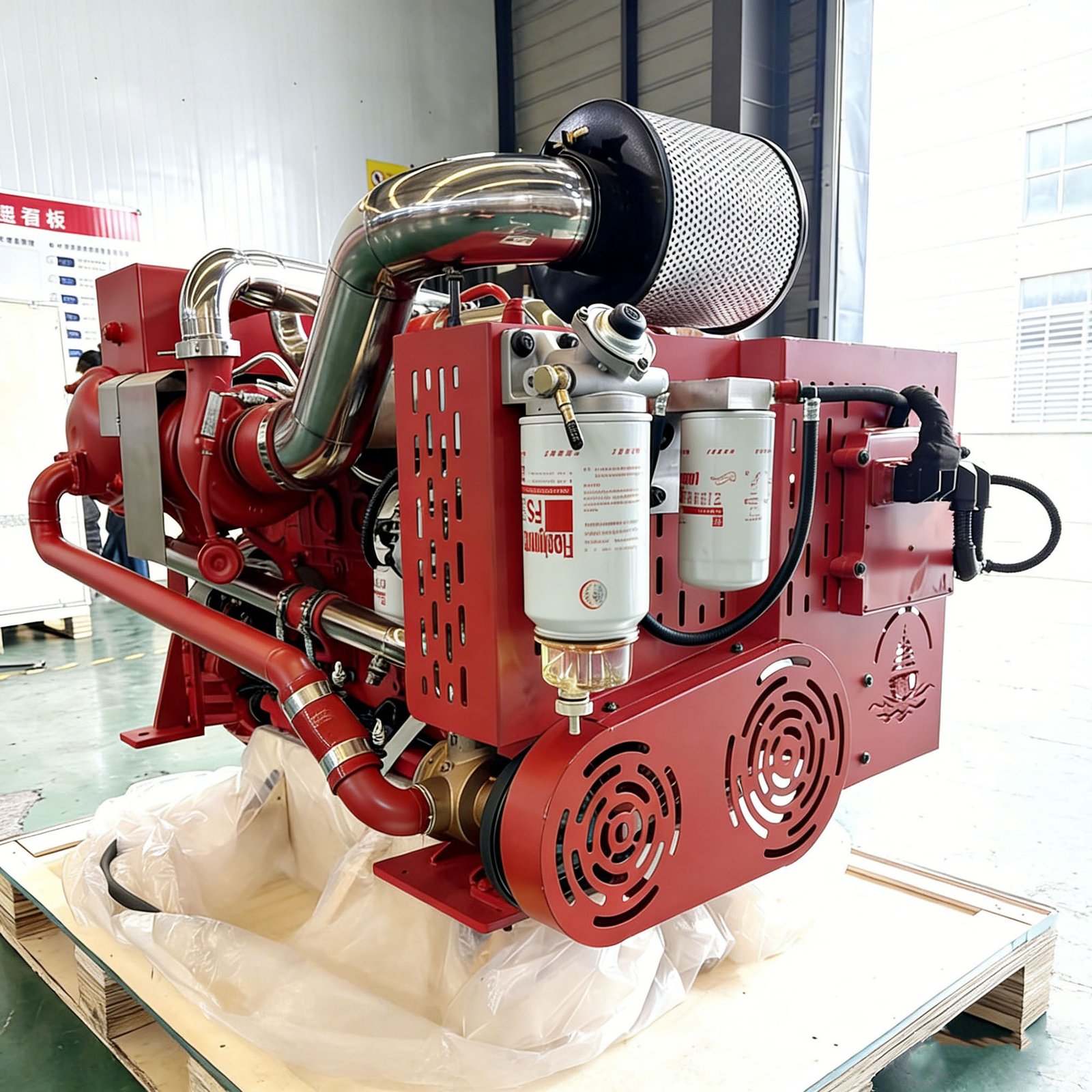
Selecting the right powertrain is a high-stakes decision for OEM project managers and heavy equipment distributors. China has transitioned from a high-volume producer to a high-precision engineering hub, making the search for “best” less about price and more about duty cycles, thermal efficiency, and global serviceability.
For international buyers, the challenge lies in distinguishing between manufacturers optimized for domestic use and those engineered for global compliance. Whether you are repowering a fleet of excavators or designing a new line of industrial generators, understanding the technical landscape of the Chinese diesel sector is the first step toward a reliable procurement strategy.
Decoding Performance: What Defines the Best Diesel Engines in China?
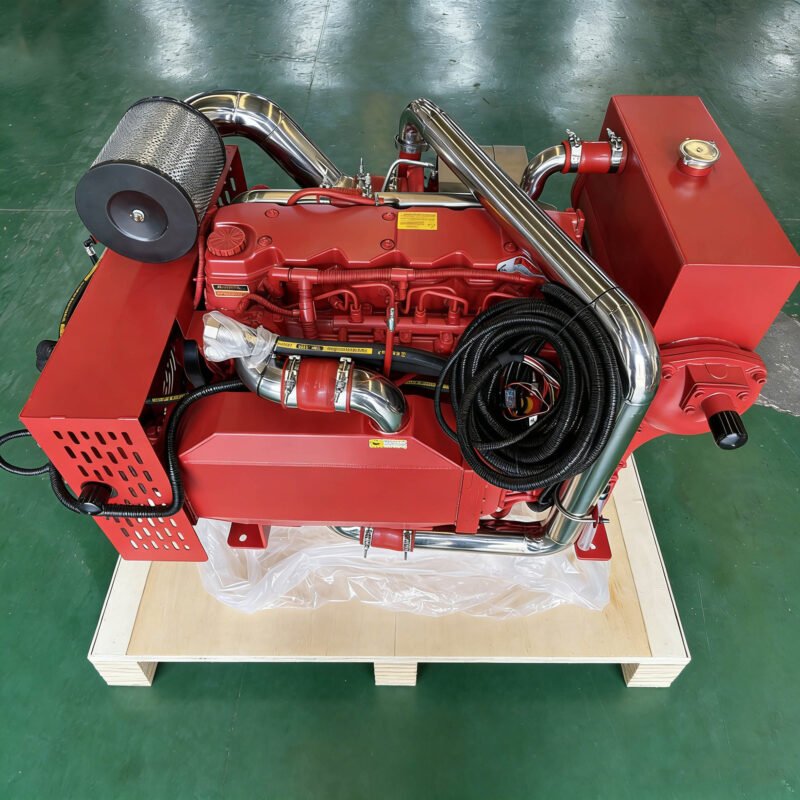
In the current market, the “best” manufacturer is defined by their ability to integrate High-Pressure Common Rail (HPCR) technology with sophisticated Electronic Control Units (ECUs). These systems ensure that engines meet stringent Tier 4 Final or Euro Stage V emission standards while maintaining fuel economy.
Professional buyers typically evaluate three technical pillars:
- Power Density: The ability to provide high torque at low RPMs, critical for construction and agricultural machinery.
- Serviceability: The availability of genuine spare parts (injectors, turbochargers, filters) in the target market.
- Duty Cycle Resilience: How the engine performs under continuous “Prime” loads versus “Standby” intermittent loads.
Strategic Breakdown: Leading Manufacturers for Industrial & Construction Use
China’s diesel engine landscape is divided into three distinct tiers. Each serves a specific commercial profile, from high-end global exports to cost-sensitive industrial applications.
1. Cummins (Joint Ventures: DCEC & CCEC)
Cummins operates through major joint ventures like Dongfeng Cummins (DCEC) and Chongqing Cummins (CCEC). These are widely considered the gold standard for export-oriented machinery.
- Technical Edge: They utilize global Cummins engineering standards, meaning an engine built in Xiangyang is technically equivalent to one built in Columbus, Indiana.
- Best For: Construction machinery (excavators, drill rigs) and heavy-duty power generation where global warranty support is non-negotiable.
2. Weichai Power
As a giant in the heavy-duty sector, Weichai has recently broken records for diesel engine thermal efficiency, exceeding the 52% threshold.
- Technical Edge: Exceptional structural rigidity in the engine block, designed to withstand high cylinder pressures.
- Best For: Marine propulsion, heavy trucks, and large-scale industrial power plants requiring 500kW+ outputs.
3. SDEC (Shanghai Diesel Engine Co.)
SDEC is a preferred partner for many domestic construction brands. Their engines, particularly the “D” and “G” series, are known for their “overbuilt” nature, which allows for high tolerance in harsh environments.
- Technical Edge: Excellent cold-start capabilities and optimized cooling systems for high-ambient temperature regions.
- Best For: Wheel loaders, rollers, and medium-range generators.
4. Deutz (Dalian)
The Dalian Deutz (DDE) joint venture brings German modular design to the Chinese manufacturing cost base.
- Technical Edge: Compact dimensions and a highly efficient power-to-weight ratio.
- Best For: Specialized industrial equipment where engine bay space is limited.
Technical Comparison: Power Ranges and OEM Suitability
For procurement teams, the following table summarizes the operational sweet spots for these manufacturers:
| Manufacturer | Core Power Range | Typical BMEP | Global Compliance | Recommended Application |
| Cummins (JV) | 20 – 2500 kW | High | Tier 4F / Stage V | High-end Construction & Export |
| Weichai | 30 – 10000 kW | Medium-High | Stage III / IV / V | Marine & Heavy Industrial |
| SDEC | 50 – 1000 kW | Medium | Stage III / IV | Construction & Ag Machinery |
| Yuchai | 15 – 4200 kW | Medium | Stage IV / V | Buses & Standby Power |
The Joint Venture vs. Domestic Brand Dilemma
A common commercial crossroads for buyers is choosing between a Joint Venture (JV) brand and a pure domestic brand.
Technically, JV engines (like those found in Kangjin Power’s construction machinery category) offer a lower risk profile for international projects. They use global part numbering systems, making it easier for a technician in Brazil or Australia to source a fuel pump or a gasket set.
However, domestic brands like Weichai or SDEC often provide superior value for “fixed installation” projects—such as mining sites or factory backup power—where the buyer can stock a centralized inventory of spare parts. The “best” choice is dictated by the maintenance infrastructure available at the final destination.
Optimizing the Supply Chain: Sourcing Construction Machinery Engines
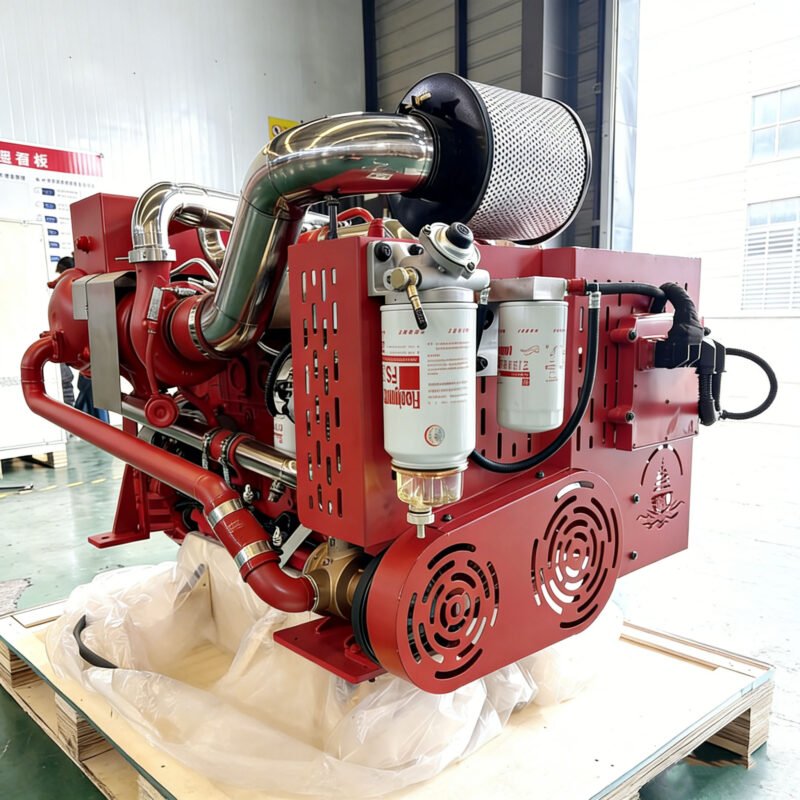
When sourcing engines for construction machinery, the procurement workflow must account for more than just the engine block. In high-vibration environments, the quality of the peripherals—the radiator, the air filtration assembly, and the mounting brackets—is what prevents premature failure.
Companies like Kangjin Power specialize in providing integrated construction machinery engines, including world-class brands like Cummins. Their expertise lies in ensuring the engine is matched correctly to the hydraulic load of the machine. For instance, an engine for a hydraulic excavator needs a specific torque curve compared to an engine used for a constant-speed water pump.
Quality Inspection and Verification for B2B Buyers
To ensure you are receiving “Tier 1” quality from Chinese manufacturers, the following verification steps are mandatory in any RFQ process:
- Component Traceability: Confirm the brand of the fuel injection system. High-end Chinese engines typically use Bosch or Denso common rail systems.
- Dynamometer Testing: Request full-load test reports (at least 2 hours) to verify fuel consumption and exhaust temperature stability.
- Certification Mapping: Ensure the EPA or CE certificate is valid for the specific engine family, not just a generic factory ISO certificate.
- Electronic Calibration: For OEM projects, ask if the manufacturer provides the “Insite” or equivalent software access for engine diagnostics and parameter tuning.
Final Procurement Logic
The “Best Diesel Engine Manufacturer in China” is a moving target that depends on your specific application. If your priority is global resale value and parts availability, the Cummins joint ventures remain the top choice. If your priority is raw power and thermal efficiency for a large-scale project, Weichai is the technical leader. For robust, mid-market construction equipment, SDEC and Deutz-Dalian offer the best balance of longevity and capital expenditure.
FAQ
Q1: Can Chinese diesel engines meet US EPA Tier 4 Final standards?
Yes. Leading manufacturers like Cummins (DCEC) and Weichai produce specific models equipped with Selective Catalytic Reduction (SCR) and Diesel Particulate Filters (DPF) that are fully certified for North American and European markets.
Q2: What is the average lifespan (B10 life) of a Tier 1 Chinese engine?
For heavy-duty engines from manufacturers like Weichai or Cummins JV, the B10 life (the point at which 10% of engines require an overhaul) typically ranges from 12,000 to 15,000 hours, depending on maintenance and load factors.
Q3: How do I handle warranty claims for engines purchased from China?
For JV brands, global warranty programs often apply. For domestic brands, it is standard commercial practice to negotiate a “spare parts percentage” (usually 1-3%) as part of the initial purchase to cover potential warranty issues locally.
Q4: Is it better to buy a complete engine or a “long block” for repowering?
For repowering existing construction machinery, a “complete engine” including the fuel system and turbocharger is recommended to ensure the electronic calibration matches the hardware, reducing installation downtime.
Reference Sources
- ISO 3046-1:2002: Reciprocating internal combustion engines — Performance.
- Internal Combustion Engine Industry Association (CICEIA): Market Trends and Technical Standards for Chinese Power Systems.
- DieselNet: Comprehensive database of global emission standards (China Stage IV/V/VI).
- SGS Technical Audits: Manufacturing process standards for heavy-duty engine blocks in China

