
Aftercooler vs Intercooler in Diesel Engines: Differences & Applications

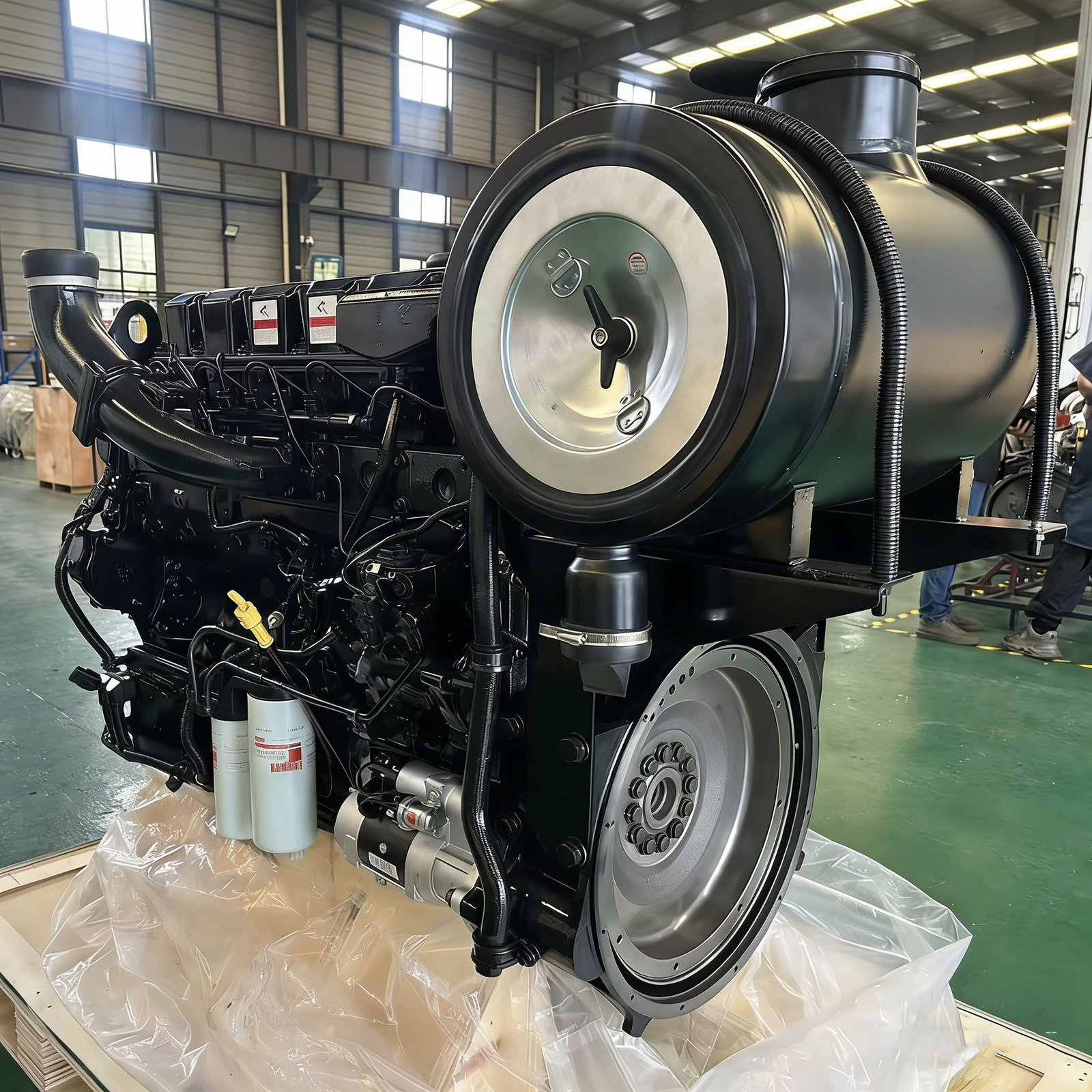
In diesel engines, an aftercooler and an intercooler both cool compressed intake air before it enters the cylinders. The terms are sometimes used interchangeably, although SAE terminology distinguishes them according to their position relative to the final compression stage. Their purpose is to reduce charge-air temperature, increase air density, and support efficient combustion. The actual cooling arrangement may use ambient air, engine coolant, or a separate liquid-cooling circuit.
For industrial diesel engines, the difference matters when evaluating cooling-system design, engine performance, and maintenance requirements. A charge-air cooler that cannot remove sufficient heat may increase intake temperature, reduce available air density, and affect engine output under sustained load.
What Are Aftercoolers and Intercoolers in Diesel Engines?
A charge-air cooler is a heat exchanger that reduces the temperature of compressed intake air before it enters the engine cylinders.
When a turbocharger compresses intake air, its temperature increases. Although the compressor raises air pressure, the resulting heat reduces air density compared with cooler air at the same pressure.
The cooler removes some of this heat before the air reaches the intake manifold. This allows the engine to receive denser charge air and maintain suitable combustion conditions.
What Is an Aftercooler?
An aftercooler cools compressed air after the final compression stage. In a typical single-stage turbocharged diesel engine, the cooler sits between the turbocharger compressor outlet and the intake manifold.
Aftercoolers can use different cooling arrangements:
- Air-to-air cooling, which transfers heat from compressed air to ambient air.
- Water-to-air cooling, which transfers heat into a liquid cooling circuit.
- Jacket-water aftercooling, which uses engine coolant to cool the compressed intake air.
The choice depends on engine design, installation space, cooling-water availability, operating temperature, and emissions requirements.
What Is an Intercooler?
In strict technical terminology, an intercooler cools compressed air between two compression stages in a multistage compression system.
For example, a two-stage compression arrangement may compress air in a low-pressure stage, cool it through an intercooler, and then compress it again in a high-pressure stage.
However, automotive and industrial markets often use the term intercooler for the charge-air cooler installed between a turbocharger and the intake manifold.
SAE International’s J1148 recommended practice explains that engine charge-air coolers may be called intercoolers or aftercoolers according to their position relative to the final compression stage.
Therefore, when comparing diesel engines, the cooling arrangement and heat-exchanger location matter more than the product name alone.
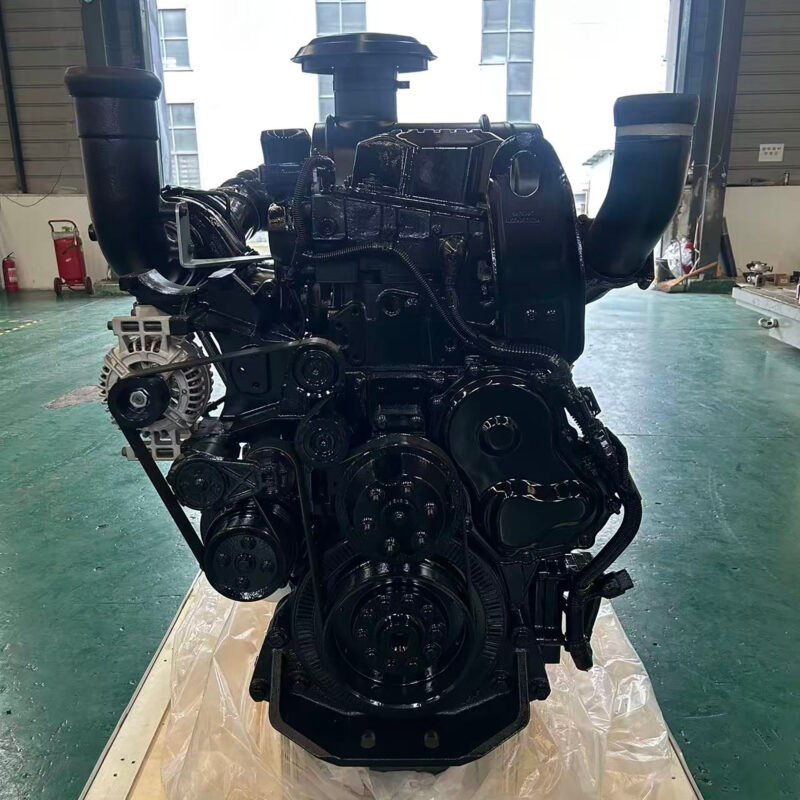
Aftercooler vs Intercooler: Key Technical Differences
The main distinction concerns terminology and system configuration rather than two completely different cooling technologies.
| Comparison | Aftercooler | Intercooler |
|---|---|---|
| Technical meaning | Cooling after the final compression stage | Cooling between compression stages |
| Typical position | After the final turbocharger compressor | Between compression stages |
| Cooling medium | Air or liquid coolant | Air or liquid coolant |
| Main purpose | Reduce final charge-air temperature | Reduce temperature before further compression |
| Typical application | Single-stage turbocharged diesel engines | Multistage compression systems |
| Terminology in industry | Often used for general charge-air cooling | Frequently used as a synonym for aftercooler |
Both devices can use similar heat-exchanger construction. The distinction does not automatically indicate different cooling efficiency or engine performance.
Why Terminology Can Be Confusing
Many engine manufacturers describe a cooler located after a turbocharger as an intercooler, while others use aftercooler or charge-air cooler.
For engine replacement and equipment integration, technicians should confirm the actual cooling arrangement rather than rely on the terminology in a parts listing.
Two engines described as aftercooled may use different coolant circuits, core designs, and installation layouts.
How Charge-Air Cooling Improves Diesel Engine Performance
Cooling compressed intake air improves its density and allows more oxygen to enter the cylinders at a given intake pressure.
This supports combustion, especially when the engine operates under high load and the turbocharger supplies substantial compressed air.
Higher Intake-Air Density
Air density depends on absolute pressure and absolute temperature.
For an ideal gas at a given pressure, density increases as absolute temperature decreases.
This explains why a charge-air cooler helps the engine receive more oxygen without requiring an equivalent increase in intake pressure.
The practical benefit depends on the cooler’s effectiveness, pressure losses, ambient temperature, and turbocharger operating conditions.
Improved Thermal Management
Charge-air cooling helps control the temperature of the air entering the cylinders.
Excessively hot intake air can increase thermal stress and reduce the available combustion margin under demanding operating conditions.
For industrial engines operating continuously under heavy loads, maintaining suitable charge-air temperatures is particularly important.
Support for Engine Power and Emissions Control
Denser intake air provides the engine with more oxygen for combustion. This supports the manufacturer’s intended fuel delivery and rated power characteristics.
Charge-air temperature also affects combustion and emissions behavior. Modern electronically controlled engines use intake-temperature and pressure information to adjust fuel delivery and other operating parameters.
However, aftercooling alone does not determine engine horsepower or guarantee lower emissions. Turbocharger sizing, injection strategy, engine calibration, cooling capacity, and exhaust aftertreatment also influence the final result.
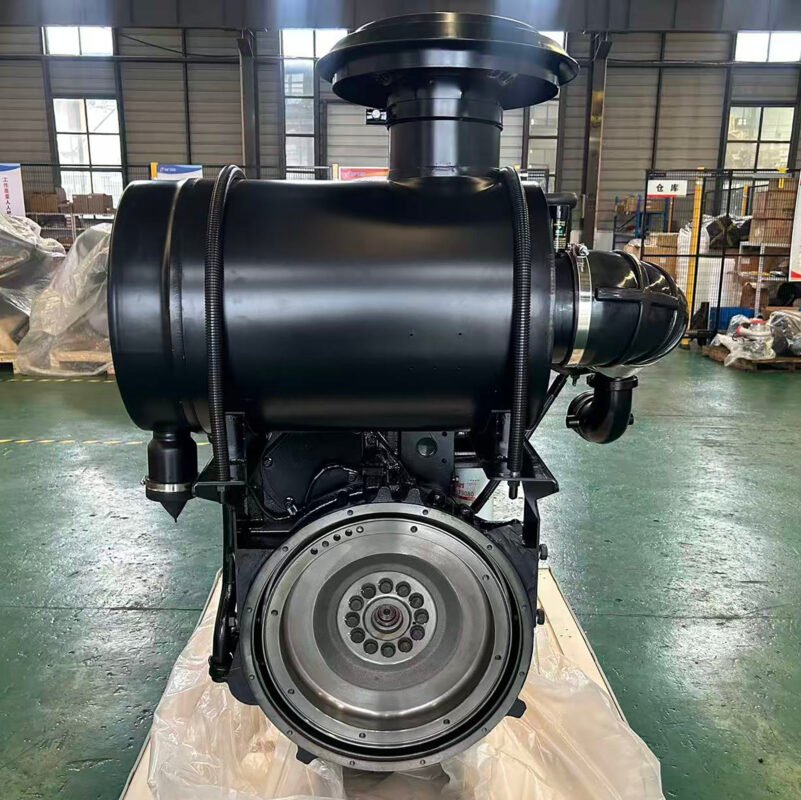
Air-to-Air vs Water-to-Air Aftercooling Systems
Diesel engines use different charge-air cooling arrangements depending on the application and available cooling resources.
Air-to-Air Charge-Air Cooling
An air-to-air cooler transfers heat from compressed intake air to ambient air flowing across the cooler core.
The arrangement is commonly used in construction machinery, trucks, and heavy-duty off-highway engines.
Its main components include:
- Turbocharger compressor outlet piping.
- Air-to-air cooler core.
- Cooling-air inlet and outlet.
- Charge-air hoses and connections.
- Intake manifold connection.
The cooling performance depends on ambient temperature, vehicle or machine airflow, cooler surface area, and core cleanliness.
Restricted cooling airflow or external contamination can reduce heat transfer during sustained operation.
Water-to-Air Charge-Air Cooling
A water-to-air cooler transfers heat from compressed air into a liquid coolant circuit through an internal heat exchanger.
This arrangement can provide effective cooling in installations where airflow across a large front-mounted cooler is difficult to arrange.
It is commonly found in marine engines and certain compact industrial installations.
Depending on the design, the coolant may circulate through a dedicated low-temperature circuit, a heat exchanger, or another manufacturer-specified cooling arrangement.
The system requires attention to coolant flow, inlet temperature, pressure, heat-exchanger cleanliness, and corrosion protection.
Jacket-Water Aftercooling
Some engines use jacket-water aftercooling (JWAC). This arrangement uses the same coolant circuit that cools the engine block and cylinder head to cool the compressed intake air.
Cummins describes JWAC as a traditional cooling-system configuration in which engine coolant also removes heat from the charge air.
However, other engines use separate low-temperature circuits to maintain lower charge-air temperatures.
| Cooling Arrangement | Heat Transfer Medium | Important Design Consideration |
|---|---|---|
| Air-to-air | Ambient air | External airflow and core cleanliness |
| Water-to-air | Liquid coolant or cooling water | Coolant flow and heat-exchanger condition |
| Jacket-water aftercooling | Engine jacket coolant | Combined engine and charge-air heat rejection |
| Separate low-temperature circuit | Dedicated coolant loop | Independent temperature control and heat rejection |
How to Diagnose Aftercooler and Intercooler Problems
A charge-air cooler problem can affect engine power, boost pressure, intake temperature, and fuel efficiency. Diagnosis should combine pressure and temperature measurements with physical inspection.
Charge-Air Leaks
Loose clamps, damaged hoses, cracked cooler cores, and leaking manifold connections can allow compressed air to escape.
Possible symptoms include:
- Reduced engine boost pressure.
- Loss of power under load.
- Increased exhaust smoke on some engine configurations.
- Abnormal whistling or hissing noises.
- Higher-than-expected exhaust temperatures.
Inspect all charge-air connections and follow the manufacturer’s approved pressure-testing procedure.
Restricted Cooler Core
Dust, oil contamination, and external debris can reduce airflow through an air-to-air cooler.
Internal contamination can also reduce the effective heat-transfer area.
Check both the external fins and internal passages. Cleaning methods must suit the cooler construction and manufacturer recommendations.
Excessive Charge-Air Temperature
High intake temperature may indicate inadequate cooling, high ambient temperature, reduced coolant flow, or a cooling-system fault.
Compare cooler inlet and outlet temperatures under similar engine operating conditions.
Also check boost pressure and coolant temperatures. A temperature difference alone does not establish whether the cooler performs correctly because airflow, pressure, and heat load affect the result.
Coolant Leakage in Water-to-Air Systems
A water-to-air cooler requires a sealed heat exchanger.
Internal leakage may allow coolant to enter the charge-air system or compressed air to enter the coolant circuit, depending on operating pressures and component condition.
Unexplained coolant loss, abnormal intake moisture, or changes in coolant condition require prompt investigation.
Follow the manufacturer’s pressure-testing and inspection procedures before returning the engine to service.
Aftercooler Applications in Cummins Industrial Diesel Engines
Different Cummins engine families use different charge-air cooling arrangements. The correct configuration depends on the engine model, application, and cooling package.
Cummins QSB6.7
The Cummins QSB6.7 diesel engine is a 6.7-liter inline six-cylinder engine with turbocharging and aftercooling.
Kangjin Power lists several industrial configurations with rated outputs ranging from 99 to 194 kW, depending on model and rated speed.
For construction machinery and generator applications, technicians should check the actual charge-air cooler arrangement, intake temperature, boost pressure, and engine cooling configuration.
Cummins QSM11
The Cummins QSM11 diesel engine is a 10.8-liter electronically controlled engine listed with turbocharging and air-to-air aftercooling.
Its cooling arrangement makes external cooling airflow and charge-air cooler cleanliness important considerations during heavy-duty operation.
For mining trucks, loaders, and construction equipment, blocked cooler fins or damaged charge-air connections can affect performance under sustained load.
Cummins 6CTA8.3
The Cummins 6CTA8.3 diesel engine is another turbocharged and aftercooled engine platform used in industrial machinery and generator applications.
Its specific cooling configuration should be confirmed against the engine model and installation documentation rather than assumed from the 6CTA8.3 family name alone.
The relationship between aftercooling, rated power, and engine configuration is also discussed in Kangjin Power’s 6CTA8.3 vs 6CTAA8.3 technical comparison.
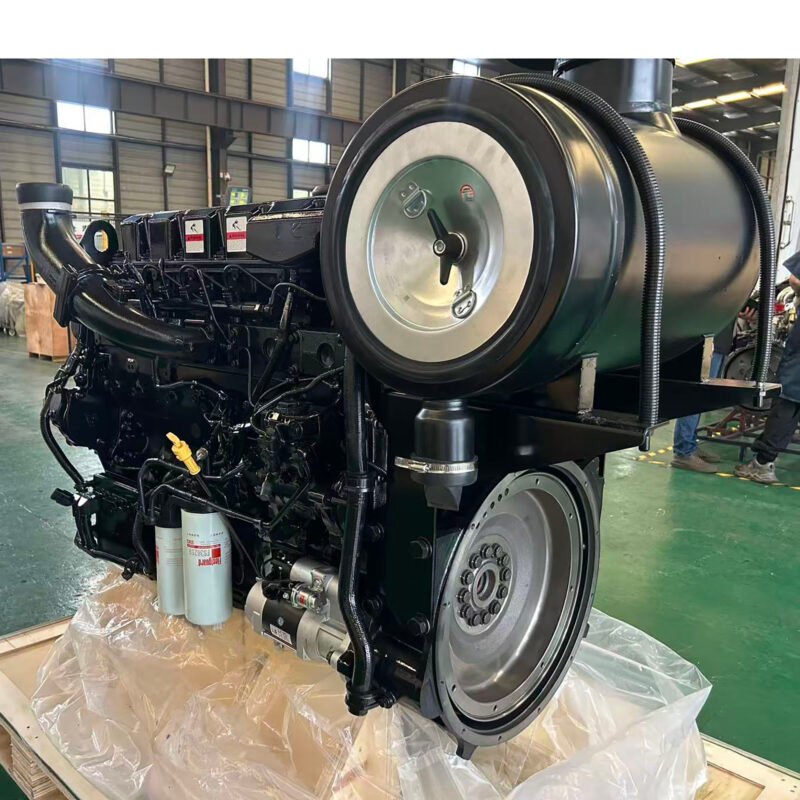
Choosing the Right Charge-Air Cooling Configuration
When evaluating an industrial diesel engine, the charge-air cooling system should match the equipment’s installation and operating conditions.
Important factors include:
- Engine rated power and operating speed.
- Expected ambient temperature and site altitude.
- Available cooling airflow or coolant supply.
- Charge-air temperature requirements.
- Permissible pressure drop through the cooler.
- Installation space and piping arrangement.
- Maintenance access and cleaning requirements.
- Compatibility with the engine’s cooling package.
For engine replacement projects, verify the complete intake and cooling interfaces before installation. Similar engine displacement does not guarantee identical cooler connections, pipe dimensions, or coolant requirements.
Likewise, a larger charge-air cooler does not automatically improve performance. Excessive pressure drop, unsuitable coolant temperatures, or poor airflow can offset the benefits of additional heat-exchanger capacity.
Conclusion
Aftercoolers and intercoolers both reduce compressed intake-air temperature, but their strict technical meanings depend on their position relative to the final compression stage. In everyday diesel engine terminology, manufacturers often use both names for the same charge-air cooling function.
For industrial applications, the more important consideration is the actual cooling arrangement. Air-to-air, water-to-air, and jacket-water aftercooling systems have different installation and maintenance requirements.
Correct charge-air cooling helps maintain intake-air density and engine thermal performance. Regular inspection of cooler cores, hoses, coolant flow, and pressure losses can help prevent power loss and unnecessary engine downtime.
Frequently Asked Questions
What is the difference between an aftercooler and an intercooler in a diesel engine?
In strict terminology, an intercooler cools compressed air between compression stages, while an aftercooler cools air after the final compression stage. However, diesel engine manufacturers often use both terms for charge-air coolers installed after a turbocharger.
Does an aftercooler increase diesel engine horsepower?
An aftercooler can support higher engine output by reducing charge-air temperature and increasing air density. Actual horsepower also depends on turbocharger performance, fuel delivery, engine calibration, and cooling-system capacity.
What is the difference between air-to-air and water-to-air aftercooling?
Air-to-air systems transfer charge-air heat to ambient air through a cooler core. Water-to-air systems transfer heat into a liquid cooling circuit. The best arrangement depends on the engine application and available cooling resources.
What causes an aftercooler to lose efficiency?
Common causes include blocked cooling fins, internal contamination, insufficient coolant flow, charge-air leaks, and damaged heat-exchanger components. Operating temperature and pressure measurements help identify the underlying problem.
Can a leaking intercooler cause diesel engine power loss?
Yes. A charge-air leak reduces the compressed air reaching the intake manifold. Depending on the engine control strategy, this can cause lower boost pressure, reduced power, increased smoke, and higher exhaust temperatures.
Technical References
The following technical references support the terminology, cooling-system design, and maintenance information discussed in this article.
- SAE J1148 – Engine Charge Air Cooler Nomenclature – Defines charge-air cooler terminology and distinguishes intercoolers from aftercoolers according to compression-stage position.
- Cummins T-030 – Liquid-Cooled Generator Set Application Manual – Explains jacket-water aftercooling, air-to-air aftercooling, and charge-air cooling system configurations.
- Cummins CFP15E Operation and Maintenance Manual – Describes charge-air cooler inspection, piping, hose connections, and maintenance considerations.

