
Cummins 6LTAA8.9 Specs: HP, Torque, Dimensions & Applications


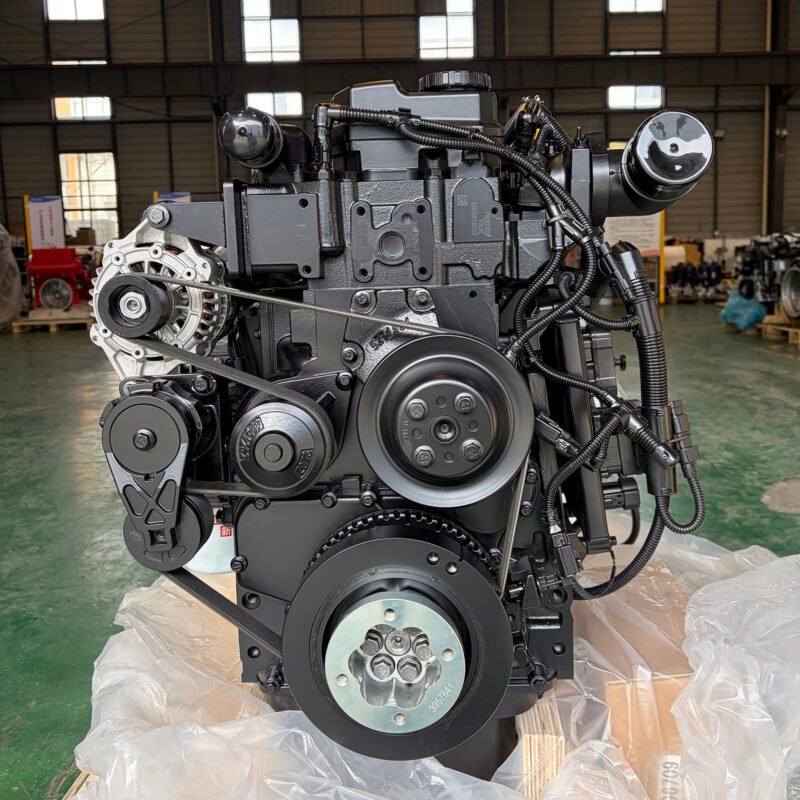
The Cummins 6LTAA8.9 is an 8.9-liter, inline 6-cylinder diesel engine outputting 220 to 360 horsepower (164–264 kW) and generating 950 to 1400 N·m of peak torque. Standard dimensions average 1,128 mm in length, 737 mm in width, and 1,098 mm in height, varying slightly based on the selected accessory configuration. OEMs utilize this specific platform for heavy-duty applications requiring high continuous power, such as dewatering pumps, construction excavators, and generator sets. Understanding these core cummins 6ltaa8.9 specs helps project managers balance power density with strict dimensional chassis limits.
How the 8.9L Block Architecture Drives Mechanical Durability
Heavy-duty industrial machinery operates in environments where metal fatigue is a constant threat. The 6LTAA8.9 utilizes a cast iron alloy block with a 114 mm bore and 145 mm stroke. This shorter stroke compared to the M11 series creates a highly compact physical footprint.
Engineers favor the wet cylinder liner design for its superior heat dissipation capabilities. Coolant flows directly against the outer liner wall inside the engine block. This rapid thermal transfer prevents cylinder distortion during continuous maximum-load operations.
- Configuration: Inline 6-cylinder, 4-stroke diesel
- Aspiration: Turbocharged and Air-to-Air Aftercooled
- Dry Weight: Approximately 650 kg (bare engine)
- Combustion System: Direct injection
Analyzing the Torque Curves for OEM Machinery
Machine performance relies entirely on how early peak torque is delivered under load. Analyzing cummins 6ltaa8.9 specs reveals that peak twisting force is achieved between 1200 and 1400 RPM. This low-end torque availability prevents hydraulic equipment from stalling under sudden resistance.
Operating at lower rotational speeds directly reduces internal component friction. This extends the mean time between overhauls (MTBO) for remote industrial fleets.
| Engine Configuration | Rated Output (kW @ RPM) | Peak Torque (N·m @ RPM) |
| 6LTAA8.9-C220 | 164 @ 2000 | 950 @ 1300 |
| 6LTAA8.9-C260 | 194 @ 2200 | 1240 @ 1200 |
| 6LTAA8.9-C325 | 239 @ 2200 | 1350 @ 1400 |
| 6LTAA8.9-C360 | 264 @ 2200 | 1400 @ 1400 |
Higher power ratings require highly responsive electronic fuel management. Systems using advanced CELECT or ISC modules adjust fuel metering instantly based on throttle position and manifold pressure.
Managing Thermal Limits in Continuous Industrial Operations
Different industries impose vastly different duty cycles on a diesel power plant. Standby generators might run sporadically, while municipal drainage systems operate continuously for days. Matching the cooling package to the exact application prevents catastrophic thermal failure.
For constant-speed applications, engineers specify setups like the 6LTAA8.9 water pump drive engine delivering 253 kW at 1800 RPM. These units feature integrated heavy-duty radiators and reinforced steel base frames. They are engineered strictly to maintain thermal equilibrium under 100% continuous load.
Vibration isolation is another critical factor for stationary pumps. Utilizing specialized polyurethane engine mounts dampens high-frequency chassis harmonics. This protects both the engine block and the connected pump impeller from structural fatigue over time.
Dimensional Tolerances and PTO Integration
Physical constraints dictate the final assembly workflow for OEM manufacturers. The air-to-air aftercooling system requires specific airflow routing through the machine’s engine bay. Restricted ventilation immediately elevates exhaust gas temperatures and degrades performance.
Exhaust backpressure must remain within stringent technical limits. Mandrel-bent exhaust piping is typically used to maintain gas velocity and prevent turbocharger lag.
Power take-off (PTO) integration requires standardized coupling points. Procurement teams sourcing a bare 6LTAA8.9 diesel engine typically request specific SAE flywheel housings. Standard SAE dimensions allow seamless mechanical bolting to proprietary hydraulic gearboxes or industrial alternators.
Evaluating Supplier Testing Protocols and Lead Times
Sourcing bare engines involves analyzing supplier assembly and testing standards. B2B purchasing managers must verify that strict quality control protocols are enforced prior to shipment. Without physical dynamometer testing, minor oil pressure leaks can destroy an engine in the field.
Reviewing established technical benchmarks for diesel engine suppliers helps buyers mitigate procurement risks. Reliable assembly plants perform comprehensive hot testing on every single unit. This validates thermostat activation, peak torque output, and electronic sensor calibration.
Production scalability and lead times also impact OEM assembly schedules. Standard industrial batch orders often require 6 to 8 weeks for custom PTO and radiator configurations. Buyers must secure digital 3D CAD files early to finalize physical chassis prototypes before manufacturing begins.

FAQ
What is the typical MOQ for customizing the SAE flywheel housing?
Specialized industrial engine suppliers often support highly flexible manufacturing. The minimum order quantity (MOQ) for custom flywheel and PTO configurations is typically just one unit.
How does the air-to-air aftercooler impact engine bay design?
The aftercooler requires a direct and unrestricted path for ambient air. OEMs must design the chassis ventilation to prevent hot air recirculation, which severely degrades combustion efficiency.
Are 3D CAD models provided prior to purchasing?
Reputable engineering suppliers provide accurate 3D step files during the RFQ phase. This allows OEM designers to digitally verify spatial tolerances before finalizing expensive physical prototypes.
What emission standards do these specific units meet?
The 6LTAA8.9 platform generally targets Euro II and Euro III regulations. This makes it highly suitable for global mining and construction sites operating outside strict Tier 4 final zones.
Reference Sources
- SAE International (J1349): Engine Power Test Code for Net Power and Torque.
- ISO 8528: Reciprocating internal combustion engine-driven alternating current generating sets.
- EPA (Environmental Protection Agency): Guidelines on Nonroad Compression-Ignition Engines.
- SGS Manufacturing Audits: Standard protocols for industrial engine factory compliance.

