
Selecting a Diesel Engine Supplier: 5 Technical Benchmarks

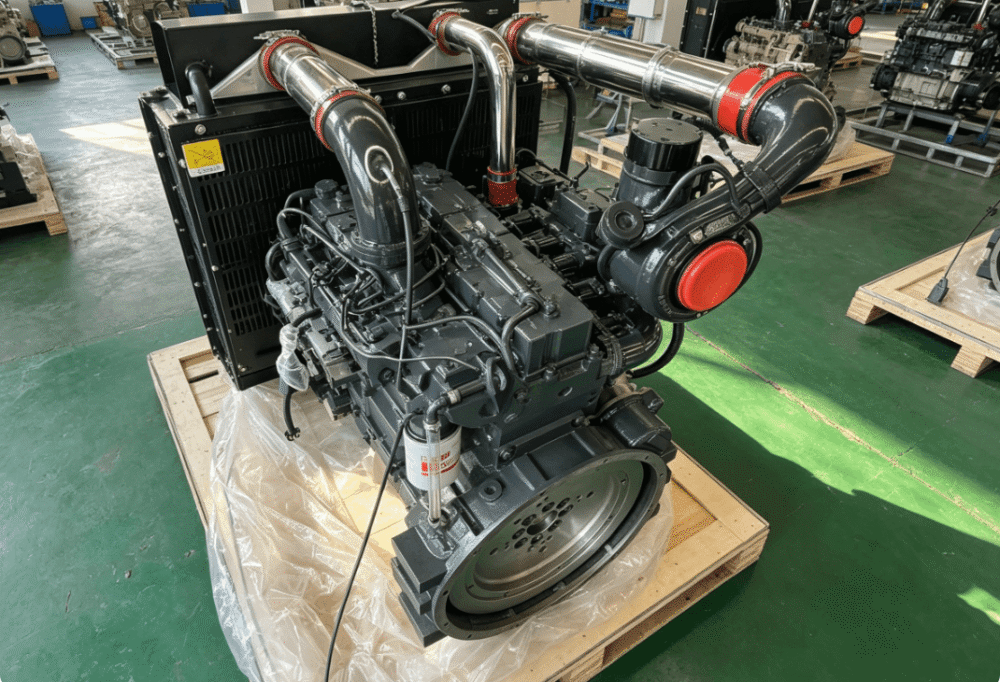
Selecting the right diesel engine supplier is a strategic decision that directly dictates the lifecycle cost and operational uptime of construction machinery. For OEM project managers and fleet procurement consultants, the engine is not merely a component; it is a long-term liability or asset. A mismatched supplier relationship leads to catastrophic field failures, spare parts bottlenecks, and emission non-compliance.
This guide outlines the technical and commercial criteria required to audit a supplier, ensuring that the power units integrated into your equipment—whether excavators, loaders, or road rollers—meet the rigorous demands of industrial duty cycles.
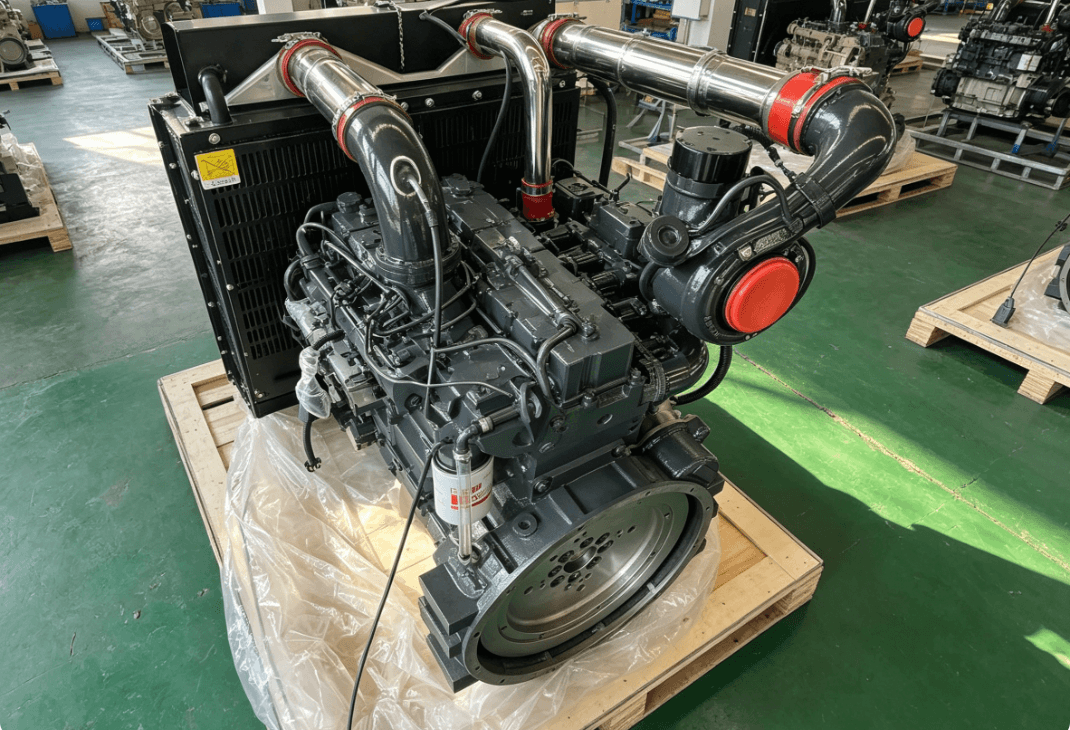
Defining Technical Compatibility: Displacement and Torque Curves
The first step in choosing a diesel engine supplier is verifying their technical alignment with your machinery’s hydraulic and mechanical requirements. Procurement teams often focus solely on rated horsepower (kW/HP), but engineers must look at the torque curve and power density.
For construction machinery, high low-end torque is essential for heavy breakout forces. A reputable supplier should provide comprehensive dynamometer test reports showing:
- Peak Torque at Low RPM: Vital for fuel efficiency and reduced engine wear.
- Power Take-Off (PTO) Options: The availability of independent or engine-driven PTOs for hydraulic pump integration.
- Cooling System Flexibility: Whether the engine configuration supports suction or pusher fans, essential for different machine enclosure designs.
Suppliers focusing onconstruction machinery enginestypically offer specialized configurations for high-vibration environments, featuring reinforced crankcases and heavy-duty filtration systems.
Emission Standards and Global Compliance
Regulatory landscapes define where your machinery can be sold and operated. A supplier’s value is often tied to their ability to provide engines across different emission tiers.
- Tier 2 / Tier 3 / Stage IIIA: Commonly required for non-regulated markets in Southeast Asia, Africa, and parts of South America. These engines emphasize mechanical fuel systems for easier maintenance in remote areas.
- Tier 4 Final / Stage V: Mandatory for North American and European markets. These require advanced Electronic Control Units (ECUs), Common Rail Fuel Injection, and Exhaust After-treatment (DPF/SCR).
A strategic supplier should offer a “global platform” approach, allowing you to use the same machine chassis with different engine tiers depending on the destination market.
Auditing Manufacturer Capability: Quality Control and Testing
Top-tier diesel engine suppliers must demonstrate rigorous manufacturing standards. An ISO 9001 certification is the baseline, but the following internal processes distinguish professional manufacturers:
- Cold and Hot Testing: Every engine should undergo a “hot test” (running under fuel) to check for leaks, abnormal vibrations, and thermal stability before leaving the factory.
- Component Traceability: The ability to track the metallurgy of crankshafts, pistons, and bearings back to the raw material batch.
- Tolerances and Machining: High-performance diesel engines rely on micron-level tolerances. Suppliers utilizing automated CNC machining centers for engine blocks ensure higher consistency than those relying on manual setups.
Comparison: OEM Branded vs. Strategic Industrial Suppliers
| Feature | Global Premium Brands (e.g., Cummins, Perkins) | High-Performance Industrial Suppliers (e.g., Kangjin Power) |
| Initial Cost | High (Premium pricing) | Competitive (High ROI) |
| Customization | Rigid (Standard configurations) | Flexible (Custom PTO/ECU mapping) |
| Parts Availability | Global Network | Direct-to-Factory / Regional Hubs |
| Lead Times | Often 16–24 weeks | Typically 4–8 weeks |
| Technical Support | Tiered/Bureaucratic | Direct Engineering Access |
The Logistics of Power: Lead Times and Spare Parts Support
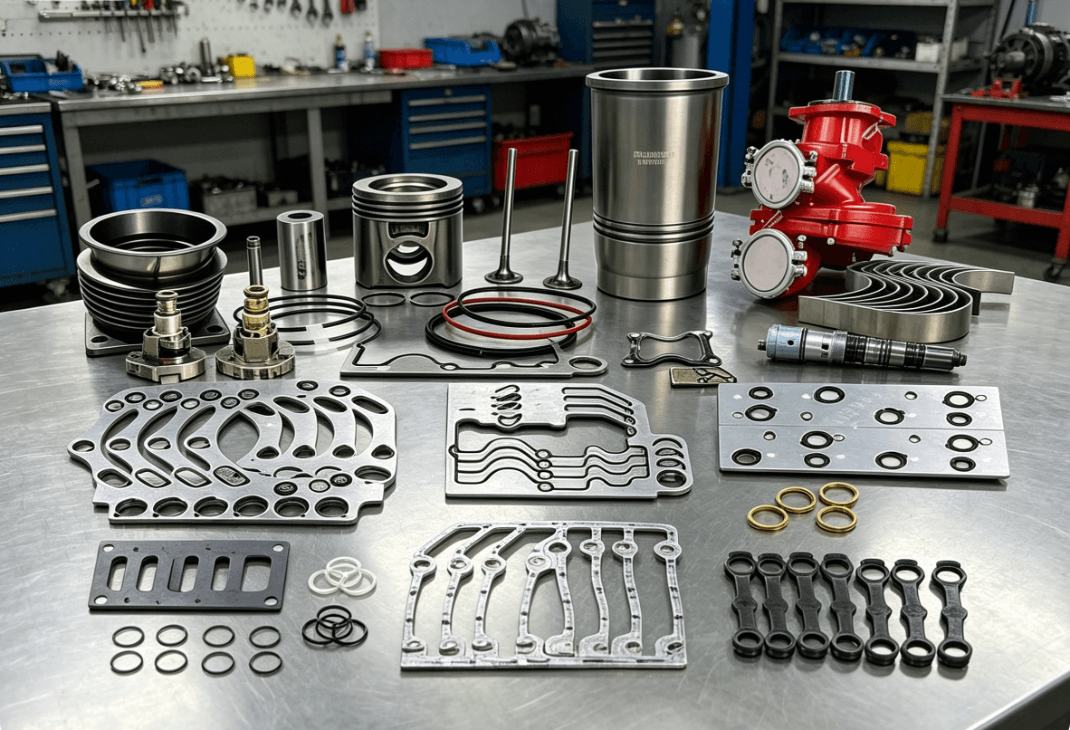
In the construction sector, downtime is priced by the hour. A supplier’s technical prowess is irrelevant if they cannot maintain a consistent supply chain for consumables and overhauling kits.
When evaluating a supplier’s logistics, ask for their “Fill Rate” for critical components like fuel injectors, turbochargers, and gaskets. Professional suppliers often provide Recommended Spare Parts Lists (RSPL) tailored to the first 2,000 and 5,000 hours of operation.
Furthermore, assess their lead time stability. OEM manufacturers require predictable delivery windows to manage their assembly lines. Suppliers that offer “buffer stock” for long-term contract partners provide a significant hedge against global shipping volatility.
Strategic Sourcing with Kangjin Power
For procurement specialists targeting the construction sector,Kangjin Powerprovides a balanced portfolio of heavy-duty diesel engines. Their focus on construction machinery ensures that the power units are engineered for high-altitude operation, extreme temperature ranges, and dusty environments common on job sites. By offering both complete engine assemblies and modular components, they allow OEMs to optimize their production workflows without the lead-time penalties often associated with larger, more rigid conglomerates.
FAQ
What is the difference between a mechanical and electronic fuel system?
Mechanical fuel systems rely on physical governors and are easier to repair in regions with limited diagnostic tools. Electronic systems (Common Rail) use an ECU to optimize combustion, providing better fuel economy and meeting stricter emission standards like Tier 4.
How do I verify the authenticity of a diesel engine from a Chinese supplier?
Check the engine nameplate for a unique serial number and verify it against the manufacturer’s database. Look for certifications from third-party inspectors like SGS or Bureau Veritas, and ensure the supplier provides a factory test certificate for each unit.
What is the typical warranty period for industrial diesel engines?
The industry standard is usually 12 months or 1,000 to 2,000 operating hours, whichever comes first. Premium suppliers may offer extended warranties for core components like the engine block and crankshaft.
Can a supplier customize the engine for specific hydraulic pump mounts?
Yes. Professional B2B suppliers can customize the flywheel housing and flywheel dimensions (SAE standards) to match specific hydraulic pump configurations used in construction equipment.
Reference Sources
- ISO 8528: International standard for reciprocating internal combustion engine-driven alternating current generating sets.
- SAE International (J1349): Engine Power Test Code for Net Power and Torque.
- EPA (Environmental Protection Agency): Guidelines on Nonroad Compression-Ignition (Diesel) Engines: Exhaust Emission Standards.
- SGS Manufacturing Audits: Technical reports on industrial engine factory compliance and quality inspection.

