
6CTA8.3 Engine Specifications & OEM Procurement Guide

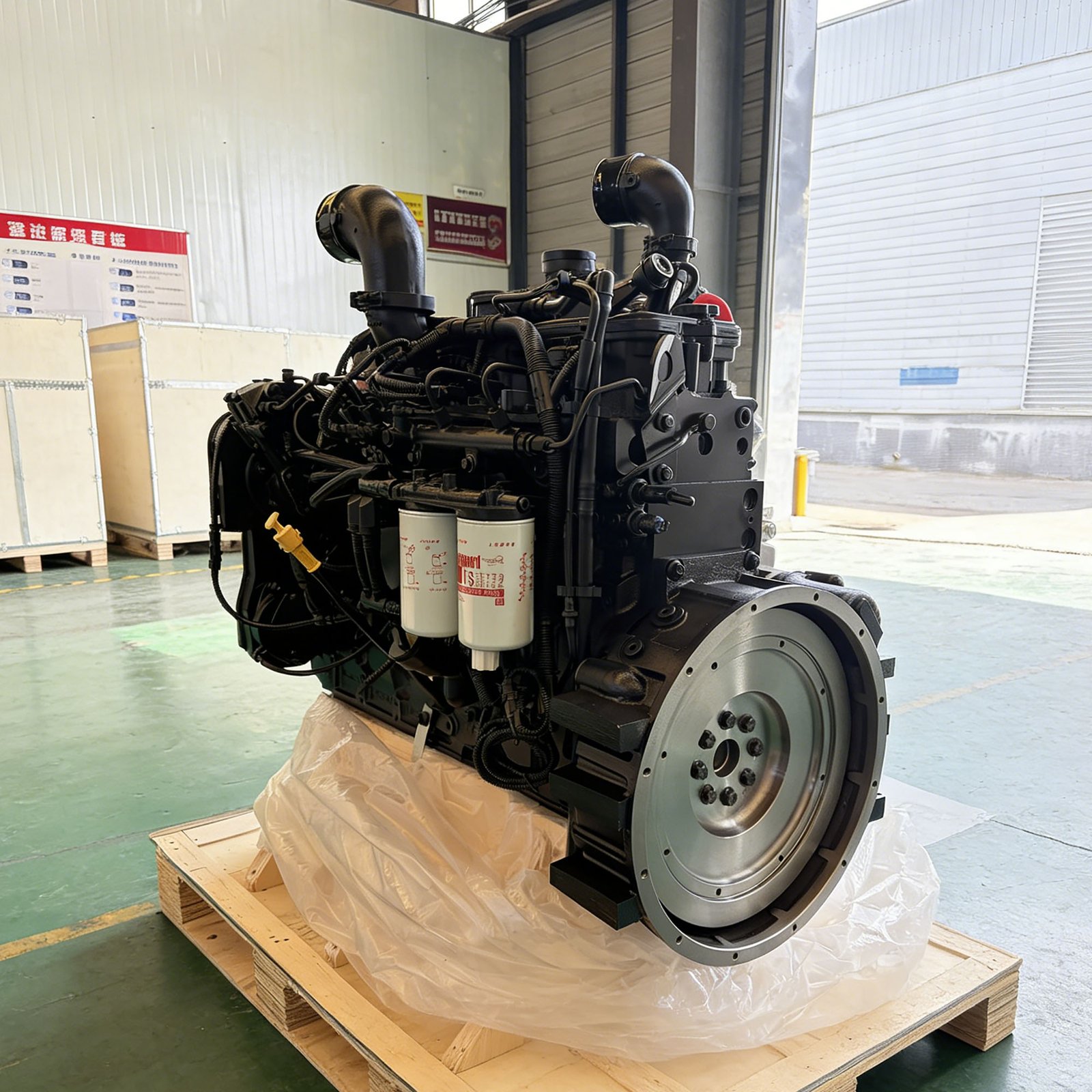
The 6CTA8.3 is an 8.3-liter, inline 6-cylinder, heavy-duty diesel engine designed for demanding industrial, agricultural, and construction environments. Built on a robust one-piece cast iron cylinder block, this turbocharged and aftercooled powerplant delivers between 193 and 264 horsepower. For B2B procurement managers and OEM project engineers, understanding the precise specifications and mechanical tolerances of the 6CTA8.3 is critical to ensuring optimal powertrain matching for high-load, continuous-duty machinery.
Unlike lighter automotive engines, the 8.3L architecture prioritizes low-speed torque, structural rigidity, and fuel tolerance, making it a foundational component for off-grid operations where equipment failure is not an option.
Mechanical Architecture: Why the 6CTA8.3 Endures Heavy Industrial Use
Industrial manufacturing and off-highway machinery demand reliable power delivery under harsh environmental conditions—including high dust, extreme temperature fluctuations, and heavy vibration. The 6CTA8.3 foundational strength comes from the heavy-duty C-Series platform.
Engineers specify this block for environments where prolonged peak-load operation is the norm. The mechanical advantages driving its adoption include:
- Wet Replaceable Cylinder Liners: Unlike parent-bore engines, the 6CTA8.3 uses wet liners that allow for easier in-field rebuilding without the need to remove the engine block from the machine chassis.
- High Displacement-to-Size Ratio: It delivers massive power density within a manageable physical footprint, leaving ample room in the engine bay for large cooling packages and hydraulic pump access.
- Thermal Stability: The targeted piston cooling nozzles and high-capacity water pumps reject heat efficiently during continuous heavy-load operations, preventing cylinder head warping.
- Forged Steel Crankshaft: Designed with hardened journals, the crankshaft easily absorbs the torsional stress generated by massive hydraulic pumps and direct-drive PTOs (Power Take-Offs).
These specific design parameters make the engine highly suitable for export markets, remote mining operations, and heavy industries where rugged durability outweighs the need for ultra-low emissions compliance.
Core 6CTA8.3 Specifications and Performance Output
Evaluating exact performance metrics is step one for OEM machine integration. The engine must perfectly align with the torque absorption curve of the machine’s hydraulic system or transmission.
When evaluating power nodes for a new fleet, OEM engineers typically review specific 6CTA8.3 diesel engine configurations to understand the available permutations for flywheel housings, oil pans, and fan drive ratios.
The table below outlines the standard configurations for the Stage II compliant models widely used in heavy industry:
| Engine Model | Rated Power (kW @ RPM) | Max Torque (N·m @ RPM) | Aspiration System |
| 6CTA8.3-C190-II | 142 kW @ 2200 | 860 N·m @ 1400 | Turbocharged & Aftercooled |
| 6CTA8.3-C215-II | 160 kW @ 2200 | 908 N·m @ 1500 | Turbocharged & Aftercooled |
| 6CTA8.3-C230-II | 172 kW @ 2200 | 1000 N·m @ 1500 | Turbocharged & Aftercooled |
| 6CTA8.3-C260-II | 194 kW @ 1900 | 1150 N·m @ 1300 | Turbocharged & Aftercooled |
General Technical Parameters:
- Engine Type: Inline 6-cylinder, 4-stroke
- Displacement: 8.3 Liters (8300 cc)
- Bore x Stroke: 114 mm × 135 mm
- Compression Ratio: Typically 16.5:1 to 17.3:1 (depending on exact model)
- Dry Weight: Approximately 600 kg to 630 kg (excluding auxiliary cooling packs)
- Rotation: Counterclockwise (facing the flywheel)

Matching Power to Application: Construction and Heavy Machinery
Matching engine performance characteristics to real-world operational demands is an complex engineering requirement. The 8.3L displacement hits a specific sweet spot for heavy machinery requiring sustained lugging power rather than rapid acceleration.
The physical demands of earthmoving and material handling require specialized construction machinery engines capable of dealing with severe shock loads. Here is how the 6CTA8.3 integrates into various sectors:
Large Excavators and Wheel Loaders
In the 20-to-30-ton excavator class, or heavy 5-to-7-ton payload wheel loaders, hydraulic stalling is a major concern. The 6CTA8.3 addresses this by delivering peak torque early—often around 1300 to 1500 RPM. This allows the machine to break through dense rock and compacted soil without forcing the operator to run the engine at redline, thereby saving fuel and reducing thermal load.
Heavy-Duty Commercial and Vocational Vehicles
The engine remains a staple for 8×4 dump trucks, cement mixers, and specialized transport trucks. Mountainous terrain, stop-and-go quarry driving, and continuous heavy payloads require the aggressive climbing capability provided by the engine’s 1150 N·m torque output.
Stationary Power and Pumping Equipment
For stationary power, the engine is frequently paired with Stamford or Leroy-Somer alternators to create robust diesel generator sets (typically in the 200 kWe to 250 kWe range). Furthermore, in industrial dewatering, dredging, and high-capacity fire pump applications, its ability to maintain stable RPM under sudden load shifts is unmatched.
Fuel System Architecture: Mechanical PT vs. Electronic Injection
One of the most critical decisions a B2B buyer must make is selecting the appropriate fuel delivery system based on the target market regulations and operating environment.
The Mechanical PT Fuel System
The classic 6CTA8.3 utilizes a mechanical PT (Pressure-Time) fuel pump. This configuration remains highly sought after for its bulletproof reliability. Because it operates entirely without an Engine Control Unit (ECU) or complex wiring harnesses, it is completely immune to electronic sensor failures caused by extreme vibration or moisture. More importantly, mechanical systems exhibit superior tolerance for the high-sulfur diesel fuel commonly found in mining camps and developing regions. Troubleshooting requires standard mechanic tools, not proprietary diagnostic laptops.
Electronic Injection Systems
For regions with stricter emissions regulations (such as China Stage III or specific EPA tier requirements), later iterations of the 8.3L block feature electronic fuel injection. The electronic mapping provides precise fuel atomization, slightly improving fuel economy and reducing particulate matter. However, this comes at the cost of increased maintenance complexity and demands higher-quality, low-sulfur diesel to prevent injector fouling.
TCO, Procurement Strategy, and Evaluating Engine Costs
Procuring heavy-duty engines involves analyzing the Total Cost of Ownership (TCO) rather than just the initial factory sticker price. A cheap base engine can quickly become expensive if it requires extensive chassis modification or fails prematurely.
To accurately forecast your B2B manufacturing and procurement budgets, consulting a comprehensive diesel engine price guide is highly recommended. Buyers must account for hidden costs such as peripheral integration components, export-grade packaging, and international freight charges.
When evaluating a supplier or OEM manufacturing partner, purchasing agents should verify several operational capabilities:
- Customization at the Factory Level: Can the supplier modify the oil pan sump orientation (front vs. rear) to clear your machine’s front axle? Can they provide exact SAE standard flywheel housings (e.g., SAE 2 or SAE 3) to match your transmission?
- Order Flexibility and MOQs: Prototype development requires low volume. Look for B2B suppliers that support a Minimum Order Quantity (MOQ) of just 1 unit for testing and validation before committing to a 50-unit container.
- Quality Assurance Workflows: The supplier should provide comprehensive performance dyno-test videos, pressure reports, and electronic data prior to authorizing shipment.
- Logistics and Export Compliance: Heavy engines require specialized handling. Ensure the factory utilizes treated wooden box packaging compliant with ISPM 15 standards and offers flexible Incoterms (FOB, CIF, DDP).
A mature supplier bridges the gap between raw manufacturing and practical engineering support, ensuring that the engine you order drops seamlessly into your production line.

FAQ
What is the standard MOQ for purchasing customized 6CTA8.3 engines?
For specialized B2B suppliers focusing on industrial manufacturing, the Minimum Order Quantity (MOQ) is generally 1 unit. This low barrier allows OEM engineers to order a single engine for physical fitment, cooling package validation, and performance testing before placing large volume orders.
Can the mechanical 6CTA8.3 diesel engine operate safely on low-quality fuel?
Yes. Configurations equipped with the classic mechanical PT fuel system and standard injectors exhibit a high tolerance for varying diesel grades. This makes them highly suitable for remote construction sites, agricultural settings, and export markets where ultra-low sulfur diesel (ULSD) is unavailable or inconsistent.
What is the standard lead time for an industrial OEM engine order?
Lead times fluctuate based on the depth of customization (e.g., specialized PTOs, custom paint, or specific wiring harnesses), factory production schedules, and total order volume. Typically, a standard configuration can be prepared in 15 to 25 days. Buyers should issue an RFQ detailing exact technical requirements for a precise production schedule.
How do I match the engine to my machine’s hydraulic pump?
Integration requires aligning the engine’s torque curve with the hydraulic pump’s displacement demands. You must specify the correct SAE flywheel housing size and flywheel specification when ordering to ensure the splines or coupling components bolt together seamlessly without aftermarket adapters.
What does the manufacturer’s warranty typically cover?
Reputable industrial suppliers offer a warranty—often 6 to 12 months from the date of commissioning—covering main internal block components such as the crankshaft, pistons, and cylinder head against manufacturing defects. Consumable wear parts (filters, belts) and damage from improper installation or oil starvation are excluded.
Reference Sources
- ISO 3046-1:2002: Reciprocating internal combustion engines — Performance — Part 1: Declarations of power, fuel and lubricating oil consumptions, and test methods.
- SAE International (J617): Standard for Engine Flywheel Housings and Mating Dimensions, utilized for industrial power-take-off matching.
- Association of Equipment Manufacturers (AEM): Best practices and engineering guidelines for Heavy Machinery Powertrain Integration.
- Kangjin Power Technical Data: Official performance curves, CAD fitment data, and factory compliance documentation for industrial diesel engines.

