
Marine Diesel Engine Price & Service Intervals: B2B Sourcing Guide

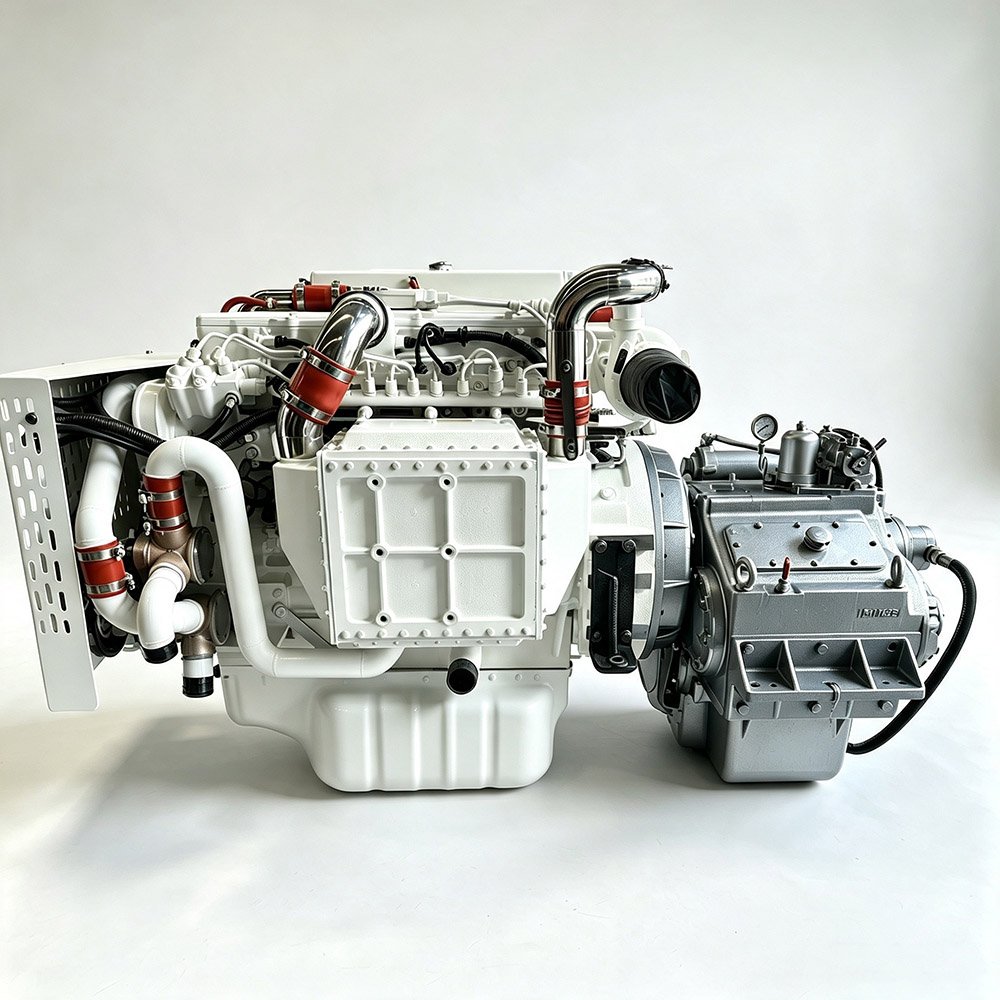
Marine Diesel Engine Price Guide and Maintenance Logistics for B2B Buyers
Evaluating the true marine diesel engine price requires analyzing more than the initial capital expenditure. For commercial shipyards and fleet operators, procurement involves calculating the total cost of ownership. This includes fuel consumption rates, emission compliance hardware, and predicted diesel engine service intervals.
Marine engines operate under continuous heavy loads in corrosive environments. Unlike automotive counterparts, marine variants require specialized heat exchangers, water-cooled exhaust manifolds, and marine-grade wiring harnesses. These structural differences directly impact manufacturing costs and lead times.
This guide details how OEM project managers and B2B buyers should evaluate marine engine specifications, compare supplier capabilities, and forecast long-term maintenance costs.
What Determines a Marine Diesel Engine Price?
A marine diesel engine price fluctuates based on displacement, power output, and regulatory compliance. High-horsepower engines require reinforced cylinder blocks and forged steel crankshafts to handle immense torque. These heavy-duty materials drive up raw manufacturing costs.
Emissions standards also play a critical role in pricing. Engines designed to meet strict IMO Tier III or EPA Tier 4 standards incorporate complex aftertreatment systems. Features like Selective Catalytic Reduction (SCR) or Diesel Particulate Filters (DPF) add significant expense compared to unregulated or Tier II models.
Primary Marine Engine Cost Drivers:
- Aspiration System: Turbocharged and aftercooled (TA) engines cost more than naturally aspirated models but offer superior power density.
- Fuel System Type: High-pressure common-rail (HPCR) systems are more expensive than mechanical injection but provide better fuel efficiency.
- Cooling Configuration: Heat exchanger configurations usually carry different tooling and material costs than keel-cooled setups.
- Marine Classification: Engines certified by societies like ABS, DNV, or Lloyd’s Register command premium pricing due to rigorous testing standards.
Specifying Engines for Commercial vs. Recreational Applications
The intended vessel application dictates the required engine rating, which heavily influences the procurement budget. A continuous duty rating implies the engine runs at full throttle for thousands of hours annually. These engines require robust cooling capabilities and lower operating RPMs.
Tugboats, commercial fishing vessels, and cargo ships rely on continuous duty engines. For these applications, buyers often select larger displacement engines operating at lower speeds to minimize internal wear. In contrast, patrol boats or light ferries might use high-speed, light-duty engines designed for rapid acceleration rather than continuous maximum load.
When evaluating supplier platforms, buyers must match the vessel’s operational profile to the engine series. For example, a heavy displacement hull requires consistent low-end torque rather than high peak horsepower.
Diesel Engine Service Intervals: Maximizing Fleet Uptime
Understanding diesel engine service intervals is mandatory for calculating the operational budget. Preventative maintenance prevents catastrophic failures at sea. Engine manufacturers provide specific schedules based on operating hours and fuel burn rates.
Routine service intervals generally fall into 250-hour or 500-hour increments. At these marks, engineers must replace oil filters, fuel filters, and zinc anodes. Zinc anodes are sacrificial metals that protect the engine’s internal cooling circuit from galvanic corrosion. Ignoring anode replacement leads to severe heat exchanger failure.
Standard Marine Diesel Maintenance Milestones:
| Operating Hours | Required Maintenance Action | Component Focus |
| 250 – 500 Hours | Basic fluid and filter changes. | Oil, primary/secondary fuel filters, zincs. |
| 1,000 Hours | Cooling system inspection and valve lash adjustment. | Heat exchanger cleaning, valve clearance. |
| 3,000 – 5,000 Hours | Fuel injector testing and turbocharger inspection. | Injector spray patterns, turbo bearing wear. |
| 10,000+ Hours | Top-end or complete in-frame overhaul. | Cylinder liners, piston rings, main bearings. |
Commercial operators often utilize oil sampling to safely extend these intervals. Laboratory analysis of used engine oil reveals microscopic metal wear, allowing fleet managers to predict component fatigue before it causes downtime.
Procurement Workflow: Evaluating OEM/ODM Marine Engine Suppliers
Procuring engines for new vessel construction or fleet repowers requires vetting the supplier’s manufacturing capabilities. B2B buyers must ensure the factory provides comprehensive documentation, including power curves, installation drawings, and emissions certificates.
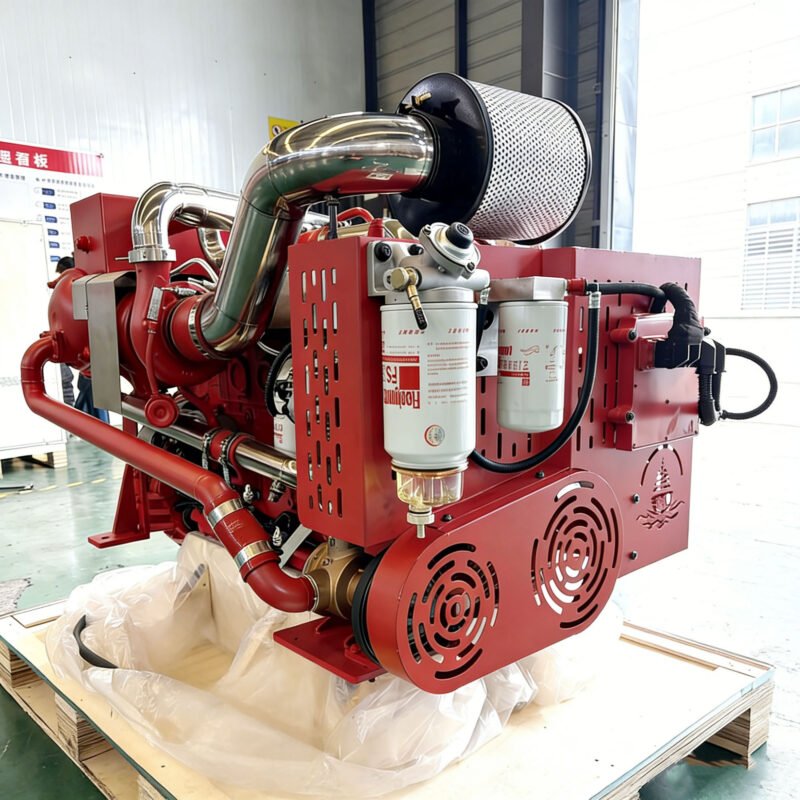
Engine packaging and logistics are equally important. Marine engines are heavy and susceptible to transit damage. Suppliers must utilize custom steel shipping skids and anti-corrosion barrier bags for international ocean freight. Buyers should request exact crated dimensions to calculate container shipping limits accurately.
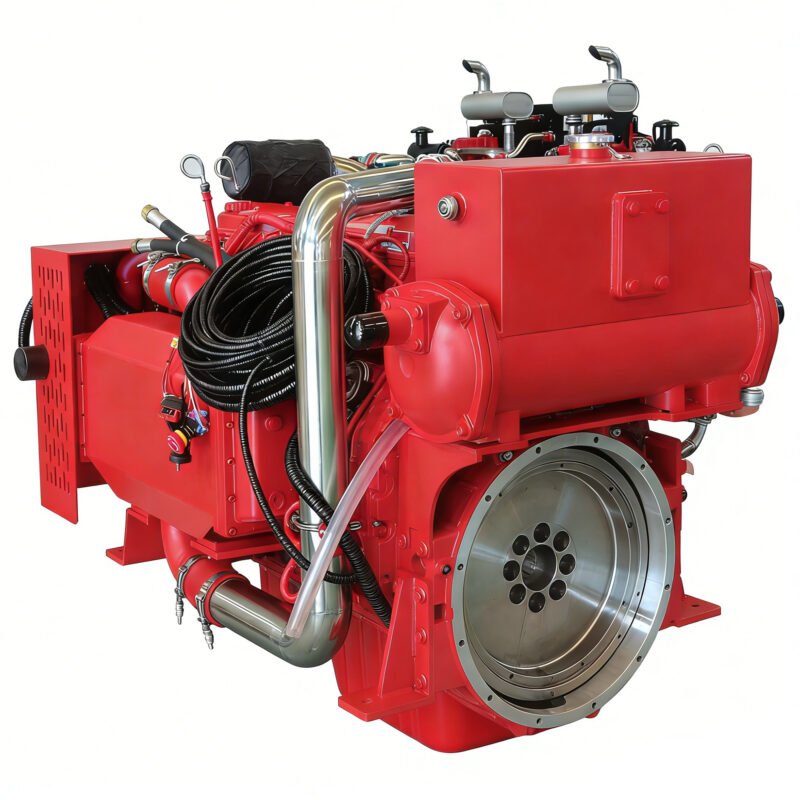
For shipbuilders requiring reliable heavy-duty propulsion, exploring established industrial series is highly recommended. Facilities like Kangjin Power offer comprehensive marine engines, including highly regarded series like the 6LTAA9.5, QSB4.5, QSB6.7, and QSL9.5. These models deliver proven power density and offer robust OEM/ODM customization for specific maritime projects.
When requesting a quotation, always specify the required cooling method, 12V or 24V electrical system, and the intended marine transmission gear ratio. This ensures the factory configures the engine correctly before dyno testing and final shipment.
FAQ
What is the average lifespan of a commercial marine diesel engine?
With strict adherence to scheduled diesel engine service intervals, a heavy-duty commercial engine can exceed 20,000 operating hours before requiring a major overhaul. High-speed, light-duty engines generally have shorter lifespans, often requiring rebuilds around 5,000 to 10,000 hours.
Does a marine diesel engine price include the transmission?
Typically, the base engine price does not include the marine gear (transmission). Buyers must specify the required reduction ratio in their RFQ. The factory or supplier will quote the marine transmission as an additional integrated component.
How does common-rail injection affect maintenance?
Common-rail systems offer superior fuel economy and lower emissions. However, they require highly pristine fuel. Buyers must install heavy-duty primary fuel-water separators, as even microscopic water contamination can destroy high-pressure injectors.
Can an OEM factory customize engine mounts?
Yes. Reputable ODM/OEM suppliers can design and manufacture custom engine brackets. This is especially critical for repower projects where the new engine must align perfectly with the vessel’s existing stringer dimensions.
Reference Sources
- ISO 8217: Specifications of marine fuels and their impact on commercial injection systems.
- ABS (American Bureau of Shipping): Rules for Building and Classing Marine Vessels (Machinery and Systems standards).
- EPA Marine Diesel Engine Emission Standards: Tier 3 and Tier 4 regulatory frameworks and compliance design costs.
- Kangjin Power Technical Specifications: QSB and QSL marine engine operational parameters, customization capabilities, and B2B export standards.

