
Choosing a Diesel Engine Spare Parts Supplier: A Technical Procurement Guide

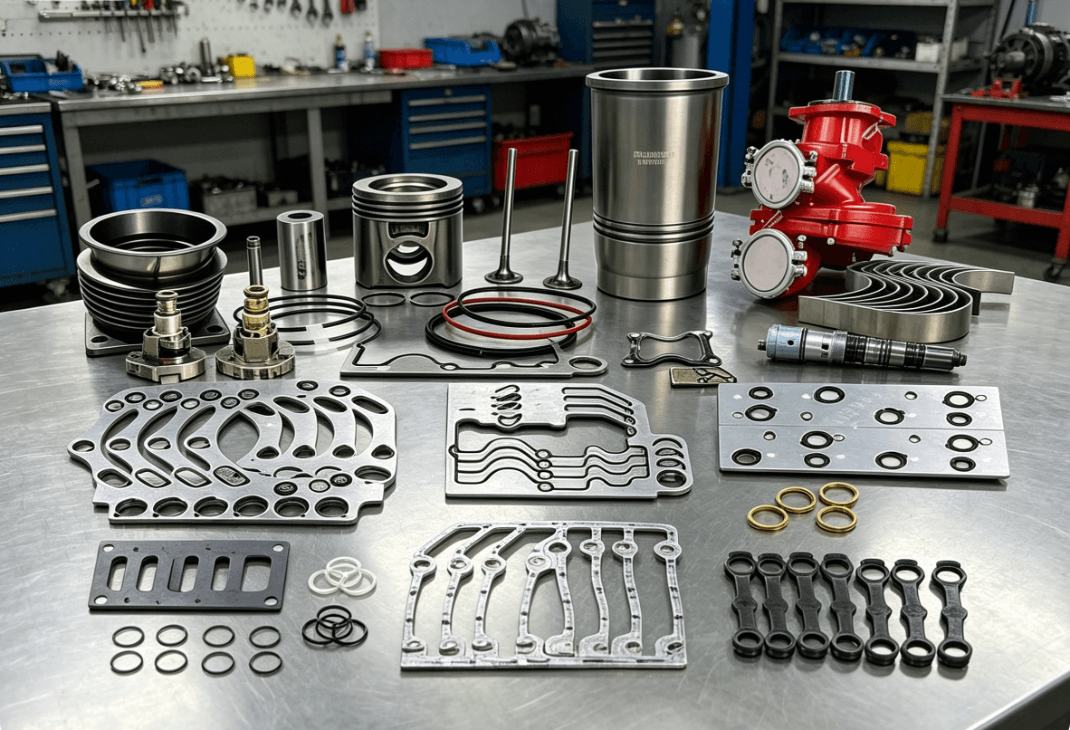
The reliability of a heavy-duty diesel engine is only as strong as its weakest component. Consequently, for procurement managers and fleet engineers, the search for a diesel engine spare parts supplier is not merely a price-comparison exercise; rather, it is a critical risk-mitigation strategy. In practice, within demanding industrial applications—ranging from power generation to marine propulsion—even a single inferior piston ring or a poorly machined cylinder head can lead to catastrophic engine failure and thousands of dollars in hourly downtime. To address these stakes, this guide outlines the technical and commercial benchmarks necessary to evaluate suppliers, ensuring your supply chain supports the longevity and thermal efficiency of your engine assets
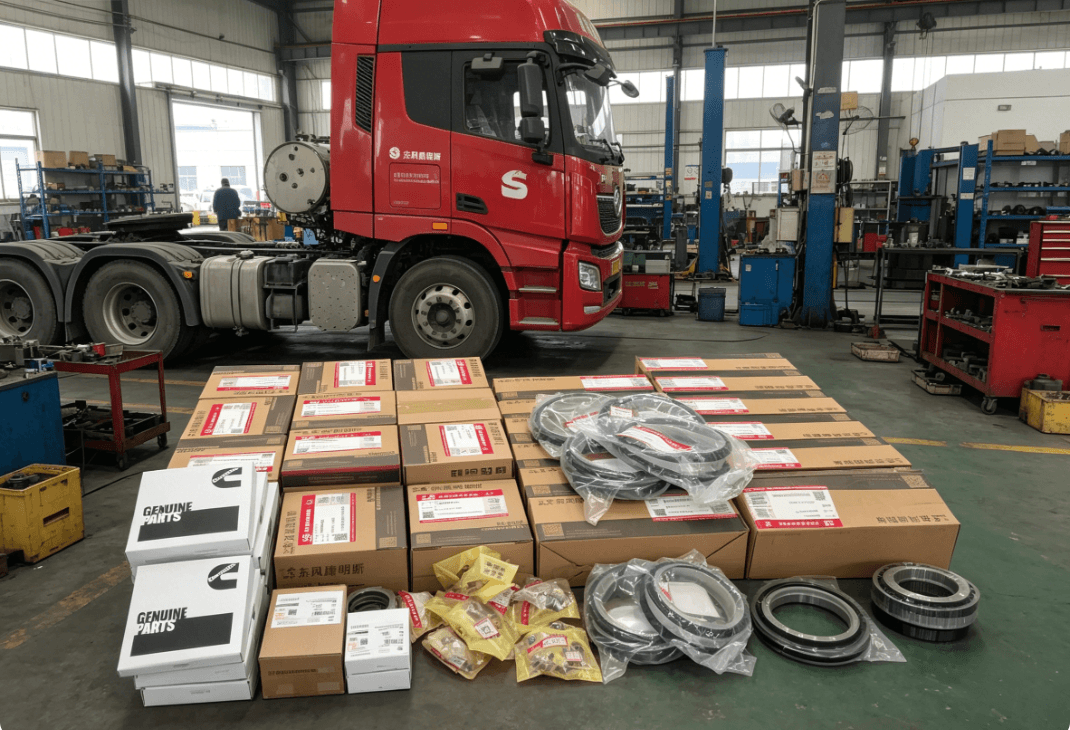
Core Technical Criteria for Evaluating Diesel Engine Parts Suppliers
When vetting a supplier, technical competence must precede commercial negotiation. Diesel engines operate under extreme thermal and mechanical stresses. Therefore, the metallurgical integrity and dimensional precision of spare parts are non-negotiable.
1. Metallurgical Excellence and Material Standards
In this regard, a reputable supplier must provide full transparency regarding the materials used. Specifically, cylinder heads should be cast from high-quality gray iron or compacted graphite iron (CGI) to effectively resist thermal fatigue. Similarly, crankshafts—which transform linear motion into rotational energy—require forged steel with induction-hardened journals to withstand high torque loads without the risk of fracturing.
2. Dimensional Tolerance and Precision Engineering
Precision is measured in microns. For components like cylinder liners, the “cross-hatching” pattern on the inner wall is critical for oil retention and piston ring lubrication. A supplier utilizing high-precision CNC machining ensures that tolerances for bore diameter, roundness, and taper meet or exceed original equipment specifications.
3. Certification and Quality Management Systems (QMS)
Verify that the supplier adheres to international standards such as ISO 9001:2015. In the automotive and heavy-machinery sector, IATF 16949 is the gold standard, indicating that the manufacturer follows rigorous defect-prevention and variation-reduction processes.
Understanding the Sourcing Spectrum: OEM, Genuine, and Premium Aftermarket
Navigating the terminology of the diesel engine spare parts market is essential for balancing budget with performance.
- Genuine Parts: These come in the engine manufacturer’s packaging (e.g., Cummins, Perkins, Caterpillar). They offer the highest assurance but come with a significant price premium.
- OEM (Original Equipment Manufacturer) Parts: These are produced by the same company that makes the parts for the engine manufacturer (e.g., Bosch for fuel injectors, Holset for turbochargers) but sold under the component manufacturer’s own brand.
- Premium Aftermarket: These parts are engineered to match or exceed the performance of the original parts. For high-wear items like gaskets, filters, and liners, high-quality aftermarket options often provide the best ROI, provided the supplier has a proven track record in metallurgical testing.
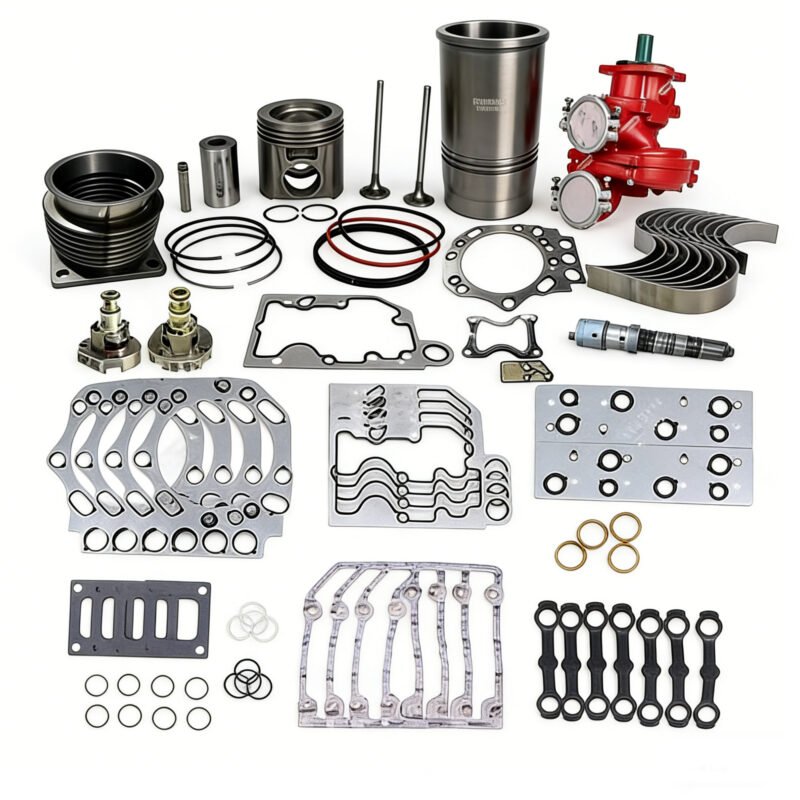
Critical Components to Prioritize in Your Supply Chain
A comprehensive diesel engine spare parts supplier should offer a wide range of components that address both top-end and bottom-end engine overhauls.
Cylinder Heads and Blocks
The “skeleton” of the engine. Look for suppliers who perform pressure testing on every cylinder head to ensure there are no casting porosities that could lead to coolant leaks.
Piston and Liner Kits
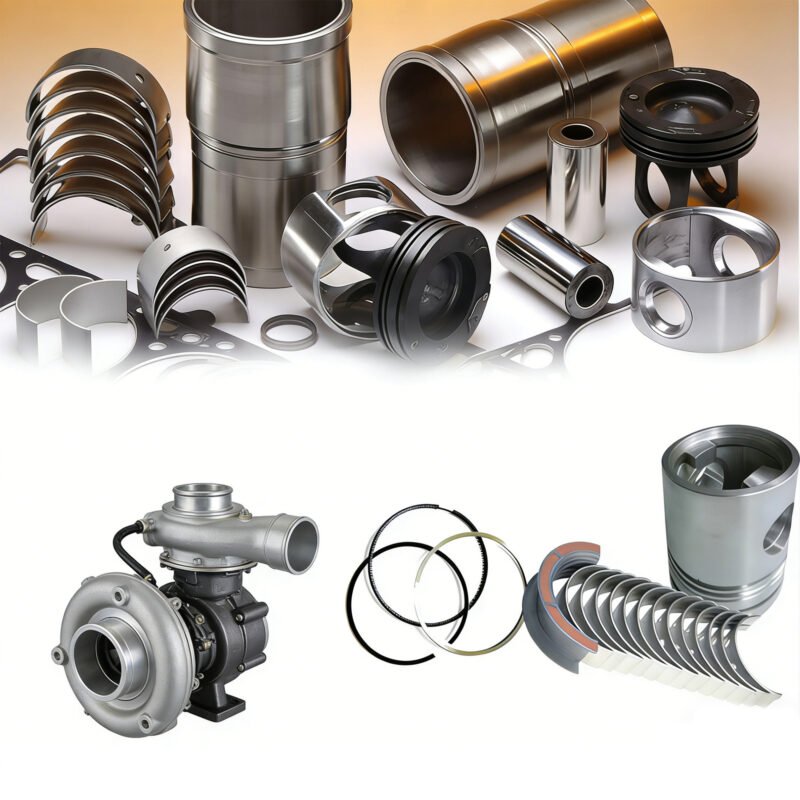
The combustion chamber’s integrity depends on the fit between the piston, rings, and liner. Premium suppliers provide kits where components are matched for thermal expansion compatibility, reducing the risk of scuffing during the initial break-in period.
Fuel Injection Systems
Modern Common Rail Diesel (CRD) systems operate at pressures exceeding 2,000 bar. Even microscopic contaminants can ruin an injector. Ensure your supplier manages these parts in clean-room environments and provides detailed calibration data.
Turbochargers and Air Handling
Efficiency is driven by airflow. High-speed balancing of the turbine and compressor wheel assembly is mandatory to prevent vibration-induced bearing failure at 100,000+ RPM.
| Component | Key Technical Metric | Importance |
| Crankshaft | Dynamic Balance & Surface Hardness | Prevents engine vibration and journal wear. |
| Gasket Kits | Compressibility & Thermal Recovery | Ensures leak-proof sealing under high pressure. |
| Camshaft | Profile Accuracy & Lobing Hardness | Controls precise valve timing and fuel economy. |
| Filters | Micron Rating & Beta Ratio | Protects sensitive engine internals from debris. |
Commercial Logistics: Beyond the Part Number
A commercial partnership with a diesel engine spare parts supplier involves more than just a transaction. In the B2B industrial sector, the following factors define the “Total Cost of Acquisition”:
- Inventory Availability: Does the supplier maintain a “Safety Stock” for high-turnover parts? For many operators, the cost of a three-week lead time is higher than the part itself.
- Packaging and Preservation: Heavy iron components are prone to oxidation. Professional suppliers utilize VCI (Volatile Corrosion Inhibitor) packaging and robust wooden crates to ensure parts arrive rust-free and undamaged.
- Technical Support: A high-value supplier acts as a consultant. They should be able to provide torque specifications, installation guides, and troubleshooting support for complex rebuilds.
Leveraging Kangjin Power for Global Engine Support
For organizations managing fleets of industrial engines, Kangjin Power serves as a specialized partner in the engine components space. Their catalog spans critical engine architecture, including Cylinder Blocks, Crankshafts, and specialized Piston Kits.
By focusing on precision-manufactured engine parts that meet rigorous durability standards, Kangjin Power bridges the gap between high-cost genuine parts and unreliable low-tier alternatives. Their expertise in logistics and technical specifications makes them a strategic choice for distributors and repair facilities looking to stabilize their supply chain for major engine brands.
FAQ: Diesel Engine Parts Procurement
What is the most important factor when choosing an aftermarket supplier?
The most critical factor is the supplier’s quality control process. Always ask for material test reports (MTRs) and verify their ISO certifications. A supplier who cannot provide technical documentation is a high-risk partner.
How do I ensure compatibility for older engine models?
Cross-referencing part numbers is essential. Provide your supplier with the Engine Serial Number (ESN) or the specific Arrangement Number. Reliable suppliers use updated electronic parts catalogs (EPC) to ensure that even “superseded” part numbers are correctly identified.
What are the typical lead times for bulk engine part orders?
For in-stock items, shipping usually occurs within 3–5 business days. For large-scale OEM production or custom-manufactured components, lead times can range from 30 to 60 days. Effective suppliers offer air-freight options for urgent “Engine Down” (AOG) situations.
Why is dynamic balancing important for crankshafts and camshafts?
If a rotating component is not balanced, it creates centrifugal forces that increase exponentially with engine speed. This leads to premature bearing wear, noise, vibration, and harshness (NVH), and can eventually snap the component or damage the engine block.
Can I mix parts from different suppliers in one engine?
While possible, it is not recommended for critical combustion-path components (e.g., using Piston Brand A with Ring Brand B). To ensure uniform thermal expansion and friction coefficients, it is best to source “kits” from a single, reputable supplier.
Reference Sources
- ISO 9001:2015 – Quality Management Systems: International Organization for Standardization
- ASTM A48 / A48M: Standard Specification for Gray Iron Castings (Critical for Cylinder Heads/Blocks).
- The Association of Diesel Specialists (ADS): Technical standards for fuel injection and turbocharger remanufacturing.
- SAE International: Standards for engine oil filtration and material hardness testing (e.g., J417 for Hardness Conversions).

