
Top 5 Popular Diesel Engine Models for Global Export: A Technical Guide

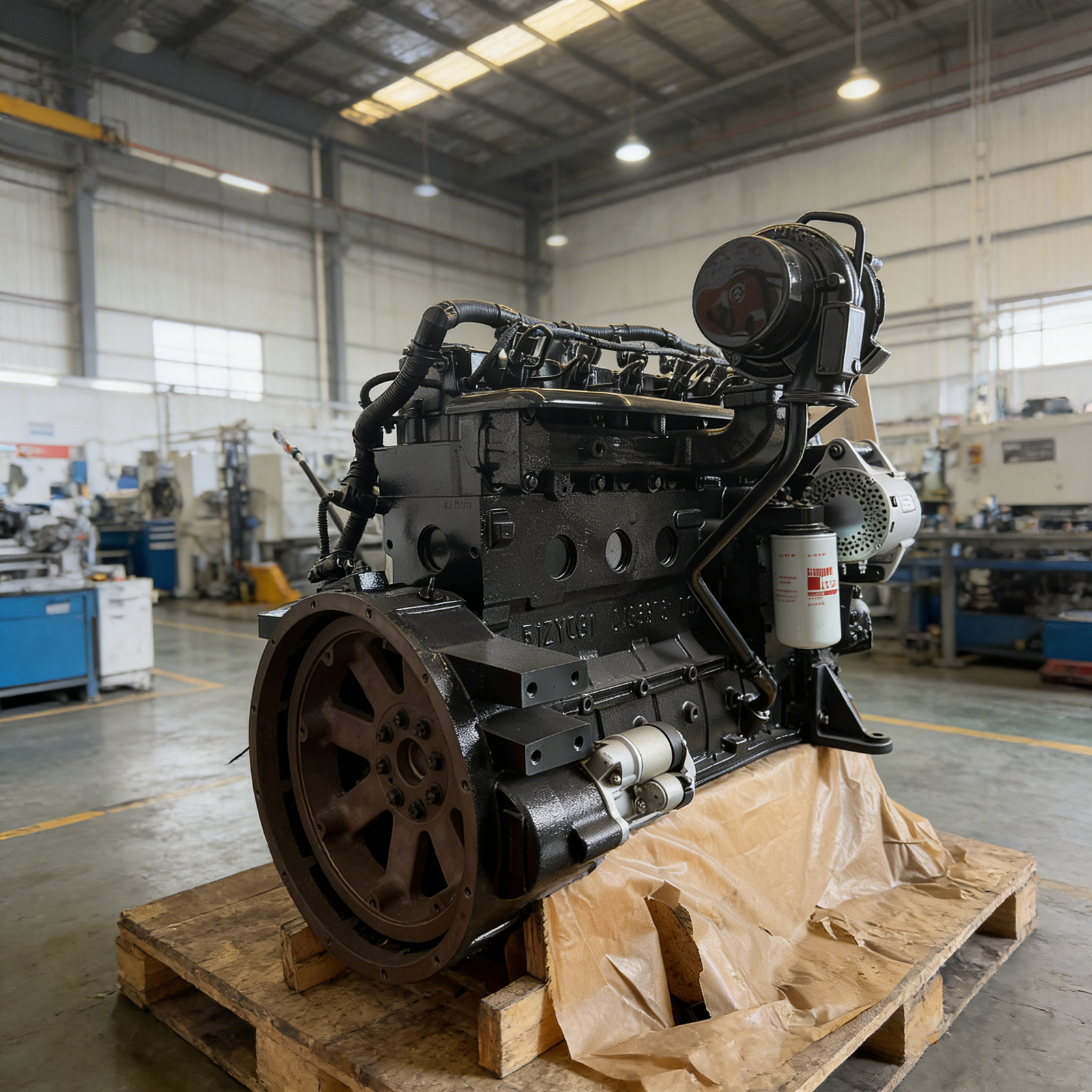
The global diesel engine export market is driven by a demand for reliability, ease of maintenance, and the universal availability of spare parts. For project managers, fleet owners, and procurement specialists in the construction and power generation sectors, selecting an engine isn’t just about horsepower; it’s about ensuring the machine stays operational in diverse environments—from high-altitude mining sites in the Andes to humid construction zones in Southeast Asia.
When analyzing export data and global demand, certain engine series consistently outperform others. These “workhorse” models have earned their reputation through decades of field performance and engineering refinement. Understanding why these specific models dominate can help stakeholders make more informed decisions regarding machinery compatibility and long-term operational costs.
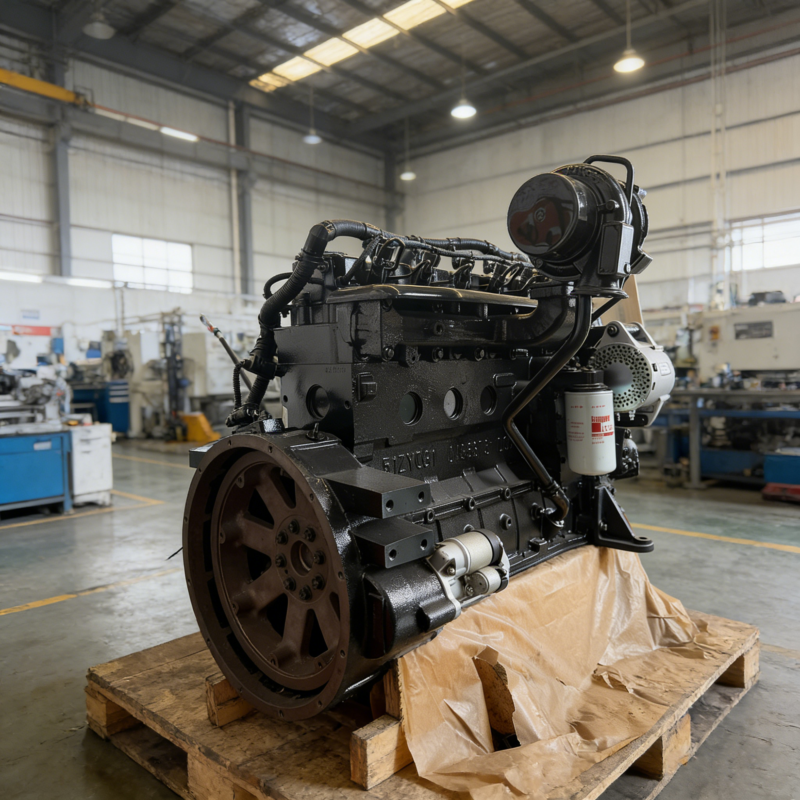
What Makes a Diesel Engine Model Successful in the Export Market?
Before diving into specific models, it is essential to understand the “Export Viability Triad”: Serviceability, Parts Interchangeability, and Environmental Adaptation.
An engine may be technologically advanced, but if a technician in a remote region cannot find a fuel filter or diagnostic software for it, its export value drops significantly. This is why the most popular diesel engine models for export often feature mechanical simplicity or widely documented electronic control modules (ECMs).
Cummins B Series (4BT and 6BT 5.9L)
The Cummins B Series remains perhaps the most exported diesel engine family in history. Known for its robust cast-iron block and head, the 6BT 5.9L model is a staple in the construction and industrial sectors.
Technical Profile: The 6BT is a 6-cylinder, in-line engine featuring a displacement of 5.9 liters. It is primarily respected for its mechanical fuel injection system (in older versions) which is highly tolerant of varying fuel qualities—a critical factor in many export markets.
Why It Dominates: It offers an incredible power-to-weight ratio. The engine lacks the complex overhead cams found in modern competitors, utilizing a simple gear-driven camshaft.
Applications: Commonly found in excavators, medium-duty trucks, and as prime power for 80-120 kVA generators.
Perkins 1100 Series (1104 and 1106)
Perkins, a subsidiary of Caterpillar, produces the 1100 Series, which is a cornerstone of the global agricultural and rental power markets.
Technical Profile: This series includes both 4-cylinder (1104) and 6-cylinder (1106) configurations. These engines are designed to meet Tier 2, Tier 3, and Stage V emission standards depending on the specific territory of export.
Why It Dominates: Perkins has established one of the world’s most comprehensive distributor networks. For exporters, this means that a Perkins-powered machine sold to a buyer in Africa or the Middle East will have local support.
Applications: These engines are the primary choice for backhoe loaders, telehandlers, and small-to-medium-scale irrigation pumps.
Cummins QSB and QSL Series
As global emission standards tighten (moving toward EPA Tier 4 Final and EU Stage V), the Cummins QSB (Quantum System B-Series) has become the high-tech successor to the older B-series for export to regulated markets.
Technical Profile: Utilizing High-Pressure Common Rail (HPCR) fuel systems and advanced turbocharging, the QSB 6.7 and QSL 9 models provide significantly higher torque at lower RPMs compared to their predecessors.
Engineering Advantage: The use of Bosch electronics and advanced filtration systems allows these engines to run cleaner while maintaining high power density.
Market Context: These are increasingly popular in high-end construction machinery, such as heavy-duty excavators and drill rigs, where fuel efficiency and electronic monitoring are prioritized.
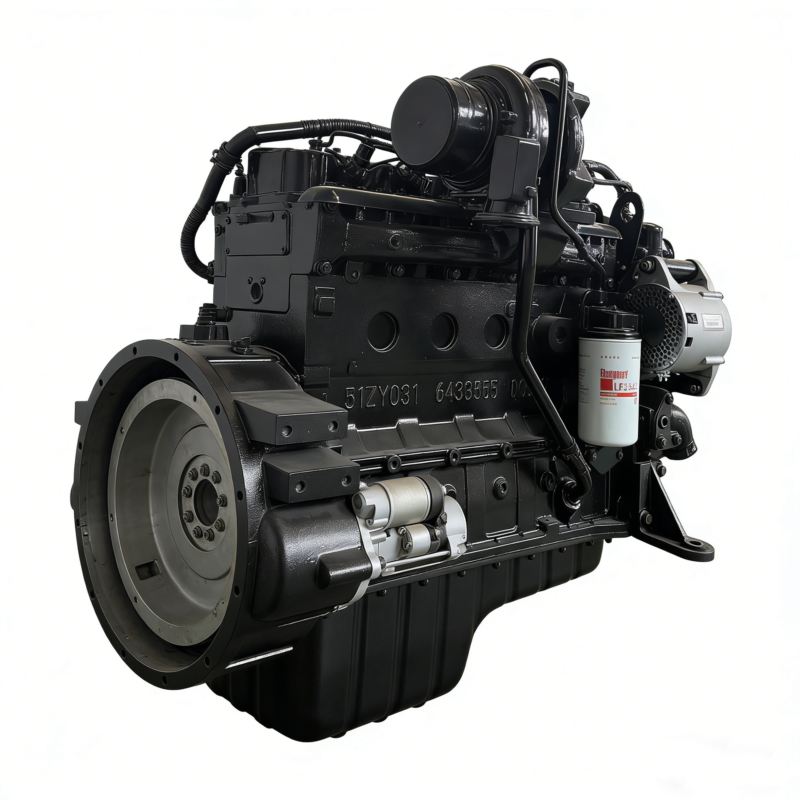
Weichai WP Series (WP10 and WP12)
In the last decade, Chinese manufacturers like Weichai have captured a massive share of the export market, particularly in Belt and Road Initiative (BRI) countries.
Technical Profile: The WP10 and WP12 series are heavy-duty engines often used in mining and heavy trucking. They are known for high displacement and high torque output.
Why It Dominates: Weichai engines offer a competitive price-to-performance ratio. They are often engineered based on proven European design philosophies but optimized for cost-effective manufacturing.
Applications: Heavy-duty mining trucks, large-scale marine propulsion, and industrial power units.
Yanmar TNV Series
For the “compact” segment of the export market, Yanmar is the undisputed leader. Their TNV (Total New Value) series is the heart of the mini-excavator world.
Technical Profile: These are small-displacement, 3- and 4-cylinder liquid-cooled engines. They focus on “clean and silent” operation, featuring indirect or direct injection systems that meet stringent noise pollution standards.
Why It Dominates: Reliability in sub-zero and high-heat environments. Their compact footprint makes them ideal for various OEM (Original Equipment Manufacturer) applications.
Applications: Mini-excavators (1–5 tons), skid steer loaders, and portable light towers.
Technical Comparison of Top Export Diesel Engines
| Engine Model | Displacement | Typical Power Range | Primary Export Strength |
| Cummins 6BT | 5.9L | 120–190 HP | Mechanical simplicity; parts availability |
| Perkins 1104 | 4.4L | 70–140 HP | Global service network; versatility |
| Cummins QSB6.7 | 6.7L | 130–310 HP | Modern emissions compliance; high torque |
| Weichai WP12 | 11.6L | 350–480 HP | Cost-effective heavy-duty power |
| Yanmar 4TNV98 | 3.3L | 50–70 HP | Compact size; low noise; high reliability |
Factors Influencing the Selection of Engines for Overseas Projects
When sourcing engines for export, technical specifications are only half the story. Practical manufacturing and logistical logic must be applied:
Fuel Sulfur Sensitivity: Modern engines with DPF (Diesel Particulate Filters) require Ultra-Low Sulfur Diesel (ULSD). For exports to regions where fuel quality is inconsistent, older mechanical models or “Lesser Regulated” (LR) versions of engines are often preferred to prevent catastrophic fuel system failure.
Cooling Package Integration: Engines exported to tropical climates require larger radiators and specialized cooling fan configurations. A “popular” model is often one that allows for easy integration of oversized cooling systems.
Electronic vs. Mechanical Governors: In remote mining sites, mechanical governors are often preferred because they can be repaired without specialized laptop software, whereas urban construction projects prefer electronic governors for better fuel mapping and telematics integration.
The Role of Construction Machinery Engines in Global Trade
The export of construction machinery engines represents a significant portion of the global industrial economy. Models from brands like Cummins, Deutz, and Isuzu are not just components; they are the lifeblood of infrastructure development. As we look toward the future, the popularity of these models is shifting slightly toward “Dual-Fuel” capabilities and hybrid-ready configurations, but the core requirement remains the same: a diesel engine must be able to perform in the world’s harshest environments without fail.
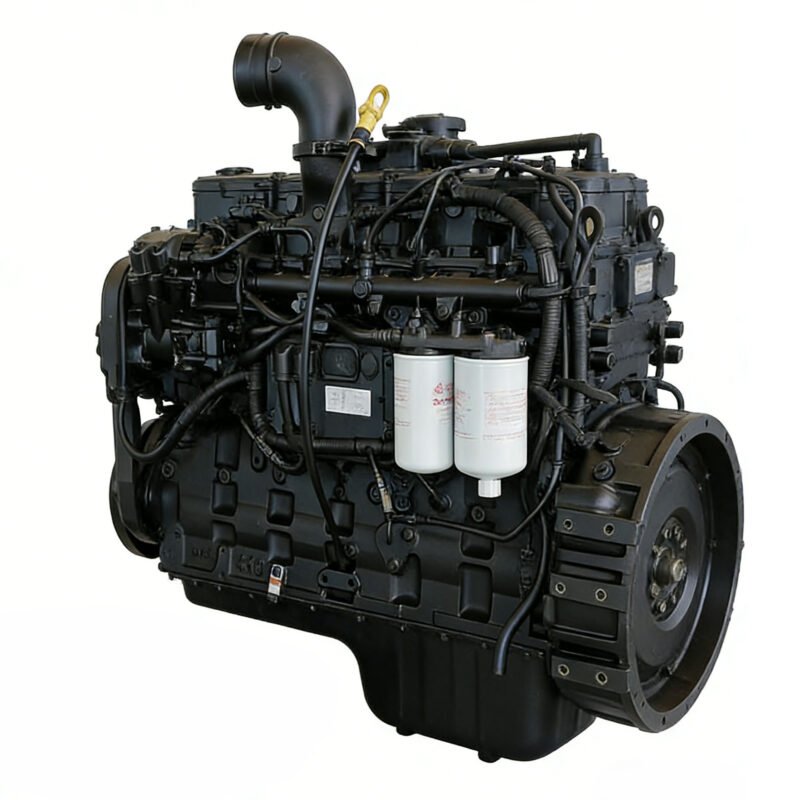
FAQ
Q1: Which diesel engine is the easiest to find parts for globally?
The Cummins 6BT 5.9L and the Perkins 1100 series are widely considered the easiest engines to source parts for. Their long production runs and use in thousands of different machine types have created a massive aftermarket parts ecosystem.
Q2: Are Chinese diesel engines like Weichai reliable for export?
Yes, modern Weichai and Yuchai engines have significantly improved in quality. They are particularly popular in heavy-duty industrial and marine applications due to their high torque and lower initial purchase price compared to North American or European counterparts.
Q3: How do emission standards (Tier 4/Stage V) affect engine exports?
Exporters must match the engine’s emission level with the destination country’s regulations. Exporting a Tier 4 Final engine to a country with high-sulfur diesel can lead to engine failure, while exporting a Tier 2 engine to the EU or USA can result in heavy fines and legal issues.
Q4: Why is Yanmar so dominant in small machinery?
Yanmar specializes in small-displacement diesel technology. Their engines are designed with a focus on low vibration and noise, which is critical for compact equipment like mini-excavators used in residential or urban areas.
Reference Sources:
Cummins Inc. Technical Documentation & Global Service Directory.
Perkins Engines Co. Ltd. – 1100 Series Specification Manuals.
DieselNet: Summary of Worldwide Engine Emission Standards.
International Journal of Mechanical Engineering: Comparative Analysis of Diesel Engine Performance in Industrial Applications.
Off-Highway Research: Global Trends in Construction Equipment Engines.

