
Cummins 6BT Engine Specs: 5.9L HP, Torque, Weight and Applications

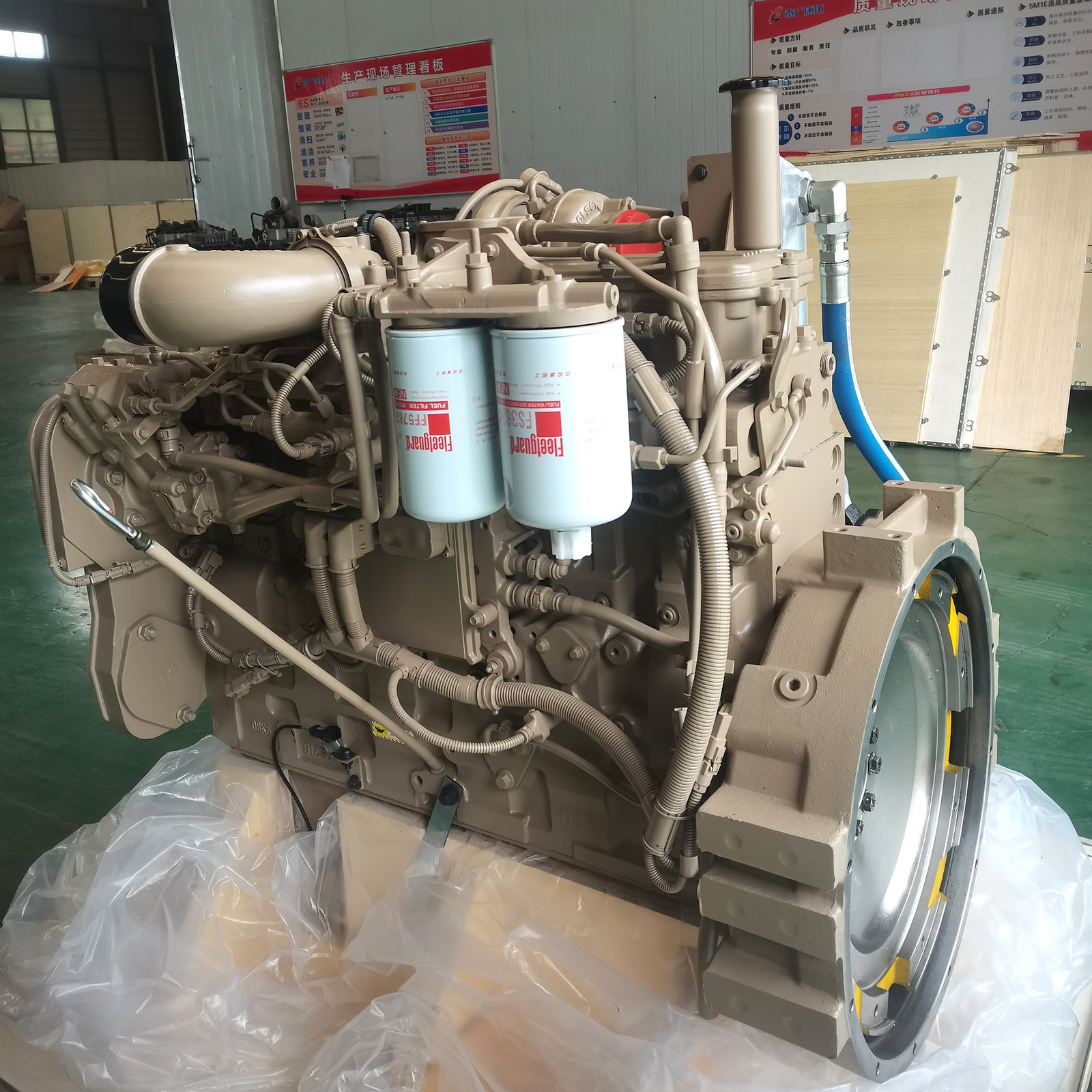
The Cummins 6BT 5.9 diesel engine is a 5.9-liter, inline six-cylinder diesel engine from the B Series.Core dimensions such as its 5.9 L displacement and 102 × 120 mm bore and stroke are shared across many configurations, but horsepower, torque, weight, dimensions, fuel consumption and installed equipment are not universal.
That distinction matters. A 6BT used in a generator set does not necessarily have the same rating or installation package as one configured for marine auxiliary power, construction machinery or a vehicle.
For anyone comparing Cummins 6BT engine specs for a replacement, OEM project or industrial application, the model suffix, rated speed, duty rating and engine identification data should be checked before making a selection.
Cummins 6BT Specs at a Glance
The table below separates the basic engine architecture from specifications that change by application.
| Specification | Cummins 6BT / 6BT5.9 |
|---|---|
| Engine family | Cummins B Series |
| Configuration | Inline 6-cylinder, 4-stroke diesel |
| Nominal displacement | 5.9 L / 359 cu in |
| Bore × stroke | 102 × 120 mm |
| Aspiration | Turbocharged; aftercooled configurations are also available within the broader B Series family |
| Fuel system | Mechanical direct injection on traditional 6BT configurations; exact pump arrangement varies |
| Rated power | Varies by model, application, speed and duty rating |
| Rated speed | Application-specific |
| Torque | Application-specific |
| Dimensions | Configuration-specific |
| Weight | Configuration-specific |
| Typical applications | Construction equipment, generator drives, industrial equipment, pumps, marine auxiliary power and repower projects |
Cummins’ published 6BT5.9 marine data identifies the engine as an inline six-cylinder, four-stroke diesel with 5.9 L displacement and a 102 × 120 mm bore and stroke. Those figures are useful family-level reference points. Installed size, output and equipment should still be checked against the exact model being purchased.
How Much Horsepower Does a Cummins 6BT Have?
There is no single horsepower rating for every Cummins 6BT. Output depends on the engine configuration, rated speed and intended duty.
This is why online references sometimes appear to disagree. Automotive, generator, marine and industrial ratings may all carry the 6BT or 6BT5.9 name while being calibrated for different operating conditions.
For historical Dodge truck applications, published 12-valve 5.9L ratings commonly range from approximately 160 to 215 hp depending on model year and transmission configuration.
Industrial fixed-speed engines should be evaluated separately.
For example, Cummins lists 6BT5.9-DM marine auxiliary ratings ranging from 104 bhp at 1500 rpm to 150 bhp at 1800 rpm, depending on the specific rating.
The Cummins 6BT5.9-G6 generator-drive specification provides another useful example:
| 6BT5.9-G6 Rating | 1500 rpm | 1800 rpm |
|---|---|---|
| Standby | 143 bhp | 170 bhp |
| Prime | 130 bhp | 155 bhp |
| Continuous | 75 bhp | 100 bhp |
These numbers should not be interpreted as the power range of every 6BT. They belong to one published G-Drive configuration.
When comparing engines for an equipment project, ask for the rated power together with the RPM and duty definition rather than comparing horsepower alone.
Cummins 6BT Torque: Why the Exact Rating Depends on Configuration
Torque is also configuration-specific.
Historical automotive 12-valve versions are commonly published at around 400–440 lb-ft, but those figures should not automatically be applied to construction, marine or generator versions.
For an industrial application, the useful question is not simply:
“What is the maximum torque of a 6BT?”
It is:
“What does the torque curve look like at the speed range where my machine operates?”
A hydraulic machine may need strong torque response as engine speed falls under load. A generator engine is selected around fixed-speed operation. A pump drive may spend long periods at a relatively stable RPM.
For OEM integration or replacement work, request the performance curve for the exact model or CPL whenever torque matching is important.
Cummins 6BT Dimensions and Weight
A Cummins 6BT does not have one universal installed size or weight. Cooling equipment, exhaust components, sump position, flywheel housing, fan drive and accessories all change the final package.
Cummins’ published configurations illustrate the difference:
| Published Configuration | Length | Width | Height | Weight |
|---|---|---|---|---|
| 6BT5.9 marine auxiliary example | 1020 mm | 601 mm | 1201 mm | 426 kg |
| 6BT5.9-G6 Coolpac generator-drive package | 1248 mm | 700 mm | 1102 mm | 500 kg dry |
The second engine is not simply a “heavier 6BT.” It is a different packaged configuration.
This distinction becomes important when replacing an existing engine. A nominally compatible 5.9L engine can still create installation problems if the fan position, oil pan, mounts, flywheel housing or accessory arrangement does not match the machine.
For installation work, use the dimensional drawing for the exact supplied configuration rather than relying on a generic 6BT diagram found online.
How Much Fuel Does a Cummins 6BT Use?
Fuel consumption depends on load, RPM, engine calibration and application. There is no reliable single liters-per-hour figure that applies to every Cummins 6BT.
A published generator-drive specification provides a useful example.
For the Cummins 6BT5.9-G6 operating at prime power:
| Engine Speed | Load | Published Fuel Consumption |
|---|---|---|
| 1500 rpm | 100% | 24 L/h |
| 1500 rpm | 75% | 18 L/h |
| 1500 rpm | 50% | 13 L/h |
| 1500 rpm | 25% | 7 L/h |
| 1800 rpm | 100% | 29 L/h |
| 1800 rpm | 75% | 22 L/h |
| 1800 rpm | 50% | 16 L/h |
| 1800 rpm | 25% | 9 L/h |
These figures are specifically for the published 6BT5.9-G6 generator-drive configuration. They should not be used as a fuel-consumption specification for a vehicle, pump engine or different industrial rating.
For procurement, request either the fuel-consumption curve or the specific fuel consumption data associated with the proposed engine rating.
What Fuel System Does the Cummins 6BT Use?
Traditional Cummins 6BT engines are known for mechanical direct fuel injection, but the exact injection-pump arrangement depends on the version.
Historical automotive 12-valve engines are commonly associated with Bosch VE rotary pumps on earlier versions and the Bosch P7100 inline pump on later versions. Other industrial and marine configurations should be identified by their own engine data rather than assumed to use the same pump.
Cummins’ current published marine 6BT5.9 specification, for example, describes an inline injection pump.
The mechanical fuel system is one reason the older B Series remains familiar to technicians working with legacy industrial and off-highway equipment. It also means buyers need to confirm the pump, governor and application calibration when sourcing a replacement.
Two engines can share the 6BT5.9 designation while still having different fuel-system settings or accessory arrangements.
Cummins 6BT vs 6BTA: What Is the Difference?
The practical distinction is the intake-air configuration.
A standard 6BT designation refers to a turbocharged B Series engine. The additional “A” in 6BTA is generally used for an aftercooled configuration.
| Feature | 6BT | 6BTA |
|---|---|---|
| Base family | B Series | B Series |
| Cylinders | Inline 6 | Inline 6 |
| Displacement | 5.9 L family | 5.9 L family |
| Turbocharged | Yes | Yes |
| Aftercooling | Configuration-dependent; standard 6BT designation does not indicate “A” | Yes, indicated by “A” designation |
| Power rating | Depends on exact model | Depends on exact model |
| Typical selection factor | Required output and installation | Higher-output or thermally demanding configurations, depending on rating |
Aftercooling reduces the temperature of compressed intake air before it enters the cylinders. Denser intake air allows an engine calibration to support different output and thermal requirements.
It does not mean that every 6BTA is automatically the correct replacement for a 6BT. Mounting, governor, cooling arrangement, flywheel housing, rated speed and application still need to be checked.
Where Is the Cummins 6BT Used?
The 6BT platform has appeared across a wide range of equipment, but the engine needs to be configured for the duty cycle rather than selected on displacement alone.
Construction Equipment
Mechanical B Series engines have been used in loaders, rollers, excavators and other industrial machinery.
For construction equipment, pay particular attention to:
- torque behavior under changing hydraulic load
- cooling capacity
- fan and radiator arrangement
- oil-pan clearance
- flywheel and transmission interface
- governor configuration
- target-market emissions requirements
A replacement engine should be matched against the original machine specification rather than selected only because both engines are labeled 6BT.
Generator Sets
Generator-drive versions operate at controlled speeds such as 1500 rpm for 50 Hz systems or 1800 rpm for 60 Hz systems.
The rating also matters.
Prime, standby and continuous power are different duty definitions. A high standby figure should not be treated as a continuous output rating.
For generator projects, confirm engine power together with alternator efficiency, required electrical output, frequency, ambient conditions and altitude.
Industrial Pump Systems
Pump engines are normally selected around required shaft power and operating speed.
The related 6BTA5.9 platform is also used for dedicated pump-drive configurations. One example is the 6BTA5.9-P160 pump-drive engine, configured for applications such as fire pumps, drainage systems and industrial water supply. For example, Kangjin Power lists a 6BTA5.9-P160 pump-drive model configured for fire-fighting, drainage, water-supply and industrial pumping applications.
Before specifying an engine, provide the required pump power, operating RPM and coupling arrangement.
Marine and Auxiliary Power
Cummins publishes dedicated 6BT5.9 marine auxiliary configurations.
Marine versions require installation equipment and cooling arrangements that differ from a construction or automotive installation. A land-based 6BT specification should therefore not be used as a substitute for a marine engine datasheet.
Replacement and Repower Projects
The 6BT is frequently considered in repower work because of the maturity of the B Series platform. For projects replacing an existing industrial engine, review the available 6BT engine configuration before comparing mounting, flywheel housing and rated speed.
Fitment, however, is determined by much more than displacement.
Check:
- exact engine model
- Engine Serial Number
- CPL where applicable
- rated power
- rated RPM
- flywheel housing
- flywheel
- engine mounts
- oil-pan configuration
- intake and exhaust direction
- cooling system
- electrical starting voltage
- governor
- PTO requirements
- emissions requirements
A visually similar engine is not automatically a drop-in replacement.
How to Identify the Correct Cummins 6BT Before Ordering
Start with the engine nameplate.
For an existing engine, record the model designation, serial number and CPL or other configuration identification before asking a supplier for a replacement.
For a new project, provide the operating requirement rather than requesting only “one 6BT.”
A useful RFQ should include:
- Application — excavator, loader, generator, pump, marine auxiliary or other equipment.
- Required power — preferably in both kW and hp if available.
- Rated speed — for example 1500, 1800, 2200 or another required RPM.
- Existing engine identification — model, serial number and CPL for replacement projects.
- Flywheel and housing requirement — important for transmission, alternator or pump coupling.
- Cooling arrangement — radiator, heat exchanger or other system.
- Emissions requirement — based on the destination and equipment use.
- Electrical system — including starting voltage where relevant.
- Quantity and destination country — needed for supply and export planning.
If you are also estimating the budget for a replacement or OEM project, see our diesel engine price guide to understand how power rating, emissions requirements, engine configuration and integration needs can affect industrial engine costs.
This prevents a common sourcing mistake: comparing two engines that share the 6BT name but were built for completely different duties.
6BT Maintenance: Use the Specification for Your Exact Engine
The simple mechanical architecture of many 6BT variants makes them familiar to diesel technicians, but maintenance intervals should still come from the documentation for the specific engine.
Do not assume that a service interval from a Dodge truck, marine engine or generator package applies unchanged to an industrial engine.
At minimum, maintenance planning should cover:
- engine oil and filter
- fuel filtration and water separation
- cooling-system condition
- air filtration
- belt and hose inspection
- valve clearance where required
- injection-system condition
- leaks and mounting condition
For engines operating in dusty, hot or continuous-duty environments, use the application-specific Cummins operation and maintenance documentation to determine the correct intervals.
FAQ
How much horsepower does a Cummins 6BT have?
There is no single 6BT horsepower figure. Historical automotive 12-valve versions were produced in multiple ratings, while Cummins marine and generator versions use different outputs at different engine speeds and duty ratings. Always compare horsepower together with the exact model, RPM and application.
Is the Cummins 6BT a 5.9-liter engine?
Yes. Cummins identifies the 6BT5.9 as a nominal 5.9-liter inline six-cylinder engine. Some technical documents list the more precise displacement as approximately 5.88 liters or 359 cubic inches.
How much does a Cummins 6BT weigh?
Weight depends on configuration. One Cummins marine 6BT5.9 example is published at 426 kg, while a Cummins 6BT5.9-G6 Coolpac generator-drive package is listed at 500 kg dry. Use the exact configuration datasheet for installation calculations.
What is the difference between a 6BT and 6BTA?
Both belong to the B Series family. The “A” in 6BTA identifies an aftercooled configuration. Buyers who need an aftercooled configuration can also review available 6BTA5.9 diesel engine options and compare the required power, RPM and installation arrangement.Power rating and installation details still depend on the exact model.
Is the Cummins 6BT mechanically injected?
Traditional 6BT versions use mechanical direct injection, but injection-pump and governor arrangements vary by model and application. Verify the engine identification before ordering fuel-system parts or a replacement engine.
How much fuel does a 6BT use?
There is no universal fuel-consumption figure. Consumption changes with engine rating, RPM and load. For example, Cummins’ published 6BT5.9-G6 generator-drive data shows 24 L/h at 1500 rpm and full prime load, but this figure should not be applied to other 6BT configurations.
Need to Match a 6BT to Your Equipment?
If you are comparing a 6BT diesel engine or 6BTA5.9 engine configuration for a construction machine, generator, pump or replacement project, send Kangjin Power the application, required power, rated RPM and existing engine model or nameplate information.
For replacement projects, include the engine serial number or CPL where available, along with photos of the flywheel housing, mounting arrangement and engine nameplate.
That information makes it much easier to confirm a suitable configuration before quotation.
Reference Sources
- Cummins Inc. — 6BT5.9 official engine specifications and marine auxiliary ratings
- Cummins G-Drive — 6BT5.9-G6 specification sheet and fuel-consumption data
- Cummins engine identification and application documentation
- Application-specific Cummins operation and maintenance documentation

