
Mining Diesel Engine Supplier China: OEM Evaluation Guide

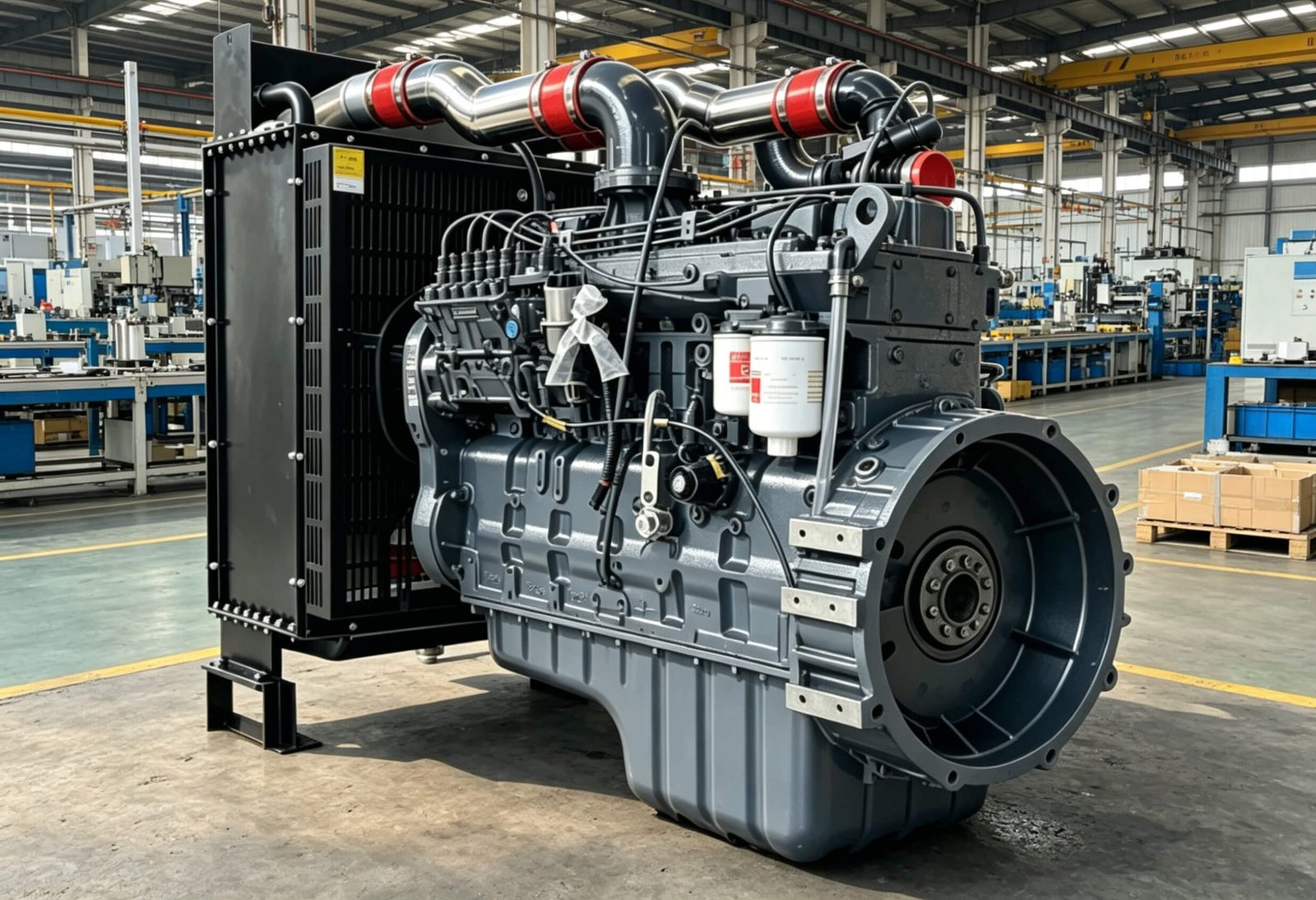
Mining operations demand relentless mechanical reliability. Equipment failure in an open-pit or underground mine halts production and incurs massive downtime costs. Consequently, sourcing industrial powertrains requires rigorous technical and commercial evaluation.
Procurement managers must look beyond initial unit pricing. They must assess an engine’s thermal management capabilities, low-end torque reserves, and global parts availability. Evaluating a mining diesel engine supplier China involves verifying their engineering support and integration expertise.
This guide breaks down how to evaluate heavy-duty diesel engines. It provides a framework for selecting the right manufacturing partner for OEM equipment or heavy machinery repowering projects.
What Defines a Heavy-Duty Mining Diesel Engine?
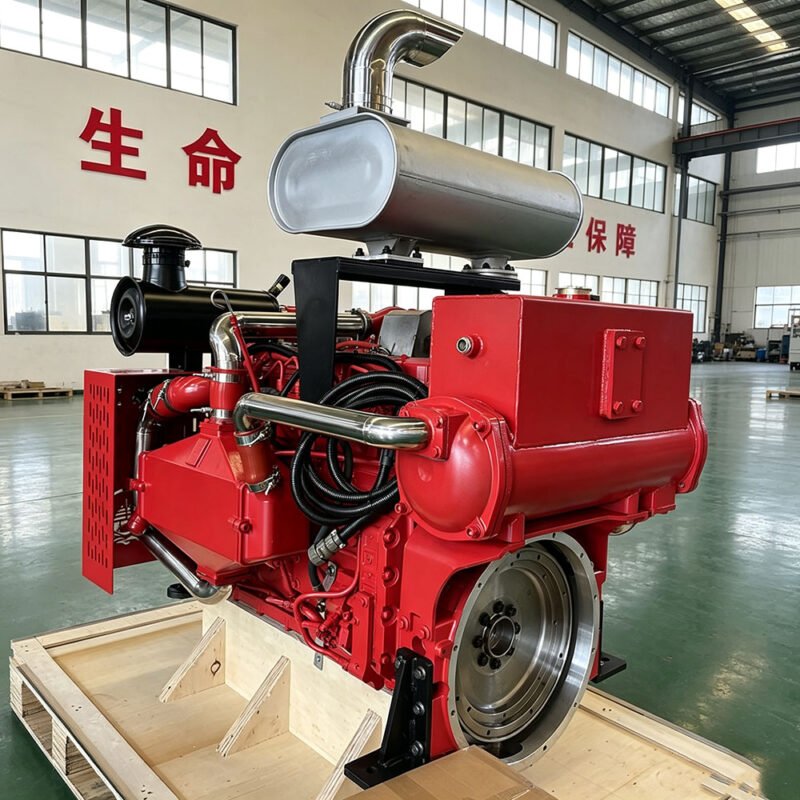
Mining equipment operates under extreme continuous loads. Standard commercial truck engines will fail prematurely in these environments. A true mining-grade diesel engine requires specific engineering adaptations to handle high dust levels, continuous vibration, and variable fuel quality.
In heavy-duty applications, engineers prioritize mechanical durability over lightweight efficiency. Key manufacturing requirements include:
- High Torque Reserve: The engine must deliver substantial low-end torque to move heavy loads on steep gradients without stalling.
- Advanced Thermal Management: Heavy-duty radiators and reinforced cooling systems prevent overheating during continuous operation (COP).
- Robust Filtration: Multi-stage air and fuel filtration systems are mandatory. They protect injectors and cylinders from abrasive silica dust common in mining sites.
- Altitude Compensation: In high-altitude mining operations, naturally aspirated engines suffer power loss. Turbocharged and air-to-air aftercooled (TAA) systems maintain volumetric efficiency.
Many mining operators also prefer mechanically injected engines over complex electronic common-rail systems. Mechanical injection often ensures easier field maintenance in remote, off-grid locations.
Evaluating Engine Series for Mining Equipment
Different mining vehicles require specific displacement and power configurations. When evaluating options from a mining diesel engine supplier China, buyers typically compare proven industrial engine blocks.
Engineers must match the engine’s power curve to the hydraulic pump requirements of the specific machine. Below is a comparison of standard heavy-duty engine profiles used in excavators, loaders, and mining generators.
Comparison of Common Industrial Engine Profiles
| Engine Series | Displacement | Cylinder Config | Primary Mining Application | Performance Focus |
| 4BTA3.9 | 3.9 Liters | Inline 4 | Compact loaders, small generators | High fuel efficiency, compact footprint |
| 6BTA5.9 | 5.9 Liters | Inline 6 | Mid-size excavators, drilling rigs | Balanced power-to-weight ratio |
| 6CTA8.3 | 8.3 Liters | Inline 6 | Heavy wheel loaders, articulated trucks | High torque output, mechanical reliability |
| 6LTAA8.9 | 8.9 Liters | Inline 6 | Heavy excavators, large pump sets | Maximum continuous power, advanced cooling |
| 6LTAA9.5 | 9.5 Liters | Inline 6 | 300KW Prime Power Generators | Stable frequency under heavy electrical loads |
How to Select a Reliable Mining Diesel Engine Supplier China
Finding an engine assembler is relatively simple. Finding a true OEM integration partner is much more difficult. B2B procurement consultants must audit suppliers based on their technical support depth and supply chain stability.
A qualified supplier does more than ship a crate. They ensure the engine interfaces correctly with your existing drivetrain. Critical supplier evaluation criteria include:
- OEM Integration Support: The supplier must assist with PTO (Power Take-Off) configurations and exact flywheel housing matching (e.g., SAE 1 or SAE 3).
- Dynamometer Testing: Reliable factories conduct rigorous dynamometer testing before shipment. Buyers should always request Factory Acceptance Test (FAT) reports.
- Component Authenticity: The supplier must utilize genuine core components. They should provide verifiable documentation for critical parts like turbochargers and injection pumps.
- Emission Compliance: Verify that the supplier can provide engines meeting specific regional emission standards. This often means Tier 2 or Tier 3 for unregulated or specialized mining environments.
Global aftermarket support is also a non-negotiable factor. Mining equipment operates for decades. The supplier must guarantee long-term availability of consumable parts like filters, gaskets, and over-haul kits.
Platform Integration: Kangjin Power’s Industrial Solutions
For buyers seeking integrated power solutions, evaluating established suppliers like Xiangyang Kangjin Power Technology provides a practical benchmark. Kangjin Power specializes in supplying heavy-duty diesel engines for construction, marine, and heavy industrial applications.
Their product portfolio includes highly reliable series such as the 6CTA8.3 and 6LTAA8.9. These engines are specifically designed for continuous heavy loads in extreme operational environments. Rather than selling bare engine blocks, Kangjin Power focuses on providing complete engine assemblies.
For OEM project managers and B2B buyers, Kangjin offers specific procurement advantages:
- Application Matching: They configure engines specifically for excavators, high-flow water pumps, or generator sets. This reduces the engineering burden on the buyer.
- Export Readiness: The company provides full export qualifications, technical documentation, and logistical support for international procurement.
- Spare Parts Ecosystem: They supply comprehensive engine parts and accessories. This ensures minimal downtime and simplifies long-term fleet maintenance.
Integrating a reliable engine requires exact technical communication. When initiating a Request for Quotation (RFQ), buyers should provide detailed machine specifications to ensure perfect drop-in compatibility.
FAQ
What is the typical lead time for industrial diesel engine orders?
For standard industrial blocks like the 6BT5.9 or 6CTA8.3, lead times usually range from 15 to 30 days. Custom configurations requiring specific PTO setups or modified cooling packages may extend production to 45 days.
Can a supplier customize the engine for underground mining applications?
Yes. Underground mining requires strict emission controls and specific safety modifications. You must specify these requirements during the RFQ process so the supplier can integrate specialized exhaust scrubbers or flameproof components.
How do I verify the compatibility of a replacement engine?
During the RFQ stage, provide the supplier with your machine’s make, model, and the original engine’s data plate. The supplier will use this data to match the flywheel housing, mounting points, and hydraulic pump interfaces exactly.
What testing documentation should I request before final payment?
Always request the Factory Acceptance Test (FAT) report. This document proves the engine was run on a dynamometer and successfully hit its rated horsepower and torque curve specifications under simulated load conditions.
Reference Sources
- ISO 3046-1: Reciprocating internal combustion engines — Performance requirements and declarations of power.
- Environmental Protection Agency (EPA): Nonroad Compression-Ignition Engines Exhaust Emission Standards and Tier classifications.
- Association of Equipment Manufacturers (AEM): Technical guidelines for heavy machinery powertrains and industrial engine integration.
- Xiangyang Kangjin Power Technology: Official technical specifications and performance data for industrial diesel engine series (4BTA, 6CTA, 6LTAA).

