
How to Identify Genuine Diesel Parts: A Technical Inspection Guide

The global market for diesel engine components has seen a sophisticated rise in counterfeit products that mimic the appearance of Original Equipment Manufacturer (OE
) parts. For fleet managers, marine engineers, and industrial operators, the ability to distinguish between a genuine component and a high-quality fake is no longer just about brand loyalty; it is a critical measure for preventing catastrophic engine failure.
Counterfeit parts often bypass the rigorous metallurgical testing and precision machining required for heavy-duty applications. While a fake piston or fuel injector might fit into the assembly, its performance under high thermal stress and peak cylinder pressure often leads to premature fatigue. Understanding the technical nuances of “how to identify genuine diesel parts” is the first step in maintaining operational integrity.
Visual Forensics: Surface Finish and Casting Marks
The manufacturing process of a genuine diesel part, such as those found in Kangjin Power’s engine parts inventory, involves high-precision CNC machining and controlled casting environments. Counterfeiters often use lower-grade sand-casting methods which leave distinct traces.
Casting and Forging Identifiers
Genuine engine blocks, cylinder heads, and connecting rods usually feature crisp, legible casting numbers and brand logos integrated into the mold. On counterfeit parts, these markings often appear “soft” or blurry. Look for signs of “grinding away” previous markings, a common tactic used by counterfeiters to repurpose old cores as new OEM products.
Machining Quality
Examine the surface finish of mating faces. Genuine parts utilize specific Ra (Roughness Average) values to ensure proper gasket sealing and oil retention. If a component shows irregular tool marks, “chatter” patterns from a vibrating lathe, or inconsistent deburring on the edges, it is likely a fake. OEM parts undergo automated deburring to ensure no metal shavings enter the lubrication system.
Material Integrity and Weight Discrepancies
Material science is the most expensive part of engine manufacturing. To reduce costs, counterfeiters substitute high-performance alloys with cheaper alternatives that lack the necessary heat resistance or tensile strength.
The Weight Test
While not foolproof, weight is a significant indicator. Genuine parts like crankshafts or camshafts are made from specific forged steel or ductile iron grades. Because counterfeiters use scrap-heavy alloys with different densities, the weight of a fake part often deviates by 5% to 15% from the OEM specification. Always compare the weight of the new part against the service manual or a known genuine component.
Heat Treatment Markers
Many genuine diesel parts, especially valvetrain components and gears, undergo induction hardening or nitriding. This process often leaves a distinct, subtle discoloration or “heat ring” at specific zones. If a gear tooth or a valve stem appears perfectly uniform in color despite being a high-friction part, it may have skipped the critical hardening stage, leading to rapid wear or “mushrooming” during operation.
Precision Tolerances and Geometric Accuracy
In the world of diesel engineering, tolerances are often measured in microns. A genuine fuel injector nozzle, for instance, has spray holes machined via Electrical Discharge Machining (EDM) to ensure perfect atomization.
| Feature | Genuine Diesel Part | Counterfeit Part |
| Tolerance | Accurate to within +/- 0.005mm | Inconsistent; often exceeds +/- 0.05mm |
| Hole Geometry | Perfectly circular, sharp edges | Irregular shapes, visible burrs |
| Seal Grooves | Uniform depth and width | Variable depth; causes O-ring failure |
| Thread Quality | Rolled threads (stronger) | Cut threads (prone to stripping) |
If you are inspecting a liner or a piston, use a micrometer to check for “out-of-roundness.” Genuine liners are honed with a specific cross-hatch pattern (usually 30 to 45 degrees) to facilitate oil film thickness. Fakes often have haphazard honing marks that lead to “scuffing” or oil consumption issues.
Packaging and Security Verification Systems
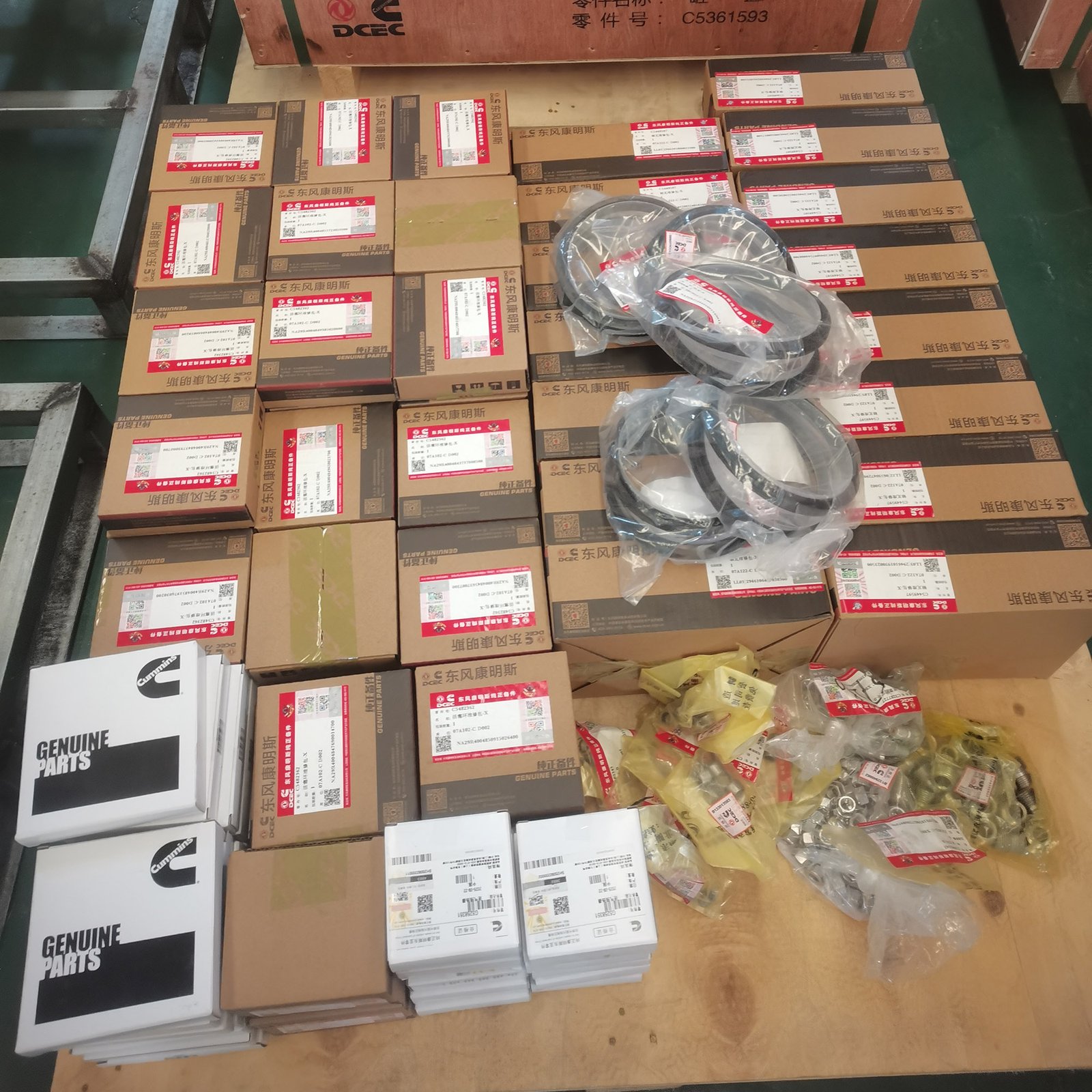
OEMs like Cummins, Perkins, and Caterpillar have invested heavily in tamper-evident packaging. This is often the first line of defense in identifying genuine diesel parts.
Holographic Labels and QR Codes
Most modern genuine parts come with high-resolution 3D holograms that shift color or reveal hidden text when tilted. Many manufacturers now integrate “Track and Trace” QR codes. When scanned, these codes should lead directly to the manufacturer’s official verification portal, showing the part’s serial number and production date. If the QR code leads to a generic website or a broken link, the part is fraudulent.
The “Box Integrity” Rule
Industrial engine parts are heavy and oily. Genuine packaging is designed with high-burst-strength corrugated fiberboard and specific rust-inhibitor (VCI) paper or plastic. If the packaging feels flimsy, lacks proper internal bracing for heavy items like turbochargers, or uses generic “OEM Quality” stickers instead of branded printing, exercise extreme caution.
Technical Documentation and Physical Characteristics
A genuine part is an engineered solution, not just a physical object. This means it comes with specific traceability.
- Part Number Logic: Verify the font and alignment of the etched part numbers. Counterfeiters often use “stamped” numbers that vary in depth, whereas OEMs typically use laser etching.
- Instruction Sheets: Genuine overhaul kits usually include technical bulletins or torque specifications printed on high-quality paper. Counterfeits often include poor-quality photocopies with grammatical errors or incorrect technical data.
- Color Consistency: Most manufacturers use specific paint codes for their engines (e.g., CAT Yellow, Cummins Red, Deutz Grey). If a replacement water pump or oil cooler has a shade that looks “off” or has overspray on the gaskets, it is a sign of a refurbished or fake unit.
Why Sourcing from Established Providers Matters
Identifying fakes becomes significantly easier when you understand the supply chain. Companies specializing in heavy-duty engine components maintain strict quality control protocols to ensure that every bearing, gasket, and fuel system component meets the specific metallurgical standards required for industrial duty cycles. Genuine parts are designed to handle the “tolerance stack-up” of a full engine build, whereas fakes often create fitment issues that lead to secondary failures in adjacent components.
FAQ
Q: Can a part be genuine if it doesn’t come in a branded box?
A: Sometimes. This occurs with “Neutral Packaging” from Tier 1 OES (Original Equipment Suppliers) who manufacture for the brand. However, the part itself should still bear the manufacturer’s internal casting marks or laser-etched batch codes.
Q: What is the most commonly counterfeited diesel part?
A: Fuel injectors and filters. Because these are high-volume “consumables,” counterfeiters target them. Fake filters are particularly dangerous as they often lack the bypass valve or the micron-rated media required to protect high-pressure common rail (HPCR) systems.
Q: Does “Aftermarket” mean “Fake”?
A: No. Aftermarket parts are produced by third-party companies under their own brand names (e.g., Mahle, FP Diesel). Counterfeits are illegal “fakes” that pretend to be the OEM brand (e.g., a fake part labeled as “Cummins”).
Q: What should I do if I suspect a part is counterfeit?
A: Do not install it. A fake $200 sensor can cause a $20,000 engine failure. Compare the suspect part with the one being replaced, check for serial number registration on the manufacturer’s app, and contact an authorized distributor for verification.
Reference Sources
- ISO 9001:2015 – Standards for Quality Management Systems in Manufacturing.
- AERA Engine Builders Association – Technical bulletins on engine component tolerances and failure analysis.
- World Customs Organization (WCO) – Reports on the impact and identification of counterfeit industrial goods.
- SAE International – Technical papers on diesel engine material specifications and fatigue limits.

