
Diesel Generator Governor Droop vs Isochronous: Differences

Diesel generator governor droop and isochronous control are two methods of regulating engine speed and generator frequency as electrical load changes. Droop control allows engine speed and frequency to decrease slightly as load increases, while isochronous control maintains a constant steady-state speed and frequency across the operating load range. Droop is commonly used for load sharing between parallel generators, whereas isochronous control is useful when stable frequency is required from a standalone generator or a properly configured load-sharing system.
The choice depends on how the generator operates. A single generator supplying an independent electrical load may benefit from isochronous control. Multiple generator sets operating on a common bus may use droop characteristics or electronic isochronous load-sharing controls to distribute power.
What Is Governor Droop Control in a Diesel Generator?
Governor droop is a speed-regulation method in which the engine’s steady-state speed decreases as the electrical load increases.
When a generator supplies more electrical power, the alternator applies greater mechanical torque to the engine. The governor responds by increasing fuel delivery, but in droop mode it intentionally maintains a small speed reduction rather than restoring the original no-load speed.
Because generator frequency is directly related to engine speed, this produces a corresponding frequency reduction.
For a generator operating at 50 Hz, a 3% droop setting means the no-load speed is higher than the full-load speed. The actual frequency at intermediate loads follows the configured droop characteristic.
How Is Droop Percentage Calculated?
The governor speed droop percentage can be calculated as:
Droop (%) = [(No-load speed − Full-load speed) ÷ Full-load speed] × 100
For example, consider a 50 Hz generator with:
- No-load speed: 1,545 RPM
- Full-load speed: 1,500 RPM
The calculation is:
(1,545 − 1,500) ÷ 1,500 × 100 = 3%
This is a 3% speed-droop setting.
At approximately 50% load, an ideal linear droop characteristic would produce a speed close to 1,522.5 RPM, corresponding to approximately 50.75 Hz.
Actual frequency response depends on the governor calibration, load characteristics, and generator operating conditions.
Why Do Generator Sets Use Droop?
Droop provides a natural way for multiple generator sets to share active power.
When generators operate in parallel, each unit responds to changes in bus frequency according to its speed-droop characteristic.
If their droop settings and speed references are coordinated, the machines can distribute load according to their respective ratings.
Cummins describes this approach in its Paralleling Application Manual.
What Is Isochronous Governor Control?
Isochronous control maintains the engine’s steady-state speed at the selected reference value as electrical load changes.
For a 50 Hz generator, the engine normally operates at 1,500 RPM. For a 60 Hz generator, the corresponding speed is 1,800 RPM when using a four-pole alternator.
When electrical demand increases, the governor increases fuel delivery to provide the additional mechanical power required by the alternator.
Unlike droop control, isochronous control attempts to restore the engine to its original speed reference after the load change.
This provides more consistent steady-state frequency across the operating range.
How Does Isochronous Control Respond to Load Changes?
Consider a diesel generator operating at 1,500 RPM with a 50 Hz output.
When an electrical load is connected, engine speed may temporarily decrease because the alternator requires additional mechanical torque.
The governor detects the speed deviation and increases fuel delivery.
Once the system stabilizes, the engine returns to approximately 1,500 RPM.
The same principle applies when electrical load decreases. The governor reduces fuel delivery to prevent excessive speed and maintain the frequency reference.
However, isochronous control does not eliminate transient frequency dips. Large motor-starting loads, sudden load rejection, and insufficient engine capacity can still produce temporary speed variations.
Governor Droop vs Isochronous: Key Differences
| Comparison Factor | Droop Control | Isochronous Control |
|---|---|---|
| Speed regulation | Speed decreases as load increases | Maintains constant steady-state speed |
| Frequency response | Frequency varies with load | Returns to the frequency reference |
| Load sharing | Naturally supports parallel load sharing | Requires coordinated load-sharing control for parallel operation |
| Standalone operation | Possible, with load-dependent frequency | Common choice for standalone frequency regulation |
| Control complexity | Generally simpler | More complex when multiple generators share load |
| Typical application | Parallel generators and selected prime-power systems | Standalone generators and coordinated parallel systems |
| Frequency stability | Lower steady-state frequency stability across changing loads | Better steady-state frequency regulation when properly sized |
The important distinction is that droop and isochronous describe governor speed-control behavior.
They should not be confused with voltage regulation. The alternator’s Automatic Voltage Regulator (AVR) controls excitation and terminal voltage.
In parallel generator systems, reactive-power sharing may use voltage droop compensation or other excitation-control methods.
Cummins explains this distinction between governor droop, isochronous kW sharing, and reactive kVAR control in its generator paralleling technical documentation.

How Do Droop and Isochronous Control Work in Parallel Generators?
The difference becomes particularly important when two or more diesel generators operate on a common electrical bus.
Droop-Based Load Sharing
In a droop system, each generator follows a coordinated speed-droop characteristic.
When electrical demand increases, the common bus frequency decreases slightly. Each governor responds according to its configured droop curve.
Generators with properly coordinated speed references and droop settings can then share active power proportionally to their ratings.
For example, consider two generators rated at 500 kW and 1,000 kW.
If the system requires 900 kW and both units share load at 60% of their respective ratings, their outputs would be:
- Generator A: 300 kW.
- Generator B: 600 kW.
The total output is 900 kW.
This proportional arrangement helps prevent one generator from carrying an excessive share of the common load.
Isochronous Load Sharing
Isochronous control can also be used when multiple generators operate in parallel.
However, simply setting every generator to isochronous mode without coordinated load-sharing controls can create control conflicts.
Each governor attempts to maintain its own speed reference. Small differences in settings can cause one generator to pick up too much load while another contributes too little.
An isochronous load-sharing system addresses this problem by measuring generator output and adjusting individual fuel commands.
Cummins describes its isochronous load-sharing approach as comparing each generator’s kW output with the other units on the common bus and correcting fuel delivery accordingly.
This allows the generators to maintain frequency while distributing active power. <Cite refs={[“turn288708search33″,”turn288708search34”]}/>
Why Synchronization and Load Sharing Must Be Coordinated
Before a generator connects to an energized bus, its voltage, frequency, phase sequence, and phase angle must satisfy the synchronization requirements.
After connection, the governor and load-sharing system control active power contribution.
The AVR and excitation system handle voltage regulation and reactive-power sharing.
These functions work together, but they perform different jobs.
Which Governor Mode Is Better for Industrial Diesel Generators?
The correct control mode depends on the electrical system and operating requirements.
Standalone Generator Applications
For a single generator supplying an isolated electrical network, isochronous control is often suitable.
It maintains the frequency reference as demand changes, which benefits equipment that requires stable power frequency.
Examples include industrial production equipment, control systems, and facilities with sensitive electrical loads.
However, generator capacity must still be sufficient to handle motor starting and sudden load changes.
Multiple Generator Sets
Droop control can be suitable for parallel generators where proportional load sharing is required through coordinated governor characteristics.
Isochronous load sharing is another option when the control system supports coordinated operation.
The choice depends on the generator controller, governor compatibility, system architecture, and required frequency performance.
Industrial and High-Load Applications
Heavy industrial equipment may introduce sudden changes in electrical demand.
Large motors, pumps, compressors, and hydraulic equipment can create significant load steps.
In these applications, governor response, engine torque reserve, turbocharger response, and generator sizing all influence frequency stability.
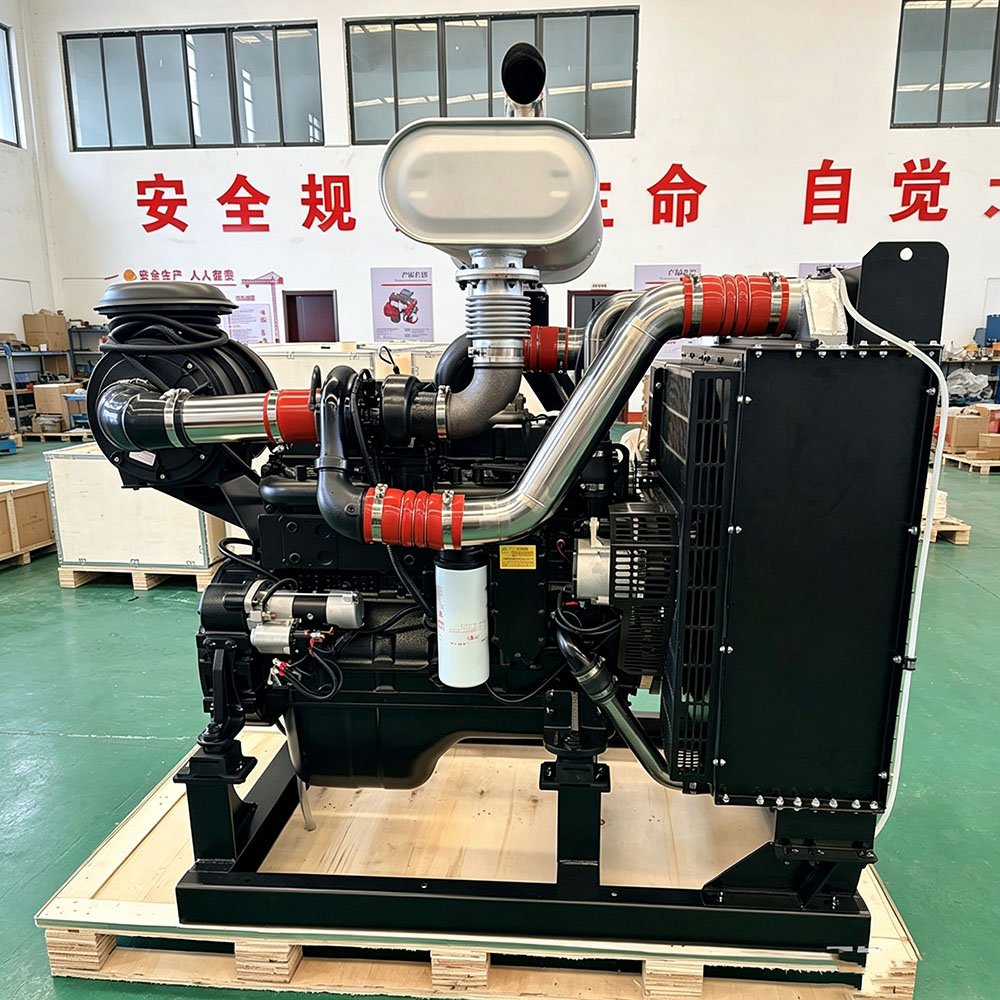
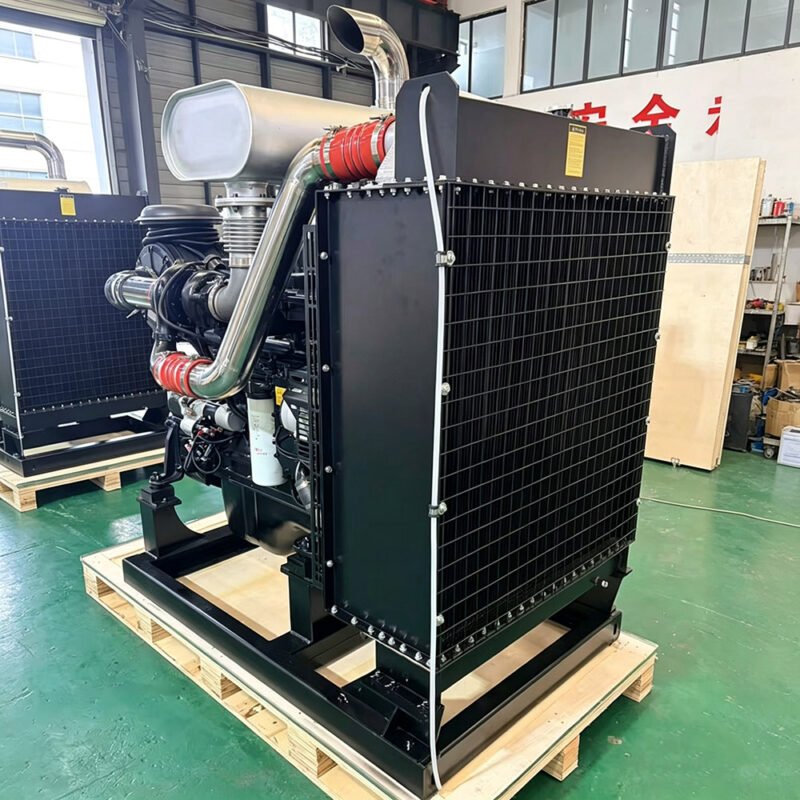
For example, Kangjin Power’s Cummins QSB6.7 diesel engine is available in multiple industrial power configurations.
The engine’s rated power and torque are relevant when matching it to a generator package, but governor mode must be evaluated separately through the generator control system.
For higher-output industrial and generator applications, the Cummins QSZ13 diesel engine provides another example of an electronically controlled engine platform.
Its engine rating alone does not determine whether the complete generator set uses droop or isochronous control. That depends on the governor, controller, alternator, and paralleling configuration.
Common Governor Droop and Isochronous Control Problems
Incorrect governor settings can cause unstable operation, uneven load sharing, and unacceptable frequency variation.
Several problems deserve attention during commissioning.
Unequal droop settings: Parallel generators with different droop characteristics may not share active power proportionally.
Incorrect speed references: Different no-load speed settings can cause one generator to carry more load than another.
Poor isochronous coordination: Multiple generators operating without a compatible load-sharing strategy may compete to regulate bus frequency.
Insufficient engine capacity: A generator that is too small may experience excessive frequency dips when large loads are connected.
Incorrect governor tuning: Excessive gain or unsuitable stability settings can cause speed oscillations and unstable frequency recovery.
Confusing frequency and voltage droop: Governor droop controls engine speed and frequency. AVR droop controls voltage behavior and reactive-power sharing.
Commissioning should follow the engine and generator controller manufacturer’s procedures. Adjustments should be tested under appropriate load conditions by qualified personnel.
Frequently Asked Questions
What is the main difference between droop and isochronous control?
Droop control allows engine speed and frequency to decrease as load increases. Isochronous control maintains the same steady-state speed and frequency reference across changing loads.
Is isochronous control better for a single diesel generator?
It is commonly suitable for standalone generator applications because it maintains a consistent steady-state frequency. The generator must still have sufficient capacity and appropriate transient response for the connected loads.
Can two isochronous generators operate in parallel?
Yes. They can operate in parallel when a compatible isochronous load-sharing system coordinates their power contributions. Independent governors should not simply be set to identical frequency references without proper coordination.
What is a typical generator governor droop setting?
A 3% droop setting is used in some generator applications, while 5% settings also appear in technical documentation. The correct value depends on the governor, generator controller, and paralleling requirements.
Does governor droop affect generator voltage?
Governor droop directly affects engine speed and generator frequency. Generator voltage is regulated by the AVR, which may use a separate voltage-droop or reactive-power-sharing function.
Can droop control be used with a single generator?
Yes. A single generator can operate with droop characteristics, although its steady-state frequency will vary with load. Whether this is acceptable depends on the connected equipment’s frequency requirements.
Summary
Diesel generator governor droop and isochronous control serve different operating needs.
Droop allows frequency to decrease with increasing load and provides a practical method for sharing active power between parallel generators. Isochronous control maintains a constant steady-state frequency and can support standalone generator operation or coordinated parallel load sharing.
For industrial generator systems, the right choice depends on the number of generator sets, load characteristics, governor capabilities, and control architecture. Understanding the difference between speed regulation, active-power sharing, and AVR voltage regulation helps prevent commissioning problems and improves overall system stability.

