
Diesel Engine Vibration Analysis: Causes, Measurement & Diagnosis

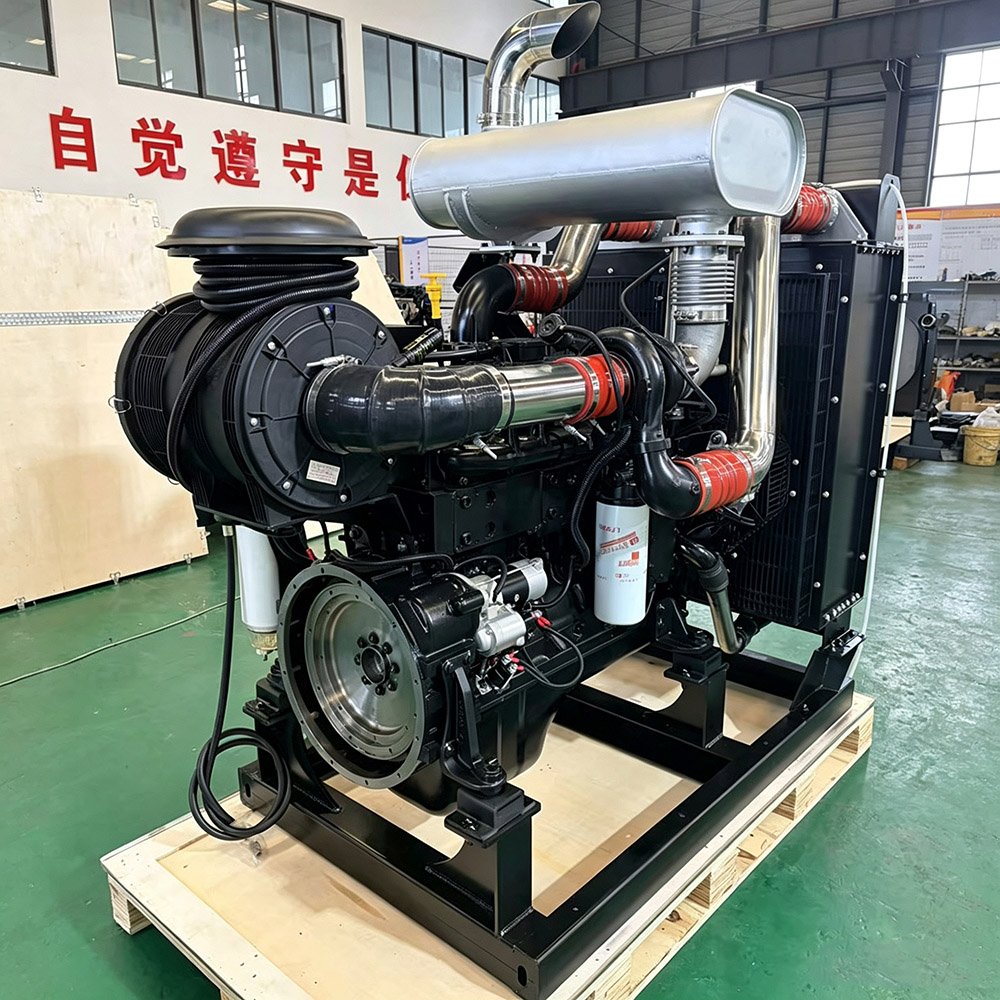
Diesel engine vibration analysis identifies abnormal mechanical movement by measuring vibration amplitude, frequency, and changes under different operating conditions. Common causes include combustion imbalance, worn engine mounts, crankshaft problems, bearing wear, loose components, and drivetrain misalignment. A reliable diagnosis compares measurements at consistent engine speeds and loads, then checks the vibration pattern against the engine manufacturer’s limits and applicable measurement standards.
Not every vibration indicates an engine fault. Diesel engines naturally produce periodic forces from combustion and reciprocating components. The important distinction is whether vibration is excessive, changes unexpectedly, or appears together with abnormal noise, temperature, pressure, or engine performance.
Why Do Diesel Engines Vibrate?
A diesel engine generates vibration because pistons, connecting rods, crankshaft components, and combustion forces produce periodic mechanical loads. These forces are transmitted through the engine block, mounts, foundation, and connected equipment.
Some vibration is normal. Problems develop when mechanical wear, incorrect combustion, loose connections, or installation conditions increase the vibration beyond the expected operating behavior.
| Vibration Source | Typical Cause | Possible Symptoms |
|---|---|---|
| Combustion system | Uneven fuel delivery or injector problems | Rough running and irregular vibration |
| Engine mounts | Worn rubber, loose bolts, or damaged supports | Excessive movement and transmitted vibration |
| Crankshaft and rotating assembly | Imbalance, runout, or mechanical damage | Speed-related vibration |
| Bearings | Wear, lubrication problems, or excessive clearance | Abnormal noise and vibration |
| Drivetrain | Misalignment or coupling problems | Vibration near the flywheel or driven equipment |
| Foundation | Loose anchors or inadequate structural support | Movement of the complete engine assembly |
Combustion Imbalance and Fuel Injection Problems
Uneven combustion can create differences in cylinder pressure and crankshaft torque. This may produce rough running, irregular vibration, and changes in exhaust smoke.
Possible causes include:
- Blocked or worn fuel injectors.
- Incorrect injection timing on applicable mechanical systems.
- Uneven fuel delivery between cylinders.
- Low compression in one or more cylinders.
- Air entering the fuel system.
On electronically controlled engines, diagnostic fault codes and cylinder contribution tests can help identify irregular combustion. Mechanical engines may require injector testing, compression testing, and fuel-pump inspection.
Vibration measurements alone cannot confirm an injector fault. They should be combined with engine diagnostics and operating observations.
Mechanical Imbalance and Loose Components
Rotating components generate centrifugal forces when their mass distribution is uneven. Damaged pulleys, improperly installed accessories, or rotating assembly problems can increase vibration at particular operating speeds.
Loose brackets, mounting bolts, exhaust supports, and protective covers can also create vibration or amplify existing engine movement.
In industrial installations, a problem may originate outside the engine itself. A misaligned coupling or poorly supported driven machine can transmit vibration back into the engine structure.
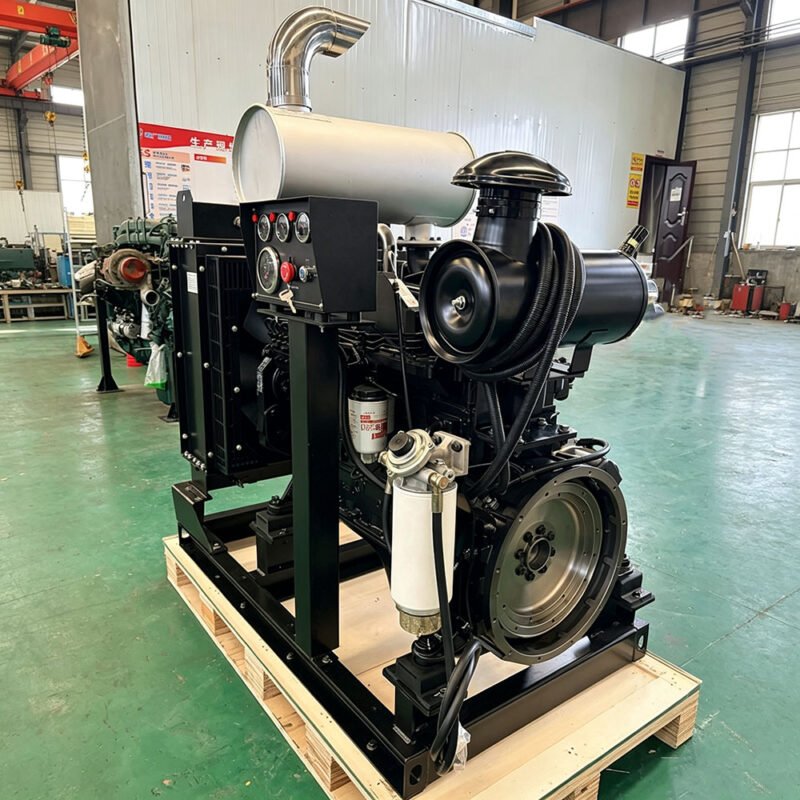
How to Measure Diesel Engine Vibration
Vibration analysis normally uses accelerometers, vibration meters, or data acquisition equipment to measure movement at selected locations. Measurements may include acceleration, velocity, displacement, and frequency.
The appropriate measurement depends on the machine, fault being investigated, sensor location, and frequency range.
| Measurement | Common Unit | What It Helps Identify |
|---|---|---|
| Displacement | µm or mm | Relative movement and low-frequency motion |
| Velocity | mm/s RMS | Overall vibration severity in suitable applications |
| Acceleration | m/s² or g | Higher-frequency impacts and mechanical activity |
| Frequency | Hz or orders | Relationship between vibration and engine speed |
Choose Appropriate Measurement Locations
For engine-mounted measurements, technicians commonly inspect accessible structural locations near the main bearing supports, engine block, mounting points, and connected equipment interfaces.
Measurements should be taken in three directions where practical:
- Horizontal: Detects side-to-side movement.
- Vertical: Detects movement perpendicular to the mounting surface.
- Axial: Detects movement along the crankshaft direction.
Consistent sensor placement is important when comparing vibration readings over time. Measurements taken at different locations or with different mounting methods may not be directly comparable.
Measure Vibration at Different Operating Conditions
A single reading at idle rarely provides enough information to diagnose an industrial diesel engine.
Record vibration under controlled operating conditions, including:
- Engine startup and warm-up.
- Normal operating speed without external load where applicable.
- Representative working load.
- Changes in speed and load.
- Shutdown, if abnormal vibration occurs during the process.
Record engine RPM, load percentage, coolant temperature, oil pressure, and other relevant operating information alongside vibration measurements.
This context helps distinguish speed-related vibration from load-dependent combustion or drivetrain problems.
How to Interpret Diesel Engine Vibration Frequencies
Frequency analysis helps identify whether vibration is related to engine rotation, combustion events, or another mechanical source.
Engine speed provides a useful reference for interpreting vibration signals.
The rotational frequency is calculated as:
Rotational frequency (Hz) = Engine RPM / 60
For an engine operating at 1,800 RPM:
1,800 / 60 = 30 Hz.
This means the crankshaft completes 30 revolutions per second.
However, vibration can also occur at multiples of rotational frequency and at frequencies associated with combustion, reciprocating forces, and accessory operation.
| Vibration Pattern | Possible Source | Additional Checks |
|---|---|---|
| 1× rotational frequency | Rotating imbalance or alignment issues | Pulley, coupling, and shaft condition |
| Higher rotational orders | Mechanical forces and component interactions | Engine configuration and operating speed |
| Irregular low-frequency movement | Combustion variation or loose supports | Injector condition and engine mounts |
| High-frequency vibration | Impacts, bearing activity, or accessory faults | Bearings, gears, and auxiliary components |
These patterns are diagnostic clues, not standalone fault identifications. Diesel engines are reciprocating machines with complex excitation forces, so frequency signatures must be interpreted in relation to cylinder count, firing order, engine speed, and machine configuration.
Standards and Practical Vibration Diagnosis
ISO standards provide useful guidance for vibration measurement and evaluation, but the correct standard depends on the machine type.
ISO 10816-6 addresses vibration measurement on non-rotating parts of reciprocating machines with power ratings above 100 kW. Its scope includes diesel generator engines, marine propulsion engines, and other reciprocating power units.
ISO 13373-1 provides general procedures for machinery vibration monitoring, including measurement methods and data collection.
ISO 13373-2 covers vibration signal processing, analysis, and presentation. These methods help technicians examine frequency components and changes in vibration signatures.
Official references:
- ISO 10816-6:1995
- ISO 13373-1:2002
- ISO 13373-2:2016
ISO 10816-6 is specifically relevant to reciprocating engines above 100 kW. It should not be replaced by generic vibration limits developed for other types of rotating machinery.
Acceptance limits must be selected according to the applicable standard, engine configuration, mounting arrangement, and manufacturer requirements. The same vibration value may have different significance on different machines.
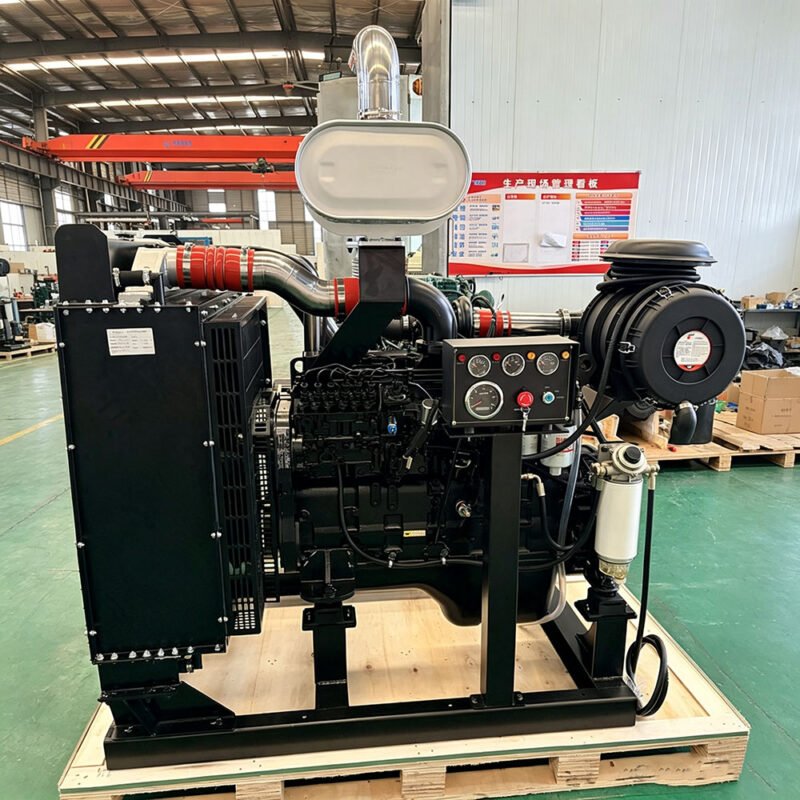
Practical Troubleshooting for Industrial Diesel Engines
When vibration increases, diagnosis should begin with the operating conditions and the location where the vibration is strongest.
A practical inspection sequence is:
- Confirm the operating condition. Record engine speed, load, temperature, and whether the vibration occurs continuously or intermittently.
- Inspect mounting components. Check anchor bolts, engine mounts, brackets, and foundation condition.
- Review combustion performance. Check fuel delivery, injectors, cylinder balance, and compression where necessary.
- Inspect rotating components. Examine pulleys, coupling alignment, flywheel interfaces, and accessory drives.
- Compare vibration data. Review amplitude and frequency against previous measurements and applicable limits.
- Investigate related symptoms. Check abnormal noise, oil pressure, coolant temperature, exhaust smoke, and bearing condition.
Do not attempt to correct excessive vibration simply by tightening every mounting bolt. Incorrect mounting adjustments can introduce additional stress or conceal an underlying mechanical problem.
For example, the Cummins QSB6.7 diesel engine is available in several industrial configurations. Its vibration characteristics should be evaluated against the specific engine rating, installation arrangement, and manufacturer’s technical requirements.
The same approach applies to the Cummins 6CTA8.3 diesel engine, which is used in industrial applications with different operating speeds and load conditions.
For larger industrial power applications, the Cummins QSM11 diesel engine provides another example of an engine platform where mounting, driven equipment, and operating conditions must be considered during vibration assessment.
Frequently Asked Questions
What causes excessive vibration in a diesel engine?
Common causes include uneven combustion, injector problems, worn engine mounts, loose fasteners, rotating imbalance, bearing wear, and drivetrain misalignment. Measurements and mechanical inspections are needed to identify the actual cause.
How is diesel engine vibration measured?
Technicians use accelerometers or vibration meters to measure acceleration, velocity, displacement, and frequency at selected engine locations. Measurements should be recorded at consistent engine speeds and loads.
What is a normal vibration level for a diesel engine?
There is no single vibration limit that applies to every diesel engine. Acceptable levels depend on engine type, power rating, mounting arrangement, measurement location, and the applicable manufacturer or standards-based criteria.
Can bad injectors cause diesel engine vibration?
Yes. Uneven fuel delivery or poor injector performance can create differences in cylinder combustion pressure, resulting in rough running and irregular engine vibration. Injector testing and cylinder contribution checks can help confirm the cause.
Does engine mounting affect vibration?
Yes. Worn mounts, loose anchors, and inadequate foundations can increase vibration transmission or allow excessive engine movement. Mounting condition should be checked before replacing major engine components.
Conclusion
Diesel engine vibration analysis combines measurement data with mechanical inspection and operating information. Amplitude, frequency, engine speed, and load conditions help technicians identify abnormal vibration and narrow down its likely source.
For industrial engines, the most reliable diagnosis compares consistent measurements with the engine manufacturer’s limits and appropriate vibration standards. Checking combustion, mounting, rotating components, and connected equipment together helps prevent unnecessary repairs and identifies problems before they cause more serious damage.

