
Diesel Engine Radiator Sizing: Cooling Requirements

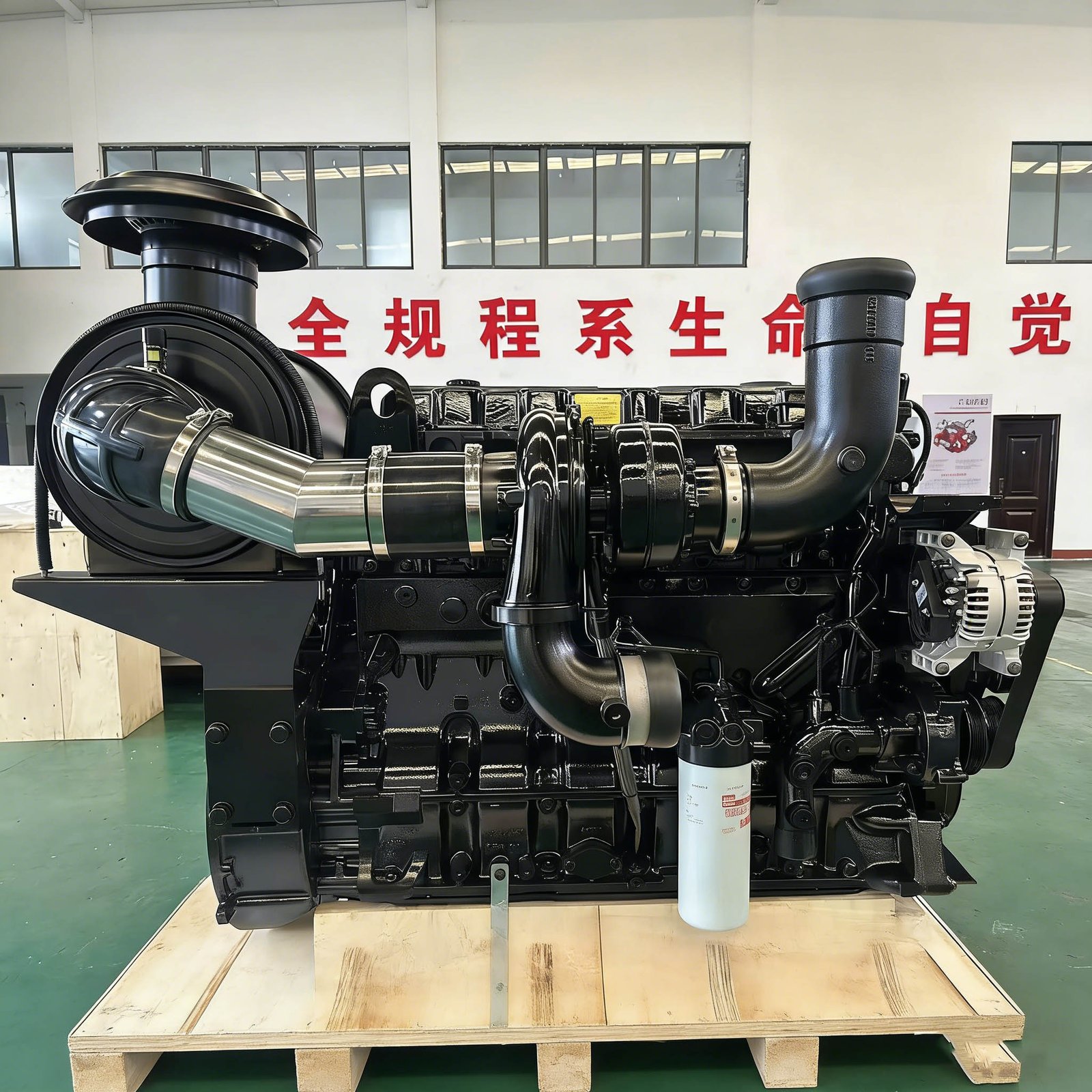
Diesel engine radiator sizing starts with the engine’s coolant heat rejection, not its horsepower. The radiator must remove the required heat at the maximum operating temperature while maintaining adequate coolant flow and airflow. Correct sizing also depends on the engine’s rated load, coolant temperature limits, cooling-system pressure drop, and installation environment. A radiator that appears large enough may still cause overheating if airflow is restricted or hot discharge air returns to its inlet.
For construction machinery, generator sets, and industrial pumps, the cooling package should be evaluated as a complete system. The radiator, fan, coolant pump, thermostat, piping, and charge-air cooler all influence operating temperatures.
What Determines the Correct Diesel Engine Radiator Size?
A radiator transfers heat from engine coolant to the surrounding air. The amount of heat it must remove depends on engine design, fuel consumption, operating load, and cooling-circuit configuration.
Not all the heat produced by a diesel engine passes through the radiator. Some leaves through the exhaust, mechanical output, surrounding surfaces, and other cooling circuits.
Engine manufacturers therefore publish coolant heat-rejection figures for particular operating conditions.
The following information is needed before a radiator can be sized accurately.
| Parameter | Role in Radiator Sizing |
|---|---|
| Coolant heat rejection (kW) | Establishes the required heat-removal capacity |
| Rated engine power and RPM | Identifies the operating point used for cooling data |
| Maximum ambient temperature | Determines the available temperature difference |
| Coolant flow rate | Affects engine and radiator heat transfer |
| Coolant temperature limits | Defines acceptable operating temperatures |
| Fan airflow | Controls air movement through the radiator |
| Air-side restriction | Affects actual fan performance |
| Coolant-side pressure drop | Must remain within the coolant pump’s limits |
| Altitude and installation | Influence air density and cooling performance |
Heat rejection must be taken from the specific engine rating. Two engines producing similar horsepower may have different coolant heat loads.
For example, Kangjin Power lists several configurations of the Cummins QSB6.7 diesel engine, with rated outputs from 99 to 194 kW.
Those output figures help identify the engine configuration, but they cannot be converted directly into radiator capacity. The matching Cummins cooling data is still required.
How to Calculate Diesel Engine Radiator Cooling Capacity
The first calculation is a heat balance across the cooling system.
For a liquid coolant circuit, heat transfer can be estimated using:
Q = ṁ × cp × ΔT
Where:
- Q: Heat transferred, in kW.
- ṁ: Coolant mass flow, in kg/s.
- cp: Specific heat capacity of the coolant, in kJ/(kg·K).
- ΔT: Coolant temperature difference, in °C or K.
This equation is useful for checking measured coolant performance. It does not independently determine the radiator’s physical dimensions or air-side capability.
Example: Calculating Radiator Heat Transfer
Consider an illustrative cooling circuit with:
| Parameter | Example Value |
|---|---|
| Coolant mass flow | 4 kg/s |
| Coolant specific heat | 3.8 kJ/(kg·K) |
| Temperature drop across radiator | 10°C |
| Calculated heat transfer | 152 kW |
The calculation is:
Q = 4 × 3.8 × 10 = 152 kW
The radiator transfers approximately 152 kW under these assumed conditions.
This does not mean that any radiator advertised as 152 kW will work. That rating must be achieved at the specified coolant temperatures, ambient temperature, airflow, and coolant flow.
The coolant’s actual specific heat also depends on the water-glycol mixture and temperature.
Why Radiator Core Area Cannot Be Calculated from Horsepower Alone
Radiator dimensions depend on more than the required heat-transfer rate.
Two cores with the same frontal area may deliver different performance because of their fin geometry, tube arrangement, depth, and airflow resistance.
A radiator manufacturer normally evaluates the required heat rejection against the coolant and air inlet conditions.
The resulting selection may involve changes to core dimensions, fin density, fan specifications, or the complete cooling arrangement.
A larger core is not always the correct solution. If the fan cannot move enough air through it, the additional area may provide little practical benefit.
Ambient Temperature, Airflow and Cooling System Restrictions
Industrial cooling systems often fail because the installation cannot deliver the airflow assumed during radiator selection.
This is particularly common in enclosed generator rooms, dusty construction equipment, and machinery operating in hot climates.
High Ambient Temperature
A radiator becomes less effective as the temperature difference between the coolant and incoming air decreases.
A cooling package performing adequately at 25°C may struggle at 45°C.
Some industrial engine packages offer different ambient-temperature ratings, but those ratings apply to specific configurations.
The correct design temperature should reflect the hottest credible operating conditions at the site.
Fan Performance and Hot-Air Recirculation
The radiator fan must overcome resistance from the core, protective grilles, ducting, and equipment enclosure.
A fan’s free-air rating does not indicate how much air it will deliver after these restrictions are added.
Common installation problems include:
- Restricted intake or discharge openings.
- Incorrect fan or shroud positioning.
- Hot discharge air returning to the radiator inlet.
- Dirty fins restricting airflow.
- Exhaust heat entering the cooling-air stream.
Hot-air recirculation is especially problematic because it raises the effective ambient temperature seen by the radiator.
For stationary generator sets, discharge ducting and ventilation openings must be coordinated with the radiator fan’s pressure capability.
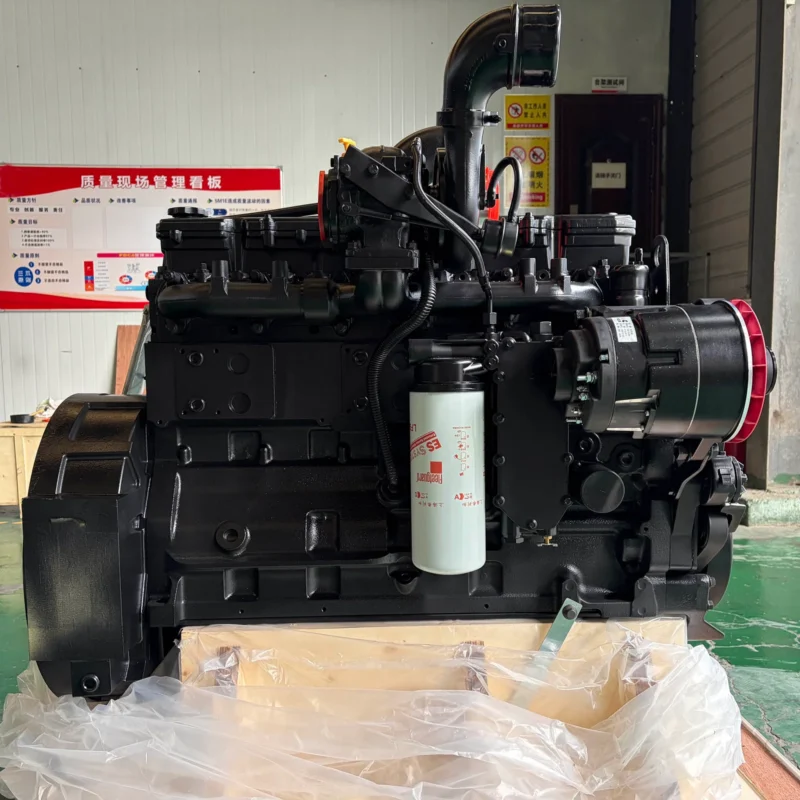
Coolant Flow and Pressure Drop
Increasing radiator capacity does not solve inadequate coolant circulation.
Long pipes, restrictive fittings, undersized hoses, and unsuitable heat exchangers can increase pressure losses beyond the coolant pump’s allowable limits.
Remote radiator installations require particular attention to piping resistance, elevation differences, filling, venting, and expansion arrangements.
Cummins’ liquid-cooled generator application guidance emphasizes that cooling-system performance depends on both the thermal design and the hydraulic characteristics of the installation.
High Altitude and Dust
At higher elevations, reduced air density can limit the air mass passing through the radiator for a given volumetric flow.
Dust and debris can further reduce performance by obstructing the core.
For construction and mining applications, access for cleaning and inspection should be considered during the initial cooling-system design.
Radiator Requirements for Different Industrial Applications
The appropriate cooling arrangement changes with the equipment’s operating pattern and installation constraints.
Construction Machinery
Excavators and loaders experience changing loads as their hydraulic systems operate.
Their cooling packages may need to reject heat from the engine coolant, charge-air cooler, hydraulic oil cooler, and other circuits.
These components can compete for airflow when installed in a common cooling stack.
A radiator that performs adequately by itself may deliver less capacity when positioned behind another heat exchanger.
The Cummins 6CTA8.3 diesel engine is used in heavy-duty industrial applications where sustained loading and cooling-system capacity are important.
For such installations, the complete engine rating and equipment cooling requirements should be evaluated together.
Diesel Generator Sets
Generator sets operate under relatively defined speed conditions, but their electrical loads can change significantly.
A generator enclosure must handle radiator discharge air and heat released from the engine, exhaust components, and alternator.
Factory-mounted radiators are often practical because the manufacturer can design the fan and cooling package around the engine.
Remote radiators can address space, ventilation, or noise constraints, but they introduce additional hydraulic and installation requirements.
Water Pumps and Fire-Pump Engines
Pump-drive engines may operate continuously near a fixed speed.
Their cooling systems must handle the corresponding sustained heat rejection, even when the pump is operating in a hot or poorly ventilated location.
However, not every pump engine uses a conventional radiator.
For example, Kangjin Power’s Cummins QSB6.7 fire-pump engine uses a closed coolant circuit with a shell-and-tube heat exchanger.
This arrangement transfers heat to a separate cooling-water circuit rather than directly to ambient air through a radiator.
Its design requires confirmation of cooling-water flow, inlet temperature, pressure limits, and heat-exchanger capacity.
A conventional radiator specification should not be used as a substitute for those requirements.
How to Select and Verify an Industrial Engine Radiator
A sound radiator selection follows the engine’s operating requirements rather than a generic horsepower-to-radiator chart.
The essential checks are:
- Identify the exact engine configuration. Record the model, rated output, speed, and serial number.
- Obtain manufacturer heat-rejection data. Include coolant and charge-air cooling requirements where relevant.
- Define the worst-case environment. Consider ambient temperature, altitude, dust, and enclosure conditions.
- Check coolant flow and pressure limits. Confirm the radiator and piping can operate within the engine water pump’s requirements.
- Evaluate installed fan performance. Use the fan curve and expected system resistance rather than free-air capacity.
- Verify the final installation. Test coolant temperatures and cooling performance at the relevant operating load.
Selection margins should be supported by engineering requirements, expected fouling, and operating conditions.
Adding an arbitrary percentage to the radiator size cannot compensate for incorrect airflow or unsuitable coolant piping.
The final cooling package must also use the correct coolant mixture, pressure cap, expansion provisions, and venting arrangement.
Frequently Asked Questions
How do you size a radiator for a diesel engine?
Start with the engine manufacturer’s coolant heat-rejection data. Then check ambient temperature, coolant flow, fan airflow, pressure drop, and the installation layout before selecting the radiator core.
Can radiator size be calculated from engine horsepower?
Horsepower alone is insufficient. Engines with similar mechanical outputs can reject different amounts of heat into their cooling circuits. The manufacturer’s coolant heat-rejection value is more reliable.
Does a turbocharged diesel engine need a bigger radiator?
Not necessarily. Cooling requirements depend on the engine’s specific heat rejection and charge-air cooling arrangement. A turbocharged engine may also require a separate charge-air cooler.
How does ambient temperature affect radiator sizing?
Higher ambient temperatures reduce the temperature difference available for cooling. A radiator intended for hot conditions may require greater heat-transfer capacity or improved airflow.
Why does a diesel engine overheat even with a large radiator?
Possible causes include restricted airflow, hot-air recirculation, inadequate coolant flow, blocked passages, incorrect coolant mixture, or insufficient fan performance.
When should a remote radiator be considered?
A remote radiator may be suitable when the engine installation has limited ventilation space or specific noise requirements. Coolant pump capability, piping pressure losses, filling, and venting must be assessed.
Summary
Diesel engine radiator sizing requires an accurate understanding of coolant heat rejection, airflow, coolant circulation, and ambient operating conditions. Engine horsepower is useful for identifying the relevant rating, but it cannot determine radiator capacity on its own.
For industrial equipment, the most reliable approach is to obtain the manufacturer’s cooling data and evaluate the radiator, fan, piping, and installation as one system. This helps prevent overheating, unnecessary equipment changes, and cooling-related downtime.

