
Custom Diesel Engine Solutions: Industrial Selection Guide


Selecting a custom diesel engine manufacturer is a critical pivot point for OEMs (Original Equipment Manufacturers) in the construction, mining, and power generation sectors. Unlike off-the-shelf units, custom diesel engine solutions are engineered to harmonize with specific hydraulic configurations, structural footprints, and duty cycles. For industrial applications—where downtime is measured in thousands of dollars per hour—the integration of an engine that matches the machine’s specific torque curve is not a luxury; it is a mechanical necessity.
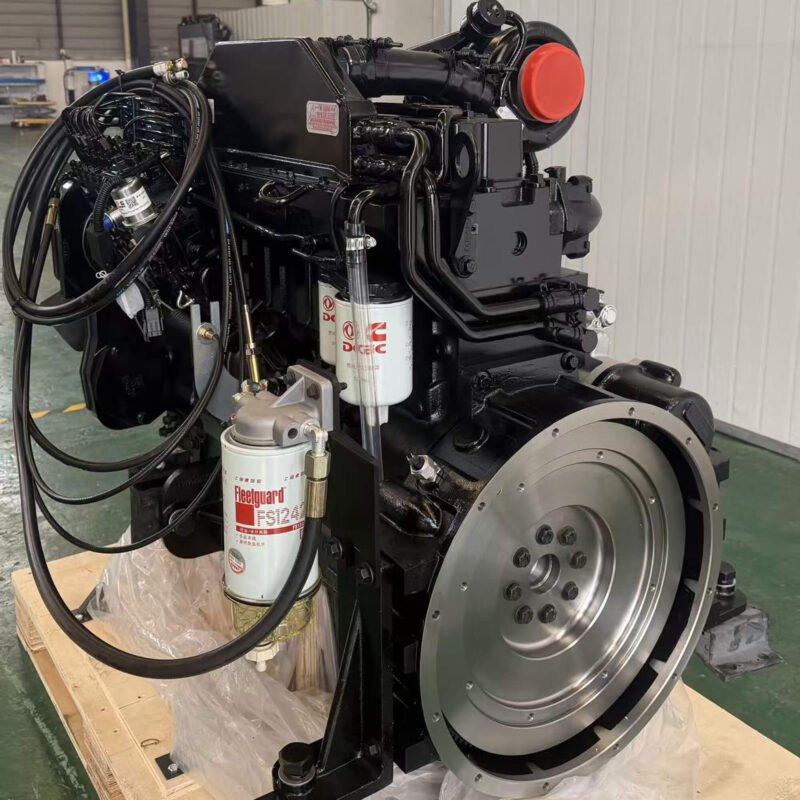
The Engineering Gap: Standard vs. Custom Diesel Solutions
Most mass-produced diesel engines are designed for a “median” application, often leaving specialized machinery underpowered or inefficient. A custom diesel engine manufacturer bridges this gap by modifying core parameters to suit the end-use environment.
When evaluating custom solutions, engineers must prioritize the balance between power density and thermal management. In construction machinery, for instance, the engine must often drive multiple hydraulic pumps while maintaining optimal temperatures in confined compartments.
| Feature | Standard Diesel Engine | Custom Industrial Engine Solution |
| Torque Profile | Fixed curve, general purpose | Optimized for specific load points (e.g., high low-end torque) |
| Mounting & SAE | Standardized bell housings only | Custom flywheels, housings, and mounting brackets |
| Cooling System | Integrated, non-flexible | Remote or oversized cooling for high-ambient/dusty sites |
| Electronic Control | Locked ECU parameters | Specialized ECU mapping for fuel efficiency or hydraulic sync |
| Emission Support | Regional (e.g., EPA Tier 4 Final) | Multi-regional compliance (Stage V, Tier 3, etc.) |
Why Construction Machinery Demands Custom Integration
Industrial equipment, particularly those found in Kangjin Power’s construction machinery category, faces unique stressors that generic engines cannot withstand. Excavators, road rollers, and forklifts operate in environments characterized by high vibration, heavy dust, and fluctuating loads.
1. Hydraulic System Synchronization
In many custom builds, the engine isn’t just a power source; it is the heartbeat of the hydraulic system. Manufacturers must ensure the engine’s power output matches the flow requirements of the hydraulic pumps to prevent stalling during peak breakout forces.
2. Physical Footprint and Manifold Orientation
In compact construction equipment, space is a premium. Custom diesel engine solutions often involve relocating the turbocharger, alternator, or exhaust manifold to fit within a specific chassis design without compromising serviceability or airflow.
3. Environmental Adaptability
For machines destined for high-altitude mining or desert construction, custom manufacturers implement specialized turbochargers and heavy-duty filtration systems. This prevents “derating”—the loss of engine power due to thin air or excessive heat.
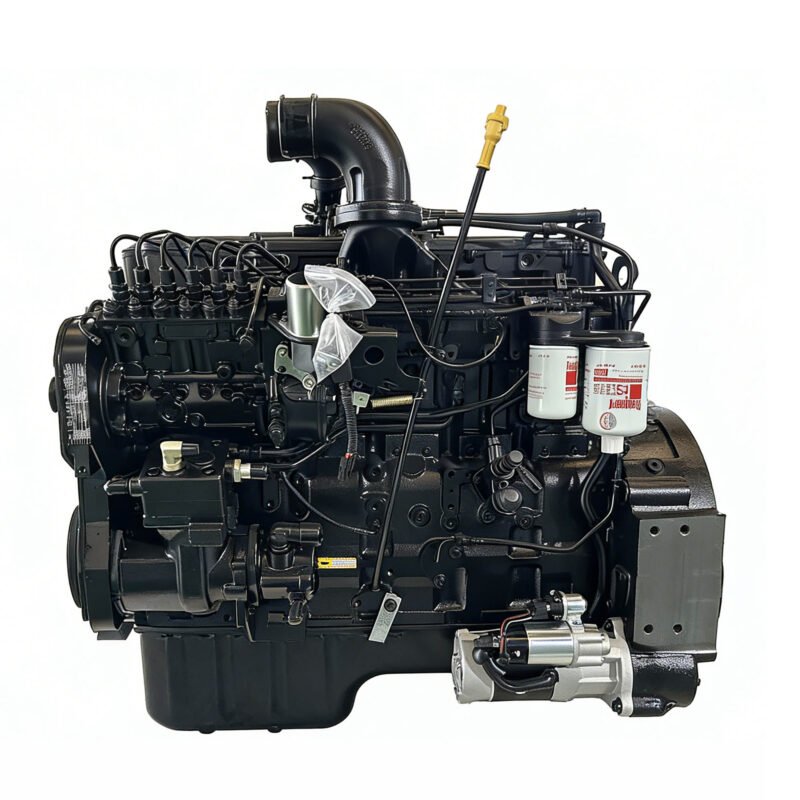
The Workflow of a Custom Diesel Engine Project
Engaging with a custom diesel engine manufacturer involves a multi-stage engineering cycle. It is rarely a “buy and bolt-on” transaction.
- Requirements Definition: The OEM provides the “Duty Cycle Profile.” Is the engine running at a constant RPM (generators) or variable load (excavators)?
- Technical Prototype Development: The manufacturer adapts the block with custom accessories—SAE adapters, specialized oil pans for high-angle operation, and tailored wiring harnesses.
- Emissions and Compliance Mapping: Ensuring the engine meets local regulations (EPA, EU Stage V, or non-regulated markets) while maintaining the required power output.
- Validation and Field Testing: Real-world testing to ensure vibration levels and heat rejection meet the machine’s durability standards.
Critical Evaluation Factors for B2B Procurement
When moving from the research phase to a Request for Quote (RFQ), industrial buyers should scrutinize a manufacturer’s capability beyond just the unit price.
- Component Provenance: Ask which fuel injection systems (e.g., Bosch, Denso) and turbochargers are used. Custom engines are only as reliable as their highest-failure-point component.
- After-Sales Technical Support: Industrial engines require specialized diagnostic software. A manufacturer must provide the interface tools and global parts availability for the engine’s life cycle (often 10,000+ hours).
- Scalability and Lead Times: For OEM projects, the manufacturer must demonstrate the ability to scale from a single prototype to batch production without compromising quality control (QC) standards.
Strategic Integration for Long-Term Value
A custom engine solution significantly lowers the Total Cost of Ownership (TCO). By optimizing the fuel consumption map for the specific task of the machine, a custom engine can reduce fuel overhead by 5-15% compared to a generic alternative. Furthermore, by reducing parasitic loads through efficient accessory mounting, the overall lifespan of the drivetrain is extended.
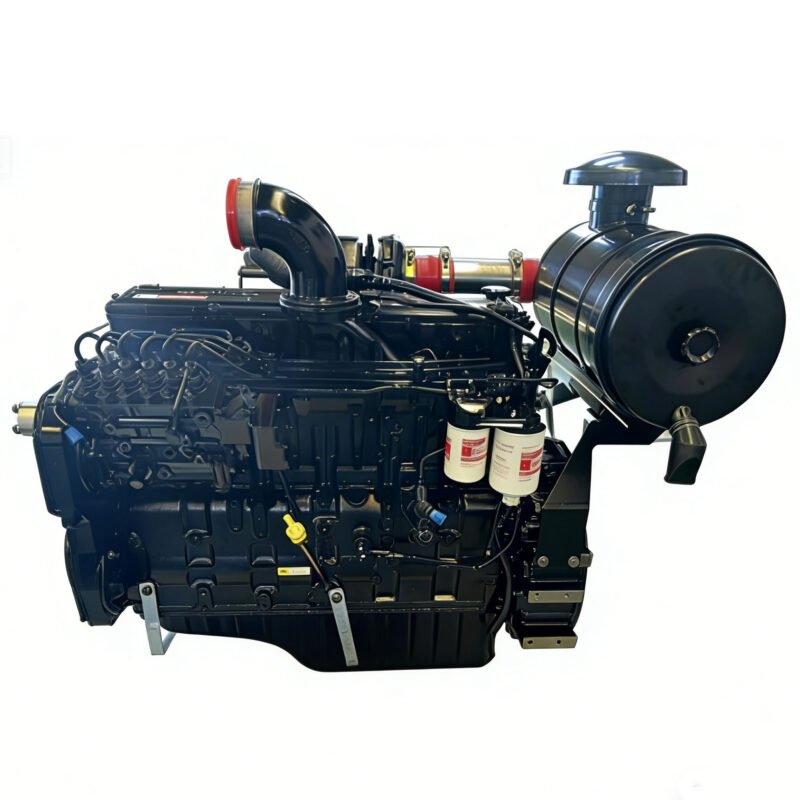
FAQ: Custom Industrial Diesel Engines
Q: What is the typical MOQ for custom diesel engine solutions?
A: Minimum Order Quantities vary significantly by the level of customization. For minor accessory adjustments, some manufacturers accept orders as low as 5–10 units. However, for full structural modifications or proprietary ECU mapping, MOQs typically range from 20 to 50 units to offset engineering costs.
Q: Can a manufacturer adapt an engine to meet both EPA Tier 4 and EU Stage V?
A: Yes. Many modern custom engines utilize a “Global Platform” approach where the base block remains the same, but the Aftertreatment System (ATS)—including DPF, DOC, and SCR—is swapped or reconfigured based on the destination market’s regulations.
Q: How does a custom engine impact the machine’s warranty?
A: When you work with a certified custom diesel engine manufacturer, the engine warranty is typically held by the engine supplier, while the machine warranty is held by the OEM. It is vital to ensure the engine manufacturer’s warranty covers the specific industrial application (e.g., marine, construction, or stationary power).
Q: What is the average lead time for a custom engine prototype?
A: For existing engine platforms requiring custom mounting or external components, lead times are usually 8–12 weeks. If significant internal modifications or new emissions certifications are required, the timeline can extend to 6 months or more.
Reference Sources
- ISO 8178: The international standard for exhaust emission measurement for non-road internal combustion engines.
- EPA Nonroad Diesel Engines: Regulations and compliance standards for industrial diesel engines in the US.
- DieselNet: Technical resource for emissions and engine technology, focusing on industrial and heavy-duty applications.
- SAE International: Standards for engine mounting, flywheels, and housing (e.g., SAE J617).

