
EPA Tier 4 Final vs EU Stage V: Diesel Engine Emission Standards Compared

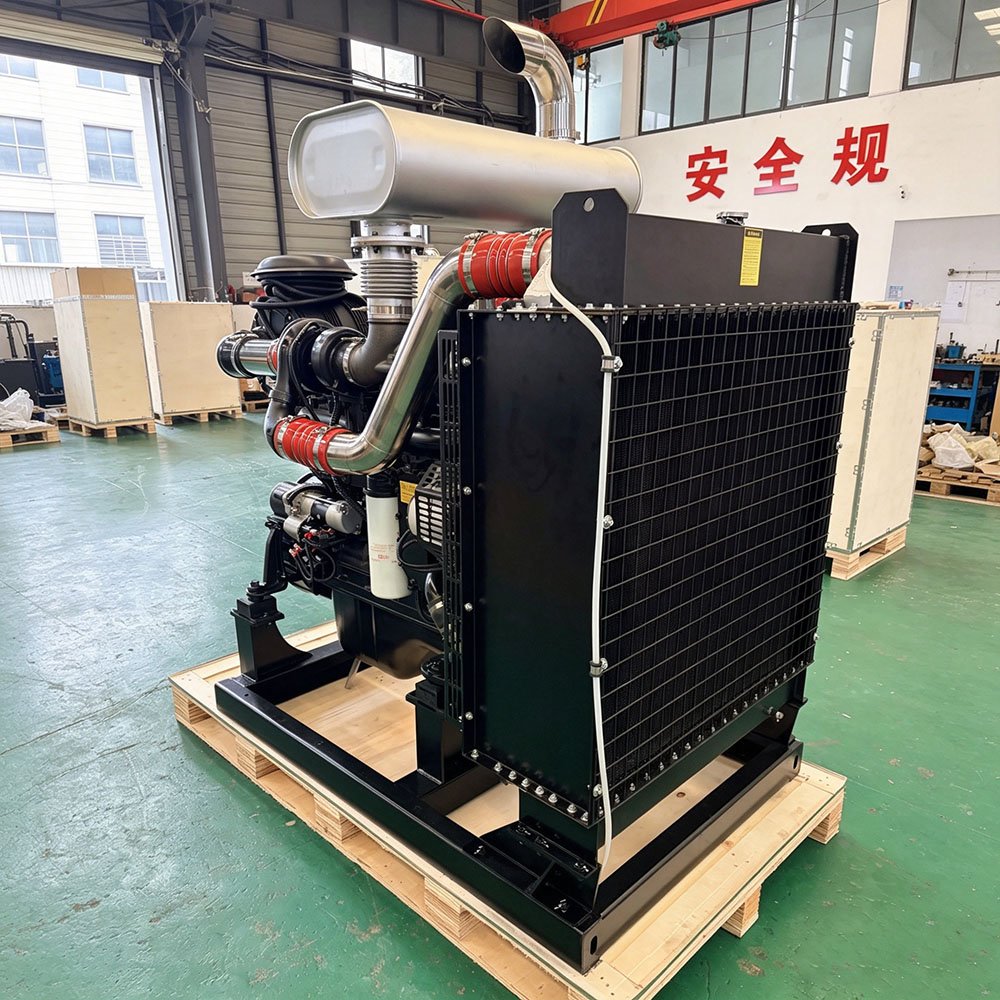
EPA Tier 4 Final and EU Stage V are emissions standards for non-road engines in the United States and European Union. Both set strict limits on nitrogen oxides (NOx) and particulate matter (PM). However, EU Stage V also establishes a particle number (PN) limit for several engine categories. The rules use different certification procedures, engine classifications, and regulatory requirements. Consequently, an engine certified for EPA Tier 4 Final does not automatically qualify for EU Stage V.
For construction equipment manufacturers, diesel engine importers, and international OEM buyers, this difference affects engine selection, aftertreatment requirements, certification documents, and market access. A suitable engine must meet the applicable standard for its power rating, equipment category, and destination market.
What Are EPA Tier 4 Final and EU Stage V?
EPA Tier 4 Final: United States Non-Road Diesel Standards
EPA Tier 4 Final is the final phase of the United States Environmental Protection Agency’s Tier 4 emissions requirements for covered non-road compression-ignition engines.
The rules appear in 40 CFR Part 1039 and regulate pollutants such as NOx, particulate matter, hydrocarbons, and carbon monoxide.
Tier 4 requirements were introduced in stages according to engine power and model year. The final requirements became applicable across the relevant power categories through a phased implementation schedule.
Manufacturers must certify applicable engine families and meet requirements covering emissions testing, durability, production conformity, and related controls.
Importantly, Tier 4 Final is a non-road standard. It should not be confused with EPA requirements for on-highway heavy-duty vehicles or stationary engines regulated under separate provisions.
EU Stage V: European Non-Road Mobile Machinery Standards
EU Stage V is the European Union’s emissions framework for engines used in non-road mobile machinery (NRMM).
Regulation (EU) 2016/1628 establishes emission limits, engine categories, and type-approval requirements. The rules cover a broad range of machinery and engine applications.
For many relevant engine categories, Stage V became applicable from 2019 or 2020, subject to regulatory transition provisions and category-specific dates.
Compared with earlier European stages, Stage V introduced important particulate-control requirements, including particle number limits for specified engine categories.
As a result, an engine that meets an earlier European emissions stage may require a different aftertreatment configuration to achieve Stage V approval.
EPA Tier 4 Final vs EU Stage V: Key Differences
The two standards pursue similar environmental objectives but differ in regulatory scope, emissions requirements, and approval procedures.
| Comparison | EPA Tier 4 Final | EU Stage V |
|---|---|---|
| Market | United States | European Union |
| Regulatory framework | 40 CFR Part 1039 | Regulation (EU) 2016/1628 |
| Main applications | Covered non-road compression-ignition engines | Specified non-road mobile machinery engine categories |
| Regulated pollutants | NOx, PM, HC/NMHC, CO | NOx, PM, HC, CO, and PN where applicable |
| Particle number limit | No equivalent general PN limit in the Tier 4 exhaust standards table | Applies to specified categories and power ranges |
| Approval method | EPA engine-family certification | EU engine type or family type-approval |
| Certification evidence | EPA certificate and required engine labeling | EU type-approval documentation and required engine marking |
| Automatic mutual recognition | No | No |
The most important purchasing implication is that similar numerical emission limits do not create automatic certification equivalence.
An engine manufacturer may supply a common base platform for both markets, but its approved calibration, emissions hardware, documentation, and production configuration must satisfy the requirements of each jurisdiction.

EPA Tier 4 Final vs EU Stage V Emission Limits
Emission limits vary by engine power, category, and operating characteristics. Therefore, comparison tables should identify the exact engine classification rather than apply one numerical limit to all diesel engines.
Example: A 200 kW Non-Road Diesel Engine
Consider a representative 200 kW variable-speed compression-ignition engine intended for a qualifying non-road machinery application.
At this power rating, the relevant EPA Tier 4 Final standards and EU Stage V NRE category limits can be compared as follows.
| Pollutant | EPA Tier 4 Final | EU Stage V (NRE) |
|---|---|---|
| Carbon monoxide (CO) | 3.5 g/kWh | 3.5 g/kWh |
| Non-methane hydrocarbons / hydrocarbons | 0.19 g/kWh NMHC | 0.19 g/kWh HC |
| Nitrogen oxides (NOx) | 0.40 g/kWh | 0.40 g/kWh |
| Particulate mass (PM) | 0.020 g/kWh | 0.015 g/kWh |
| Particle number (PN) | No corresponding general PN limit | 1 × 10^12 particles/kWh |
These figures illustrate the applicable EPA power band from 130 kW to below 560 kW and the EU Stage V NRE power band from 130 kW through 560 kW. Their boundary conditions and category definitions are not identical.
The hydrocarbon measurements also use different regulatory terminology. Buyers must evaluate the complete certification and testing requirements, not simply compare the numbers in one row.
Sources: US 40 CFR 1039.101 and Annex II of Regulation (EU) 2016/1628.
Why Particle Number Matters
Particulate mass measures the weight of regulated particles. Particle number measures the count of particles under the prescribed test procedure.
A diesel engine can produce a relatively small total particle mass while still emitting a substantial number of very small particles.
Stage V addresses this concern through PN limits for designated engine categories.
For many qualifying diesel engines, meeting the PN requirement makes effective particulate filtration an important engineering solution. However, the regulation specifies emission limits rather than universally requiring one identical DPF design.
Do the Same Limits Apply Below 56 kW or Above 560 kW?
No. Both regulatory frameworks use different power categories and limits.
For example, EU Stage V sets a PN limit for applicable NRE diesel engines from 19 kW, while the regulations also provide separate requirements for lower-power engines.
Above 560 kW, different categories and limits may apply. EU Stage V also distinguishes certain generator-set engines from other non-road machinery engines.
Therefore, the emissions table for a 200 kW excavator engine must not be used automatically for a small agricultural engine or a large stationary generator.
Does EPA Tier 4 Final Automatically Meet EU Stage V?
No. EPA Tier 4 Final certification does not automatically establish EU Stage V compliance.
Although the standards share several similar limits, EU Stage V introduces different particle number requirements and uses its own engine type-approval process.
The reverse is also true. An engine approved under EU Stage V does not automatically hold the EPA certificate required for a covered US application.
What Does Dual Certification Mean?
A dual-certified engine is an engine configuration for which the manufacturer holds the appropriate regulatory approvals for both markets.
For purchasing purposes, the buyer should verify that the supplied engine version matches the relevant certified family and configuration.
The following details are important:
- Engine manufacturer and complete model designation.
- Engine family or approved type identification.
- Rated power and operating characteristics.
- Applicable EPA certificate or certificate reference.
- Applicable EU Stage V type-approval evidence.
- Required emissions label or marking.
- Approved engine calibration and aftertreatment package.
An engine carrying hardware similar to a dual-certified model should not be treated as dual-certified without the corresponding approval evidence.
Can an Older Engine Be Upgraded to Stage V?
Adding an aftermarket DPF or SCR system does not automatically convert an older engine into an EU Stage V-approved product.
Regulatory approval covers the applicable engine configuration and required testing, not simply the physical presence of emissions-control components.
For an equipment retrofit or replacement project, buyers should consult the original engine manufacturer and relevant approval authority before assuming that modified hardware qualifies for a new market.
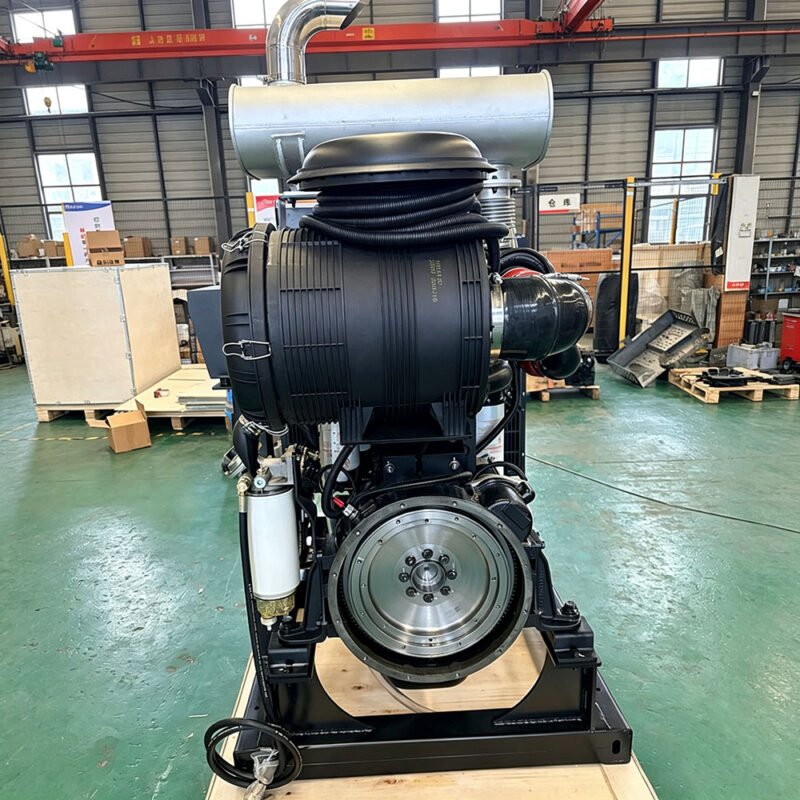
What Aftertreatment Systems Do Tier 4 Final and Stage V Engines Use?
Modern non-road engines may combine several emissions-control technologies.
Diesel Particulate Filter (DPF)
A DPF traps particulate matter in the exhaust. It periodically removes accumulated combustible soot through regeneration.
Many Stage V diesel engines use highly effective particulate filtration to meet the applicable PN limit.
However, not every Tier 4 Final engine or Stage V engine necessarily uses the same DPF arrangement. The actual configuration depends on power rating, category, and manufacturer design.
Selective Catalytic Reduction (SCR)
SCR reduces nitrogen oxides through chemical reactions in an exhaust catalyst.
Most conventional diesel SCR systems use Diesel Exhaust Fluid (DEF), which supplies the ammonia needed for NOx conversion.
SCR can help manufacturers meet demanding NOx limits while managing combustion efficiency.
Exhaust Gas Recirculation (EGR)
EGR reduces NOx formation inside the cylinders by introducing a controlled portion of exhaust gas into the intake charge.
Some manufacturers combine cooled EGR with SCR. Others rely on different air-handling and aftertreatment strategies.
The correct technology mix must match the engine’s certified configuration and duty cycle.
| Technology | Main Purpose | Buyer Consideration |
|---|---|---|
| DPF | Capture particulate matter | Regeneration, ash maintenance, service access |
| SCR | Reduce NOx in exhaust | DEF supply, dosing, catalyst temperature |
| EGR | Reduce engine-out NOx | Cooling demand, valve and cooler maintenance |
| DOC | Oxidize CO and hydrocarbons | Exhaust temperature and catalyst condition |
How Emission Standards Affect Industrial Diesel Engine Selection
Emission compliance influences engine packaging, operating costs, maintenance resources, and supplier selection.
Construction Equipment for the United States
An excavator, loader, or other covered non-road machine entering the US market may require an appropriately EPA-certified engine.
Buyers should verify the engine’s power category, emission family, model year, and required label.
They should also confirm that the aftertreatment and control system match the approved installation.
Construction Equipment for the European Union
For machinery subject to EU Stage V, the engine must satisfy the applicable category and type-approval requirements.
The equipment manufacturer should review engine identification, installation constraints, aftertreatment packaging, and supporting approval documentation.
Where PN limits apply, DPF maintenance and exhaust-system access may become important design considerations.
Generator Sets and Stationary Applications
Generator engines require particular attention because regulatory treatment can depend on whether the installation is mobile, stationary, emergency-only, or intended for another defined purpose.
EU Stage V includes specific engine categories for certain generator-set applications. US stationary compression-ignition engines may also fall under separate EPA regulations rather than the standard non-road Tier 4 framework.
Consequently, a procurement specification should identify the actual generator application before stating that Tier 4 Final or Stage V is required.
International OEM and Export Projects
OEM buyers often source a common engine family for several export markets.
However, different destinations may require different approved emissions configurations even when the base engine displacement and power rating remain similar.
Kangjin Power’s diesel engine export supplier guide discusses the importance of certification documents, engine identification, and technical verification in international purchasing.
Before arranging shipment, buyers should confirm the engine version and compliance evidence with the supplier and the importer responsible for the destination market.
Evaluating Cummins Industrial Engine Configurations
Cummins engine families may include multiple power ratings, control systems, and emissions versions. The family name alone does not prove Tier 4 Final or EU Stage V certification.
QSB4.5 Engine Family
The Cummins QSB4.5 diesel engine is a four-cylinder electronic diesel engine used in construction and agricultural machinery.
Kangjin Power lists several ratings and refers to earlier EPA Tier and European Stage configurations on its product page.
These listings should not be interpreted as proof that the displayed engine variants meet EPA Tier 4 Final or EU Stage V.
For a regulated-market project, request the precise engine identification and emissions approval before confirming availability.
QSB6.7 Engine Family
The Cummins QSB6.7 diesel engine is a six-cylinder, electronically controlled engine platform offered for industrial equipment.
Its product listing provides multiple rated-power options and states that different emissions solutions are available.
However, the public listing does not establish that every configuration has Tier 4 Final or Stage V approval.
OEM buyers should verify the offered variant, approved aftertreatment package, and installation requirements against their destination-market specifications.
QSM11 Heavy-Duty Applications
The Cummins QSM11 diesel engine is a larger industrial engine platform used in heavy construction and mining applications.
The listed product information refers to earlier emissions classifications. Therefore, buyers should not assume that a QSM11 configuration is suitable for a new Tier 4 Final or Stage V equipment project without specific certification evidence.
For these applications, emissions approval should be checked before engine packaging, mounting, and cooling arrangements are finalized.

EPA Tier 4 Final vs EU Stage V: Engine Procurement Checklist
When purchasing a diesel engine for export, technical compliance should be verified before the purchase order is finalized.
| Procurement Check | What to Request |
|---|---|
| Destination and application | Country, equipment type, mobile or stationary use |
| Engine identification | Full model number, serial number, rated power |
| Emission category | Applicable EPA or EU engine classification |
| Certification evidence | Relevant EPA certificate or EU type-approval documentation |
| Emissions label | Photographs of the required engine marking |
| Aftertreatment package | Approved DOC, DPF, SCR, sensors, and controls as applicable |
| Installation compatibility | Exhaust routing, thermal clearances, cooling and electrical interfaces |
| Maintenance requirements | DEF supply, DPF cleaning, approved lubricants, diagnostic tools |
| Supplier support | Parts availability, warranty terms, documentation and technical assistance |
What Should You Verify on the Engine Label?
The label or marking should identify the engine according to the applicable regulatory requirements.
Buyers should verify that the engine family or type information corresponds to the certification evidence and physical engine supplied.
Serial numbers, model designations, and emissions information must be consistent across the engine, sales documentation, and approved records.
Why Supplier Statements Are Not Enough
A statement such as “meets European emissions requirements” does not identify the exact engine category, certification, or emissions approval.
Likewise, a product brochure mentioning Tier 4 or Stage V does not prove that every engine offered under that family name carries the relevant certification.
A qualified supplier should be able to obtain accurate documentation and distinguish between available variants.
For international purchasing, this verification reduces the risk of unsuitable engine selection, customs difficulties, installation redesign, and project delays.
Common Mistakes When Comparing Tier 4 Final and Stage V Engines
- Assuming Tier 4 Final and Stage V are legally interchangeable.
- Comparing emission limits without matching the correct engine category.
- Ignoring the Stage V particle number requirement.
- Assuming every certified diesel engine uses an identical DPF and SCR package.
- Confusing non-road standards with on-highway or stationary-engine requirements.
- Accepting an engine family name without checking the specific certified configuration.
- Changing emission-control components without manufacturer approval.
- Ordering an engine before confirming destination-market documentation.
The most effective way to avoid these errors is to identify the legal application category first and then verify the exact approved engine configuration.
Conclusion
EPA Tier 4 Final and EU Stage V are advanced diesel emission standards, but they are not automatically equivalent.
For many medium-power non-road engines, both frameworks establish stringent NOx limits. EU Stage V also applies particle number limits to specified categories, making the emissions-control requirements different in important ways.
When selecting a diesel engine for international equipment projects, buyers should compare more than the advertised emissions stage. Verify the engine family, power rating, certification evidence, aftertreatment system, installation requirements, and destination-market rules before placing an order.
Frequently Asked Questions
Is EPA Tier 4 Final equivalent to EU Stage V?
No. The standards share some similar pollutant limits but differ in particle number requirements, engine categories, and certification procedures. An engine requires the appropriate approval for each intended market.
What is the biggest difference between Tier 4 Final and Stage V?
For many applicable diesel engine categories, a major difference is EU Stage V’s particle number limit. Stage V also uses its own type-approval framework and category-specific requirements.
Do all EU Stage V diesel engines require a DPF?
No regulation universally requires one identical DPF configuration for every engine. However, particulate filtration is an important technical solution for many Stage V diesel engines subject to strict particle number limits.
Can a Tier 4 Final engine be imported into Europe?
It may be possible if the engine and its intended application satisfy the applicable European requirements and the necessary approval or exemption conditions. EPA certification alone does not establish EU Stage V compliance.
What documents should buyers request for a dual-certified engine?
Buyers should request the exact engine identification, applicable EPA certification evidence, EU type-approval information, emissions label details, and approved aftertreatment configuration. The documents must correspond to the supplied engine version.
Need Help Sourcing an Engine for Your Export Market?
Kangjin Power supplies Cummins diesel engines for construction machinery, industrial equipment, and power generation. Share your destination country, equipment application, required power, and emission standard with our team. We can discuss available engine configurations and the technical documentation needed to evaluate their suitability. Contact Kangjin Power to request engine specifications and a quotation.
Technical References
- US EPA – 40 CFR 1039.101 – Tier 4 exhaust emission standards and applicable power categories.
- European Union – Regulation (EU) 2016/1628 – Stage V engine categories, emission limits, and type-approval requirements.
- US EPA – Certification of Nonroad Vehicles and Engines – Official certification program guidance.

