
ISO 3046 vs ISO 8528: Understanding Diesel Engine Power Ratings

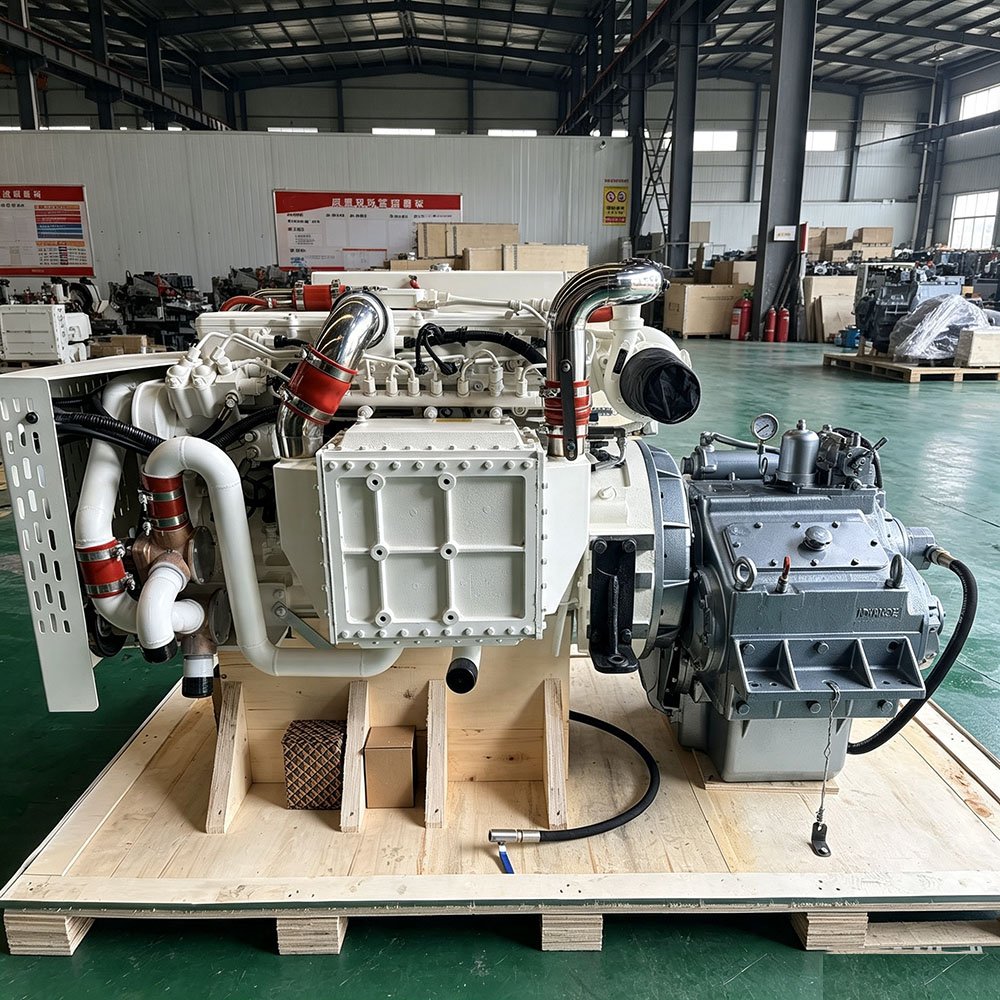
ISO 3046 and ISO 8528 define different aspects of diesel engine and generator performance. ISO 3046 covers engine power declarations, fuel consumption, lubricating oil consumption, and testing methods. ISO 8528 covers the application, power ratings, and performance of complete engine-driven AC generating sets. In practical terms, ISO 3046 helps establish what an engine can deliver, while ISO 8528 helps define how the complete generator set is rated and operated.
Understanding this distinction is important when comparing diesel engines, selecting generator sets, or reviewing technical specifications from different manufacturers. An engine rated at 200 kW does not automatically produce a 200 kW generator output, and a standby generator rating should not be treated as its continuous operating capacity.
What Is the Difference Between ISO 3046 and ISO 8528?
Both standards are used in the diesel power industry, but they address different equipment and performance requirements.
| Comparison | ISO 3046 | ISO 8528 |
|---|---|---|
| Primary focus | Reciprocating internal combustion engine performance | Engine-driven AC generating set performance |
| Equipment covered | Diesel and other reciprocating engines | Engine, AC generator, and associated equipment |
| Power declaration | Engine brake power | Generating set power ratings |
| Fuel consumption | Declaration and test methods | Relevant to complete generating set performance |
| Operating conditions | Engine reference and test conditions | Generator application and operating conditions |
| Typical application | Industrial diesel engines and engine testing | Standby, prime, and continuous generator sets |
| Main purpose | Establish engine performance information | Classify and evaluate generator set performance |
ISO 3046-1 is titled Reciprocating internal combustion engines — Performance — Part 1: Declarations of power, fuel and lubricating oil consumption, and test methods.
ISO 8528-1 is titled Reciprocating internal combustion engine driven alternating current generating sets — Part 1: Application, ratings and performance.
The distinction matters because the engine and the generator set are not the same rated product. The engine supplies mechanical power, while the alternator converts that power into electrical output.
You can consult the official ISO 3046-1 standard and ISO 8528-1 standard for their respective scopes and technical requirements.
How ISO 3046 Defines Diesel Engine Power
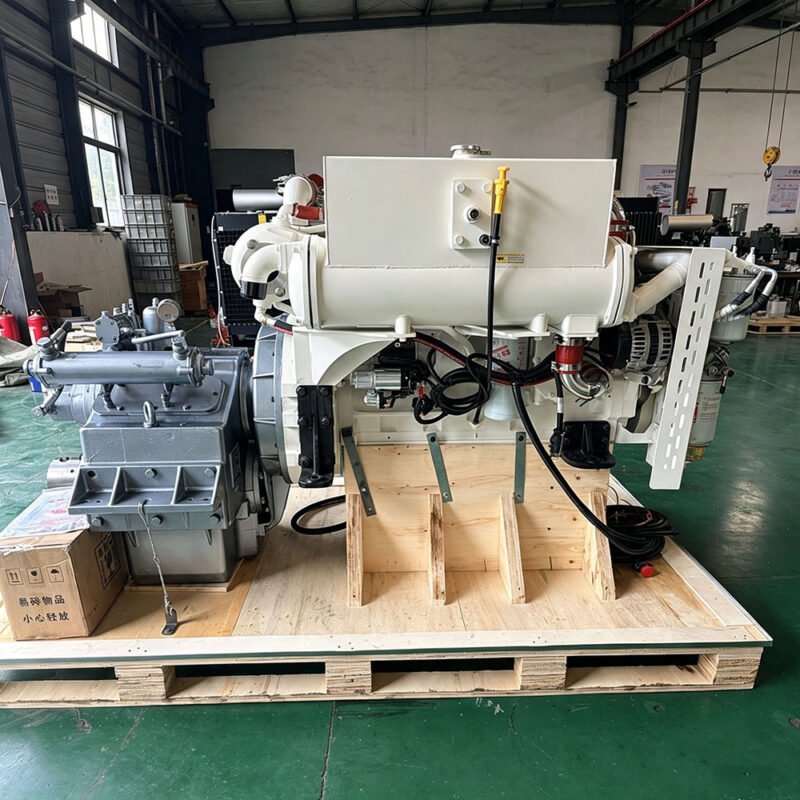
ISO 3046 establishes requirements for declaring engine performance, including brake power, fuel consumption, and lubricating oil consumption. It also provides test methods and reference conditions for reporting engine performance.
One important concept is brake power. This represents the mechanical power available at the engine output shaft under specified test conditions.
Engine Power and Reference Conditions
Engine power depends on several operating variables, including:
- Engine speed and rated RPM.
- Ambient air temperature and atmospheric pressure.
- Intake-air temperature and pressure.
- Fuel characteristics.
- Cooling system conditions.
- Engine accessories and auxiliary loads.
These variables matter when comparing engine specifications from different manufacturers or test environments.
For example, an engine tested under favorable atmospheric conditions may produce a different measured output from the same engine operating at high altitude or elevated ambient temperature.
Reference conditions and applicable power correction procedures help make technical comparisons more consistent. However, they do not mean that an engine will automatically deliver its declared reference power at every installation site.
Power Declaration and Fuel Consumption
ISO 3046 also addresses fuel and lubricating oil consumption declarations.
Fuel consumption is commonly expressed in grams per kilowatt-hour (g/kWh) or liters per hour (L/h). These values describe different aspects of engine operation.
Specific fuel consumption in g/kWh measures fuel consumed relative to mechanical energy produced. Liters per hour describe the actual fuel volume consumed over time at a particular operating point.
When evaluating an industrial engine, compare fuel consumption at equivalent power output and engine speed. Comparing two engines at different loads can produce misleading conclusions.
How ISO 8528 Defines Generator Power Ratings
ISO 8528 applies to AC generating sets driven by reciprocating internal combustion engines. It covers the combined generating unit, including the engine, alternator, and associated control and auxiliary equipment.
Unlike an engine power declaration, a generator set rating describes the electrical power the complete unit is designed to supply under specified operating conditions.
Common Generator Power Ratings
ISO 8528-1 defines several generator operating ratings. The most commonly encountered categories include:
| Rating | Meaning | Typical Application |
|---|---|---|
| Continuous Operating Power (COP) | Power available for continuous operation under specified conditions | Continuous industrial power supply |
| Prime Power (PRP) | Power available for variable-load operation under defined conditions | Temporary or primary power generation |
| Limited-Time Running Power (LTP) | Power available for a limited number of operating hours under specified conditions | Applications with defined limited operating periods |
| Emergency Standby Power (ESP) | Power available for emergency operation under specified conditions | Backup power during utility interruptions |
These ratings are not interchangeable. Each has specific operating-hour, load, and maintenance conditions.
For example, an emergency standby generator is intended to provide backup power during utility failure. It should not automatically be used as a continuous prime-power source.
The applicable rating definitions and limitations must be checked in the relevant edition of ISO 8528-1 and the generator manufacturer’s documentation.
Why Prime and Standby Power Are Different
Prime power and standby power describe different operating duties.
A prime-rated generator is designed for applications involving variable loads and defined operating conditions. An emergency standby generator is designed to supply power during interruptions of the normal electrical supply.
Standby ratings may be higher than prime ratings because the operating conditions and permitted usage differ.
Using a standby rating as a continuous operating target can increase thermal and mechanical stress and may violate the manufacturer’s operating requirements.
Engine Power vs Generator Electrical Output
One of the most common mistakes in generator selection is treating engine mechanical power as identical to generator electrical output.
The engine produces mechanical power at the crankshaft. The alternator converts that power into electrical energy, with some energy lost through conversion and auxiliary requirements.
The relationship can be expressed as:
Generator electrical output (kW) = Engine shaft power (kW) × Alternator efficiency − Applicable auxiliary loads
For a simplified example, assume an engine provides 200 kW of mechanical power and the alternator operates at 94% efficiency.
Estimated electrical output before auxiliary deductions:
200 × 0.94 = 188 kW
This is an illustrative calculation, not a guaranteed generator rating. Actual output depends on alternator efficiency, cooling fans, pumps, electrical auxiliaries, and the generator manufacturer’s rating method.
Understanding kW and kVA
Generator specifications commonly include both kilowatts (kW) and kilovolt-amperes (kVA).
kW represents active electrical power, while kVA represents apparent power.
The relationship is:
kW = kVA × Power Factor
For example, a generator rated at 250 kVA with a power factor of 0.8 has an active-power rating of:
250 × 0.8 = 200 kW
This distinction is important when matching a generator to motors, pumps, compressors, and other industrial loads.
Applying ISO 3046 and ISO 8528 to Cummins Diesel Engines
These standards become particularly useful when comparing industrial engine specifications with complete generator set ratings.
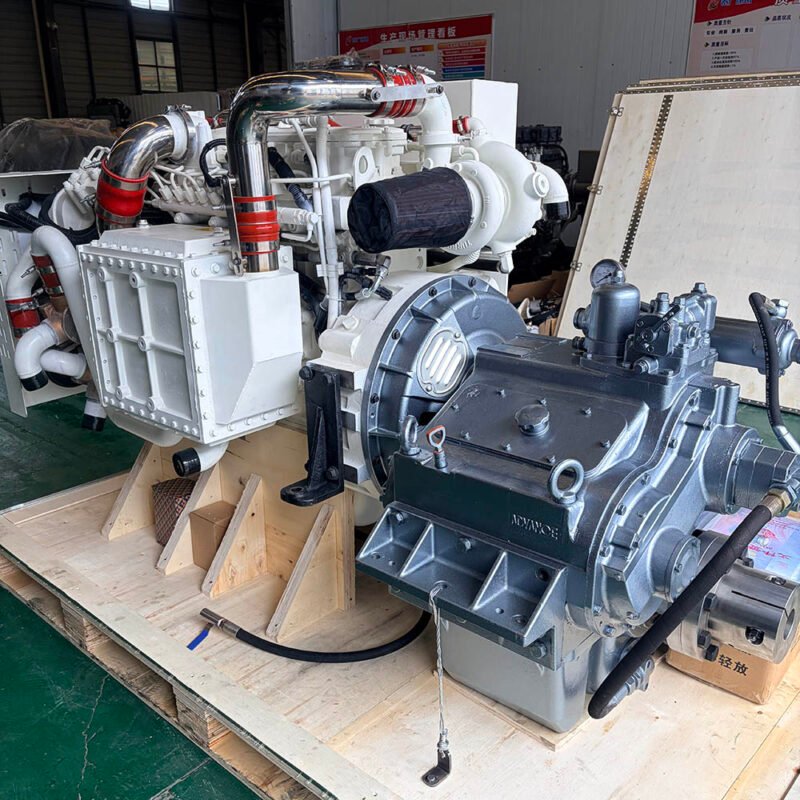
For example, Kangjin Power’s Cummins QSB6.7 diesel engine page lists several engine configurations with rated mechanical outputs from 99 to 194 kW.
These values describe specific engine models and rated speeds. They should not be interpreted as equivalent electrical generator outputs without considering the alternator and complete generating set.
Similarly, the Cummins 6CTA8.3 diesel engine is used in industrial applications with different power configurations.
When evaluating a generator package built around this engine family, the engine’s mechanical rating must be matched to the alternator’s electrical rating and the intended generator duty.
For higher-power industrial installations, the Cummins QSZ13 diesel engine provides another example of an engine platform used in demanding power applications.
The actual generating set rating depends on the selected engine calibration, alternator efficiency, operating speed, cooling arrangement, and applicable duty classification.
How to Compare ISO-Based Engine and Generator Specifications
When reviewing technical quotations or selecting generator equipment, check the following information rather than relying on a single headline power figure.
- Identify the rated product. Confirm whether the quoted power refers to the bare engine or the complete generator set.
- Check the applicable standard. Identify whether the manufacturer references ISO 3046 for engine performance or ISO 8528 for generator set ratings.
- Verify the power rating. Record the exact COP, PRP, LTP, or ESP classification where applicable.
- Confirm operating conditions. Check ambient temperature, altitude, humidity, and installation conditions.
- Review fuel consumption. Compare figures at the same load, speed, and rating basis.
- Check alternator performance. Verify kW, kVA, power factor, voltage, and frequency.
- Review manufacturer documentation. Confirm that the rating is supported by the engine and generator set technical data.
For industrial power projects, these checks help prevent a common specification error: purchasing a generator based on an engine horsepower figure without confirming the complete electrical output and operating duty.
Conclusion
ISO 3046 and ISO 8528 serve complementary purposes in diesel power generation. ISO 3046 establishes how engine performance, brake power, fuel consumption, and lubricating oil consumption are declared and tested. ISO 8528 addresses the application, rating, and performance of complete engine-driven AC generating sets.
For equipment selection, the distinction between engine mechanical output and generator electrical output is essential. Always verify the applicable power rating, operating duty, ambient conditions, and alternator specifications before comparing generator sets.
FAQ
What is the main difference between ISO 3046 and ISO 8528?
ISO 3046 covers reciprocating engine performance declarations and testing methods, including power and fuel consumption. ISO 8528 covers the application, ratings, and performance of complete engine-driven AC generating sets.
Does ISO 3046 apply to diesel generators?
ISO 3046 applies to reciprocating internal combustion engines used in various applications. It can provide the engine performance information used as part of a diesel generator’s technical specification.
What does ISO 8528 PRP mean?
PRP stands for Prime Power. It describes a generating set’s capability to supply variable electrical loads under the operating conditions and limitations defined by the applicable standard.
Is standby power higher than prime power?
Standby ratings are commonly higher than prime ratings because they cover different operating duties. The permitted operating hours, load characteristics, and maintenance requirements must be checked in the manufacturer’s documentation.
Can a 200 kW diesel engine produce a 200 kW generator output?
Not necessarily. Engine power is mechanical output, while generator power is electrical output. Alternator losses and auxiliary loads mean the complete generator’s available electrical output may be lower.

