
Diesel Generator Load Sharing: How Multiple Generator Sets Share Loads

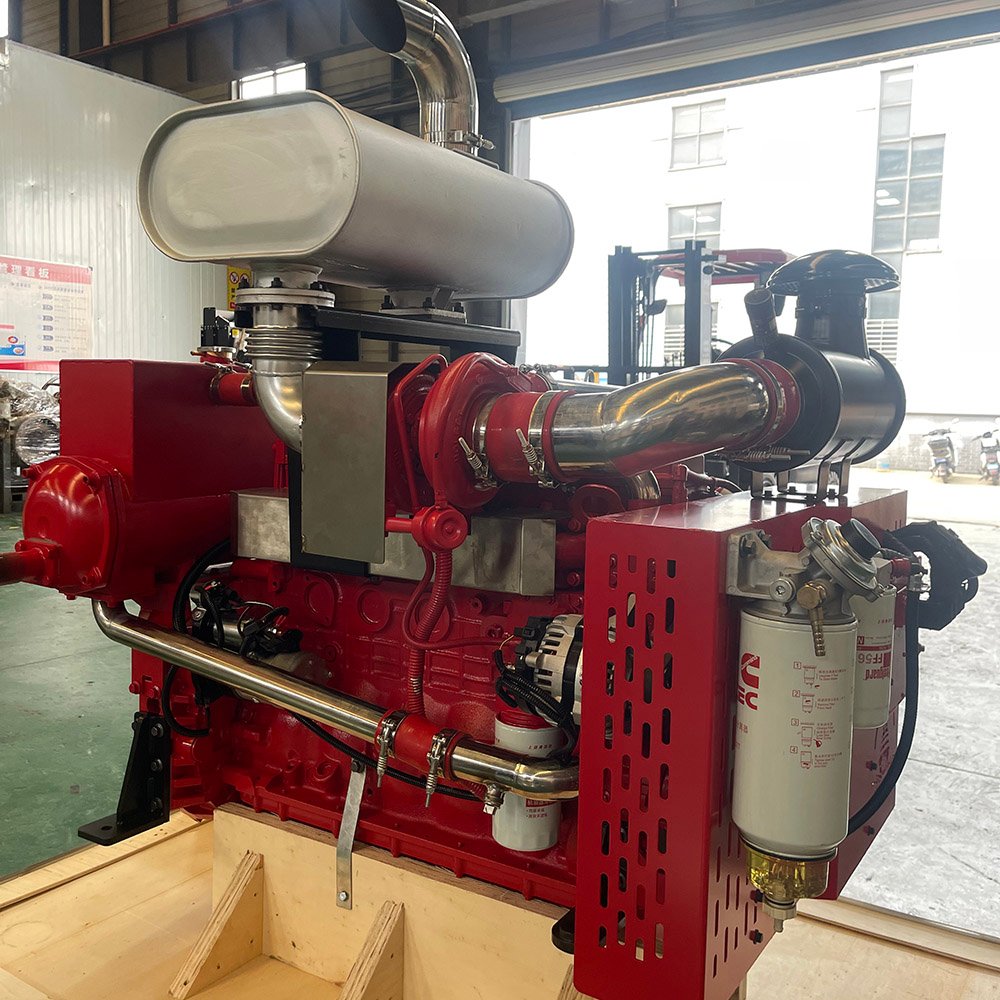
Diesel generator load sharing is the process of distributing electrical demand among two or more generator sets operating in parallel on a common bus. Each generator contributes a controlled portion of the total load according to its rated capacity, governor settings, excitation system, and load-sharing controls. Proper load sharing prevents individual units from becoming overloaded while maintaining stable system frequency and voltage.
For industrial facilities, multiple generators provide flexibility that a single large generator may not offer. Operators can run only the units needed for current demand, add generating capacity when loads increase, and maintain power availability during maintenance.
However, connecting generators in parallel requires more than matching their power ratings. Synchronization, active-power sharing, reactive-power sharing, and protective coordination must work together.
How Does Diesel Generator Load Sharing Work?
When multiple generators operate in parallel, their alternators connect to a common electrical bus. The bus supplies electricity to the facility’s connected equipment.
Once the generator circuit breakers close, the connected machines operate at the same electrical frequency and bus voltage. Their individual contributions must then be controlled.
Two types of electrical power are important:
- Active power (kW): The useful electrical power consumed by motors, heaters, lighting, and other loads.
- Reactive power (kVAR): Power exchanged between magnetic or electric fields in equipment such as motors and transformers.
The engine and governor primarily determine the generator’s active-power contribution. The alternator excitation system and Automatic Voltage Regulator (AVR) control voltage and influence reactive-power sharing.
These are separate control functions. A system can distribute kW correctly while still experiencing poor kVAR sharing.
What Happens When Electrical Load Increases?
Consider two diesel generators already operating in parallel. When a large motor starts, electrical demand increases and the load-sharing controller adjusts the generators’ power contributions.
The governors increase fuel delivery to produce additional mechanical power. The alternators convert this mechanical power into electrical output, while excitation systems respond to voltage and reactive-power requirements.
The result should be a controlled increase in generator output without allowing one machine to carry a disproportionate share.
How Are Loads Distributed Between Multiple Generators?
The load-sharing method determines how individual generators contribute to the common electrical demand. Two common approaches are droop-based sharing and isochronous load sharing.
Droop Load Sharing
Droop control allows engine speed and frequency references to decrease slightly as generator load increases.
When several generators use coordinated droop settings, each unit responds to changes in bus frequency according to its own governor characteristic.
For example, consider two generators with different ratings:
| Generator | Rated Capacity | Share of Rated Capacity |
|---|---|---|
| Generator A | 500 kW | 60% |
| Generator B | 1,000 kW | 60% |
| Total output | 1,500 kW | 60% |
The actual output is:
- Generator A: 300 kW.
- Generator B: 600 kW.
- Combined output: 900 kW.
Both generators operate at 60% of their respective ratings. This proportional arrangement helps distribute load according to available capacity rather than requiring every generator to produce the same number of kilowatts.
Droop settings, governor calibration, and generator ratings must be coordinated to achieve the intended sharing behavior.
Isochronous Load Sharing
Isochronous control maintains the system’s steady-state frequency at its reference value.
When several generators operate together, an isochronous load-sharing controller compares the kW output of individual units and adjusts their governor references.
If one generator carries more than its assigned share, its fuel command can be reduced. Another generator can increase its contribution.
This allows the generators to maintain frequency while distributing active power according to their assigned sharing targets.
Unlike independent isochronous governors, a coordinated load-sharing system prevents multiple units from competing to regulate the same bus frequency.
Droop vs Isochronous Load Sharing
| Feature | Droop Load Sharing | Isochronous Load Sharing |
|---|---|---|
| Frequency behavior | Changes slightly with load | Maintains steady-state frequency |
| Active-power sharing | Uses coordinated governor droop characteristics | Uses load-sharing controller feedback |
| Control architecture | Relatively simple | Requires coordinated control |
| Parallel operation | Suitable | Suitable with compatible controls |
| Standalone operation | Frequency varies with load | Maintains frequency reference |
| Typical use | Conventional parallel systems | Advanced generator paralleling systems |
The appropriate method depends on the generator controller, governor, alternator, and system architecture.
How Synchronization Makes Generator Load Sharing Possible
Before a generator connects to an energized bus, its electrical output must be synchronized with the existing system.
Four conditions are particularly important:
- Voltage: The incoming generator’s voltage must be sufficiently close to bus voltage.
- Frequency: Its frequency must match the operating bus.
- Phase sequence: The phase rotation must be identical.
- Phase angle: The corresponding voltage waveforms must be aligned within the permitted closing window.
An automatic synchronizer monitors these conditions and adjusts the incoming generator’s speed and voltage references as required.
When the conditions fall within the configured limits, the circuit breaker can close.
Closing a generator breaker without proper synchronization can produce severe electrical and mechanical disturbances, including high transient currents and shaft torque disturbances.
Synchronization is therefore a separate but essential function within the overall load-sharing system.
Active Power vs Reactive Power: Why Both Matter
A common mistake in generator paralleling is treating kW and kVAR sharing as the same control process. They are related, but their control mechanisms differ.
Active Power (kW)
Active power is primarily controlled through engine fuel delivery. Increasing fuel delivery increases engine mechanical output, allowing the alternator to supply more active power.
The governor and load-sharing controller determine how much kW each generator contributes.
Reactive Power (kVAR)
Reactive power is associated with the magnetic fields of inductive electrical equipment.
The alternator excitation system controls the generated voltage and influences reactive-power contribution. In conventional paralleling systems, AVR voltage-droop compensation can help distribute reactive load between generators.
This requires coordinated voltage references and compatible droop settings.
For example, two generators with mismatched excitation settings may develop circulating reactive currents even when their active-power contributions appear balanced.
Choosing Diesel Generator Engines for Parallel Operation
Generator load sharing depends on the complete generating unit, not simply the engine’s horsepower.
The engine must provide sufficient mechanical power at the required speed, while the alternator and control system must handle the electrical load.
For industrial applications, engine selection should consider:
- Rated generator output in kW and kVA.
- Power factor and reactive-power requirements.
- Prime or standby operating duty.
- Engine torque and transient load response.
- Governor and ECM compatibility.
- Alternator excitation and AVR configuration.
- Cooling capacity and ambient conditions.
- Synchronization and load-sharing controller support.
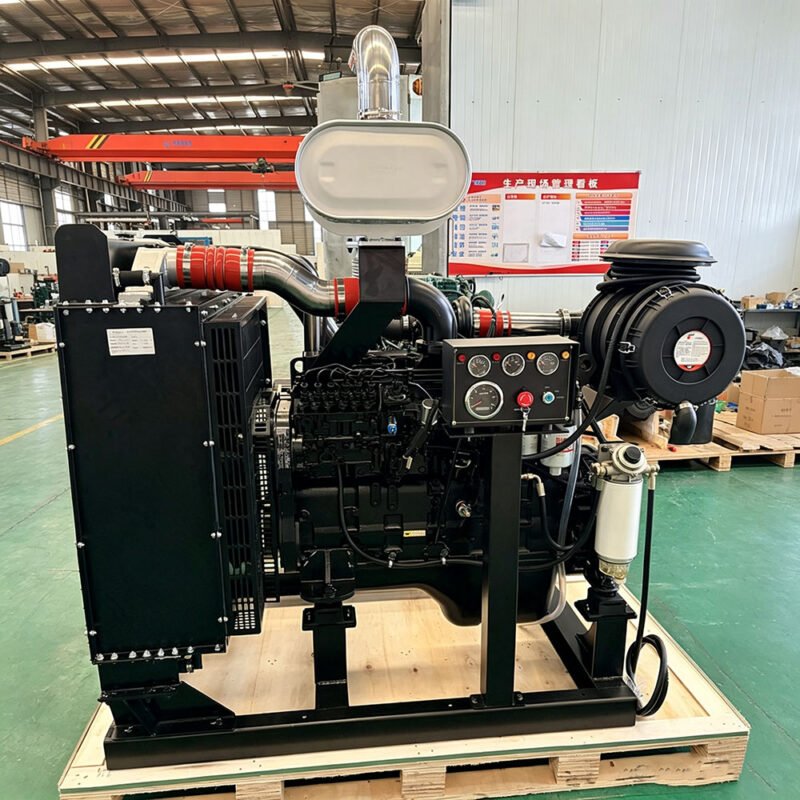
For example, Kangjin Power’s Cummins QSB6.7 diesel engine includes industrial configurations with rated outputs from 99 to 194 kW.
Its different ratings can support generator applications with different mechanical power requirements. The actual generator output must still be established by the complete engine-alternator package.
For higher-power installations, the Cummins QSZ13 diesel engine is a 13-liter platform with a listed configuration rated at 410 kW and 1,900 rpm.
The engine’s mechanical output is not the same as the generator’s electrical output. Alternator efficiency, auxiliary loads, operating conditions, and generator rating must be considered separately.
The Cummins 6CTA8.3 diesel engine is another example of an engine platform used in industrial power generation.
When evaluating multiple generating units, compare their complete specifications rather than assuming engines with similar displacement can share loads automatically.
Common Diesel Generator Load Sharing Problems
Improper load sharing can reduce system reliability and place unnecessary stress on individual generator sets.
Several problems deserve attention during commissioning and operation:
- Unequal kW sharing: Different governor settings, incorrect load-sharing calibration, or incompatible controllers can cause one generator to carry more active load than intended.
- Unequal kVAR sharing: Mismatched AVR settings can create uneven reactive-power distribution and circulating currents.
- Frequency instability: Incorrect governor tuning or unsuitable load-sharing signals can cause oscillation after load changes.
- Poor synchronization: Incorrect voltage, frequency, phase sequence, or phase angle can prevent safe breaker closing.
- Generator overloading: An incorrect load-sharing ratio can push one generator beyond its permitted operating capacity while other units remain underused.
- Communication or controller faults: Failed sensors, wiring problems, or communication interruptions can affect coordinated operation.
Commissioning should include synchronization checks, kW and kVAR sharing tests, protective relay verification, and load-step testing under controlled conditions.
FAQ
What is diesel generator load sharing?
Diesel generator load sharing is the process of distributing electrical demand among multiple generators operating in parallel. It uses governor and excitation controls to coordinate active and reactive power contributions.
How do two diesel generators share electrical load?
Two generators must first synchronize and connect to a common bus. Their governors then regulate active-power sharing, while their excitation systems coordinate voltage and reactive-power sharing.
What is the difference between kW and kVAR load sharing?
kW sharing determines how much active electrical power each generator supplies. kVAR sharing determines how reactive power is distributed through the alternator excitation system.
Can generators with different power ratings operate in parallel?
Yes. Generators with different ratings can operate in parallel when their alternators, controls, protection systems, and operating characteristics are compatible. Load-sharing controls can distribute demand according to each unit’s assigned capacity.
Does load sharing require isochronous control?
No. Droop-based systems can also share active power. Isochronous load sharing uses coordinated controllers to maintain frequency while distributing load between generators.
Conclusion
Diesel generator load sharing allows multiple generating units to operate together and distribute electrical demand according to their rated capacity and control settings.
Reliable operation requires more than connecting alternators to a common bus. Synchronization, governor control, active-power sharing, AVR excitation, reactive-power sharing, and electrical protection must work as a coordinated system.
For industrial facilities, the generator engines, alternators, and controllers should be evaluated as one complete power-generation package. Correct system design helps prevent uneven loading, frequency instability, and unnecessary equipment stress.

