
Diesel Engine Derating at High Altitude: Power Loss & Selection

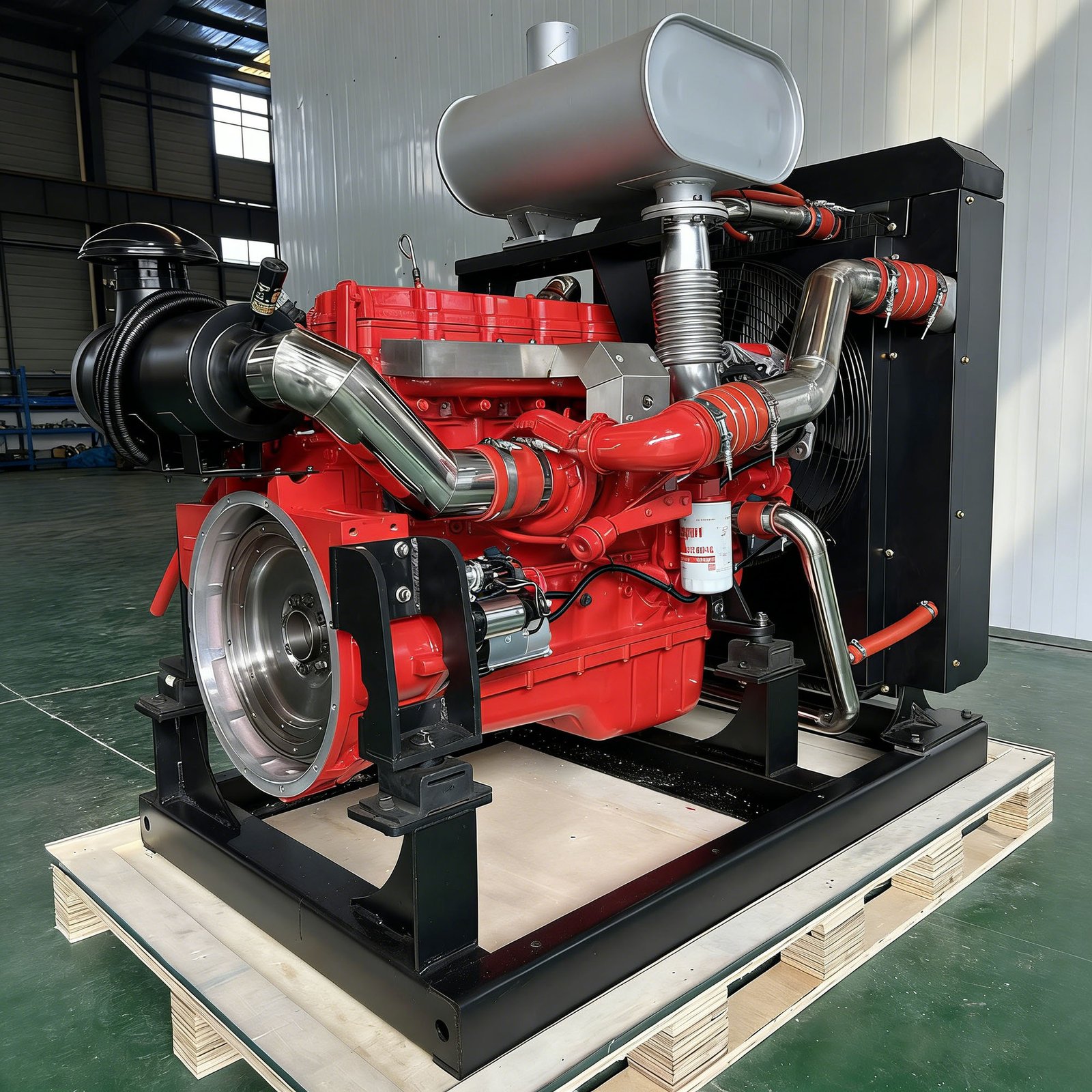
Diesel engine derating at altitude occurs when an engine cannot maintain its rated power under reduced atmospheric pressure and air density. Less oxygen enters the cylinders, limiting combustion and increasing the demands on the turbocharger and cooling system. The amount of power lost depends on engine design, turbocharger capacity, ambient temperature, emissions calibration, and the manufacturer’s operating limits.
Naturally aspirated diesel engines generally lose available power more readily as elevation increases. Turbocharged engines can compensate by increasing boost pressure, but that compensation has limits. For industrial equipment operating in mountainous regions, the engine must be selected using its altitude-specific power rating rather than its sea-level horsepower alone.
Why Does a Diesel Engine Lose Power at High Altitude?
Atmospheric pressure decreases with elevation, reducing the density of the air entering an engine. At the same temperature, lower-pressure air contains less oxygen per unit volume.
A diesel engine needs sufficient oxygen to burn the injected fuel efficiently. When the available air mass decreases, the engine may need to reduce fuel delivery to control smoke, exhaust temperature, combustion quality, and component stress.
Three factors determine how much power is available at altitude.
Air density: Less oxygen enters the cylinders when ambient pressure falls. This directly affects the amount of fuel that can be burned efficiently.
Turbocharger capacity: The turbocharger can compress thinner ambient air, but its compressor speed, pressure ratio, and temperature limits restrict how much compensation is possible.
Heat rejection: Lower air density can reduce the mass of air passing through a radiator or charge-air cooler. High ambient temperatures make cooling more difficult and can trigger additional power limitations.
SAE research on turbocharged diesel engines examines these interacting effects, including turbocharger speed, compressor outlet temperature, and engine operating limits.
Naturally Aspirated vs. Turbocharged Diesel Engines
| Factor | Naturally Aspirated Diesel | Turbocharged Diesel |
|---|---|---|
| Intake air | Relies on atmospheric pressure | Compresses incoming air |
| Altitude compensation | Limited | Possible within turbocharger operating limits |
| Power loss at elevation | Generally more pronounced | Depends on boost and engine calibration |
| Thermal demands | Depends on engine load and cooling design | Includes turbocharger and charge-air temperature limits |
| High-altitude suitability | Depends on the rated application | Often offers greater compensation potential |
Turbocharging does not eliminate altitude derating. Some electronically controlled engines deliberately reduce fueling when calculated air density falls below a calibrated limit.
This protects the turbocharger and engine from excessive speed, temperature, and emissions. Cummins technical troubleshooting documentation describes altitude-related fueling reductions associated with turbocharger operating limits.
How Much Horsepower Does a Diesel Engine Lose at Altitude?
There is no universal percentage that accurately describes every diesel engine.
The correct figure comes from the engine manufacturer’s altitude derating curve or technical specification for the exact model and rating.
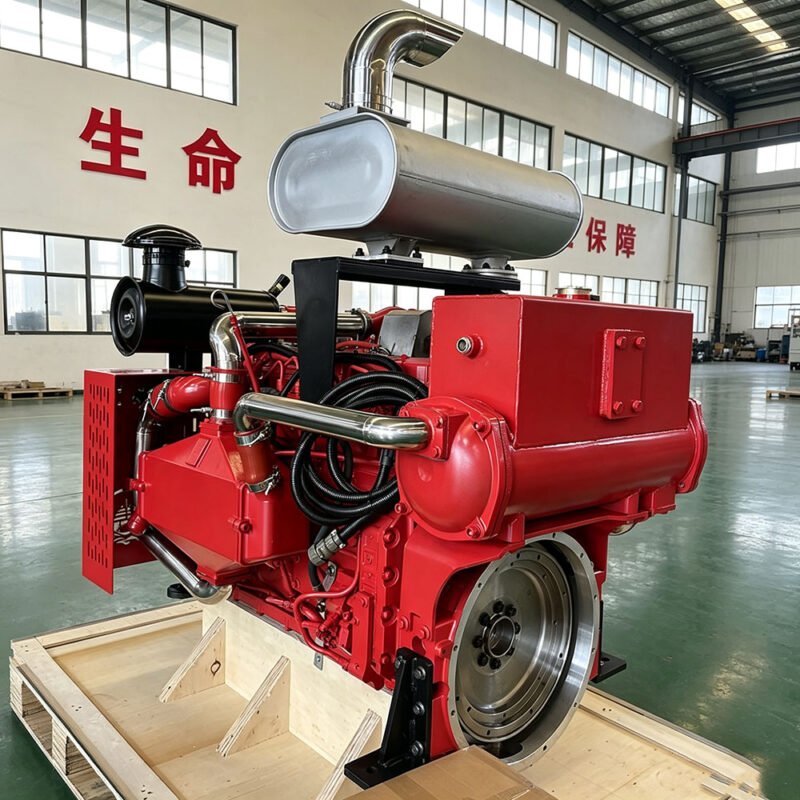
Some Cummins generator operator manuals provide a useful illustration. One manual specifies approximately 3.5% power reduction per 305 m (1,000 ft) of elevation, together with approximately 1% reduction for every 5.5°C (10°F) above 25°C (77°F). These figures apply to the generator models covered by that manual, not all Cummins engines.
Example: Calculating Available Power
Suppose a hypothetical 200 kW engine has a manufacturer-approved derating curve showing a 10% reduction at the intended operating altitude and temperature.
The available power would be:
Available power = Rated power × (1 − derating fraction)
200 kW × (1 − 0.10) = 180 kW
The engine would therefore provide 180 kW under the specified conditions, assuming the rating and derating factor refer to the same power basis.
This example illustrates the calculation method, not a universal 10% derating rule.
For an actual installation, determine whether the manufacturer’s figures apply to engine shaft power, generator electrical output, prime power, standby power, or continuous-duty operation. These ratings are not interchangeable.
Why Temperature Must Be Included
High altitude and high ambient temperature often occur together in industrial locations.
A site at 2,500 m may also experience hot afternoons, dust, and restricted airflow around the equipment. These conditions can reduce available power more than elevation alone suggests.
The engine’s altitude limit and temperature limit should therefore be evaluated together using the manufacturer’s data.
How to Select a Diesel Engine for High-Altitude Operation
An engine that meets the required power at sea level may be undersized for a site several thousand metres above sea level.
The selection process should begin with the equipment’s actual power requirement under the worst expected operating conditions.
1. Establish the Site Conditions
Record the following information before comparing engine models:
- Site elevation above mean sea level.
- Maximum expected ambient temperature.
- Required continuous or intermittent power.
- Expected load profile and operating hours.
- Cooling airflow and available radiator space.
- Applicable emissions regulations.
Use the highest credible operating temperature and elevation combination rather than annual averages.
2. Apply the Manufacturer’s Derating Curve
Find the technical data for the exact engine model and rating.
Check the altitude at which derating begins, the reduction beyond that point, and any additional temperature-related restrictions.
Do not apply a naturally aspirated engine’s derating factor to a turbocharged engine, or transfer a factor from one Cummins family to another without supporting documentation.
3. Calculate the Required Rated Power
If the equipment needs 180 kW at the operating site and the manufacturer’s derating curve indicates that only 90% of rated power will remain available, the minimum rated power indicated by that calculation is:
180 kW ÷ 0.90 = 200 kW
This calculation provides a starting point. The final selection must also account for transient loads, duty-cycle requirements, accessories, and any additional manufacturer restrictions.
4. Confirm Cooling and Airflow Capacity
A high-altitude engine installation needs adequate cooling capacity as well as sufficient combustion air.
Check radiator performance, fan selection, charge-air cooler sizing, coolant temperature limits, and airflow through the equipment compartment.
A larger engine will not necessarily solve a cooling problem. If the radiator cannot reject the required heat, the installation may still experience temperature-related derating.
Which Cummins Engines Are Suitable for High-Altitude Applications?
Cummins engine families include several configurations used in construction machinery, agricultural equipment, generator sets, and industrial power systems. Their suitability depends on the exact model, emissions generation, rating, and approved operating envelope.
QSB6.7 for Construction and Industrial Equipment
The QSB6.7 is an electronically controlled, turbocharged and charge-air-cooled diesel engine family used in applications such as excavators, loaders, agricultural machinery, and industrial equipment.
Kangjin Power’s Cummins QSB6.7 diesel engine range lists configurations with rated outputs from 99 to 194 kW. These ratings provide a starting point for evaluating power requirements, but they do not establish the available output at a particular altitude.
For high-altitude operation, verify the specific engine’s altitude limits, turbocharger configuration, cooling requirements, and applicable derating data.
6CTA8.3 for Heavy-Duty Industrial Applications
The 6CTA8.3 is an 8.3-liter inline six-cylinder engine used in heavy-duty and industrial applications, including certain pump drives, machinery, and generator sets.
Kangjin Power’s Cummins 6CTA8.3 diesel engine specifications list several ratings, including configurations with rated outputs of 142–194 kW.
These are model-specific ratings, not guaranteed high-altitude outputs. A higher sea-level rating does not automatically make an engine more suitable for a mountainous site.
Compare the available power after derating, the engine’s operating speed, and its cooling capability against the equipment’s actual load.
Why Engine Family Names Are Not Enough
Two engines within the same family can have different turbochargers, calibrations, emissions systems, and rated operating speeds.
An engine intended for a lower-altitude application may not have the same approved operating envelope as another version with a different rating.
The engine serial number, complete model designation, and manufacturer technical data should be used to confirm suitability.
Common Mistakes When Operating Diesel Engines at High Altitude
Using sea-level horsepower for equipment sizing. The advertised rating may not be available at the installation site.
Assuming a turbocharger eliminates power loss. Turbochargers have operating limits, and engine controls may reduce fueling to protect components.
Ignoring high ambient temperature. Hot intake air and reduced cooling capacity can trigger additional limitations.
Increasing fuel delivery without approval. Unapproved fueling changes can increase exhaust temperature, smoke, turbocharger speed, and emissions while risking engine damage.
Ignoring the driven equipment’s load profile. A pump, generator, and excavator can have very different transient and continuous power requirements.
Treating prime, standby, and continuous ratings as equivalent. Each rating describes a different operating duty and must be used according to the manufacturer’s definitions.

FAQ
Does every diesel engine lose power at high altitude?
Available power generally decreases as atmospheric pressure falls, but the amount depends on engine design. Turbocharged engines can compensate within their operating limits, while some engines use calibrated derating to protect components and maintain emissions compliance.
At what altitude does a diesel engine start losing power?
There is no universal threshold. The altitude at which derating begins depends on the engine model, turbocharger, rating, ambient temperature, and manufacturer specifications.
Can a turbocharged diesel engine run at 3,000 metres?
Some engines are approved for operation at that elevation, while others require power reduction or have different limits. Confirm the exact engine’s approved altitude range and derating curve before installation.
Does high altitude increase diesel fuel consumption?
Fuel consumption depends on the work performed and the engine’s operating point. An engine may consume less fuel per hour after its output is derated, but fuel consumption per unit of useful work can increase if efficiency deteriorates or operating time rises.
Should I choose a larger engine for a high-altitude site?
A larger rated engine may be necessary if derating reduces the available output below the equipment’s requirement. However, the decision should also consider cooling capacity, duty cycle, transient loads, and the manufacturer’s approved rating.
Can I remove altitude derating through ECU tuning?
Unapproved tuning is not a safe substitute for correct engine selection. Derating may protect turbocharger speed, exhaust temperature, mechanical components, and emissions compliance. Any calibration change should follow the manufacturer’s approved engineering procedures.
Summary
Diesel engine derating at altitude results from reduced air density and the limits of the engine’s air-handling, fueling, and cooling systems. Turbocharged engines can maintain more output than naturally aspirated designs in many conditions, but they cannot compensate indefinitely.
For industrial equipment operating in mountainous regions, select the engine using its manufacturer-approved altitude and temperature data. Calculate the available power at the site, verify cooling capacity, and match the resulting rating to the equipment’s real operating load.

