
Cummins 6BT vs 6BTA vs 6BTAA: Key Differences

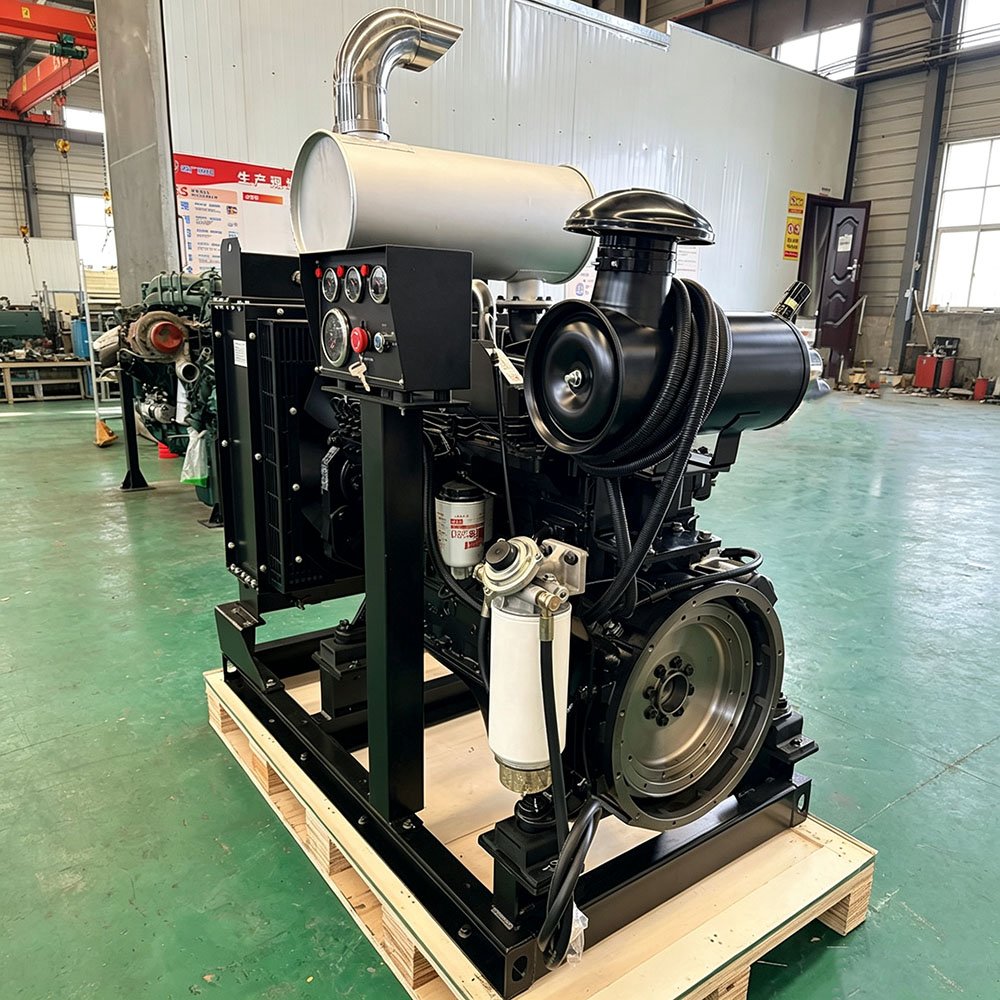
The main difference between Cummins 6BT, 6BTA, and 6BTAA engines is their turbocharging, charge-air cooling, and application-specific configuration. All three belong to the 5.9-liter B Series diesel engine family. The 6BT is generally turbocharged, the 6BTA adds aftercooling, and the 6BTAA designation appears on additional aftercooled configurations with distinct power ratings and cooling arrangements.
For construction machinery, generator sets, and industrial pumps, these differences affect power output, thermal performance, and installation requirements. However, the model prefix alone cannot confirm horsepower or cooling design. The complete engine model and Cummins specification sheet remain essential.
Cummins 6BT vs 6BTA vs 6BTAA: Specifications Compared
These engines share the same basic six-cylinder architecture, but their performance depends on how combustion air is supplied and cooled.
| Specification | 6BT5.9 | 6BTA5.9 | 6BTAA5.9 |
|---|---|---|---|
| Displacement | 5.9 L | 5.9 L | 5.9 L |
| Configuration | Inline 6-cylinder | Inline 6-cylinder | Inline 6-cylinder |
| Bore × stroke | 102 × 120 mm | 102 × 120 mm | 102 × 120 mm |
| Turbocharged | Yes | Yes | Yes |
| Aftercooling | Generally no | Yes | Yes |
| Cooling arrangement | No charge-air cooler in typical basic configuration | Air-to-air or liquid-cooled, depending on version | Application-specific aftercooling |
| Fuel injection | Typically mechanical | Typically mechanical | Typically mechanical |
| Power output | Rating-dependent | Rating-dependent | Rating-dependent |
| Typical applications | Industrial equipment, vehicles | Machinery, pumps, generators | Industrial machinery, generators, pumps |
The basic engine displacement remains approximately 5.88 liters, or 359 cubic inches.
Most traditional mechanical B Series versions use direct fuel injection. Fuel pump designs, governors, turbochargers, and accessories can differ by engine configuration.
One important distinction is that 6BTAA does not universally mean a higher horsepower rating than every 6BTA. Cummins published multiple ratings under both designations.
For instance, its generator engine portfolio includes both 6BTA5.9 and 6BTAA5.9 models with different electrical output capabilities.
The relevant comparison is therefore between complete engine models, not simply the number of letters in their names.
How Turbocharging and Aftercooling Affect Performance
Turbocharging increases the amount of air entering an engine by compressing intake air using energy from the exhaust gases.
However, compression also increases air temperature. Hotter air is less dense than cooler air at the same pressure.
This is why charge-air cooling becomes important in engines designed for greater output or sustained load.
6BT5.9: Turbocharging Without Conventional Aftercooling
The basic turbocharged 6BT configuration uses a turbocharger to increase intake manifold pressure.
Without a separate charge-air cooler, compressed air reaches the engine at a higher temperature.
This design reduces the number of cooling components, which can simplify installation and maintenance.
It is useful where the required engine rating can be achieved without additional charge-air cooling.
However, thermal conditions and maximum output still depend on the particular turbocharger, fuel calibration, and operating environment.
6BTA5.9: Turbocharged and Aftercooled
The 6BTA introduces charge-air cooling after the turbocharger.
An aftercooler removes heat from compressed intake air before it enters the cylinders.
Cooler air allows more oxygen mass to enter each cylinder at a given intake pressure, supporting higher fueling rates and improved combustion control.
Depending on the engine configuration, aftercooling may use air-to-air or liquid-to-air heat exchange.
Neither design is automatically superior in every application.
Air-to-air cooling depends on ambient airflow and heat exchanger placement. Liquid-based cooling depends on coolant temperatures, circulation, and heat rejection capacity.
For detailed ratings and installation considerations, see Kangjin Power’s Cummins 6BTA5.9 specifications guide.
6BTAA5.9: Application-Specific Aftercooled Configurations
The 6BTAA designation is found on several Cummins industrial and generator-drive engines.
These engines combine turbocharging and aftercooling, but their operating characteristics differ by model suffix and calibration.
A 6BTAA5.9-G7 generator engine, for example, should not be evaluated using the same duty requirements as a 6BTAA5.9-C series construction engine.
Their rated speeds, governors, cooling arrangements, and load characteristics can differ.
For more detailed power and torque information, the Cummins 6BTAA5.9 specifications article covers the industrial platform.
What Changes When Charge-Air Cooling Is Added?
The practical effects can include:
- Higher available air density: Supports combustion at increased engine output.
- Improved thermal management: Reduces compressed intake-air temperature.
- Greater sustained-load capability: Helps manage intake conditions during extended operation when properly sized.
- Additional cooling requirements: Introduces heat exchangers, piping, and potential maintenance points.
An aftercooler does not guarantee higher horsepower by itself. Fuel delivery, boost pressure, component limits, and factory calibration determine the actual rating.

Horsepower, Torque and Continuous-Duty Differences
Engine horsepower figures must be interpreted alongside rated speed and duty cycle.
The same 5.9-liter architecture can support different outputs in construction equipment, fire pumps, and generators.
Cummins’ published specifications illustrate this variation.
| Engine Model | Published Rating | Application |
|---|---|---|
| 6BT5.9-C165 | 165 hp designation | Fire-pump engine configuration |
| 6BTA5.9-G6 | Model-specific generator rating | Generator drive |
| 6BTA5.9-P160 | 120 kW / approximately 161 hp at 1,500 rpm | Pump drive |
| 6BTAA5.9-G7 | Used in a 155 kVA prime-rated generator set | Power generation |
The entries illustrate different rating contexts, not a standardized horsepower ranking. Generator-set electrical output is not equivalent to engine shaft horsepower.
The 6BTA5.9-P160 pump drive engine listed by Kangjin Power provides a useful application example.
Its published specifications include 120 kW at 1,500 rpm and 764 N·m at 1,500 rpm.
These figures describe that specific pump configuration rather than every 6BTA engine.
Why Torque Curves Matter More Than Peak Horsepower Alone
Construction machinery experiences changing engine loads as hydraulic pumps respond to operator commands.
Generator engines, by comparison, must maintain relatively stable operating speed as electrical demand changes.
A water pump may require continuous operation near its rated speed for extended periods.
The most relevant technical characteristics therefore include:
- Rated power at the intended operating rpm.
- Available torque throughout the working speed range.
- Response to sudden load changes.
- Continuous versus intermittent duty ratings.
- Cooling performance at expected ambient temperatures.
Comparing engines only by maximum horsepower can obscure important operating differences.
A lower-rated engine with an appropriate torque curve may be more suitable for a specific machine than a higher-rated alternative.
Which Engine Is Better for Different Applications?
There is no universal best choice among the three engine designations.
The appropriate configuration depends on the load profile, operating environment, and equipment requirements.
Construction and Agricultural Equipment
Excavators, loaders, and agricultural machines often experience fluctuating torque demand.
Turbocharged B Series engines provide useful low-speed pulling capability, while aftercooled configurations can support additional performance requirements.
Cooling system capacity is particularly important in dusty environments and during sustained hydraulic loading.
The engine must also be matched to the hydraulic pump’s absorbed power and working speed.
Industrial Water Pumps
Water pumps commonly operate for long periods at a controlled speed.
The required shaft power depends on pump flow, head, efficiency, and the operating point.
A 6BTA pump-drive configuration may be suitable when its rated output matches these conditions.
For continuous operation, cooling capacity and the manufacturer’s duty rating are more important than the highest advertised horsepower.
Diesel Generator Sets
Generator engines operate at speeds determined by electrical frequency and alternator design.
Common four-pole generator arrangements use 1,500 rpm for 50 Hz or 1,800 rpm for 60 Hz operation.
The 6BTA5.9 and 6BTAA5.9 families both include generator-drive configurations.
Their suitability depends on the actual prime or standby rating, governor behavior, and the complete generator package.
Marine Applications
Marine engines may operate under prolonged high loads and have specific cooling and exhaust requirements.
Some 6BTA configurations use water-cooled charge-air systems suited to marine installations.
However, marine engines require application-specific ratings and equipment.
A construction or generator engine should not be assumed suitable for marine operation simply because it shares the same cylinder block.
Can a 6BTA or 6BTAA Replace a 6BT?
The engines share core B Series architecture, but direct interchangeability is not guaranteed.
Replacing a 6BT with an aftercooled configuration can introduce additional installation requirements.
Before considering a replacement, the following technical differences should be checked:
- Engine mounting and flywheel housing: Confirm mechanical interfaces and transmission compatibility.
- Charge-air cooling: Verify space for the required heat exchanger and intake piping.
- Cooling system capacity: Check radiator performance and heat rejection requirements.
- Engine speed and governor: Confirm compatibility with the driven equipment.
- Fuel and electrical connections: Identify differences in fuel controls and starting systems.
- Emissions requirements: Check compliance for the intended market and application.
Even where the basic engine block dimensions are similar, accessories and supporting systems may differ.
A change in rated output can also alter the load imposed on the transmission, coupling, or hydraulic equipment.
The engine serial number, complete model designation, and Control Parts List (CPL) provide a more reliable basis for comparing configurations.
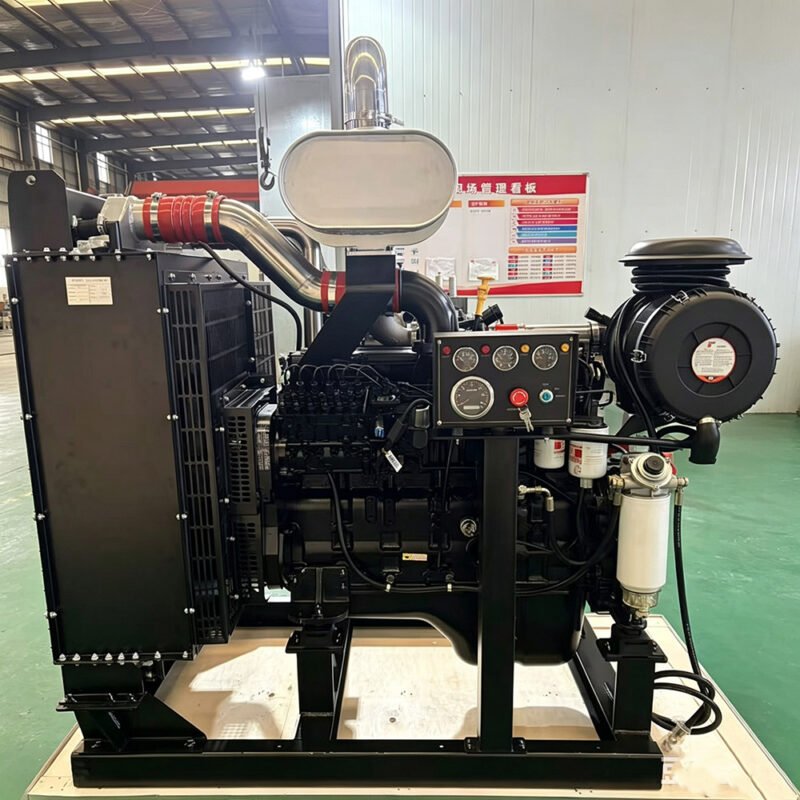
Frequently Asked Questions
What is the main difference between 6BT and 6BTA?
The 6BT is generally turbocharged without a separate charge-air cooler, while the 6BTA adds aftercooling. This helps manage intake temperatures and supports different performance ratings.
Is the 6BTAA more powerful than the 6BTA?
Not necessarily. Both families include multiple power ratings. Some 6BTAA configurations offer greater output, but horsepower depends on the complete model, fuel calibration, and application.
Does the 6BTAA always use air-to-air cooling?
No. The complete engine specification is required to confirm its cooling arrangement. The 6BTAA designation alone is insufficient to establish the heat exchanger type.
Are 6BT, 6BTA and 6BTAA engine parts interchangeable?
Some components may be shared, but full interchangeability cannot be assumed. Pistons, turbochargers, fuel injection components, manifolds, and cooling parts can differ by model and CPL.
Which is better for continuous industrial operation?
The best configuration is the one with an appropriate continuous-duty rating, torque curve, and cooling capacity. Aftercooling can support higher output, but it does not replace correct engine sizing.
Summary
The Cummins 6BT, 6BTA, and 6BTAA share the same 5.9-liter inline six-cylinder foundation, but differ in charge-air cooling, engine calibration, and application-specific equipment.
The 6BT generally uses turbocharging without conventional aftercooling. The 6BTA adds charge-air cooling, while the 6BTAA designation identifies additional aftercooled configurations with distinct operating characteristics.
For industrial machinery, pumps, and generators, engine performance should be evaluated using the actual horsepower rating, torque curve, cooling arrangement, and operating duty. The complete model number and manufacturer specifications provide a more reliable comparison than the engine prefix alone.

