
Cummins ISM11 Specs: HP, Torque, Dimensions & Uses

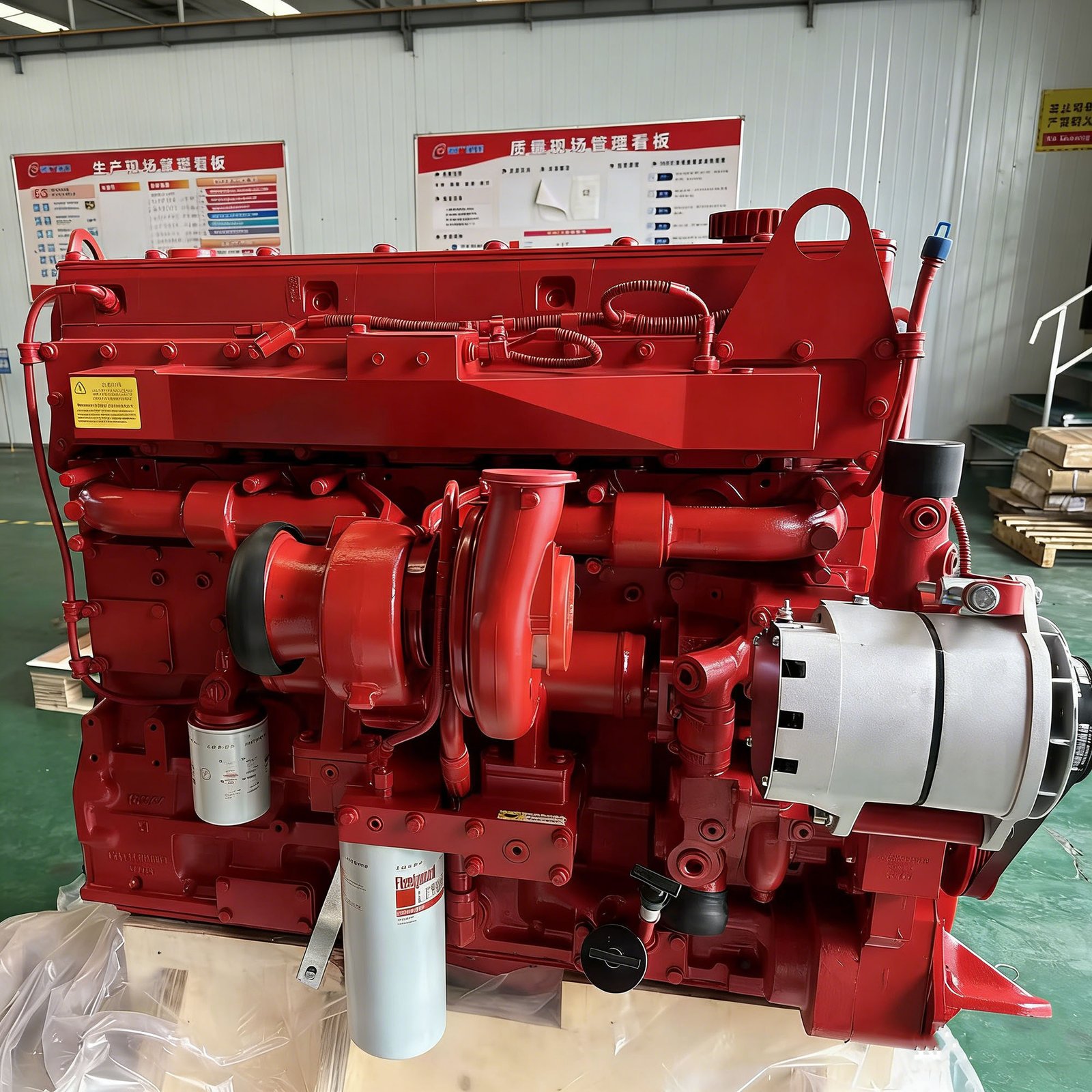
The Cummins ISM11 is a 10.8-liter inline six-cylinder diesel engine used in heavy-duty trucks, buses, motorhomes, and emergency vehicles. Depending on the application, published ratings range from approximately 280 to 500 hp, with peak torque reaching 1,550 lb-ft (2,102 N·m). A representative EPA 2007 truck version weighs 2,206 lb (1,000 kg) dry. External dimensions vary with the engine configuration, accessories, and installation requirements.
The ISM11 belongs to Cummins’ M Series engine family. Its combination of relatively low engine speed and substantial torque makes it particularly suitable for moving heavy vehicles under sustained loads.
Cummins ISM11 Engine Specifications
The ISM11 uses a four-stroke, turbocharged diesel design with electronic engine management. Its 10.8-liter displacement comes from six cylinders with a 125 mm bore and 147 mm stroke.
The following table combines basic engine characteristics with representative EPA 2007 specifications published by Cummins.
| Specification | Cummins ISM11 |
|---|---|
| Engine type | Inline 6-cylinder diesel |
| Displacement | 10.8 L / 661 cu in |
| Bore × stroke | 125 × 147 mm |
| Horsepower | 280–500 hp, depending on application |
| Maximum documented torque | 1,550 lb-ft / 2,102 N·m |
| Governed speed | 2,100 rpm for EPA 2007 versions |
| Dry weight | 2,206 lb / 1,000 kg |
| Fuel system | Electronically controlled injection |
| Aspiration | Turbocharged and charge-air cooled |
| Cooling system | Liquid-cooled |
| Main applications | Trucks, buses, motorhomes, emergency vehicles |
Note: These figures describe different ISM11 configurations. Individual engines may have different ratings, weights, and emissions equipment.
Although the engine is commonly called an 11-liter diesel, its actual displacement is 10.8 liters.
It is also important to distinguish the ISM11 from smaller Cummins engine families. Kangjin Power’s Cummins engine models guide provides additional background on engine classifications, displacement, and operating characteristics.
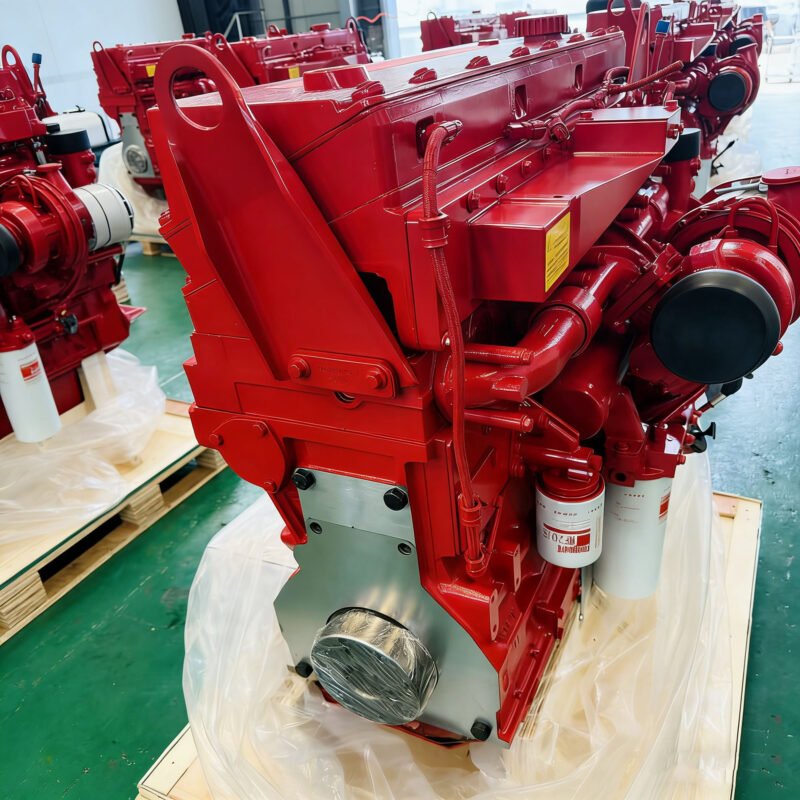
Cummins ISM11 Horsepower and Torque Ratings
Cummins offered several ISM11 power calibrations to suit different vehicle requirements. Higher horsepower ratings support greater power output, while the available torque determines how effectively the engine responds to load at a given speed.
Representative ISM11 Power Ratings
The following ratings are from Cummins’ EPA 2007 heavy-duty truck specifications.
| Engine Rating | Horsepower | Peak Torque |
|---|---|---|
| ISM 280 | 280 hp | 1,150 lb-ft |
| ISM 310 | 310 hp | 1,150 lb-ft |
| ISM 330 | 330 hp | 1,250–1,350 lb-ft |
| ISM 350 | 350 hp | 1,250–1,350 lb-ft |
| ISM 370 | 370 hp | 1,350–1,450 lb-ft |
| ISM 410 | 410 hp | 1,550 lb-ft |
Peak torque for these ratings occurs at approximately 1,200 rpm. Some versions offer alternative torque calibrations.
Certain fire and emergency vehicle configurations reach 500 hp, demonstrating how substantially the engine’s output can vary between applications.
Why Does the ISM11 Deliver High Torque at Low RPM?
The ISM11’s relatively long 147 mm piston stroke contributes to its displacement and torque-producing characteristics.
Turbocharging increases the air available for combustion, while electronic fuel injection adjusts fuel delivery according to engine demand.
Together, these systems allow the engine to produce substantial pulling force at moderate engine speeds.
For example, the ISM 410 develops 1,550 lb-ft of peak torque at approximately 1,200 rpm. This operating characteristic is useful when accelerating a loaded truck or maintaining speed on an incline.
However, engine torque alone does not determine vehicle performance. Transmission ratios, axle gearing, tire diameter, and gross vehicle weight also affect the force delivered to the wheels.
Cummins ISM11 Dimensions and Weight
Physical dimensions are important when installing an engine in a truck chassis or equipment compartment.
Unlike displacement and cylinder arrangement, the ISM11’s overall length, width, and height are not universal measurements.
Turbocharger position, accessory drives, exhaust connections, and cooling arrangements affect the space required.
ISM11 Weight Specifications
Cummins published the following weights for its EPA 2007 heavy-duty truck version.
| Measurement | Weight |
|---|---|
| Dry engine | 2,206 lb / 1,000 kg |
| Published system weight | 2,268 lb / 1,028 kg |
| Additional aftertreatment allowance | 62 lb / 28 kg |
The published system weight includes a defined aftertreatment weight allowance. It does not represent the complete weight of the engine and every vehicle-installed component.
Radiators, cooling fans, mounting brackets, fluids, and air intake systems may increase the installed weight.
What Are the Dimensions of a Cummins ISM11?
Cummins’ general EPA 2007 ISM specification page does not provide a universal overall length, width, and height.
The exact external dimensions depend on the engine configuration.
When examining an ISM11 installation drawing, the important measurements include:
- Overall length: Including the front accessory drive and flywheel housing.
- Maximum width: Including the turbocharger and external accessories.
- Overall height: From the lowest installed component to the highest point.
- Mounting dimensions: Engine support locations and crankshaft centerline.
- Flywheel housing dimensions: Required for transmission and drivetrain compatibility.
The engine’s internal dimensions remain 125 mm bore and 147 mm stroke, but these measurements do not describe its external installation envelope.
This distinction also applies to the related QSM11 diesel engine, which uses the same basic 10.8-liter M Series architecture.
Its industrial and marine configurations can have different accessories, dimensions, and mounting arrangements.
Therefore, QSM11 dimensional figures should not be applied directly to an ISM11 installation.
How Does the Cummins ISM11 Fuel System Work?
The ISM11 uses electronic engine management to regulate diesel fuel delivery according to engine operating conditions.
Its fuel injection architecture varies by production generation. It should not automatically be described as identical to the high-pressure common-rail systems used in newer Cummins engines.
The EPA 2007 version combines electronic fuel control with cooled exhaust gas recirculation and an electrically actuated variable geometry turbocharger.
Electronic Fuel Control
The Electronic Control Module (ECM) processes information from engine sensors to manage fuel delivery.
This allows the engine to respond to changes in speed, load, and operating temperature.
Electronic control also supports engine diagnostics and communication with compatible vehicle systems.
Variable Geometry Turbocharging
The variable geometry turbocharger adjusts exhaust gas flow through its turbine.
This helps maintain useful boost pressure across different engine speeds, improving response when operating conditions change.
The system also works with other engine controls to manage exhaust emissions.
Emissions and Exhaust Aftertreatment
EPA 2007 ISM engines include emissions control systems such as:
- Cooled exhaust gas recirculation (EGR).
- Variable geometry turbocharging.
- Diesel particulate filtration.
- Electronic engine management.
- Crankcase ventilation filtration.
These systems work together to reduce regulated exhaust emissions.
Earlier engine generations may have different arrangements, so emissions components must be identified by the relevant engine version.
Common Applications of the Cummins ISM11 Engine
The ISM11 was developed for commercial vehicles that require high torque and dependable operation under varying loads.
Its applications extend beyond conventional highway transportation.
Heavy-Duty Commercial Trucks
Heavy-duty trucks frequently operate with substantial payloads and changing road conditions.
The ISM11’s low-speed torque helps support acceleration under load and sustained operation on highway gradients.
Its electronically controlled engine management also allows the power output to respond to driving conditions.
Transit Buses
Transit buses experience frequent stopping, acceleration, and extended idling.
These operating conditions place different demands on an engine compared with long-distance highway driving.
Cummins offered ISM configurations for transit buses with power ratings suited to passenger transportation.
Motorhomes and Recreational Vehicles
Large motorhomes require enough torque to move significant vehicle weight over long distances.
Certain ISM motorhome versions provide higher horsepower ratings than standard commercial truck configurations.
Their cooling and transmission arrangements may also differ to match recreational vehicle requirements.
Fire and Emergency Vehicles
Emergency vehicles require responsive acceleration and the ability to operate under demanding conditions.
Cummins offered specialized ISM versions producing up to 500 hp.
These applications may involve additional loads from vehicle-mounted equipment, making engine calibration and cooling performance particularly important.
Related Industrial Applications
Although the ISM11 is primarily associated with on-highway vehicles, Cummins developed the related QSM11 for industrial and marine applications.
The QSM11 is used in equipment such as mining machinery, construction vehicles, and industrial power systems.
For readers examining the relationship between these engines, Kangjin Power’s QSM11 diesel engine specifications and applications guide discusses the industrial platform in greater detail.
The two engine families share the same displacement class, but their fuel system configurations, power ratings, cooling arrangements, and emissions requirements can differ.
Another useful comparison is the Cummins 6CTA8.3 diesel engine, which has a smaller 8.3-liter displacement and is used in various heavy-duty industrial applications.
Comparing these platforms helps illustrate how engine displacement, torque output, and operating requirements influence diesel engine applications.

Frequently Asked Questions
How much horsepower does a Cummins ISM11 have?
The Cummins ISM11 has published ratings ranging from approximately 280 to 500 hp, depending on the application. Common EPA 2007 heavy-duty truck configurations include 280, 310, 330, 350, 370, and 410 hp.
What is the maximum torque of the ISM11?
Selected ISM11 versions produce up to 1,550 lb-ft (2,102 N·m) of peak torque. Several heavy-duty truck ratings reach peak torque around 1,200 rpm.
How much does a Cummins ISM11 weigh?
A representative EPA 2007 truck engine has a dry weight of approximately 2,206 lb (1,000 kg). Installed weight depends on the accessories and associated equipment.
Is the Cummins ISM11 an 11-liter engine?
Yes. The ISM11 is commonly classified as an 11-liter engine, although its actual displacement is 10.8 liters, or approximately 661 cubic inches.
What is the difference between ISM11 and QSM11?
Both engines belong to Cummins’ 10.8-liter M Series family. However, the ISM11 is primarily associated with highway vehicles, while the QSM11 serves industrial and marine applications. Their configurations and operating requirements may differ.
Does the Cummins ISM11 use common-rail injection?
Not necessarily. ISM11 fuel injection systems vary by production generation. The specific fuel system should be identified using the engine model and serial number rather than assuming every version uses common-rail injection.
Summary
The Cummins ISM11 combines a 10.8-liter inline six-cylinder design with substantial low-speed torque and electronically controlled engine operation. Its published power ratings range from approximately 280 to 500 hp, with selected configurations producing up to 1,550 lb-ft of torque.
The engine has been used in heavy-duty trucks, buses, motorhomes, and emergency vehicles, where load handling and consistent power delivery are important.
Although ISM11 engines share the same basic architecture, their ratings, dimensions, weights, and emissions systems can differ. The engine serial number and application-specific Cummins documentation provide the most accurate basis for identifying an individual engine’s specifications.

