
Cummins 6BTA5.9 Specs: HP, Torque, Dimensions & Applications

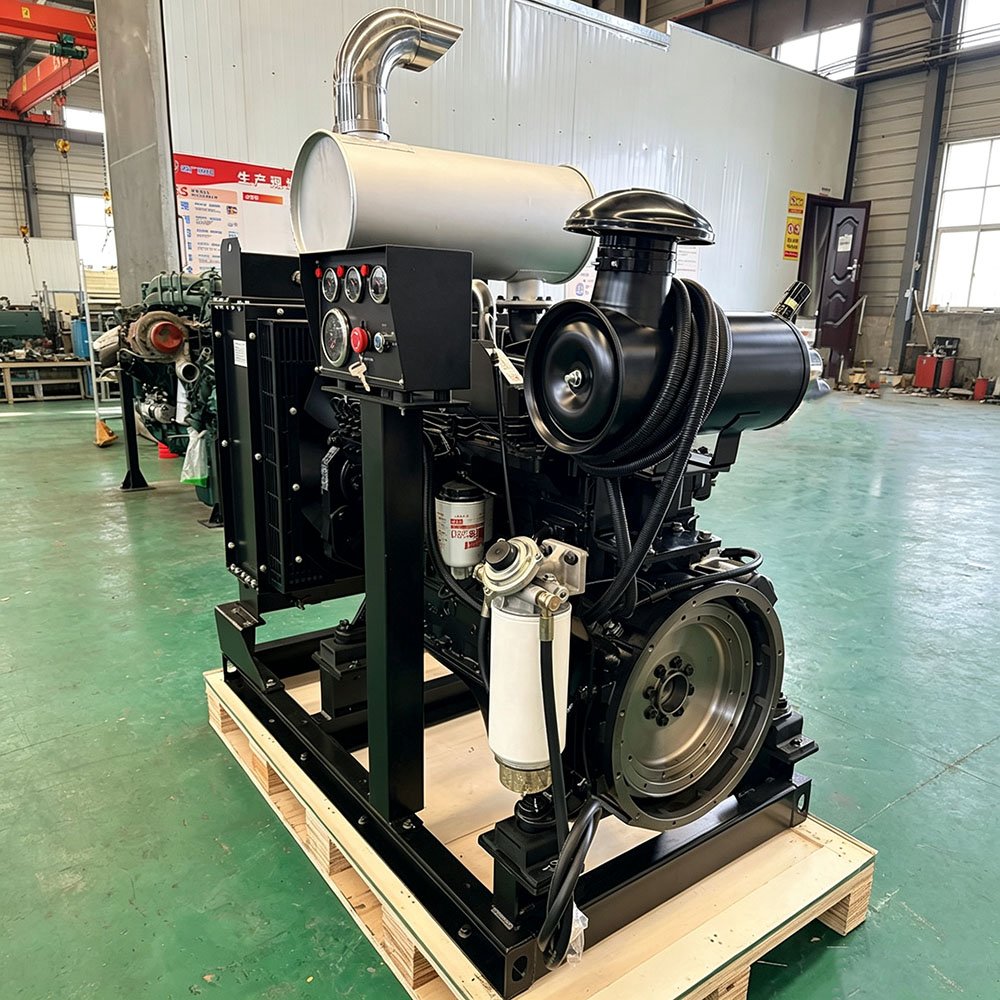
What are the exact cummins 6bta5.9 specs required for heavy-duty industrial integration?
This 5.9-liter, inline 6-cylinder diesel engine delivers between 140 HP and 285 HP. It produces exceptional low-speed torque, making it a global standard for demanding machinery. Engineers and manufacturing consultants rely on this platform for its proven mechanical durability.
The engine features a highly rigid cast-iron block. Buyers can select a classic mechanical PT fuel system or an upgraded electronic control module. This versatility ensures compliance with diverse emission requirements across global markets.
Core Technical Framework and Mechanical Design
The 6BTA5.9 utilizes a turbocharged and aftercooled aspiration system. This configuration maximizes combustion efficiency without drastically increasing the engine footprint. It operates on a standard 4-stroke direct injection cycle.
The cylinder dimensions are specifically optimized for continuous heavy-load demands. The bore and stroke measure 102 mm by 120 mm. This oversquare geometry supports strong torque reserves during sudden load spikes.
General Engine Parameters:
- Engine Configuration: Inline 6-cylinder
- Displacement: 5.9 Liters
- Aspiration: Turbocharged / Air-to-Air Intercooled
- Cooling Method: Water-cooled
- Starting System: 24V electric start
- Dry Weight: Approximately 410–450 kg
Performance Output: HP and Peak Torque Matrix
Selecting the right power node requires analyzing both rated horsepower and peak torque. Different OEM applications demand very different speed curves. A water pump requires steady continuous RPM, while an excavator needs responsive torque changes.
The B-Series covers a remarkably wide power spectrum. Output models vary based on injection timing, turbocharger mapping, and governor settings.
| Engine Model | Rated Power (kW @ RPM) | Max Torque (N·m @ RPM) | Typical Application |
| 6BTA5.9-C150-II | 112 @ 2200 | 655 @ 1500 | Medium Loaders |
| 6BTA5.9-C170-II | 127 @ 2000 | 710 @ 1300 | Heavy Excavators |
| 6BTAA5.9-C180 | 132 @ 2500 | 640 @ 1400 | Commercial Trucks |
| 6BTAA5.9-C205 | 153 @ 2200 | 870 @ 1400 | Heavy Duty Industrial |
These variations highlight the supreme flexibility of the 5.9L platform. Engineers must perfectly align the engine’s torque curve with the specific driven equipment.
Application-Specific Configurations
The operational environment heavily dictates the final engine build. OEM buyers must carefully specify ambient temperature limits, dust exposure, and continuous duty requirements.
Construction Machinery:
Loaders and excavators rely on the 6BTA5.9 for its fast transient response. The engine recovers RPM quickly when the hydraulic pump demands sudden power. Dust-resistant intake systems are mandatory in these environments.
Industrial Pump Drives:
Fire pumps and dewatering units require stable, uninterrupted power. The 6BTA5.9‑P160 Pump Drive Engine provides a rated prime power of 120 kW at 1500 RPM. It features an electronic governor to manage sudden large-flow water demands.
Power Generation:
Genset applications use this platform for 150 kWe to 250 kWe outputs. The engine must hold a strict 1500 or 1800 RPM speed. Fast governing ensures ISO 8528 compliance for electrical frequency stability.

Dimensional Constraints for OEM Packaging
Evaluating cummins 6bta5.9 specs requires looking beyond basic displacement. Packaging this engine into an existing chassis requires strict spatial planning. The compact inline design generally simplifies the mounting process.
However, auxiliary systems can easily complicate the overall physical envelope. Standard physical dimensions hover around 1,036 mm (L) x 732 mm (W) x 978 mm (H). These numbers typically exclude the radiator and complex exhaust routing.
Engineers must meticulously account for:
- Radiator clearance for the air-to-air intercooler.
- Oil pan depth versus front axle clearance.
- Power take-off (PTO) interfaces on the flywheel housing.
- Air filter housing positioning for easy maintenance access.
Custom oil pans or modified turbocharger mounting locations are often required. B2B buyers should request detailed 3D CAD models before finalizing any chassis designs.
Material Specifications and Manufacturing Durability
The longevity of this engine stems from its high-strength block. The cast-iron design minimizes vibration and withstands extreme internal cylinder pressures. This rigidity ensures exceptional durability in harsh off-highway environments.
Forged steel crankshafts and connecting rods provide maximum fatigue strength. These internal components easily handle the stresses of continuous heavy loads. Many industrial units exceed one million kilometers without requiring a major overhaul.
OEMs must evaluate these material specifications when matching engines to applications. Marine and mining applications expose engines to corrosive and abrasive conditions. Specifying anti-corrosive paint and sealed alternators prevents premature equipment failure.
Emission Compliance and Injection Technology
Navigating global emission standards is a critical procurement step. Mechanical direct injection models are typically suited for lesser-regulated markets. They offer raw reliability and high tolerance for varying fuel qualities.
Tier 3 and above emission requirements necessitate electronic controls. High-pressure common rail (HPCR) systems provide highly precise fuel delivery. This optimizes the air-fuel mixture, reducing particulate matter and nitrogen oxides.
Electronic engines require sophisticated wiring harnesses and ECU integration. OEM project managers must map these electrical interfaces carefully. This ensures seamless communication between the engine and the chassis control modules.
RFQ Workflow and Supplier Evaluation
Procuring heavy-duty engines involves strict technical validation. Evaluating a reliable diesel engine supplier requires documented project requirements. Buyers cannot rely on generic price lists or marketing brochures.
When submitting an RFQ for the 6BTA5.9 Diesel Engine, define the exact application first. Include target destination markets to ensure proper emission compliance. Specify the required duty cycle and cooling arrangement precisely.
Key B2B Procurement Steps:
- Request a model-specific datasheet and performance rating curve.
- Confirm destination-market emission certificates.
- Define the scope of supply (bare engine vs. complete powerpack).
- Verify the supplier’s testing protocols and warranty terms.
- Clarify Incoterms and packaging standards for international freight.
Custom configurations often require a minimum order quantity (MOQ). However, professional factory-direct suppliers may support an MOQ of just 1 unit for prototype testing. Always request pre-shipment performance test videos before final payment.
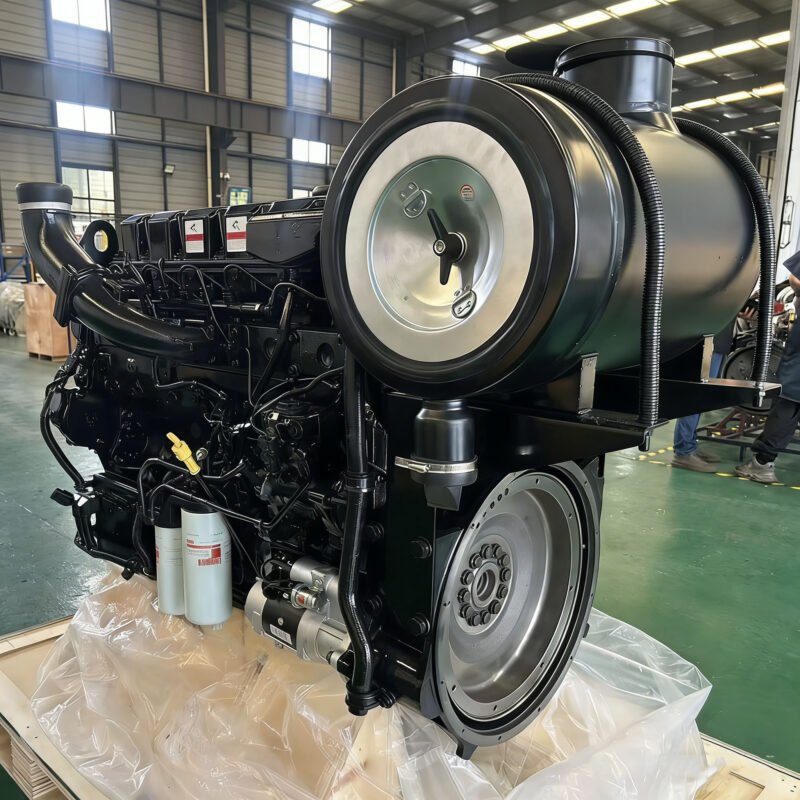
FAQ
What is the difference between the 6BTA and 6BTAA?
The 6BTA features a standard turbocharger with water-to-air aftercooling. The 6BTAA utilizes advanced air-to-air aftercooling. This significantly improves air density and overall combustion efficiency.
What fuel system does the 6BTA5.9 use?
Classic mechanical versions use the highly reliable PT fuel system. Upgraded models utilize electronic injection systems. This technological shift is necessary to meet stricter environmental regulations.
How do I verify supplier compatibility during an RFQ?
Provide the supplier with your driven equipment’s torque requirements. Include the exact flywheel housing SAE sizes. Cross-reference their proposed datasheet with your continuous power needs.
Can the 6BTA5.9 be customized for harsh environments?
Yes. OEM manufacturers can configure the engine with heavy-duty air cleaners. Additional options include deep-sump oil pans and high-capacity tropical cooling systems.
What documentation should accompany an international engine order?
Always request a factory test report and a certificate of origin. Depending on the target market, specific emission compliance certificates may also be mandatory.
Need the Right 6BTA5.9 Configuration for Your Equipment?
Choosing a 6BTA5.9 is not only about matching horsepower. Rated speed, torque curve, cooling system, duty cycle, flywheel housing, and destination-market requirements all affect whether the engine will work reliably in your equipment.
Kangjin Power supplies Cummins 6BTA5.9 diesel engines for construction machinery, industrial pump drives, generator sets, and other OEM applications. Send us your required power, operating RPM, application, destination country, and preferred configuration, and our team can help you identify a suitable engine model and provide the relevant technical specifications.
Contact Kangjin Power for a 6BTA5.9 quotation, datasheet, and configuration recommendation for your project.
Reference Sources
- ISO 3046-1: Reciprocating internal combustion engines — Performance.
- SAE J1995: Engine Power Test Code — Spark Ignition and Compression Ignition.
- EPA: Nonroad Compression-Ignition Engines — Exhaust Emission Standards.

