
QSZ13 Diesel Engine for 500kW Generators: Specs & OEM Evaluation Guide

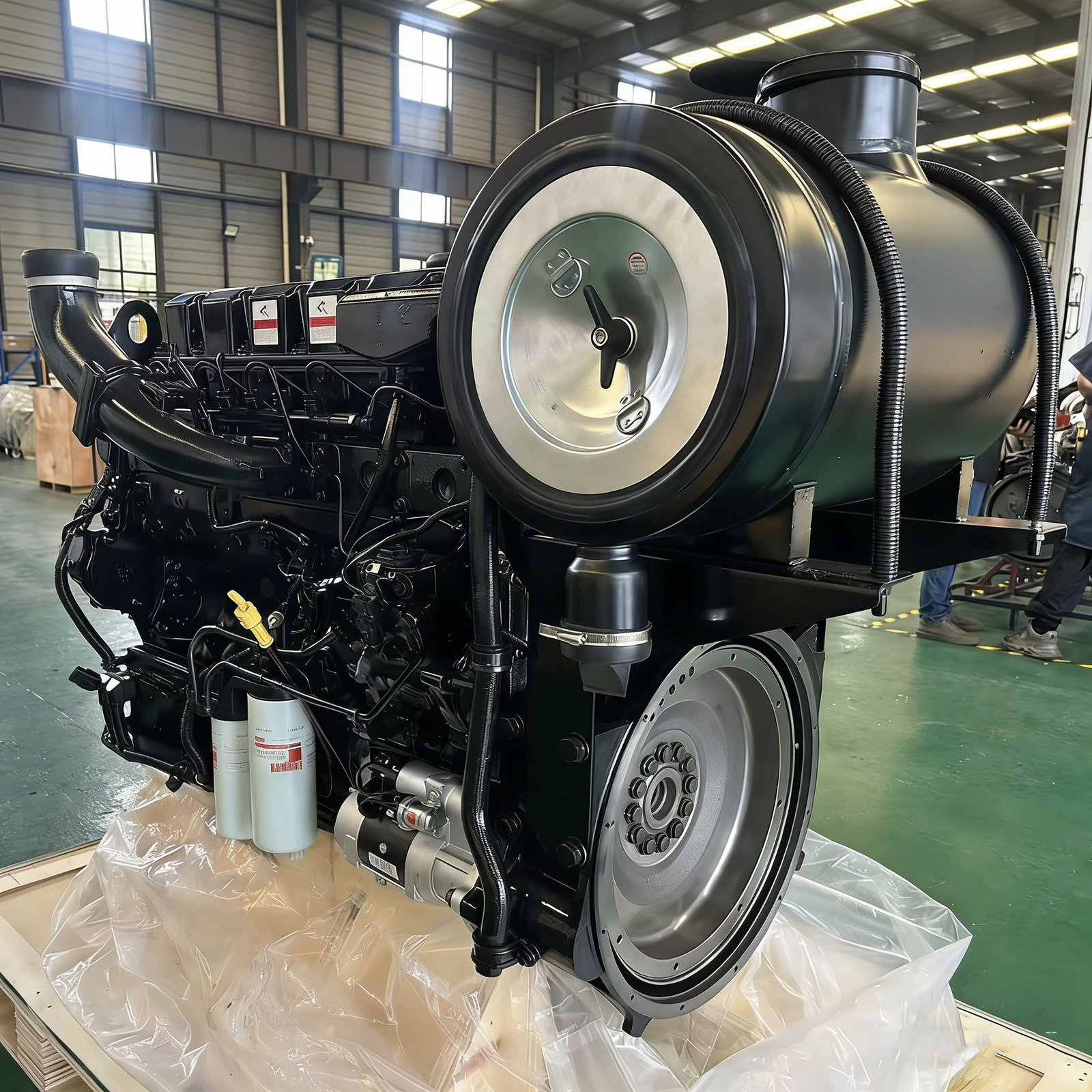
Sizing the prime mover for a 500kW generator set involves strict engineering constraints. You need rapid transient response, stable voltage output, and reliable continuous operation. The QSZ13 diesel engine serves as a benchmark for this specific power node.
Built on a heavy-duty 13-liter platform, this inline 6-cylinder engine is designed for both prime and standby power. It handles the continuous load demands of industrial factories and the rapid startup requirements of data centers.
Evaluating this engine requires looking beyond basic output numbers. B2B buyers must assess its fuel delivery system, structural durability, and the logistical realities of OEM integration.
Core Technical Specifications & Power Delivery
For power generation, constant speed control is mandatory. Designed specifically for stable energy delivery, the QSZ13 500kW engine for generator set outputs a continuous rated load at either 1500rpm (50Hz) or 1800rpm (60Hz). This ensures seamless synchronization with local grid frequencies.
| Specification | Technical Details |
| Engine Model | QSZ13 (Z-Series) |
| Configuration | Inline 6-Cylinder, 4-Stroke |
| Displacement | 13.0 Liters |
| Rated Output | 500kW |
| Operating Speed | 1500rpm (50Hz) / 1800rpm (60Hz) |
| Fuel System | XPI Ultra-High-Pressure Common Rail |
| Aspiration | Turbocharged & Air-to-Air Aftercooled |
The XPI (Extra-High Pressure Injection) common rail system is a primary cost and performance driver. It executes millisecond-level precise fuel injection adjustments. This allows the engine to accept heavy block loads without significant RPM drops or voltage dips.
Engineering Constraint: The XPI system requires strict fuel filtration. Operating in remote mining sites necessitates multi-stage fuel and water separators to prevent injector cavitation and premature wear.
Application Matching: Prime vs. Standby Capabilities
Generator applications dictate different engine stress profiles. The QSZ13 is engineered with thermal and structural tolerances to support multiple operating modes safely.
Data Center Standby Power
Standby applications demand immediate startup and aggressive load acceptance. The fully electronic intelligent management system continuously monitors speed, oil pressure, and block temperature. It allows the engine to reach optimal output within seconds during a grid failure.
Continuous Industrial & Mining Operations
Prime power requires absolute thermal stability. The engine features forced liquid cooling paired with an independent radiator assembly. It sustains 24/7 heavy-duty operation in extreme dust and heat. Excellent cold and hot start capabilities allow stable functioning between -40°C and 55°C.
Manufacturing Durability & Emission Compliance
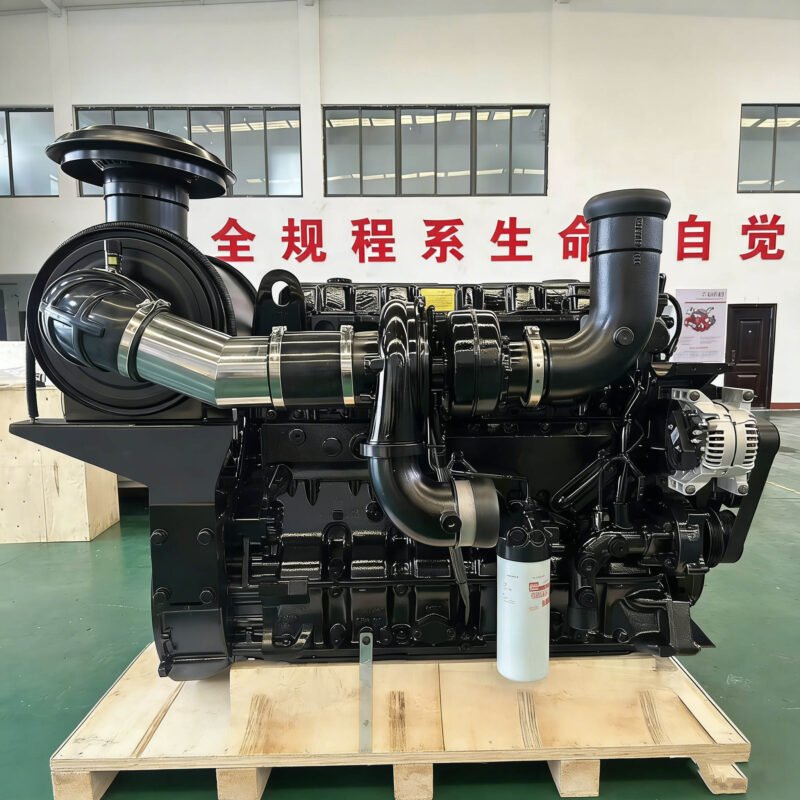
Engine longevity dictates the total cost of ownership (TCO) for equipment fleet operators. The QSZ13 incorporates heavy-duty structural enhancements to maximize uptime.
A reinforced cast iron cylinder block and forged steel crankshaft minimize torsional vibration under maximum load. These heavy-duty internal components contribute to a B10 design life exceeding 20,000 hours. This metric guarantees that 90% of these engines will surpass 20,000 operating hours before requiring a major overhaul.
Global emission compliance is another critical procurement factor. The QSZ13 platform adapts to varying regional environmental regulations. Hardware and exhaust configurations are available to meet China III/Euro III, up to China VI/Euro VI, and EPA Tier 3/4 Final standards.
Electronic Management and Remote Monitoring
Modern power generation requires deep telemetry integration. The QSZ13 utilizes an advanced electronic control module (ECM).
The ECM integrates directly with the generator’s main controller via standard CAN bus protocols like J1939. It actively monitors vital parameters and triggers automated protection protocols. Functions like overload, overheating, overpressure, and phase loss protection prevent catastrophic mechanical failures.
This digital infrastructure supports remote monitoring. Fleet managers can track fuel consumption and schedule predictive maintenance from off-site command centers.
OEM Procurement & Integration Workflows
Buying a heavy-duty diesel engine requires more than matching a spec sheet. Procurement consultants must evaluate a supplier’s customization capability, factory testing rigor, and export readiness.
Integrating the QSZ13 into a custom canopy or open-skid genset often requires specific physical layouts. Working with an established supplier like Xiangyang Kangjin Power Technology Co., Ltd. streamlines this engineering phase. They offer a comprehensive catalog of industrial engine products, providing direct factory supply of the QSZ13 alongside dedicated OEM integration support.
Project managers can request tailored configurations with an accessible Minimum Order Quantity (MOQ) of just 1 unit. This lowers the barrier to entry for prototype testing before committing to volume production.
RFQ and Testing Realities
When submitting an RFQ, buyers should clearly state their operating altitude, ambient temperature, and required emissions tier. High altitudes reduce air density, which can cause power derating. Supplying accurate site data allows the factory to tune the turbocharger and ECM correctly.
Before dispatch, every engine undergoes rigorous factory load testing. Buyers receive detailed electronic performance data and verification videos. Export-standard wooden box packaging ensures the unit survives long-haul maritime and land transport intact.
Maintenance Logistics & TCO
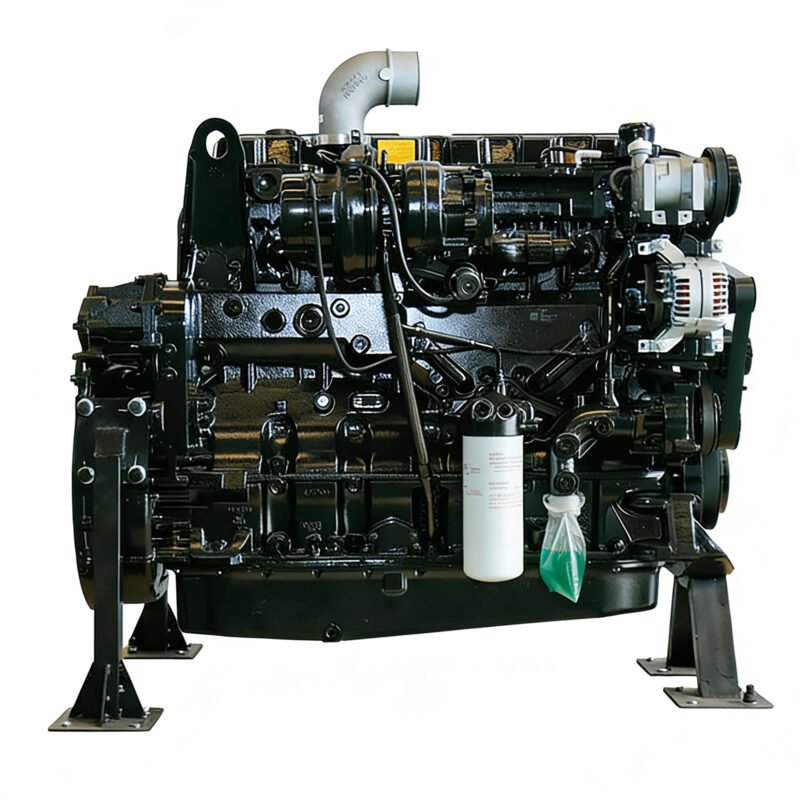
Industrial operators calculate value based on maintenance downtime. The QSZ13 features a highly modular external design. This makes routine servicing of filters, belts, and sensors straightforward without dismantling core components.
Long service intervals reduce consumable costs over the engine’s lifespan. Because the 13L platform is globally recognized, sourcing replacement parts is efficient regardless of the deployment location. This localized part availability significantly reduces operational bottlenecks for global contractors.
FAQ
What is the B10 design life of the QSZ13 diesel engine?
The B10 design life exceeds 20,000 hours. Heavy-duty internal components, including a reinforced cylinder block and forged steel crankshaft, ensure long-term reliability under continuous loads.
Can the engine automatically adapt to different grid frequencies?
Yes. The engine is calibrated to run at a constant 1500rpm for 50Hz grids or 1800rpm for 60Hz grids. The electronic governor handles varying transient loads to maintain a stable frequency.
What is the MOQ for a customized QSZ13 engine?
Suppliers like Kangjin Power offer custom engine configurations with a Minimum Order Quantity (MOQ) of 1 unit. This allows OEMs to validate a single generator build before scaling up.
How does high altitude affect the 500kW output?
High altitudes reduce oxygen density, which can lead to engine derating. While the turbocharger compensates for moderate elevations, operating above 2,000 meters requires specific factory tuning to ensure the engine still meets the 500kW requirement.
Does the engine support remote telemetry?
Yes. The advanced electronic control system utilizes standard communication protocols to transmit real-time data. Operators can remotely monitor speed, load, temperature, and fault codes.
What warranty terms apply to these export engines?
Standard B2B export agreements typically include a 6-month warranty covering main engine components. Failures caused by improper operation or the use of contaminated fuel are generally excluded.
Reference Sources
- ISO 8528-1: Reciprocating internal combustion engine driven alternating current generating sets — Part 1: Application, ratings and performance.
- ISO 3046-1: Reciprocating internal combustion engines — Performance — Part 1: Declarations of power, fuel and lubricating oil consumptions, and test methods.
- Official Manufacturer Specifications: Xiangyang Kangjin Power Technology Co., Ltd. – QSZ13 500kW Product Data
- EPA Nonroad Diesel Engine Emission Standards: Subpart IIII (Stationary Compression Ignition Internal Combustion Engines).

