
Diesel Engine PTO Selection: Matching Power Take-Off to Hydraulic Equipment

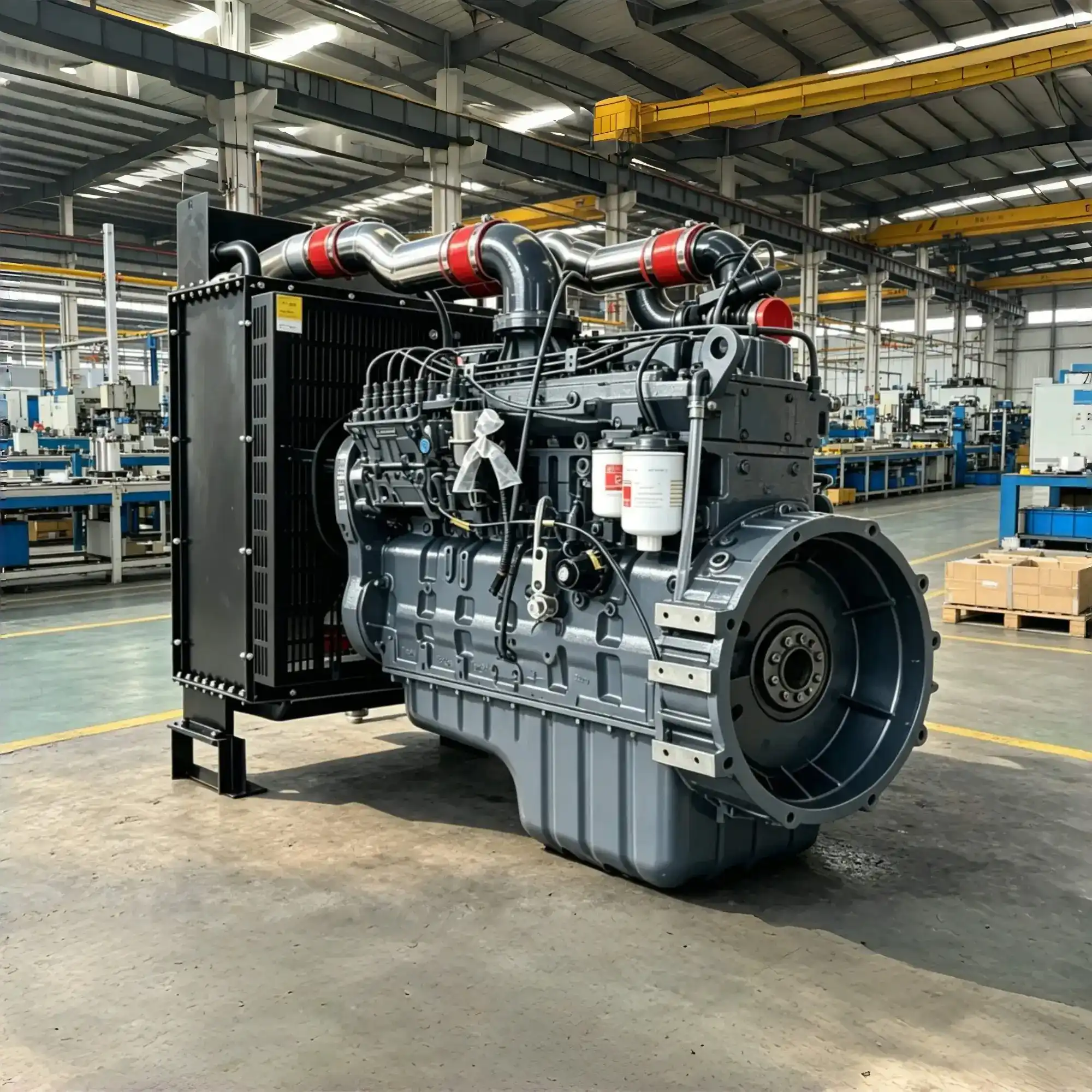
Diesel engine PTO selection requires matching the hydraulic equipment’s flow, pressure, speed, and torque demand to an engine-approved power take-off arrangement. Start by calculating the hydraulic pump’s required shaft power, then confirm the PTO’s continuous and peak torque ratings, speed ratio, mounting interface, and duty cycle. The engine must deliver sufficient power at the actual operating RPM, while the PTO and coupling must safely transmit that load without exceeding their mechanical limits.
For construction machinery, industrial pumps, agricultural equipment, and special-purpose vehicles, PTO selection affects hydraulic performance, engine loading, and component life. A correctly sized diesel engine can still experience coupling failure, PTO overheating, or hydraulic underperformance if the drive interface is unsuitable.
What Is a Power Take-Off on a Diesel Engine?
A power take-off (PTO) transfers mechanical power from an engine or its associated drivetrain to auxiliary equipment.
In hydraulic applications, the PTO commonly drives a pump that converts shaft power into hydraulic flow and pressure. The hydraulic circuit then operates cylinders, motors, winches, lifting systems, or other working equipment.
Depending on the engine and installation, power may come from:
- A flywheel-side drive connected through an approved coupling or pump drive.
- An engine front-end accessory or crankshaft drive.
- An auxiliary gear-drive provision, where the engine supports one.
- A transmission- or gearbox-mounted PTO in a vehicle installation.
These arrangements are not interchangeable. Each has its own mechanical capacity, speed characteristics, mounting restrictions, and engagement requirements.
Engine PTO vs Transmission PTO
An engine-mounted PTO takes power directly from an approved engine drive location. Its speed generally follows engine speed according to the drive ratio.
A transmission PTO obtains power from a gearbox drive. Depending on the design, its operation may depend on clutch position, transmission input speed, vehicle operating mode, or specific engagement controls.
For a stationary hydraulic power unit, a flywheel-driven pump assembly may be appropriate. A mobile truck-mounted crane, however, may use a transmission PTO if the vehicle manufacturer approves the arrangement.
| PTO Arrangement | Typical Application | Main Selection Concern |
|---|---|---|
| Flywheel-side drive | Stationary hydraulic power units and industrial machinery | Coupling torque, housing compatibility, and alignment |
| Front crankshaft drive | Auxiliary equipment on suitable engine configurations | Allowable front-end torque and bearing loads |
| Engine auxiliary gear drive | Engine-mounted accessories and approved pumps | Gear-drive rating and available mounting interface |
| Transmission PTO | Truck-mounted hydraulic equipment | Gearbox compatibility, speed ratio, and engagement |
Step 1: Determine Hydraulic Flow and Pressure Requirements
Hydraulic pump selection should begin with the equipment’s actual operating demand rather than the engine’s advertised horsepower.
Request the required pump flow, maximum working pressure, pressure duty cycle, and expected operating speed.
For example, a hydraulic system that operates a lifting cylinder intermittently may have different continuous-load requirements from a system that drives hydraulic motors for several hours.
Calculate Hydraulic Power
For a hydraulic pump, theoretical hydraulic output power can be estimated using:
Hydraulic Power (kW) = Pressure (bar) × Flow (L/min) / 600
Because a real pump has losses, its input shaft power is higher:
Pump Shaft Power (kW) = Pressure × Flow / (600 × Overall Pump Efficiency)
Overall pump efficiency accounts for volumetric and mechanical losses.
Consider a hydraulic system with these requirements:
- Required flow: 120 L/min.
- Working pressure: 180 bar.
- Assumed overall pump efficiency: 85%.
The theoretical hydraulic power is:
180 × 120 / 600 = 36 kW
After accounting for pump losses:
36 / 0.85 ≈ 42.4 kW
The pump therefore needs approximately 42.4 kW of input shaft power at this operating point.
This is an illustrative calculation, not a verified rating for any specific pump. Actual pump efficiency varies with displacement, pressure, speed, temperature, and equipment design.
Check Peak Pressure and Operating Duty
Hydraulic systems do not always operate at their nominal pressure.
Pressure may increase during cylinder acceleration, heavy lifting, relief-valve operation, or transient overload events.
Therefore, the PTO must handle both the continuous operating demand and the allowable short-duration peak load.
A PTO rated for occasional peak torque should not automatically carry that torque continuously.
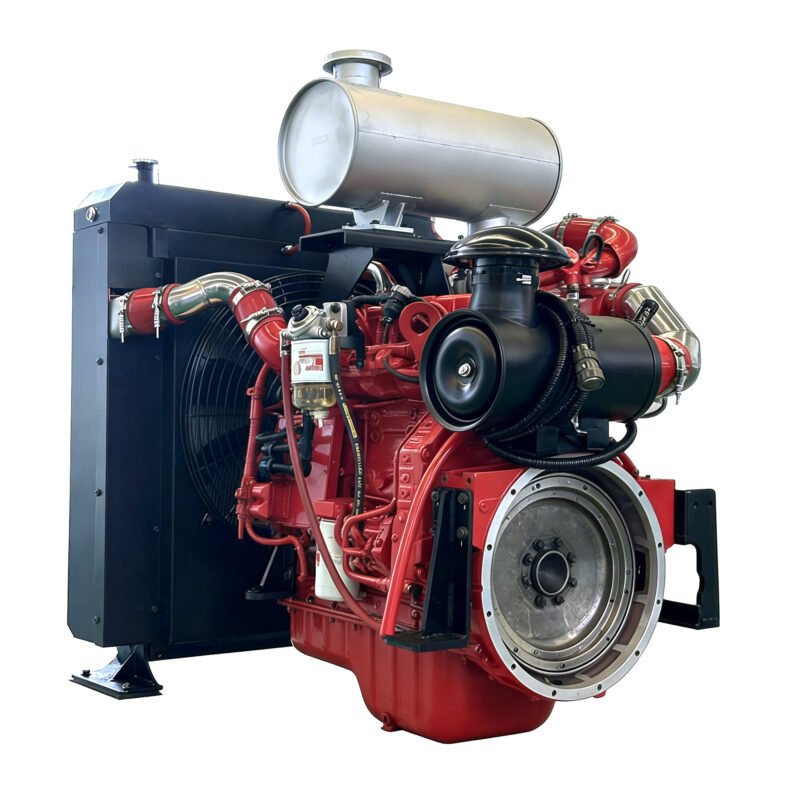
Step 2: Calculate PTO Torque at the Required Speed
After determining shaft power, calculate the torque transmitted through the PTO.
The relationship between power, torque, and rotational speed is:
Torque (N·m) = 9550 × Power (kW) / Speed (rpm)
Using the previous example, assume the pump operates at 1500 rpm and requires 42.4 kW.
Torque = 9550 × 42.4 / 1500 ≈ 270 N·m
The pump shaft therefore requires approximately 270 N·m under the stated operating conditions.
If the drive includes a gearbox, its efficiency and gear ratio affect the torque and power at the engine-side connection.
Account for PTO Gear Ratio
The PTO output speed does not always equal engine speed.
For a simple drive:
PTO Speed = Engine Speed × Speed Ratio
For example, if the engine operates at 1800 rpm and the output-to-engine speed ratio is 0.8:
PTO Speed = 1800 × 0.8 = 1440 rpm
The hydraulic pump must therefore produce the required flow at 1440 rpm rather than 1800 rpm.
When the PTO reduces speed, output torque increases approximately in inverse proportion to speed, allowing for transmission losses.
Always confirm how the equipment manufacturer defines the PTO ratio. Different manuals may express reduction ratios in different directions.
Continuous Torque vs Peak Torque
PTO suppliers often specify more than one torque rating.
| Rating | Meaning | Selection Rule |
|---|---|---|
| Continuous torque | Load permitted for sustained operation under specified conditions | Must cover the required continuous duty |
| Intermittent torque | Higher load allowed for a limited operating period | Check duration and duty-cycle restrictions |
| Peak torque | Short-duration permissible load | Check startup and transient loading |
| Maximum speed | Highest permitted shaft speed | Must not be exceeded during engine operation |
For a hydraulic drive, starting loads and rapid pressure changes can create short torque peaks. The coupling, PTO gearing, and driven pump must all tolerate these conditions.
Step 3: Match Pump Displacement and Engine Speed
Hydraulic pump flow depends on displacement, shaft speed, and volumetric efficiency.
For a fixed-displacement pump:
Flow (L/min) = Displacement (cm³/rev) × Speed (rpm) × Volumetric Efficiency / 1000
Rearranging the equation:
Required Displacement = 1000 × Flow / (Speed × Volumetric Efficiency)
Suppose a pump must deliver 120 L/min at 1500 rpm with an assumed volumetric efficiency of 92%.
The required displacement is:
1000 × 120 / (1500 × 0.92) ≈ 87 cm³/rev
This provides an initial pump displacement estimate.
However, the final pump selection must also consider pressure rating, inlet conditions, permissible speed, fluid viscosity, and manufacturer performance curves.
Why Engine Rated RPM Is Not Enough
An industrial diesel engine may produce its maximum torque at a substantially lower speed than its rated-power RPM.
For example, Kangjin Power lists the Cummins QSB6.7-C155-30 at 116 kW and 2000 rpm, with a maximum torque of 622 N·m at 1500 rpm.
However, a maximum torque point does not mean the engine can continuously supply that torque through every auxiliary drive.
The PTO’s permitted load and the engine’s application-specific power curve must be checked independently.
If hydraulic operation requires nearly constant pump flow, the engine governor and working-speed control strategy must also maintain suitable shaft speed under changing load.
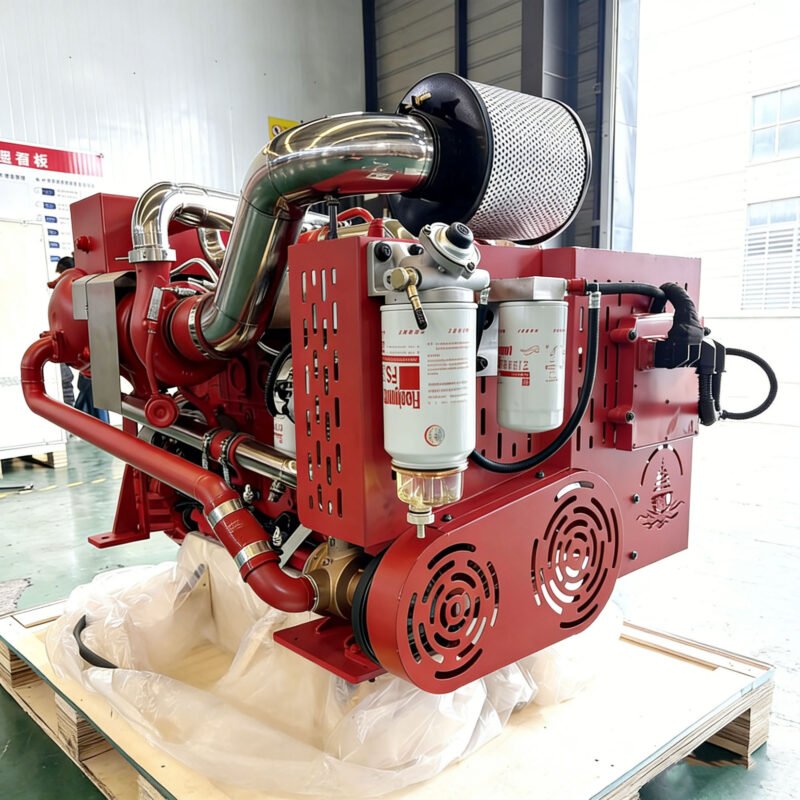
Step 4: Select the Correct PTO Mounting and Coupling
Once the power and torque requirements are known, engineers must confirm that the mechanical connection fits the engine and driven pump.
SAE Flywheel Housing and Drive Compatibility
Many industrial engine installations use SAE mounting interfaces to connect the engine to a clutch, gearbox, pump drive, or other equipment.
Kangjin Power’s SAE flywheel housing compatibility guide explains how pilot diameters, bolt patterns, flywheel dimensions, and mounting geometry affect installation.
The correct SAE housing size establishes only part of the mechanical connection. The flywheel coupling, shaft engagement, clutch or drive rating, and axial clearance must also match.
Direct-Coupled vs Belt-Driven Pumps
A direct-coupled hydraulic pump transfers torque through a coupling or approved gear-drive arrangement.
This can provide compact installation and predictable drive speed, but it requires correct alignment and structural support.
A belt-driven pump offers different packaging flexibility. However, belt tension creates radial loads that may exceed the allowable capacity of an engine front-end drive or accessory bearing.
Do not add a belt pulley to an engine shaft unless the manufacturer approves the connection and belt loads.
Alignment, Vibration, and Torsional Compatibility
An installation can fail even when the shaft dimensions and torque capacity appear correct.
Misalignment, soft foot, inadequate support, and excessive vibration can damage pump bearings and couplings.
Kangjin Power’s diesel engine shaft alignment guide explains the importance of angular and parallel alignment.
For high-inertia or cyclic-load equipment, engineers may also need a torsional vibration assessment.
The assessment should consider engine firing impulses, coupling stiffness, gearbox characteristics, and driven equipment inertia.
Step 5: Match the PTO to the Industrial Application
Different machines place different demands on their PTO arrangements.
Construction Machinery and Excavators
Excavators and other hydraulic construction equipment often require strong low-speed torque and rapid load response.
The Cummins QSB4.5 diesel engine is used in construction and agricultural machinery applications.
For a hydraulic installation built around this engine family, engineers should compare the expected pump operating speed and hydraulic load with the exact engine rating and approved accessory drive provisions.
Because the product family includes multiple configurations, the engine model alone does not confirm an available PTO option or its torque rating.
Heavy-Duty Hydraulic Equipment
Hydraulic equipment operating at higher pressure or flow may require a larger engine and stronger transmission components.
The Cummins QSB6.7 diesel engine offers several industrial power ratings and substantial low-speed torque.
For crane auxiliaries, large loaders, and industrial hydraulic systems, buyers should confirm the permitted PTO capacity at the proposed working speed.
Do not assume that the engine’s full crankshaft torque is available through an auxiliary gear drive.
Industrial Pumping and Special-Purpose Equipment
The Cummins 6CTA8.3 diesel engine is used in demanding industrial and special-equipment applications.
For a hydraulic power unit, the engine must provide sufficient continuous shaft power while the PTO, clutch, and coupling satisfy the relevant mechanical ratings.
Long-running applications may also require additional attention to oil cooling, hydraulic fluid temperature, and engine thermal performance.
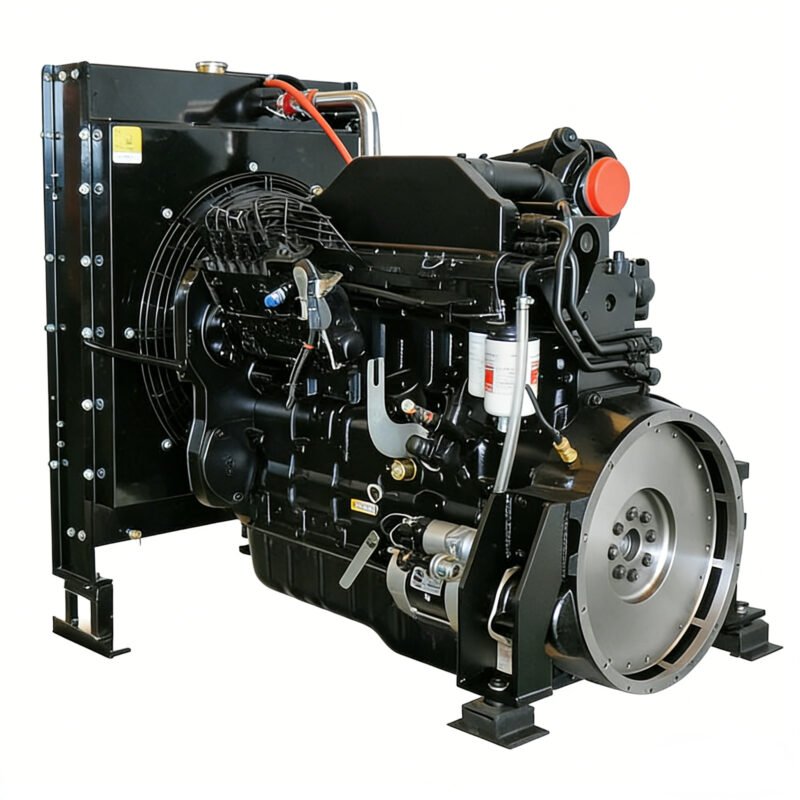
Common Diesel Engine PTO Selection Mistakes
Several errors repeatedly cause problems during hydraulic equipment integration.
- Selecting the PTO using engine horsepower alone.
- Ignoring continuous and intermittent torque differences.
- Using engine rated speed instead of actual pump operating speed.
- Failing to account for pump and drive efficiency losses.
- Assuming the PTO can transmit the engine’s full available torque.
- Ignoring radial loads from belt drives and unsupported accessories.
- Matching SAE housing dimensions without checking the flywheel coupling.
- Overlooking torsional vibration and transient hydraulic pressure peaks.
- Assuming every engine in a model family has the same PTO provision.
In replacement projects, an incorrect PTO specification may require additional adapters, a new hydraulic pump, or changes to the machine’s operating speed.
Therefore, buyers should approve the complete engine-to-pump drive arrangement rather than purchase the engine and PTO independently.
Diesel Engine PTO Procurement Checklist
Before requesting a quotation, gather the technical information needed to confirm the complete powertrain arrangement.
| Item | Information Required |
|---|---|
| Engine specification | Full model, serial number, rated power, torque curve |
| Equipment application | Hydraulic equipment type and working cycle |
| Hydraulic duty | Required flow, operating pressure, maximum pressure |
| Pump information | Displacement, efficiency, shaft speed, input torque |
| PTO arrangement | Engine, gearbox, flywheel, or front-end drive |
| PTO mechanical rating | Continuous torque, peak torque, allowable speed |
| Mechanical interface | Mounting flange, shaft dimensions, coupling details |
| Loading limits | Permitted radial and axial loads |
| Duty and environment | Operating hours, temperature, altitude, cooling conditions |
| Supplier documentation | Installation drawings, approved ratings, warranty terms |
For OEM projects, request confirmation that the proposed engine and PTO combination meets the intended operating conditions.
Suppliers should provide the available engine configuration, drive interface documentation, and applicable technical specifications before final approval.
When the application requires custom mounting or a nonstandard hydraulic drive, the equipment manufacturer should validate the complete assembly through appropriate engineering checks and commissioning tests.
Conclusion
Diesel engine PTO selection is a powertrain matching task rather than a simple horsepower comparison.
The right PTO must transmit the hydraulic pump’s required power and torque at the intended operating speed. At the same time, the engine must provide adequate continuous output, and the mounting arrangement must satisfy mechanical and installation requirements.
For construction and industrial equipment, checking hydraulic duty, PTO ratings, gear ratios, couplings, and engine-specific drive provisions early in the project helps reduce installation errors and premature component failure.
Frequently Asked Questions
How do you select a PTO for a diesel engine?
Calculate the hydraulic equipment’s required power, speed, and torque. Then compare those values with the PTO’s continuous and peak ratings. Finally, verify the engine’s approved drive location, mounting interface, duty cycle, and coupling compatibility.
How much horsepower is needed to drive a hydraulic pump?
The required shaft horsepower depends on hydraulic pressure, flow, and pump efficiency. In metric units, pump shaft power in kW equals pressure in bar multiplied by flow in L/min, divided by 600 and overall pump efficiency.
Does PTO speed equal engine speed?
Not always. A direct drive may operate at engine speed, while a gearbox or auxiliary drive changes the output speed according to its ratio. Confirm the manufacturer’s definition of the PTO speed ratio.
Can a PTO use all the engine’s available torque?
No. An auxiliary PTO may have a lower torque limit than the engine’s crankshaft output. Its gears, bearings, shaft, coupling, and permitted duty determine the maximum load it can transmit.
What is the difference between a continuous-duty and intermittent-duty PTO?
A continuous-duty PTO is rated to transmit its specified load for sustained operation under stated conditions. An intermittent-duty rating permits a different load for a limited period. Always verify the manufacturer’s duty definitions and limits.
Need Help Matching a Diesel Engine to Hydraulic Equipment?
Kangjin Power supplies Cummins diesel engines for construction machinery, industrial equipment, and special-purpose applications. Share your engine model, hydraulic flow, operating pressure, pump speed, and installation requirements with our team to discuss suitable engine configurations and available technical documentation. Contact Kangjin Power to request engine specifications and a quotation.
Technical References
- Parker Hannifin – F12 Hydraulic Pump Technical Formulas – Pump displacement, speed, hydraulic power, and shaft torque calculations.
- DAF – Bodybuilder Guidelines – PTO drive torque, speed ratio, hydraulic pump selection, and installation considerations.

