
Mechanical vs Electronic Diesel Engines: Which Is Better?

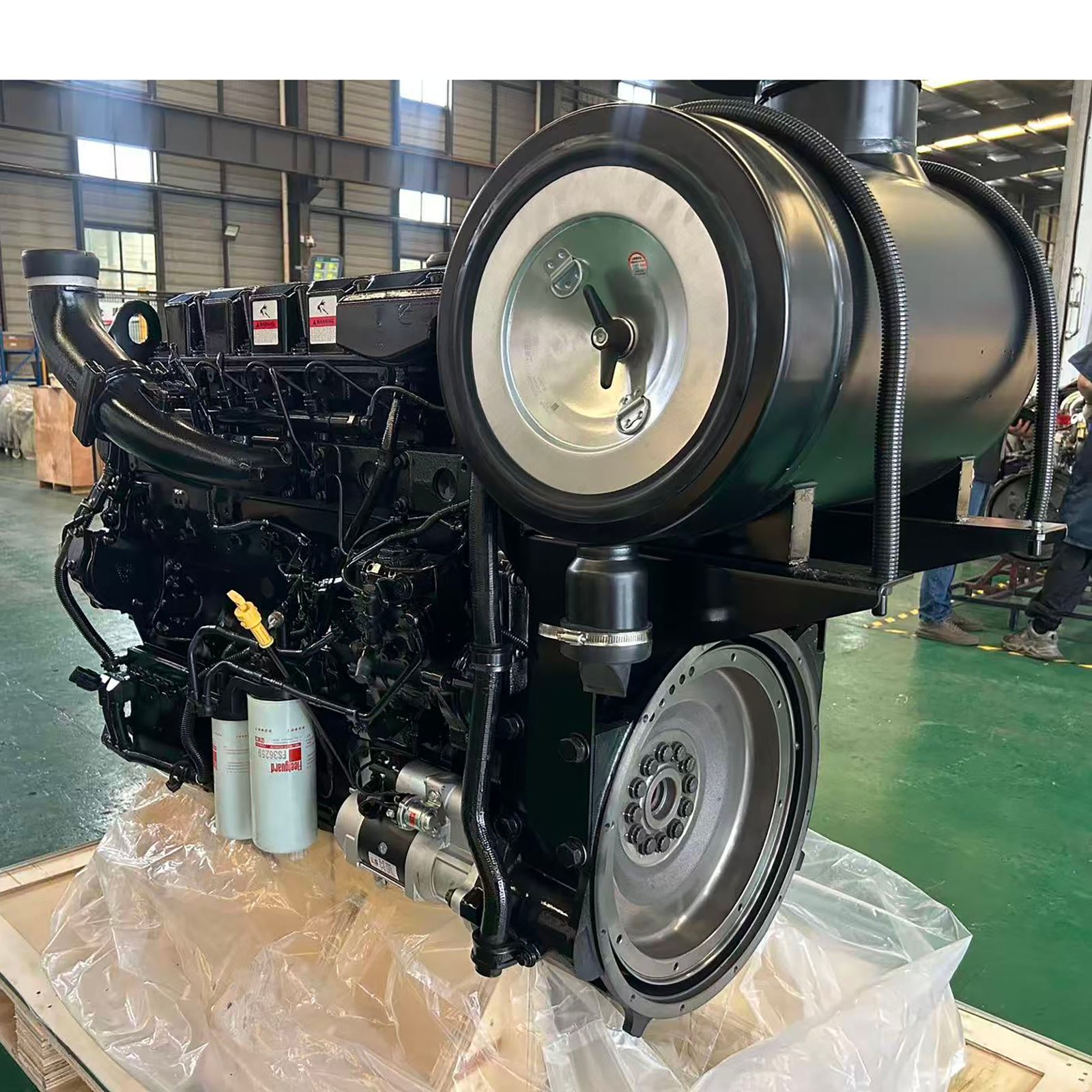
A mechanical diesel engine is often easier to troubleshoot in workshops with limited electronic diagnostic equipment, while an electronic diesel engine offers more precise fuel control, fault-code monitoring, and integration with modern emissions systems. For industrial equipment, neither design is universally better. The right choice depends on the required power, working conditions, fuel quality, local service capabilities, and the cost of downtime.
The main distinction lies in fuel control. Traditional mechanical engines use an injection pump and mechanical governor, whereas electronically controlled engines use an ECM or ECU to manage fuel delivery. The Cummins 6BT5.9 and QSB6.7 provide useful examples of these different approaches, although individual configurations must be checked against their specifications.
How Mechanical and Electronic Diesel Engines Work
Both engine types ignite diesel fuel through compression. Their main difference is how fuel quantity and injection timing are controlled as engine speed and load change.
Mechanical Diesel Engines
A traditional mechanical diesel engine uses an injection pump to meter fuel and deliver it to the injectors. A mechanical governor adjusts fuel delivery according to engine speed and load, with the exact arrangement depending on the pump design.
This design can be practical in remote industrial locations. Technicians familiar with mechanical injection systems can often investigate fuel delivery, injector condition, and injection timing without manufacturer-specific diagnostic software.
Mechanical systems still require accurate adjustment and clean fuel. Worn injectors, incorrect timing, a damaged injection pump, or restricted fuel supply can cause difficult starting, excessive smoke, reduced output, and higher fuel consumption.
Electronic Diesel Engines
An electronic diesel engine uses an Engine Control Module (ECM) or Engine Control Unit (ECU) to manage fuel delivery using information from sensors. Depending on the engine design, it may use high-pressure common-rail injection or another electronically controlled injection system.
In a common-rail engine, fuel is maintained at high pressure in a shared rail. Electronically controlled injectors deliver the required fuel quantity at the commanded time.
This arrangement allows more precise control across changing operating conditions. Electronic systems can also record fault codes and provide diagnostic information that helps technicians investigate sensor, wiring, fuel-system, and operating problems.
The trade-off is that diagnosis may require compatible software, electrical testing equipment, and technicians trained on the specific engine generation.
Mechanical vs Electronic Diesel Engines: Key Differences
| Factor | Mechanical Diesel | Electronic Diesel |
|---|---|---|
| Fuel control | Mechanical injection pump and governor | ECM-controlled fuel delivery |
| Diagnostics | Primarily mechanical testing | Electronic diagnostics and mechanical testing |
| Fuel calibration | Adjusted through mechanical settings | Managed through electronic calibration |
| Load response | Depends on pump, governor, turbocharger, and engine design | Can benefit from coordinated electronic control |
| Emissions management | Depends on engine generation and equipment | Can integrate fuel control with emissions systems |
| Service requirements | Mechanical diesel expertise | Mechanical, electrical, and diagnostic expertise |
| Fuel cleanliness | Essential for reliable operation | Especially important for high-pressure common-rail systems |
These differences are general rather than absolute. An electronically controlled engine can still use mechanically driven components, while a mechanical engine may have electrical starting or shutdown controls.
The injection architecture matters more than the label alone. Cummins explains how common-rail systems regulate fuel pressure and injection delivery in its common-rail fuel system overview.
Which Engine Type Fits Construction Equipment, Pumps and Generators?
The engine should be selected around the equipment’s actual load profile. An excavator experiences changing hydraulic demand, while a generator must maintain stable speed as electrical load changes.
Construction and Agricultural Machinery
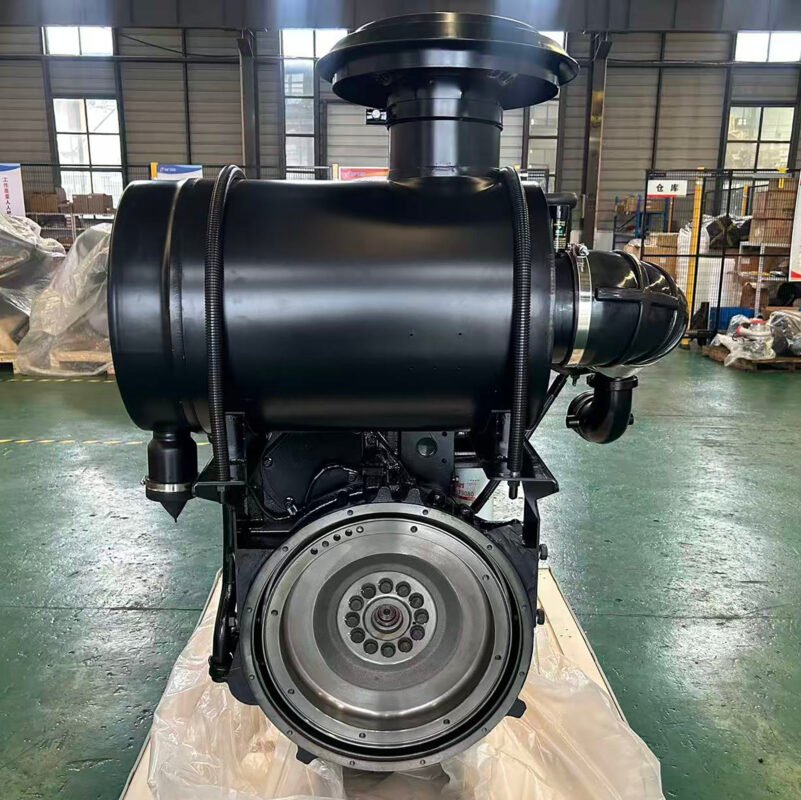
A mechanical engine can remain a sensible option for older loaders, excavators, tractors, and agricultural equipment designed around that fuel system. Retaining a compatible engine can reduce modifications to mounts, controls, cooling, and drivetrain interfaces.
Electronic engines are worth considering when equipment requires more precise fuel management, diagnostic monitoring, or integration with newer machine controls. Their suitability still depends on rated power, torque at working speed, cooling capacity, and the manufacturer’s requirements.
For example, the Cummins QSB6.7 diesel engine uses electronic control and high-pressure common-rail injection in documented configurations. Kangjin Power lists several QSB6.7 models with different rated outputs and torque characteristics, so the complete model designation matters when matching an engine to a machine.
Industrial Water Pumps
For a diesel-powered pump, calculate the required shaft power from flow rate, discharge head, and pump efficiency. The engine must supply that power at the intended operating speed and within its applicable duty rating.
A mechanical engine may suit a remote installation where local technicians already service mechanical injection pumps. An electronic engine may be preferable where diagnostic monitoring or a particular emissions configuration is required.
In either case, confirm continuous-duty capability and cooling performance. A maximum intermittent rating should not be used as a substitute for a rating approved for prolonged operation.
Generator Sets
Generator engines must operate at the speed required by the alternator. A four-pole alternator typically runs at 1,500 rpm for 50 Hz or 1,800 rpm for 60 Hz operation.
The engine must match the generator’s prime or standby rating. Electronic control can help manage fuel delivery as load changes, but governor response, engine calibration, and alternator sizing remain important.
For specialized applications, the complete engine configuration matters more than the injection system alone. For example, Kangjin Power’s Cummins QSB6.7 fire-pump engine is configured for a specific pumping application, with cooling and installation requirements that differ from those of a typical industrial generator.
Fuel Quality, Maintenance and Total Operating Cost
Neither mechanical nor electronic fuel control guarantees low operating costs. Fuel consumption and maintenance expenses depend on engine loading, calibration, operating temperature, service history, and parts availability.
Mechanical engines may be easier to troubleshoot where electronic diagnostic equipment is unavailable. However, injection-pump repairs still require suitable tools, correct calibration procedures, and experienced technicians.
Electronic engines provide additional diagnostic information, but a fault code does not automatically identify a failed component. Proper diagnosis may require sensor testing, wiring checks, fuel-pressure measurements, and manufacturer-specific procedures.
Fuel cleanliness is important for both designs. High-pressure common-rail injectors have precision components that can be damaged by contamination or unsuitable fuel. Follow the engine manufacturer’s fuel specifications and filtration requirements in the Cummins diesel fuel quality guidance.
Before comparing lifecycle costs, consider:
- Fuel consumption under equivalent operating loads.
- Scheduled servicing and expected repair requirements.
- Availability of filters, injectors, pumps, sensors, and other parts.
- Access to mechanical-diesel specialists and electronic diagnostic support.
- Downtime caused by parts delays or difficult fault diagnosis.
- Emissions equipment and associated maintenance requirements.
A mechanical engine is not automatically cheaper to operate, and an electronic engine is not always more fuel-efficient. The comparison must use equivalent working conditions and actual engine ratings.
How to Choose the Right Diesel Engine
When selecting an engine for new equipment or a replacement project, establish the machine’s requirements before deciding which fuel system is preferable.
- Define the duty cycle. Determine whether the engine will operate continuously, intermittently, under variable loads, or in standby service.
- Match power and speed. Check rated horsepower, torque, and RPM against the driven equipment’s requirements.
- Assess local service capabilities. Consider technician experience, diagnostic tools, parts availability, and fuel quality.
- Verify emissions compliance. Confirm the applicable certification for the equipment and destination market.
- Check installation compatibility. Compare mounts, flywheel housing, cooling connections, exhaust routing, and electrical interfaces.
- Calculate lifecycle cost. Include fuel, maintenance, repairs, downtime, and any conversion work.
For an existing machine, identify the complete engine model and serial number before ordering parts or approving a different engine family. A newer engine may offer useful control features, but it can require changes to wiring, cooling, exhaust, and machine controls.
Kangjin Power’s Cummins engine models guide provides additional context on traditional 6BT engines and the QSB family. The Cummins QSB4.5 diesel engine is another example of an electronically controlled engine intended for applications with different packaging and output requirements from the QSB6.7.
Frequently Asked Questions
Are mechanical diesel engines more reliable than electronic engines?
Neither type is universally more reliable. Mechanical systems may be easier to service with conventional tools, while electronic systems provide additional control and diagnostic capabilities. Reliability depends on design, maintenance, operating conditions, and parts quality.
Do electronic diesel engines always use common-rail injection?
No. Electronic engines can use common-rail systems, electronically controlled unit injectors, or other injection arrangements. The specific fuel system should be confirmed from the engine documentation.
Which diesel engine is better for remote industrial sites?
A mechanical engine may be practical where electronic diagnostics and specialist support are limited. However, engine rating, fuel quality, parts availability, and emissions requirements must also be considered.
Are mechanical diesel engines more tolerant of poor-quality fuel?
Neither type should be operated with contaminated or unsuitable fuel. High-pressure common-rail systems require particularly careful fuel cleanliness management, but mechanical injection systems also suffer from contamination and poor filtration.
Can a mechanical engine be replaced with an electronic engine?
Sometimes, but the conversion may require changes to wiring, controls, cooling, exhaust, mounting, and drivetrain interfaces. Confirm compatibility before approving a replacement.
Conclusion
Mechanical diesel engines can simplify servicing in suitable operating environments, while electronic diesel engines offer more precise fuel management, diagnostic functions, and integration with modern emissions systems.
For industrial equipment, the better option is the engine that meets the required power and duty cycle while remaining practical to maintain. Evaluate fuel quality, emissions requirements, local service capabilities, parts availability, and installation compatibility before making the final decision.

