
6BT vs QSB6.7: Mechanical vs Electronic Diesel Engines

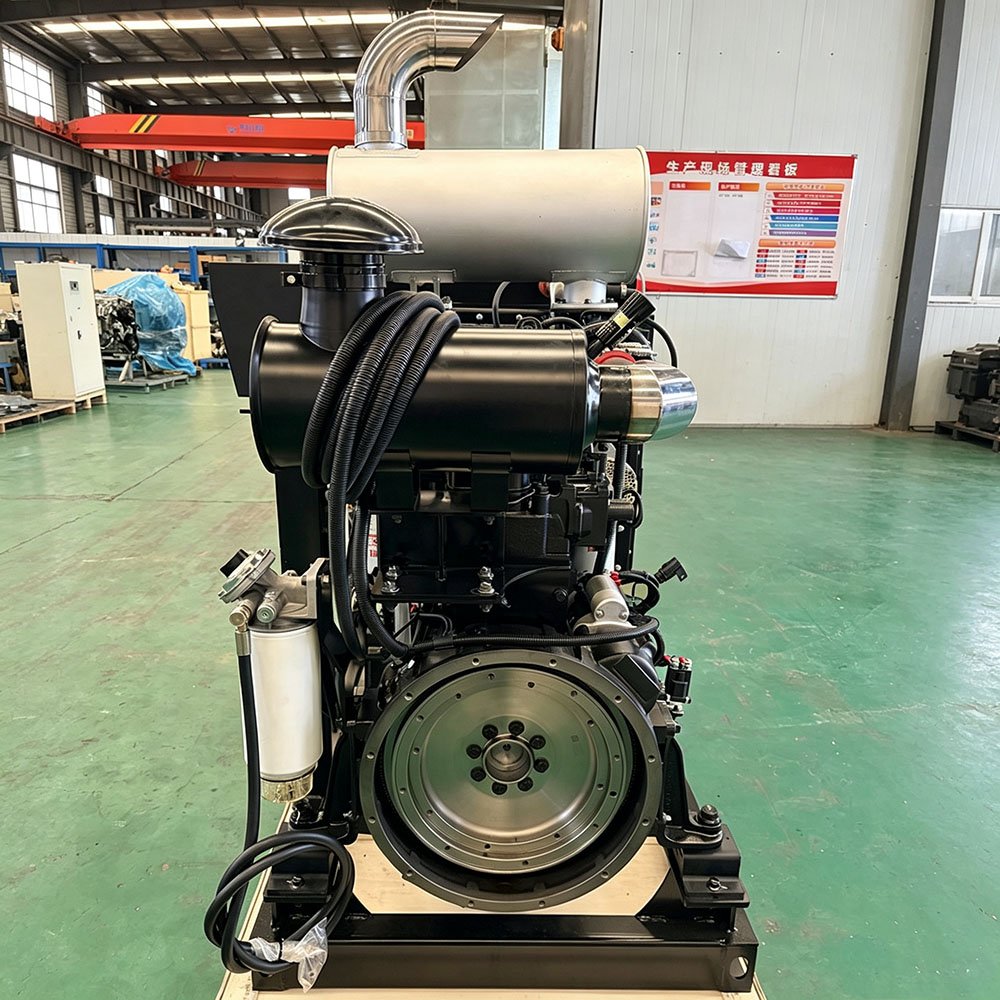
The Cummins 6BT and QSB6.7 differ primarily in fuel injection, engine management, and application-specific performance. Traditional 6BT5.9 engines use a mechanical fuel injection pump, while the QSB6.7 uses an electronically controlled high-pressure common-rail (HPCR) system. The 6BT has a 5.9-liter displacement, compared with 6.7 liters for the QSB6.7, which offers higher power potential in selected industrial configurations.
For equipment owners, the choice comes down to more than engine size. A mechanical 6BT can be practical where workshop capabilities and straightforward fuel-system servicing are priorities. The QSB6.7 is worth considering when equipment requires greater output, electronic diagnostics, or integration with modern machine controls.
6BT vs QSB6.7: What Are the Main Differences?
Both engines use an inline six-cylinder, four-stroke diesel design, but their fuel systems and control strategies reflect different stages of Cummins engine development.
| Specification | Cummins 6BT5.9 | Cummins QSB6.7 |
|---|---|---|
| Displacement | 5.9 L / approximately 359 cu in | 6.7 L / approximately 408 cu in |
| Cylinder configuration | Inline 6-cylinder | Inline 6-cylinder |
| Bore × stroke | 102 × 120 mm | 107 × 124 mm |
| Fuel injection | Mechanical pump on traditional versions | High-pressure common rail |
| Engine management | Primarily mechanical fuel control on traditional versions | Electronic Control Module (ECM) |
| Aspiration | Depends on the specific configuration | Turbocharged and charge-air cooled in documented industrial versions |
| Power rating | Varies by model and application | Varies by model, emissions stage, and application |
| Typical applications | Industrial machinery, pumps, generators, marine equipment | Construction machinery, agricultural equipment, industrial power units |
These specifications describe the general engine families rather than every production version. Turbochargers, governors, fuel pumps, emissions systems, and rated outputs vary between configurations.
The QSB6.7’s larger displacement provides greater output potential, but displacement alone does not determine fuel consumption, durability, or suitability.
Kangjin Power’s Cummins QSB6.7 diesel engine range provides examples of application-specific configurations, including different power ratings and torque outputs. Its Cummins engine models guide also explains how traditional B Series engines relate to electronically controlled QSB models.
Mechanical Injection vs Electronic Common Rail
The biggest operational difference lies in how each engine controls fuel delivery.
How the Traditional 6BT Fuel System Works
Traditional mechanical 6BT5.9 industrial configurations use an injection pump to meter fuel and deliver it to the injectors at the required pressure and timing.
The pump’s mechanical control system responds to engine speed and load. The exact arrangement depends on the engine version.
This design can be advantageous in locations where electronic diagnostic equipment is unavailable. A workshop experienced with mechanical diesel systems may be able to diagnose fuel-delivery problems without manufacturer-specific electronic software.
However, mechanical injection still requires accurate adjustment and clean fuel.
Worn injectors, incorrect injection timing, restricted fuel supply, or a poorly calibrated pump can cause hard starting, excessive smoke, reduced power, and higher fuel consumption.
A mechanical engine is not maintenance-free; it simply uses a different diagnostic and control approach.
What Changes with the QSB6.7?
The QSB6.7 uses a high-pressure common-rail fuel system controlled by an ECM in documented configurations.
Fuel is maintained at high pressure in a common rail, while electronically controlled injectors deliver the required quantity at the commanded time.
This allows fuel delivery to respond more precisely to changes in engine speed, load, and operating conditions.
Electronic control also provides diagnostic information that can help technicians investigate sensor faults, fuel-system problems, and abnormal operating conditions.
The trade-off is greater dependence on electrical integrity, compatible diagnostic tools, and technicians familiar with the engine’s control system.
The QSB6.7 is not inherently unreliable because it uses electronics. Its service requirements simply differ from those of a traditional mechanically injected 6BT.
Horsepower, Torque and Performance Under Load
The QSB6.7 has higher power potential than many traditional 6BT5.9 configurations, but an accurate comparison requires the exact engine ratings.
Cummins offers different calibrations for construction equipment, agricultural machinery, industrial power units, and generator applications. Their rated speeds and torque curves are not interchangeable.
For example, selected Tier 3 industrial QSB6.7 configurations reach approximately 275 hp and 990 N·m of torque. These figures should not be treated as universal specifications for every QSB6.7.
The 6BT also has multiple ratings, depending on its fuel system, turbocharger, governor, and intended application.
When comparing the two engines, focus on:
- Rated horsepower at the intended operating speed.
- Available torque across the working RPM range.
- Power required by hydraulic pumps or driven equipment.
- Response to sudden changes in load.
- Continuous, intermittent, or standby operating requirements.
A larger engine is not automatically more efficient. If a machine rarely uses its available power, the extra capacity may provide little practical benefit.
Conversely, an undersized engine operating near its limits for extended periods may struggle to meet the equipment’s performance requirements.
Which Engine Fits Your Equipment?
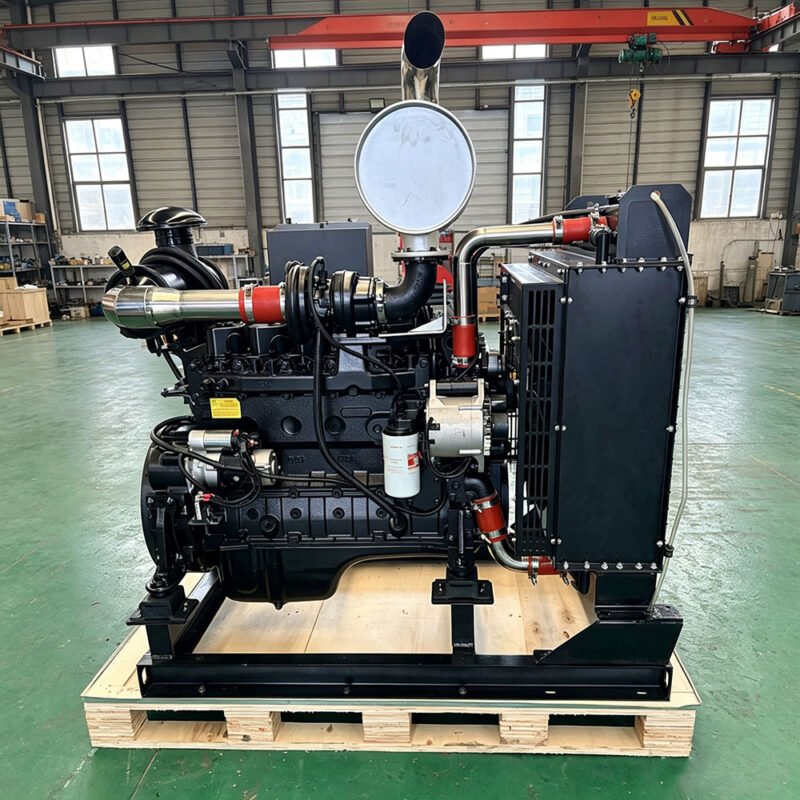
The most suitable engine depends on the equipment’s load profile, service environment, and installation constraints.
Existing Machinery and Remote Operations
A traditional 6BT can remain a practical choice for older equipment designed around its dimensions and mechanical fuel system.
This is particularly relevant where local workshops already have experience servicing the engine and can access appropriate mechanical fuel-system parts.
Keeping the same engine family may also reduce the modifications needed to mounting brackets, drivetrain interfaces, cooling systems, and exhaust routing.
However, the condition of the existing engine, parts availability, and the equipment manufacturer’s requirements should be evaluated before deciding to retain or replace it.
Construction and Agricultural Equipment
The QSB6.7 is worth considering for machinery requiring higher output or electronic integration.
Excavators, loaders, and agricultural machines can place substantial demands on hydraulic systems. The engine must supply enough power at the working speed without exceeding its thermal limits.
Electronic fuel control helps the engine manage fuel delivery under changing loads, while the exact performance depends on calibration and the machine’s overall design.
The Cummins QSB6.7 diesel engine page provides a useful starting point for examining available configurations.
Before selecting a version, confirm its rated power, torque, operating speed, cooling arrangement, and applicable emissions specification.
Pumps and Generator Sets
Pump-drive engines must provide sufficient shaft power at the pump’s specified operating speed.
The required power depends on flow rate, discharge head, pump efficiency, and operating conditions.
Generator sets introduce another constraint: engine speed must match the alternator’s required electrical frequency. Prime and standby ratings also describe different operating conditions.
Both 6BT and QSB6.7 engines have been used in industrial applications, but a rating intended for one duty cycle should not automatically be applied to another.
Maintenance, Diagnostics and Operating Costs
Maintenance costs depend on more than whether an engine uses mechanical or electronic fuel control.
Both engines require clean fuel, correct lubrication, adequate cooling, and regular inspection of intake and exhaust components.
For the 6BT, common diagnostic areas include fuel-pump condition, injection timing, injector performance, fuel supply, and turbocharger operation where fitted.
For the QSB6.7, troubleshooting can also involve ECM fault codes, sensors, wiring, electronic injectors, and high-pressure fuel-system diagnostics.
The availability of trained technicians can therefore influence operating costs.
A mechanical 6BT may be easier to service in a workshop familiar with older diesel fuel systems. A QSB6.7 may be more convenient in a facility equipped for electronic diagnostics and manufacturer-supported service procedures.
Fuel economy must be compared under equivalent working conditions. Load, engine speed, calibration, maintenance, and ambient temperature can affect fuel consumption more than displacement alone.
Can a QSB6.7 Replace a 6BT?
A QSB6.7 may provide the additional power needed for an equipment upgrade, but it should not be considered a direct replacement without an engineering assessment.
The QSB6.7 has a different displacement and external configuration. Its electronic fuel system also introduces electrical and diagnostic requirements that may not exist on the original machine.
Before approving a replacement, check:
- Physical fit: Engine length, width, height, mounting points, and crankshaft centerline.
- Drivetrain compatibility: Flywheel housing, transmission interface, coupling, and required torque capacity.
- Cooling requirements: Radiator capacity, charge-air cooling, fan clearance, and airflow.
- Electrical integration: ECM, wiring harness, sensors, starting system, and machine controls.
- Exhaust and emissions: Applicable certification and aftertreatment requirements.
- Operating rating: Required power, torque curve, rated speed, and duty cycle.
The engine serial number and complete model designation should be used to establish the original specification. The Cummins Control Parts List (CPL), where applicable, can help identify the correct component configuration.
A replacement that physically fits may still be unsuitable if its torque curve, emissions system, or control interfaces do not match the machine.
FAQ
Is the Cummins 6BT a mechanical engine?
Traditional 6BT5.9 industrial engines use mechanical fuel injection. However, auxiliary controls and fuel-system details vary by version, so the complete engine model should be checked before assuming every 6BT configuration is identical.
Does the QSB6.7 use common-rail injection?
Yes. The QSB6.7 uses a high-pressure common-rail fuel system with electronic engine management in documented configurations.
Is the QSB6.7 more powerful than the 6BT?
Selected QSB6.7 industrial configurations reach higher power and torque ratings than many traditional 6BT5.9 versions. The exact comparison depends on the complete engine models and their rated speeds.
Which engine is easier to repair in a remote location?
A traditional mechanical 6BT may be easier to troubleshoot where electronic diagnostic tools are unavailable, provided experienced technicians and suitable parts are accessible. QSB6.7 repairs may require additional diagnostic equipment and electronic-system expertise.
Does the QSB6.7 always consume more fuel?
No. Fuel consumption depends on the work performed, engine load, speed, calibration, and maintenance. A fair comparison requires equivalent duty cycles rather than displacement figures alone.
Can a QSB6.7 directly replace a 6BT?
Not necessarily. Mounting, cooling, exhaust, fuel controls, electrical interfaces, and rated output must all be checked before confirming compatibility.
Summary
The Cummins 6BT and QSB6.7 represent different approaches to diesel engine control. Traditional 6BT5.9 engines use mechanical fuel injection, while the QSB6.7 uses electronic common-rail fuel management to regulate injection and support diagnostic functions.
A suitable 6BT may remain practical for existing machinery and operations that prioritize familiar mechanical servicing. The QSB6.7 can be a better fit where greater output, electronic integration, or a newer emissions configuration is required.
The final decision should be based on the exact engine rating, duty cycle, service capabilities, installation requirements, and emissions rules. Confirming the engine model and serial number provides a more reliable basis for comparison than relying on displacement or engine-family names alone.

