
QSB4.5 vs QSB6.7: Specs, Power & Equipment Fit

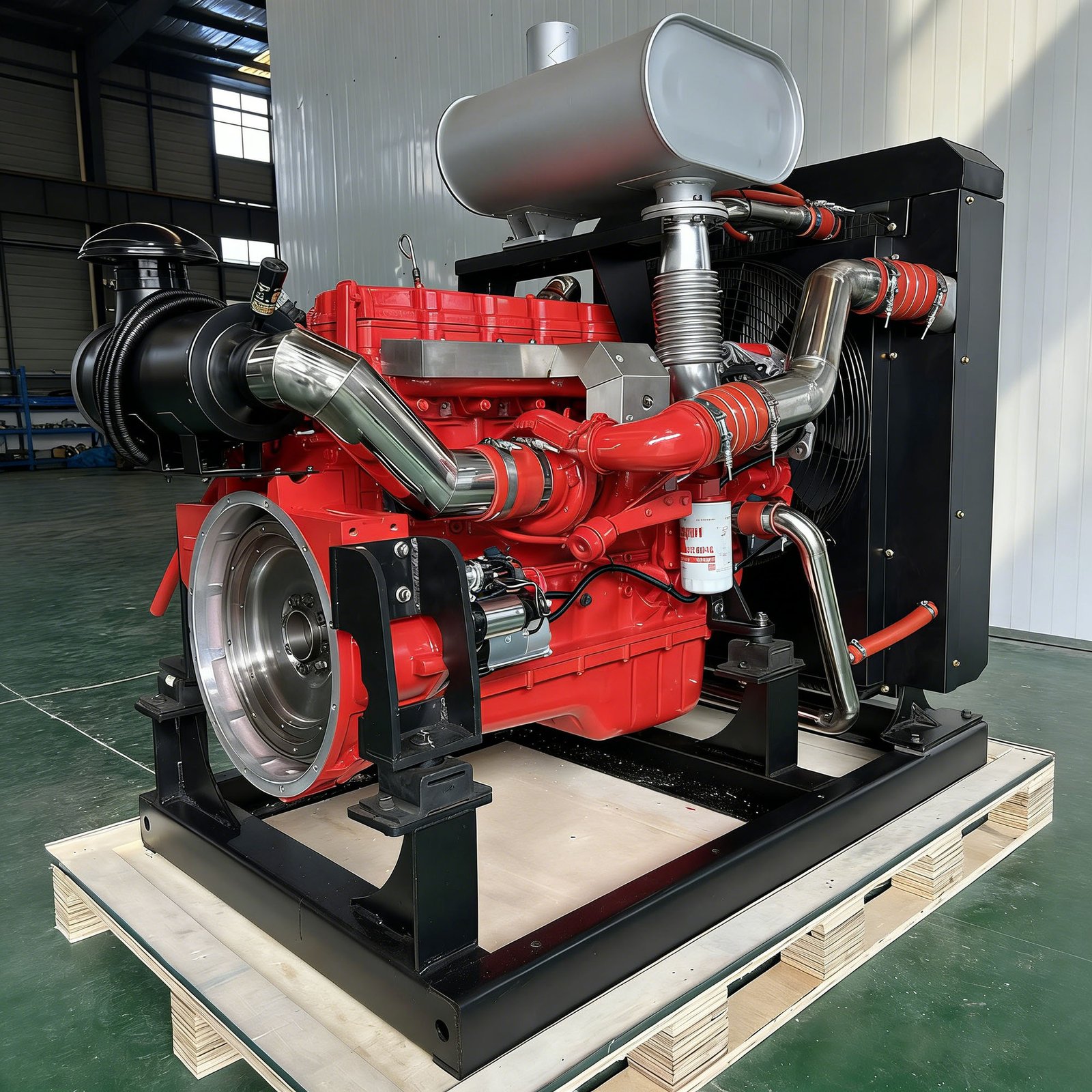
The Cummins QSB4.5 is generally a better fit for equipment requiring a compact four-cylinder engine, while the QSB6.7 suits applications needing greater power and torque. The QSB4.5 has a 4.5-liter displacement and four cylinders; the QSB6.7 uses a 6.7-liter, six-cylinder design. Both feature turbocharging, charge-air cooling, and electronic engine management in relevant configurations, but their rated output, dimensions, and fuel consumption depend on the specific engine model.
For excavators, loaders, agricultural machinery, pumps, and generator sets, the deciding factor is not displacement alone. The engine must deliver sufficient power at the equipment’s working speed without exceeding installation, cooling, or duty-cycle limits.
QSB4.5 vs QSB6.7: Key Specifications
The two engines share Cummins’ electronically controlled diesel technology, but their physical design and output capabilities differ.
| Specification | Cummins QSB4.5 | Cummins QSB6.7 |
|---|---|---|
| Displacement | 4.5 L | 6.7 L |
| Cylinder configuration | Inline 4-cylinder | Inline 6-cylinder |
| Bore × stroke | 102 × 138 mm | 107 × 124 mm |
| Published horsepower range | Approximately 110–170 hp | Approximately 133–275 hp |
| Peak torque | Up to approximately 622 N·m | Up to approximately 990 N·m |
| Aspiration | Turbocharged and charge-air cooled | Turbocharged and charge-air cooled |
| Fuel system | Electronic fuel injection; configuration-dependent | Electronic fuel injection; configuration-dependent |
| Typical applications | Compact construction equipment, agricultural machinery, pumps | Larger construction equipment, industrial machinery, pumps |
| Installation requirements | Generally smaller engine envelope | Generally larger engine envelope |
These are indicative family-level figures, not guaranteed ratings for every production version. Confirm the applicable Cummins specification sheet for the exact model and emissions generation.
The QSB6.7’s larger displacement and additional cylinders provide greater output potential. However, an individual QSB4.5 rating may be sufficient for equipment that does not need the QSB6.7’s maximum power.
The complete engine model, rated speed, torque curve, and installation drawing are more useful for selection than the family name alone.
How Do Horsepower and Torque Affect Equipment Performance?
Horsepower describes the rate at which an engine performs work. Torque describes its rotational force at a given engine speed.
Both matter when matching an engine to machinery.
A compact excavator may spend much of its operating time at partial load, with hydraulic demand changing as the operator moves the boom, arm, and bucket. A larger machine may need substantially more hydraulic power during simultaneous movements or heavy digging.
The QSB4.5 can suit applications where the required power fits its specific rating. The QSB6.7 provides more headroom for higher-demand equipment, provided the cooling system and drivetrain are designed for it.
For a practical comparison, examine:
- Rated horsepower at the intended working speed.
- Torque available across the operating range.
- Maximum power absorbed by hydraulic pumps or driven equipment.
- Response to sudden changes in load.
- Continuous-duty or intermittent-duty rating.
Peak torque alone does not establish which engine will perform better. An engine producing high torque at an unsuitable speed may not meet the driven equipment’s requirements.
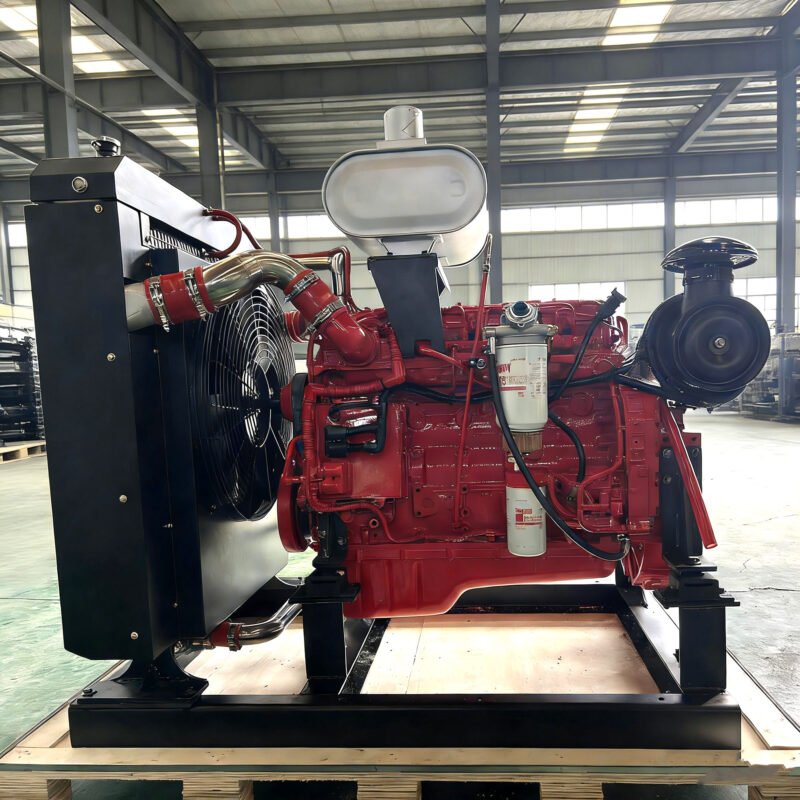
Choosing Between QSB4.5 and QSB6.7 for Different Applications
The right engine depends on the machine’s actual workload, not simply its category.
Compact Construction Equipment
The QSB4.5 is worth considering for compact excavators, loaders, and other machinery where engine-bay space and weight are important constraints.
Its four-cylinder layout can simplify packaging in equipment designed around a smaller power unit. The final choice still depends on hydraulic power demand, cooling capacity, and the machine manufacturer’s approved engine ratings.
For example, Kangjin Power lists several configurations on its Cummins QSB4.5 diesel engine page, including the QSB4.5-C110-30, QSB4.5-C130-30, and QSB4.5-C160-30.
These variants have different rated outputs and operating characteristics. The suffix and complete model designation therefore matter when comparing a replacement engine with the original installation.
Larger Excavators and Heavy-Duty Machinery
The QSB6.7 is a stronger candidate when equipment requires higher output or greater torque capacity.
Larger excavators and loaders can place substantial demands on hydraulic systems, particularly during heavy digging, lifting, and simultaneous movements.
A suitable QSB6.7 calibration may provide the required power reserve, but the engine must still match the hydraulic pump’s absorbed power and the machine’s operating-speed range.
Kangjin Power’s Cummins QSB6.7 diesel engine range includes configurations such as the QSB6.7-C220-30 and QSB6.7-C260-30.
These examples illustrate the higher output available from selected QSB6.7 versions. They should not be treated as universal ratings for every QSB6.7 engine.
Agricultural Machinery
Agricultural engines often operate under changing loads for extended periods.
Smaller machines may benefit from the QSB4.5’s more compact package, while larger equipment may require the QSB6.7’s additional power capacity.
Dust, ambient temperature, radiator airflow, and maintenance access also affect suitability. An engine that meets the power requirement on paper may still overheat if the cooling package is poorly matched to the machine.
Water Pumps and Generator Sets
Pump applications require enough shaft power to deliver the specified flow and head at the intended operating speed. Pump efficiency and continuous operating requirements must also be considered.
Generator applications introduce a different constraint: the engine must maintain the speed required by the alternator and electrical frequency. Prime and standby power ratings are not interchangeable.
Both engine families have application-specific configurations, so compare the actual duty rating rather than assuming the higher-displacement engine is automatically suitable.
Dimensions, Weight and Installation Differences
The QSB4.5 generally occupies a smaller installation envelope than the QSB6.7, but exact dimensions and weight vary with accessories, cooling arrangements, and engine generation.
This matters when replacing an existing engine or designing a new machine.
Before approving either engine, check the following:
| Installation Factor | Why It Matters |
|---|---|
| Overall length, width, and height | Determines engine-bay clearance |
| Engine mounting points | Affects chassis and support compatibility |
| Flywheel housing | Determines transmission or coupling fit |
| Crankshaft centerline | Affects drivetrain alignment |
| Radiator and charge-air cooling | Must handle the engine’s heat rejection |
| Exhaust routing | Must fit the compartment and applicable requirements |
| Service access | Allows routine filter and component replacement |
A QSB6.7 should not be assumed to fit a machine originally designed for a QSB4.5, even if the available space appears sufficient.
Mounting geometry, transmission interfaces, exhaust systems, cooling capacity, and electronic controls can all prevent a straightforward replacement.
Fuel Consumption and Maintenance: Is the Smaller Engine Cheaper to Run?
The QSB4.5’s smaller displacement may be advantageous when its output meets the equipment’s needs. However, displacement alone does not determine fuel consumption.
Fuel use depends on engine load, speed, calibration, operating conditions, and the amount of work performed. An undersized engine running near its limits may not deliver the expected operating efficiency.
The QSB6.7 can be more appropriate when sustained high power is required. The key is to select a rating that matches the real duty cycle rather than choosing the smallest or largest engine available.
Both families require maintenance according to their applicable Cummins service documentation. Oil capacity, filter specifications, coolant requirements, and service intervals should be verified for the exact engine model and operating environment.
Can You Replace a QSB4.5 with a QSB6.7?
A QSB6.7 may provide the extra output required for an equipment upgrade, but it is not automatically a direct replacement for a QSB4.5.
The larger engine may require changes to mounting brackets, cooling systems, intake and exhaust routing, transmission interfaces, and electronic controls.
Before proceeding, verify:
- The required horsepower and torque at the equipment’s working speed.
- Available installation space and engine mounting geometry.
- Transmission, flywheel housing, or driven-equipment compatibility.
- Radiator capacity and charge-air cooling requirements.
- Fuel system and electronic control compatibility.
- Emissions requirements for the machine’s production year and market.
The engine dataplate, serial number, and Cummins Control Parts List (CPL) help identify the original configuration and its applicable components.
This is particularly important for older machinery, where engines with similar family names can have different accessories, ratings, and emissions systems.

FAQ
Is the QSB6.7 more powerful than the QSB4.5?
The QSB6.7 has a higher maximum published power rating and greater peak torque capacity across the referenced engine-family ranges. Actual output depends on the specific engine model and calibration.
Which engine is better for a compact excavator?
The QSB4.5 may be more suitable when its rated output meets the machine’s hydraulic demand and installation constraints. The QSB6.7 may be necessary for equipment requiring greater sustained power.
Does the QSB6.7 always consume more fuel?
Not necessarily under every working condition. Fuel consumption depends on load, speed, calibration, and work performed. Compare fuel use at equivalent duty cycles rather than comparing displacement alone.
Can QSB4.5 and QSB6.7 parts be interchanged?
Some components may share design characteristics, but interchangeability cannot be assumed. Turbochargers, fuel system components, mounting parts, and accessories must be checked against the complete engine model and serial number.
What should be checked before replacing a QSB4.5 with a QSB6.7?
Verify power requirements, rated speed, mounting dimensions, transmission interfaces, cooling capacity, fuel controls, and emissions requirements. The equipment manufacturer’s approved specifications should guide the final decision.
Summary
The QSB4.5 is generally suited to equipment requiring a compact four-cylinder engine, while the QSB6.7 offers greater power and torque potential for higher-demand applications.
For construction machinery, agricultural equipment, pumps, and generator sets, the best choice depends on the exact engine rating, working speed, duty cycle, cooling system, and installation constraints.
Comparing the complete model specifications—and not just displacement or maximum horsepower—provides a more reliable basis for selecting an engine that fits the equipment.

