
6CTAA8.3-P250 Pump Drive Engine Specs & OEM Sourcing Guide

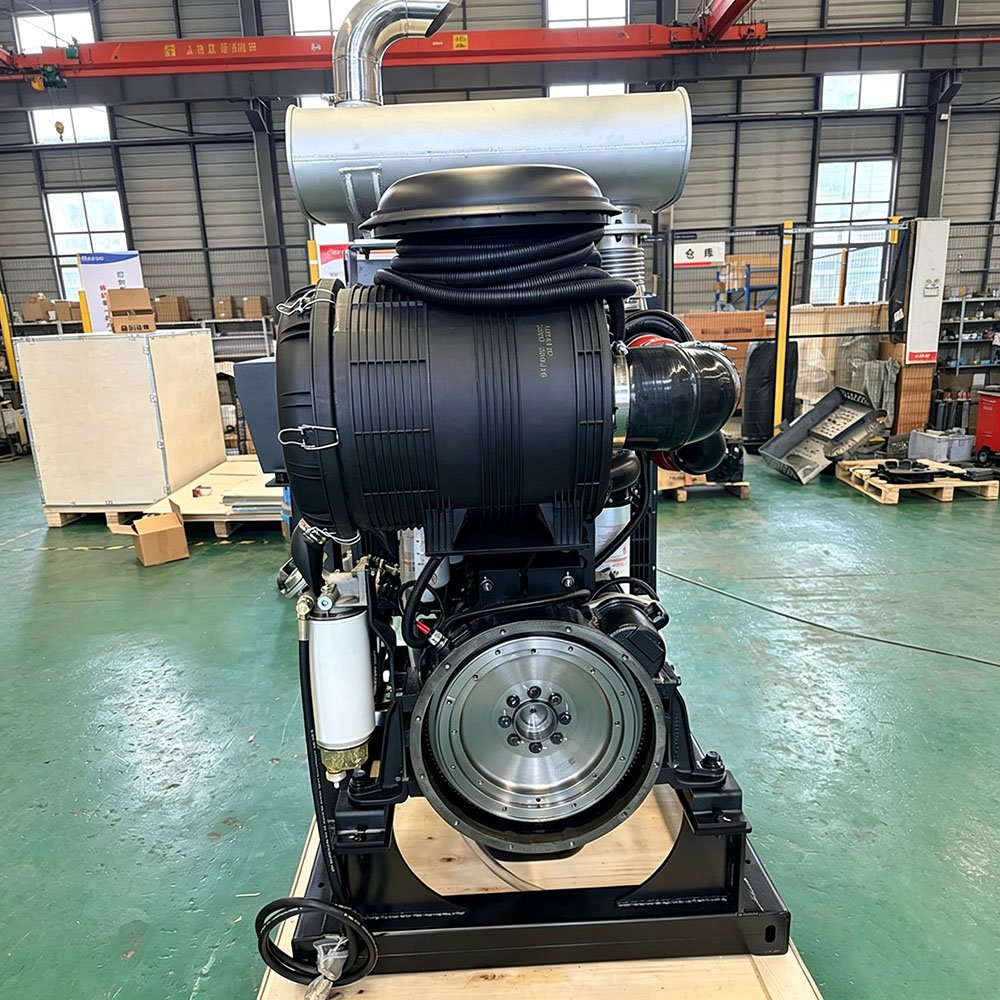
Core 6CTAA8.3-P250 Engine Specifications
When sizing a prime mover for heavy-duty fluid transfer or NFPA 20-compliant fire pumps, engineers look directly at the baseline performance data: the 6CTAA8.3-P250 is an 8.3-liter, inline-6 diesel engine that delivers 183 kW (250 HP) and 1165 N·m of peak torque at a continuous 1500 RPM. Because it is engineered specifically for stationary pump drives, it bypasses complex automotive ECUs in favor of mechanical fuel injection paired with a dedicated electronic governor. This specific configuration guarantees the immediate transient load response and fail-safe reliability required when an emergency suppression network demands instant, massive water flow.
For OEM integrators finalizing their system dimensions and output matching, the foundational mechanical parameters are as follows:
| Parameter | Technical Specification |
| Engine Model | 6CTAA8.3-P250 |
| Configuration | In-line 6-cylinder, 4-stroke |
| Displacement | 8.3 Liters |
| Bore × Stroke | 114 mm × 135 mm |
| Prime Rated Power | 183 kW (250 HP) @ 1500 RPM |
| Peak Torque | 1165 N·m @ 1500 RPM |
| Aspiration | Turbocharged + Air-to-Air intercooler |
| Fuel System | Mechanical injection with electronic governor |
| Fuel Consumption | 205–241 g/kW·h |
| Starting System | 24V electric start |
These specifications highlight a system built for steady-state performance. The unit generates its full peak torque exactly at the rated pump speed. This operational overlap prevents RPM drop during sudden hydraulic load spikes, ensuring the connected centrifugal pump maintains strict head pressure.
Mechanical Architecture for High-Load Pump Systems
Stationary pump drives operate under unique mechanical stresses compared to automotive or generator variants. A robust 6CTAA8.3-P250 pump drive diesel engine relies on a reinforced cast-iron cylinder block paired with wet cylinder liners. This specific cooling configuration dissipates internal heat highly efficiently during non-stop, maximum-load duty cycles.
Plateau-honed cylinder liners and high-nickel cast iron pistons are standard internal features. These metallurgy choices minimize oil consumption and resist friction wear over thousands of operational hours. For installations involving heavy atmospheric dust or extreme ambient heat in industrial plants, this block design ensures structural integrity without premature thermal fatigue.
Fuel delivery utilizes a P-type mechanical injection pump. The electronic governing system bolted to this mechanical setup holds the engine speed strictly within a tight operational tolerance band. This stable RPM output prevents destructive speed fluctuations caused by sudden changes in water line pressure or valve closures.
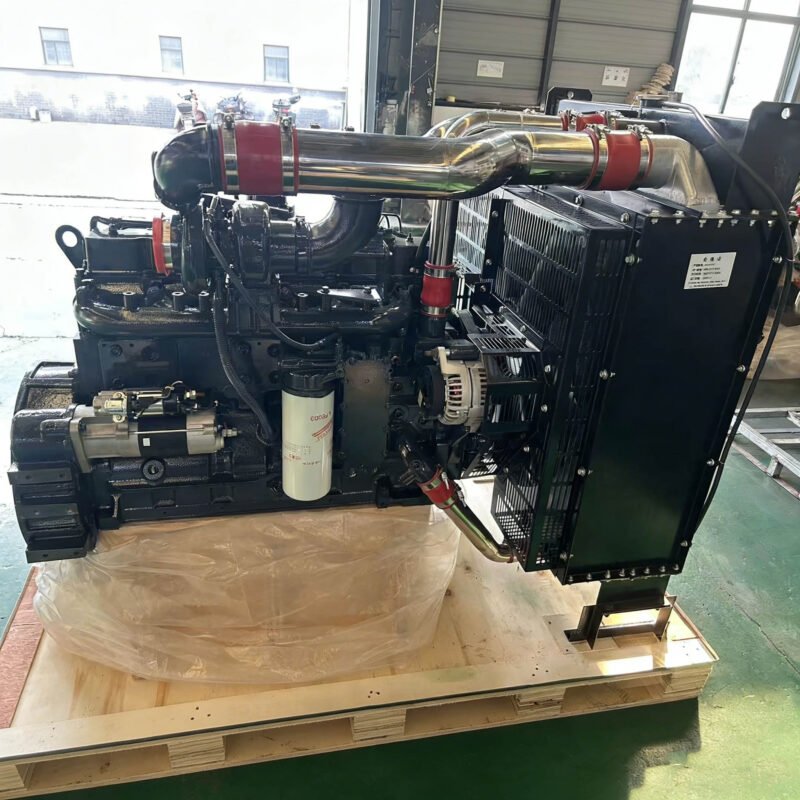
NFPA 20 Compliance & Fire Pump Suitability
Industrial fire suppression systems demand absolute mechanical reliability with zero tolerance for failure-to-start. When engineering teams analyze how to select a diesel engine for fire pump integrations, they must verify compliance with strict regulatory frameworks. The National Fire Protection Association (NFPA) 20 standard dictates that stationary drivers must be dedicated solely to fire protection and cannot perform secondary facility tasks.
A compliant configuration must exceed the maximum power required by the pump by at least 10%. This mandatory reserve capacity absorbs internal mechanical friction, gearbox losses, and unexpected hydraulic pressure surges. Furthermore, the engine must achieve its full operating RPM within 20 seconds of receiving an automated start command from the master control panel.
Environmental derating represents another critical engineering factor for system design. Standard calculations require a 3% power deduction for every 300 meters above standard baseline altitude. Ambient site temperature increases also mandate specific mathematical derating adjustments before finalizing the coupling of any 6CTAA8.3 diesel engine to an emergency water network.
Fuel Consumption & Tank Sizing Calculations
Predictable fuel efficiency is critical for sizing auxiliary equipment in enclosed industrial pump houses. Operating between 205 and 241 g/kW·h, the specific fuel consumption rate directly dictates external storage tank requirements. Facility managers must calculate required tank volumes meticulously to satisfy international fire codes and insurance mandates.
Safety standards typically dictate a minimum 8-hour continuous runtime capability for emergency pump applications. Calculating the maximum volumetric consumption at the 183 kW load determines the lowest allowable fuel storage capacity. Engineers size the primary diesel tank to ensure the pump does not starve during extended suppression events or grid-down scenarios.
Clean Number 2 diesel fuel is heavily recommended for these standby applications. Contaminated or degraded fuel can lead to severe injector fouling over long idle periods. Locating the fuel tank close to the engine minimizes line friction and lowers the vacuum burden on the engine’s mechanical lift pump.
OEM Customization & Sourcing Evaluation
Procuring heavy-duty industrial diesel engines requires navigating complex supply chain variables and factory capabilities. B2B purchasing agents must evaluate factory customization capabilities, structural modifications, and post-assembly validation processes. The 6CTAA8.3-P250 platform supports extensive OEM and ODM customization workflows for global pump packagers.
Standard SAE flywheel housings allow straightforward mechanical coupling with diverse gearboxes and pump heads. Buyers can specify optional industry-compliant accessories directly from the manufacturing facility prior to assembly. Available factory upgrades include intake air shut-off valves for hazardous environments, 120V/240V cold-start jacket water heaters, and specialized dual-redundant safety shutdown sensors.
Minimum order quantities (MOQ) dictate supplier feasibility for boutique engineering projects. For customized stationary engines, specific factory suppliers accommodate an MOQ of just one unit. This low barrier allows system integrators to source exact-match power plants without tying up massive amounts of operational capital in unused inventory.
Commercial RFQ Workflow and Testing Validation
Industrial procurement relies heavily on precise logistical planning and strict quality assurance from the engine builder. When initiating a Request for Quotation (RFQ), procurement officers must provide detailed operational data. Suppliers require the exact application scenario, required rated horsepower, altitude, and ambient site conditions to finalize the accurate build sheet.
Quality assurance directly impacts downstream field reliability and commissioning success. Reputable OEM suppliers execute full dynamometer bench testing prior to export clearance. These validation protocols include oil-pressure stability analysis, dynamic fluid leak inspections, and high-temperature endurance testing under simulated load.
Export packaging utilizes standard heavy-duty, fumigated wooden crates to prevent transit damage or moisture intrusion. Commercial delivery terms typically accommodate EXW, FOB, CIF, or DDP requirements based on the importer’s logistical network. Factory warranties generally cover primary engine components for 12 months or a specified hour limit, requiring buyers to strictly follow baseline maintenance intervals.
FAQ
What is the optimal RPM for the 6CTAA8.3-P250 in a fire pump application?
The prime rated speed is locked at 1500 RPM. Operating at this specific rotational speed allows the unit to deliver its maximum peak torque of 1165 N·m, which perfectly matches standard industrial centrifugal pump curves.
How does altitude affect this pump drive engine’s output?
High altitudes reduce ambient air density, lowering overall combustion efficiency and thermal output. Engineers must apply SAE derating factors—typically a 3% power loss per 300 meters above standard elevation—to guarantee the engine maintains its required 10% reserve capacity.
What governing system is utilized on this model?
The engine utilizes a robust mechanical fuel injection pump paired with a precision electronic governor. This configuration maintains strict RPM stability (often within +/- 0.25%) regardless of rapidly fluctuating hydraulic pump loads.
What is the minimum order quantity (MOQ) for custom configurations?
Manufacturing facilities offering OEM/ODM services for this specific engine platform typically support an MOQ of 1 unit. This allows packaging engineers to procure highly customized units featuring specialized pre-heaters or custom instrument panels without bulk commitments.
Does the engine support redundant starting systems?
Yes, standard configurations rely on a single 24V electric starter. However, this setup is frequently factory-modified into dual-starter, redundant battery arrays to satisfy strict NFPA 20 startup reliability codes.
Reference Sources
- National Fire Protection Association (NFPA) Standard for the Installation of Stationary Pumps for Fire Protection (NFPA 20)
- ISO 3046-1: Reciprocating internal combustion engines — Performance — Part 1: Declarations of power, fuel and lubricating oil consumptions, and test methods
- SAE J1349: Engine Power Test Code – Spark Ignition and Compression Ignition – Net Power Rating
- UL Solutions: Fire Pump Engine Testing and Certification Standards

