
Cummins Diesel Engine Price & Specifications: Engineering Buyer’s Guide


Selecting a powertrain for industrial machinery requires a granular understanding of how technical specifications influence capital expenditure. For project managers and OEM engineers, a Cummins diesel engine price is not a static figure; it is a reflection of displacement, aspiration technology, and emission compliance.
In high-duty cycles such as mining or continuous power generation, the initial purchase price often pales in comparison to the total cost of ownership (TCO). This guide deconstructs the variables that define engine value, ensuring your technical requirements align with your budgetary constraints.
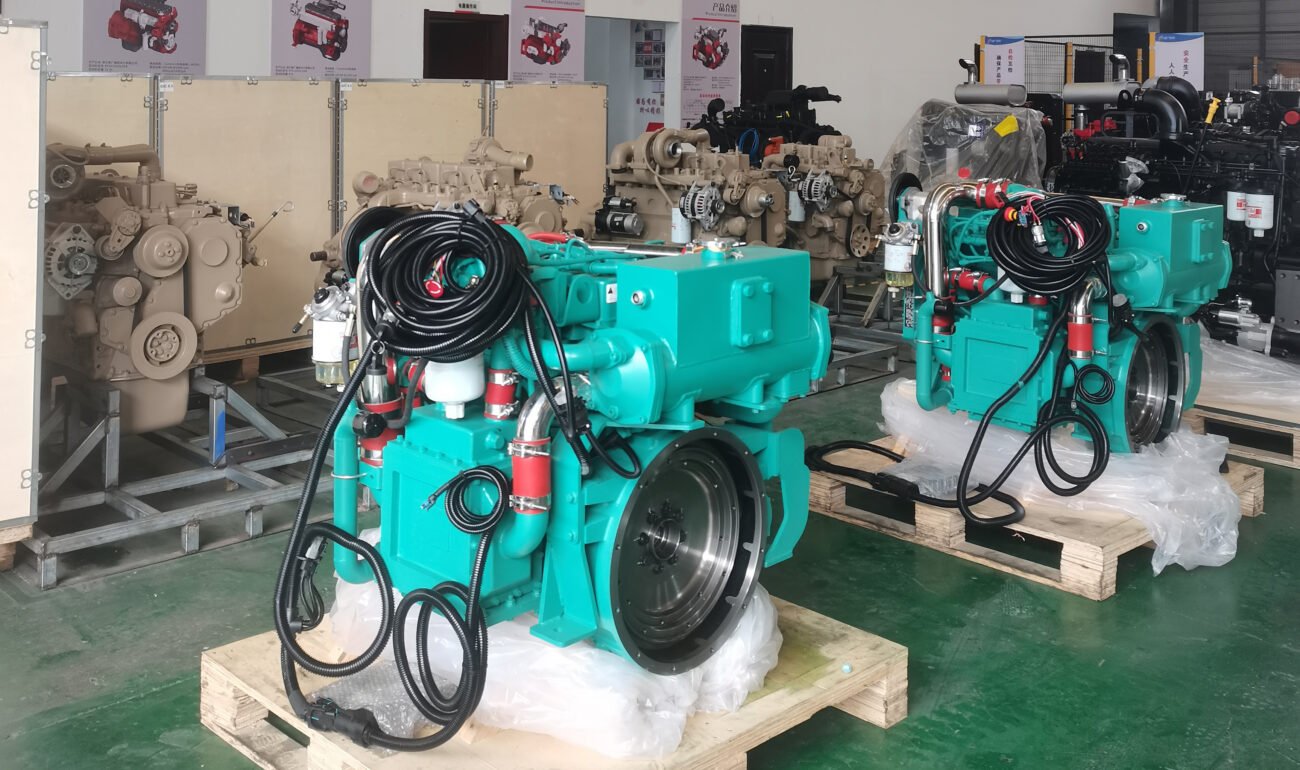
Technical Drivers of Cummins Diesel Engine Pricing
The pricing architecture of a Cummins engine is primarily dictated by its engineering complexity. A standard mechanical engine, such as the 6BT series, utilizes a straightforward fuel system and minimal electronics. These units are valued for their reliability in regions with limited diagnostic infrastructure and generally carry a lower price point.
Conversely, modern electronic engines equipped with High-Pressure Common Rail (HPCR) systems and sophisticated Engine Control Modules (ECMs) command a premium. These components allow for precise fuel mapping, which is essential for meeting strict environmental mandates.
Several manufacturing variables influence the final quote:
- Emission Standards: Engines meeting Euro V or Tier 4 Final require complex aftertreatment (SCR/DPF), significantly increasing the Cummins diesel engine price.
- Aspiration and Cooling: Naturally aspirated engines are the most affordable, while Turbocharged Aftercooled (BTA) or Air-to-Air (BTAA) configurations add cost due to the heat exchangers and ducting required.
- Fuel System Type: Mechanical PT (Pressure-Time) pumps, common in the NTA855 series, are cost-effective to maintain, whereas electronic Bosch injectors increase precision and initial cost.
Comparing Specifications Across Popular Cummins Series
To optimize machine performance, engineers must match displacement and torque curves to the intended load. Below is a comparison of the most sought-after series found in global industrial applications.
| Engine Series | Displacement | Power Range (HP) | Aspiration | Common Applications | Price Tier |
| B Series (4BT/6BT) | 3.9L / 5.9L | 80 – 210 HP | Turbocharged | Light Construction, Forklifts | Entry-Level |
| C Series (6CT/6L) | 8.3L / 8.9L | 210 – 375 HP | Turbocharged Aftercooled | Medium Excavators, Buses | Mid-Range |
| N Series (NTA855) | 14.0L | 310 – 525 HP | Turbocharged | Mining, Marine, Gensets | Professional |
| K Series (K19/K38) | 19L / 38L | 450 – 1500 HP | Turbocharged | Heavy Duty Power, Large Ships | Premium |
The B Series remains the global standard for mechanical simplicity. In contrast, the NTA855 is a “workhorse” specification favored in heavy-duty mining and marine environments due to its high-torque density and ease of overhaul.
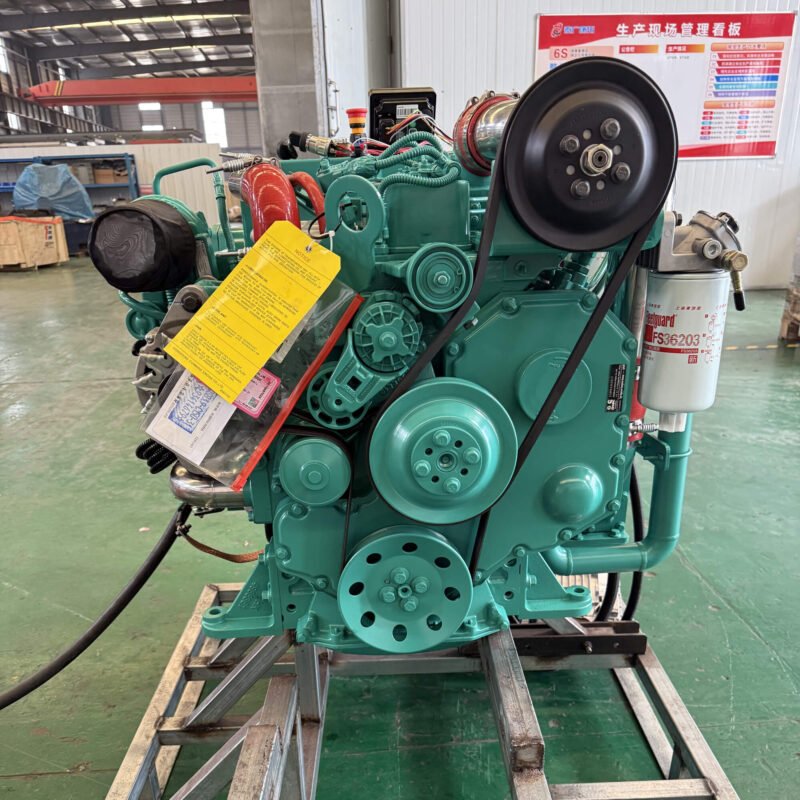
Engineering Logic: Matching Application to Specification
A common mistake in procurement is over-specifying an engine, which leads to unnecessary capital expenditure. For example, a generator set (G-Drive) engine operates at a constant RPM (1500 or 1800). It does not require the dynamic throttle response of a construction engine used in a wheel loader.
Marine Applications
Engines designated for marine use require specialized metallurgy and cooling circuits. Raw-water heat exchangers and water-cooled manifolds are essential to withstand corrosive environments. These specific modifications can increase a standard Cummins diesel engine price by 20% to 40% compared to an equivalent industrial unit.
Construction and Industrial
For “yellow metal” applications, peak torque at low RPM is the critical specification. Engines like the 6BTAA5.9 are engineered to provide maximum breakout force for hydraulic systems. These engines often feature high-capacity oil pans to allow for operation on steep inclines without losing lubrication.
Assessing TCO: Beyond the Initial Invoice
Experienced B2B procurement consultants look at the “price per hour” rather than the “price per unit.” A Cummins engine with a higher initial price may offer a significantly longer Time Between Overhaul (TBO).
Key factors that reduce long-term operational costs include:
- Parts Interchangeability: The B and C series share many internal components, reducing inventory costs for fleet operators.
- Fuel Efficiency: Electronic engines can reduce fuel consumption by 5% to 10% through optimized injection timing.
- Global Service Network: Availability of technical support minimizes the cost of downtime, which can exceed thousands of dollars per hour in mining operations.
Sourcing and Manufacturing Standards
The geographic origin of an engine often dictates the pricing structure and standard features. Manufacturing hubs like Xiangyang, China, housing massive joint-venture facilities that produce engines for international export.
For organizations seeking high-performance assemblies, it is vital to evaluate suppliers based on their technical validation processes. Companies likeXiangyang Kangjin Power Technologyspecialize in providing complete engine assemblies and customized power units that meet specific OEM specifications. Their proximity to the manufacturing core allows for competitive pricing on a wide range of Cummins-series products, from the compact 4BT to the heavy-duty NTA855.
FAQ
What does “BTAA” stand for in Cummins specifications?
BTAA stands for B series, Turbocharged, Aftercooled, Air-to-air. This means the engine uses a turbocharger to compress intake air and an air-to-air heat exchanger to cool that air before it enters the combustion chamber, resulting in higher power density.
Is a mechanical engine better than an electronic engine?
It depends on the application and region. Mechanical engines are easier to repair in remote areas and are less sensitive to fuel quality. Electronic engines are superior for fuel economy, lower noise levels, and meeting strict emission regulations in urban environments.
How does displacement affect the Cummins diesel engine price?
Generally, price increases with displacement because larger engines require more raw materials (cast iron, forged steel) and more complex cooling and lubrication systems. A 14L NTA855 will inherently cost more than a 5.9L 6BT due to the scale of the components.
What is the typical lead time for a custom industrial engine?
For standard configurations, lead times often range from 2 to 4 weeks. However, custom OEM specifications—such as specialized SAE housings or marine-certified cooling—may extend lead times to 6 or 8 weeks depending on component availability.
Does the engine price include the radiator and control panel?
Typically, a “base engine” price refers to the block, head, and internal fuel system. “Open Power Units” or “Genset Packages” include the cooling system, air filters, and control electronics. Always clarify the “scope of supply” during the RFQ process.
Reference Sources
- ISO 8528-1:2018: Reciprocating internal combustion engine driven alternating current generating sets.ISO Standards
- EPA Nonroad Compression-Ignition (Diesel) Engines: Exhaust Emission Standards.US EPA
- Society of Automotive Engineers (SAE): Standardization of Engine Flywheel Housings and Flywheels.SAE International

