
How to Choose a Reliable Diesel Engine Manufacturer


Selecting a diesel engine manufacturer for construction machinery or industrial equipment is a critical decision that influences the entire lifecycle of a project. The engine is more than just a power source; it is the heart of the machine’s productivity and the primary driver of operational costs. For OEM project managers and procurement consultants, the challenge lies in distinguishing between a standard supplier and a true engineering partner capable of meeting modern performance demands.
In the global industrial market, reliability is not a generic term. It refers to a manufacturer’s ability to maintain tight tolerances, provide consistent power density, and ensure compliance with evolving international emission standards. This guide provides a technical framework for evaluating potential partners to ensure your machinery remains competitive and durable in the harshest environments.
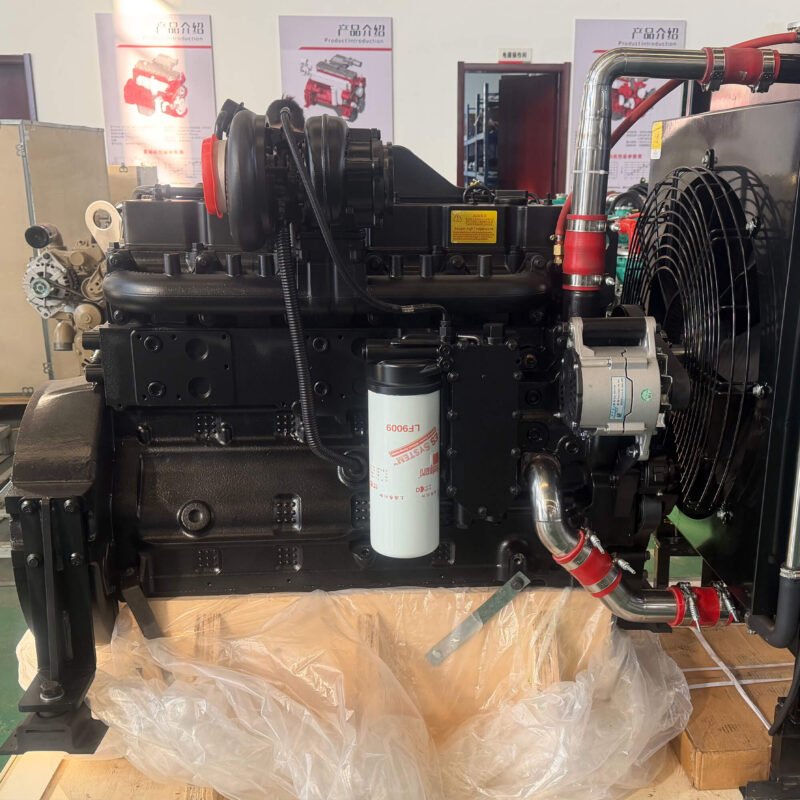
Core Technical Standards for Engine Selection
A reliable diesel engine manufacturer must demonstrate a mastery of internal combustion physics and material science. When evaluating a potential supplier, the focus should initially be on their engineering depth rather than their price list. Modern diesel engines, especially those used in high-intensity construction applications, require sophisticated thermal management and structural integrity to survive thousands of hours of operation.
High-quality manufacturing begins with the block and cylinder head design. Leading manufacturers utilize high-strength alloyed cast iron and Finite Element Analysis (FEA) to ensure that the engine can withstand high peak firing pressures. This prevents structural fatigue and oil leaks over time. Furthermore, the integration of the fuel system—typically High-Pressure Common Rail (HPCR) technology—dictates the engine’s fuel efficiency and responsiveness. A manufacturer that partners with world-class component suppliers for fuel injection and turbocharging is inherently more reliable than one that uses generic, unbranded parts.
Evaluating R&D and Application Engineering
R&D capability is the bridge between a theoretical design and a functional machine. A manufacturer should not simply provide a “one size fits all” solution. Instead, they should offer application engineering support to ensure the engine is properly matched to your machine’s duty cycle. For example, the requirements for a stationary generator are vastly different from those of a hydraulic excavator where load fluctuations are constant and severe.
When reviewing a manufacturer’s portfolio, such as the construction machinery engines available through specialized providers, look for evidence of torque backup. A reliable engine must provide sufficient low-end torque to prevent stalling during heavy breakout maneuvers. If a manufacturer cannot provide detailed torque curves and fuel consumption maps, they likely lack the technical transparency required for high-stakes B2B partnerships.
Quality Control and Testing Protocols
The consistency of a diesel engine manufacturer is defined by their quality control (QC) infrastructure. In a B2B context, a single defective engine can lead to massive downtime costs and reputational damage. Reliable manufacturers implement a “Zero-Defect” strategy through rigorous testing phases.
Every engine should undergo a dynamometer test (dyno test) before leaving the factory. This test verifies that the engine achieves its rated horsepower and torque while monitoring oil pressure, coolant temperature, and blow-by levels. Furthermore, precision machining of the crankshaft and camshaft is essential; tolerances should be measured in microns. Manufacturers who invest in automated assembly lines and robotic machining often achieve higher consistency than those relying on manual processes.
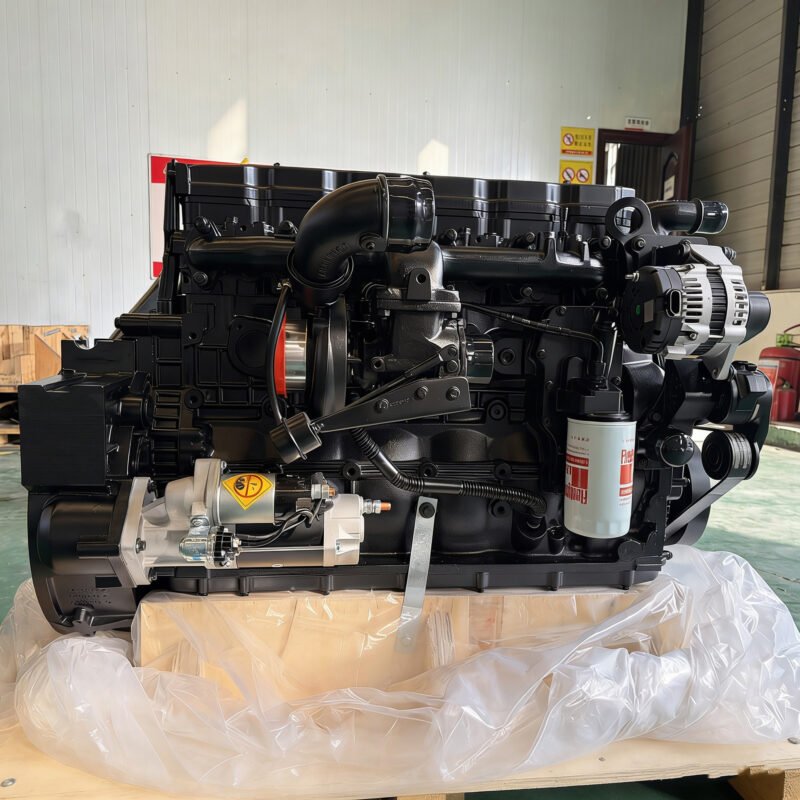
Manufacturing Comparison: Tier 1 vs. Generic
To help in your decision-making process, the following table compares the typical characteristics of a top-tier diesel engine manufacturer against lower-tier or generic assemblers.
| Feature | Tier 1 Reliable Manufacturer | Generic Engine Assembler |
| Component Sourcing | Branded Tier 1 (Bosch, Holset, Mahle) | Unbranded or local copies |
| Material Quality | High-grade alloyed cast iron | Standard grey iron |
| Testing | 100% Dyno and “Hot” testing | Random sampling or “Cold” testing |
| Emission Compliance | Stage V / Tier 4 Final Certified | Basic Tier 2 or non-compliant |
| Documentation | Full Service & Parts Manuals | Minimal operational guides |
| Technical Support | Dedicated Application Engineers | Sales-focused staff only |
Navigating Emission Compliance and Global Standards
The regulatory landscape is one of the most complex aspects of choosing a diesel engine manufacturer. With the transition to EU Stage V and US EPA Tier 4 Final standards, the engine is no longer a standalone unit; it is part of a complex system including Aftertreatment Systems (ATS).
A reliable manufacturer must have the expertise to integrate Diesel Particulate Filters (DPF), Diesel Oxidation Catalysts (DOC), and Selective Catalytic Reduction (SCR) systems. These components require sophisticated ECU (Engine Control Unit) calibration to manage “regeneration” cycles without interrupting the machine’s work. If your equipment is destined for international markets, the manufacturer must provide the necessary certifications and ensure the engine can handle varying fuel qualities, such as high-sulfur diesel found in some developing regions.
Supply Chain and Aftermarket Reliability
The relationship with a diesel engine manufacturer does not end at delivery. In fact, for most construction projects, the real test of a manufacturer begins during the first 5,000 hours of service. A reliable partner ensures that wear parts—such as filters, injectors, and gaskets—are readily available globally.
Consider the manufacturer’s logistics network. Do they have a centralized parts hub? Do they provide clear electronic parts catalogs (EPC)? Brands like Cummins, Deutz, and Weichai have set the industry standard for aftermarket support. When sourcing through a distributor like Kangjin Power, you gain access to these established supply chains, ensuring that your machinery remains operational regardless of its geographic location.
Operational Reliability in Construction Environments
Construction environments are uniquely punishing. Engines are exposed to extreme dust, high ambient temperatures, and significant vibrations. A reliable manufacturer designs their engines with these factors in mind.
Advanced Filtration: Multi-stage fuel and air filtration systems to protect the HPCR system from contaminants.
Cooling System Efficiency: High-capacity water pumps and optimized jacket water flow to prevent overheating during continuous high-load operations.
Vibration Damping: Balanced rotating components and heavy-duty engine mounts to reduce fatigue on the machine chassis.
Cold Start Capability: Integrated glow plugs or intake heaters for reliable operation in sub-zero climates.
By focusing on these specific engineering details, you can ensure that the engine will not become the weak link in your equipment’s performance.
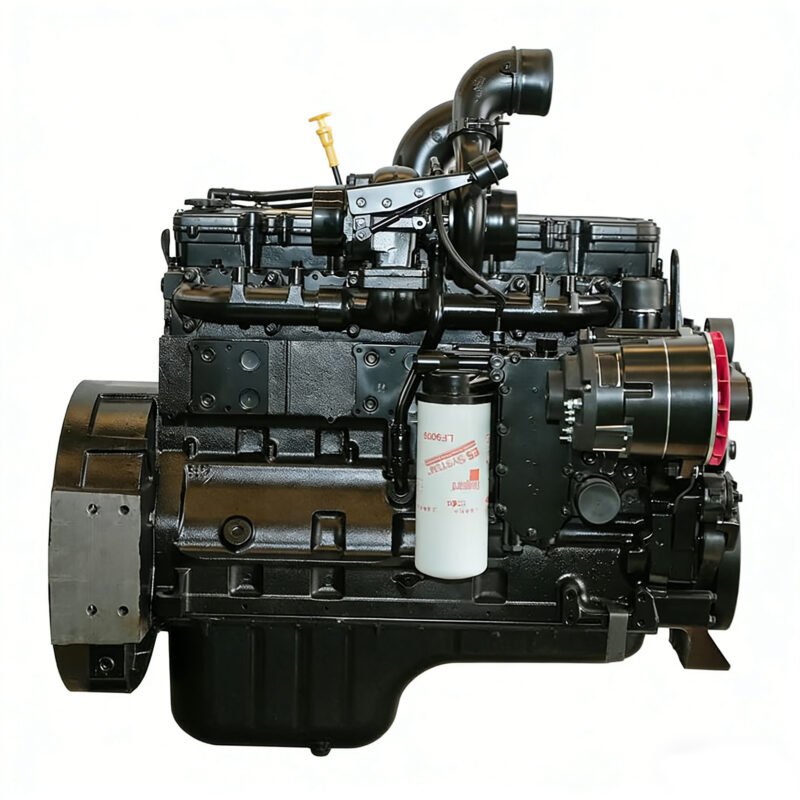
Summary
Choosing a reliable diesel engine manufacturer is a multi-dimensional process that balances technical engineering, manufacturing quality, and long-term support. A reliable partner offers more than just a product; they provide the technical transparency, emission compliance, and supply chain stability necessary for modern industrial success. Prioritizing manufacturers with a strong R&D foundation and a proven field history in construction machinery will ultimately result in lower total cost of ownership and higher machine uptime.
FAQ
1. How can I verify the authenticity of a diesel engine manufacturer’s certifications?
You should request the official engine family certificate issued by agencies like the EPA or EEA. These documents contain a unique family code that can be cross-referenced on the official government databases to ensure the engine meets the claimed emission standards.
2. What is the importance of torque rise in construction machinery engines?
Torque rise refers to the engine’s ability to increase torque as the RPM drops under load. For construction machinery, a high torque rise (usually 20% or more) is essential because it allows the machine to “dig through” heavy loads without the operator needing to downshift or the engine stalling.
3. How do I evaluate a manufacturer’s quality control if I cannot visit the factory?
Request a sample “Full Load Test Report” and a “Quality Inspection Certificate” for a specific serial number. Reliable manufacturers maintain digital records of every engine’s performance on the dyno, including oil pressure, fuel consumption, and temperature stability during the final test run.
4. Why should I care about the Engine Control Unit (ECU) brand?
The ECU is the brain of the engine. Reputable manufacturers use ECUs from established brands like Bosch or Motorola because they offer better reliability, easier diagnostic access with standard tools (like CAN bus/J1939), and better protection against electrical surges.
5. What is the typical lead time for a reliable diesel engine manufacturer?
Lead times vary by customization level. For standard industrial engines, lead times are often 4 to 8 weeks. However, for OEM-specific configurations involving unique flywheel housings or specialized emission hardware, lead times can extend to 12 or 16 weeks depending on global component availability.
Reference Sources
Official ISO 9001 Quality Management Standards
SAE International Engine Testing and Rating Standards
US EPA Nonroad Compression-Ignition Engine Regulations

